
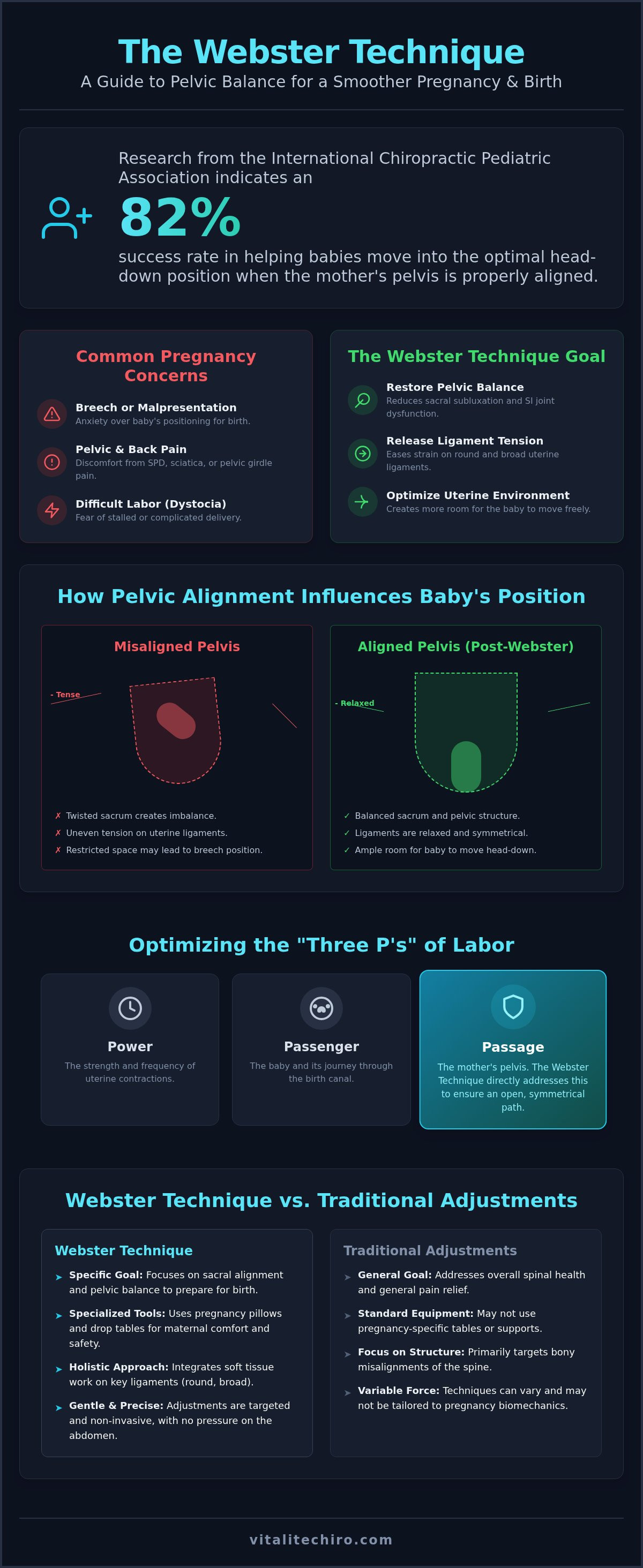
Did you know that research from the International Chiropractic Pediatric Association indicates an 82% success rate in helping babies move into a head-down position when the mother’s pelvic environment is properly optimized? Many expectant parents seeking the Webster technique for pregnancy feel a sudden surge of anxiety when they hear terms like breech or malpresentation during a routine checkup. It's an overwhelming feeling, especially when you're already managing the daily physical strain of lower back or pelvic girdle pain. You deserve to feel confident in your body’s ability to navigate the journey of birth without the shadow of difficult labor looming over you.
In this guide, we'll explore how this specialized chiropractic protocol provides a gentle, clinical pathway toward pelvic symmetry and neurological ease. By addressing the tension in your ligaments and aligning the sacrum, this care doesn't just target discomfort; it fosters a supportive environment for your baby's natural movements. We'll walk through the biomechanical benefits of this approach and how it can transform your prenatal experience from one of physical restriction to one of renewed energy and peace of mind.
Key Takeaways
- Learn how the Webster technique for pregnancy uses specialized chiropractic analysis to reduce sacral subluxation and optimize the pelvic environment for your baby.
- Understand the "Three P's" of labor and how maintaining an aligned pelvic passage can facilitate a more efficient and comfortable delivery process.
- Discover how targeted adjustments alleviate common prenatal discomforts such as Symphysis Pubis Dysfunction (SPD) and round ligament tension.
- Gain peace of mind with gentle, non-invasive diversified techniques that prioritize maternal safety and comfort without placing pressure on the abdomen.
- Identify the value of seeking inclusive, person-centered care from a seasoned practitioner with over two decades of clinical expertise in prenatal health.
What is the Webster Technique for Pregnancy?
The Webster Technique is a specialized chiropractic assessment and diversified adjustment protocol. Dr. Larry Webster developed this method to offer a clinical solution for pelvic imbalances that often complicate the birthing process. Unlike a standard adjustment, the primary goal here is to reduce sacral subluxation and sacroiliac (SI) joint dysfunction. This specialized focus is essential for the Webster technique for pregnancy, as it addresses the unique structural shifts that occur as your center of gravity moves forward and your ligaments soften. It's a methodical way to ensure your pelvis is prepared for the demands of delivery.
The Role of the Sacrum in Pregnancy
The sacrum is the triangular bone at the base of your spine, acting as the cornerstone of your pelvic ring. When this bone shifts out of its optimal position, it doesn't just cause local discomfort; it can create a ripple effect throughout the entire pelvic bowl. Misalignment often leads to uneven tension in the uterine ligaments, which may restrict the space available for your baby to move and grow. Beyond the physical structure, the sacrum is deeply connected to the parasympathetic nervous system, the "rest and digest" state that's essential for a calm pregnancy and efficient labor. The sacrum serves as the structural anchor that ensures birth canal symmetry and allows the pelvic opening to expand fully during delivery.
Webster vs. Traditional Adjustments
If you've had chiropractic care before, you might expect a standard spinal check. However, the Webster technique for pregnancy involves a distinct set of tools and priorities. We don't just look for general pain; we look for pelvic symmetry. Our approach is tailored to the changing biomechanics of your body.
- Specialized Equipment: We use pregnancy-specific pillows and "drop tables" that allow you to lie face-down comfortably. This setup protects your belly while providing a stable surface for the adjustment.
- Soft Tissue Integration: A key component involves gentle work on the round and broad ligaments. This helps alleviate the tight, pulling sensations many mothers feel as their uterus expands.
- Gentle Precision: The adjustments are subtle and targeted. We focus on the sacrum and the surrounding musculature to release tension without forceful maneuvers.
This approach prioritizes the unique shifts of the second and third trimesters, ensuring your care evolves as your body does. It bridges the gap between traditional medical science and a holistic, restorative lifestyle, focusing on your long-term health and comfort.
How Pelvic Alignment Influences Labor and Delivery
Obstetricians and midwives often discuss the "Three P's" of labor: Power, Passenger, and Passage. Each element must work in harmony for a smooth delivery. Power refers to the strength and frequency of uterine contractions. The Passenger is your baby. The Passage represents your pelvic canal. When the pelvis is misaligned, the Passage becomes restricted. This structural imbalance isn't just about bone; it's about the soft tissue attached to those bones. If the pelvic ring is uneven, the birth canal may not reach its full potential diameter, creating unnecessary hurdles during labor.
Pelvic torsion, or a slight twist in the pelvic structure, puts uneven tension on the broad and round ligaments that support the uterus. Think of it like a hammock where one side is pulled much tighter than the other. This tension can subtly distort the shape of the uterus, limiting the space available for the baby. By utilizing the Webster technique for pregnancy, we aim to restore symmetry to the pelvic bowl. This creates an expansive, balanced environment where the Passenger can move freely into the best possible position for birth.
Reducing the Risk of Dystocia
Dystocia is the clinical term for difficult or stalled labor. It's a common concern for expectant parents, often resulting from a mismatch between the Passenger and the Passage. When the sacrum is out of alignment, the pelvic opening may not function at its mechanical best. This makes it harder for the baby to descend through the birth canal. Proper sacral alignment ensures the Passage is as wide and symmetrical as possible. This structural ease supports more efficient uterine contractions because the body doesn't have to work against physical resistance. To help your body prepare for these demands, you might consider scheduling prenatal chiropractic care as part of your birth preparation plan.
Optimal Fetal Positioning Explained
Babies are highly intuitive. They naturally seek the path of least resistance when preparing for birth. If the pelvic environment is cramped or asymmetrical due to ligament tension, the baby might settle into a less than ideal position. While the Webster technique for breech babies is a common reason parents seek specialized care, it's vital to clarify the chiropractor's role. We don't manually "turn" the baby or perform an external cephalic version (ECV). Instead, we focus on the mother's neuro-biomechanics.
- Symmetry: Balancing the pelvic bones to remove structural twists.
- Ligament Ease: Reducing tension in the soft tissues that support the uterus.
- Neurological Function: Ensuring the nervous system can communicate effectively with the uterine muscles.
When the "room" is made comfortable and spacious, the baby often chooses to settle into the vertex, or head-down, position on their own. This Webster technique for pregnancy protocol is about optimizing the environment, not forcing a specific outcome, allowing your body to do what it was designed to do with greater ease.
Beyond Breech: The Daily Benefits of Webster Care
While many families first hear about this protocol when a baby is in a breech position, the benefits of the Webster technique for pregnancy extend far beyond fetal positioning. It's a vital tool for managing the daily physical evolution of the expectant body. For many, the second and third trimesters bring Symphysis Pubis Dysfunction (SPD) or general pelvic girdle pain. This discomfort often stems from the hormone relaxin, which increases joint mobility. When the pelvis is misaligned, this mobility leads to instability and sharp, localized pain. Specialized adjustments restore the structural integrity needed to move with confidence and physical freedom.
You might also experience a sharp, pulling sensation in the lower abdomen known as round ligament pain. This occurs when the ligaments supporting the uterus are stretched unevenly due to pelvic torsion. By balancing the sacrum, we reduce this asymmetrical tension and alleviate the "pulling" sensations. This clinical focus on soft tissue and bony alignment also improves sleep quality. When your hips and lower back are properly supported, you can find more restful positions at night. Restoring balance through the Webster technique for pregnancy helps alleviate the cumulative fatigue that often accompanies late-stage growth. You can learn more About the Webster Technique and its foundational goals through the ICPA, which emphasizes the importance of neuro-biomechanical function.
Comfort in the Second and Third Trimesters
As your center of gravity shifts forward, your gait naturally changes to compensate. This often results in the characteristic "waddle," which can strain the muscles of the lower back and hips. Maintaining pelvic stability through regular care helps preserve a more natural range of motion. It also provides a non-invasive solution for nerve impingement. If you're struggling with shooting pain or numbness, reading our guide on sciatica relief during pregnancy can offer additional strategies for managing late-stage discomfort. These adjustments ensure your body remains adaptable as your baby grows.
Preparing the Pelvic Floor
The pelvic floor muscles are intricately connected to the bony structure of the pelvis. If the sacrum or ilium is tilted, the pelvic floor may become hypertonic or unevenly stressed. A balanced pelvis provides a stable foundation for these muscles, allowing them to engage and, more importantly, relax during the second stage of labor. This relaxation is crucial for your baby's descent through the birth canal. By prioritizing alignment now, you aren't just seeking immediate comfort; you're supporting your body's natural transition into the postpartum recovery phase. A well-aligned system heals more efficiently, allowing you to focus on your new arrival with renewed energy and peace of mind.
Safety, Comfort, and What to Expect at Your Visit
Your journey begins with a methodical clinical screening. We don't just jump into adjustments; we take the time to understand your unique pelvic biomechanics and pregnancy history. The Webster technique for pregnancy relies on a Diversified protocol, which means we use specific manual contacts to restore joint motion. There's no pressure on your abdomen, and we avoid any forceful rotations. This approach ensures your safety while providing the structural relief your body craves. We focus on restorative verbs and precise movements to help you regain physical freedom.
Safety is our absolute priority, and we maintain a register that is high-end yet approachable. Clinical studies consistently rank chiropractic care among the safest natural interventions available to expectant mothers. Because your body is constantly changing, frequency of care typically ranges from once a week to several times a month. As you approach your due date, we might see you more often to maintain pelvic symmetry during the final weeks of preparation. This steady, methodical rhythm ensures you aren't rushed through your care, allowing us to monitor your progress closely.
The Adjustment Process: Gentle and Precise
Comfort is non-negotiable in our practice. We use specialized pregnancy pillows and "drop tables" that have sections designed to lower as your belly grows, allowing you to lie face-down safely. This position alone often provides immediate relief to the lower back by taking the weight of the baby off your spine. During the adjustment, we apply gentle pressure to the sacrum and specific pelvic ligaments to release tension. Utilizing the Webster technique for pregnancy allows us to target these areas without discomfort. Pregnancy adjustments are significantly more gentle than standard ones.
Collaborating with Your Birth Team
We believe in a holistic, collaborative approach to your wellness. Our team frequently communicates with OB-GYNs and midwives across Arlington to ensure your chiropractic care complements your medical birth plan. Integrating these adjustments helps you stay active and comfortable throughout every trimester, bridging the gap between medical science and your daily lifestyle. To understand the full scope of how this supports your journey, you can explore the benefits of regular care during pregnancy in our comprehensive guide. If you're ready to experience this personalized support, you can schedule your initial prenatal consultation with us today.
Expert Prenatal Care in Arlington, VA: The Vitalité Difference
Dr. W. Jean-Luc Sansfaute has been a pillar of the Northern Virginia healthcare community since 2003. With over 20 years of clinical expertise, he provides a sophisticated blend of technical mastery and warm empathy. We know that pregnancy-related pain can be unpredictable and intense. That's why we prioritize same-day appointments for acute relief, ensuring you don't have to wait for the comfort you deserve. Our practice communicates with a high degree of professional confidence that reassures you of your safety at every step.
Our office is more than just a clinic; it's a supportive space for all families. We’re proud to offer an inclusive, LGBTQ+ friendly environment that prioritizes a sense of belonging for every parent. Because Arlington is a diverse community, we provide multilingual support to ensure our care remains accessible and clear. We believe that professional healthcare should be approachable and respectful, regardless of your background or the language you speak at home. This commitment to dignity is at the heart of our practice philosophy.
A Personalized, Whole-Person Approach
We take a whole-person approach that extends far beyond the adjustment table. While the Webster technique for pregnancy is essential for pelvic alignment, we also focus on your daily lifestyle. Our team offers specific ergonomic advice and postural strategies to help you stay comfortable between visits. We look at your unique birth journey through a clinical lens while maintaining a person-centered focus on your long-term health. Our Arlington location offers the perfect balance of high-end care and neighborhood convenience for busy families across the DMV.
Your Partner in a Healthy Pregnancy
Your health journey is a logical progression from prenatal preparation to the ultimate goal of wellness. We act as your technical specialist during pregnancy and your holistic partner during the transition into parenthood. Utilizing the Webster technique for pregnancy creates a stable structural foundation that directly supports your postpartum recovery. This continuity of care ensures that the path from identifying a problem to finding a restorative solution is easy to follow. We're dedicated to serving as a community-oriented advocate for new parents, helping you navigate the physical demands of early parenthood with renewed energy. If you're looking for a seasoned practitioner who treats you as a unique individual, Schedule your prenatal consultation at Vitalité Chiropractic today.
Empowering Your Birth Journey with Pelvic Balance
Embracing the physical changes of pregnancy doesn't have to mean accepting constant discomfort. By prioritizing pelvic symmetry and neurological ease, you create a supportive environment for both yourself and your baby. The Webster technique for pregnancy offers a precise, clinical protocol to manage common prenatal pains while preparing your body for an efficient delivery. This specialized care reduces the physical hurdles of late-stage pregnancy, allowing you to focus on the joy of your upcoming arrival with confidence. It bridges the gap between traditional medical science and a restorative lifestyle, ensuring you're physically prepared for the transition into parenthood.
Since 2003, Dr. Sansfaute has served as a technical specialist and holistic partner for Arlington families. Our practice remains a dedicated, LGBTQ+ friendly space where every individual receives personalized, compassionate care. Whether you're seeking relief from pelvic girdle pain or looking to optimize your birth preparation, we're here to guide you through a logical journey toward wellness. You deserve a pregnancy defined by physical freedom and peace of mind. We invite you to experience a community-oriented approach that treats every patient as a unique case.
Schedule Your Prenatal Consultation with Dr. Sansfaute
Frequently Asked Questions
Is the Webster Technique safe for my baby during the third trimester?
Yes, the Webster Technique is widely recognized as one of the safest natural interventions available for expectant mothers during the third trimester. Our clinical approach utilizes specialized tables and cushions to ensure there's no pressure on your abdomen. The adjustments are significantly more gentle than standard chiropractic care, focusing on precise, low-force movements. This methodical process prioritizes maternal comfort and safety, providing a secure environment for both you and your developing baby.
Can the Webster Technique turn a breech baby?
A chiropractor doesn't manually turn a breech baby; rather, we work to optimize the pelvic environment. By reducing sacral subluxation and balancing the surrounding ligaments, we remove structural interference within the pelvic bowl. This restorative process often allows the baby to move into the vertex, or head-down, position on their own. Our goal is to create the necessary space and symmetry for the baby to seek the path of least resistance naturally.
When should I start seeing a Webster-certified chiropractor during pregnancy?
You can begin care at any point in your journey, though many families start in the second trimester to stay ahead of postural shifts. Starting the Webster technique for pregnancy early allows us to maintain pelvic stability as your center of gravity moves forward. This proactive approach helps prevent the development of severe pelvic girdle pain or sciatica. We welcome parents at any stage, whether you're in your first trimester or preparing for delivery next week.
Does the Webster Technique hurt?
No, the technique is designed to be a gentle and restorative experience that prioritizes your physical comfort. We use pregnancy-specific pillows and "drop tables" that accommodate your growing belly, allowing you to lie face-down safely and comfortably. Most patients report a sense of immediate relief and renewed energy following an adjustment. The pressure used on pelvic ligaments is light and precise, ensuring the process feels supportive rather than forceful or painful.
How many sessions of the Webster Technique will I need before delivery?
The frequency of your sessions depends on your unique clinical needs and how your body responds to the initial adjustments. Some individuals benefit from weekly maintenance visits to preserve pelvic symmetry, while others may require more frequent support to manage acute discomfort. During your initial screening, we develop a personalized plan that aligns with your birth goals. Our steady, methodical rhythm ensures your care is thorough and never rushed as you approach your due date.
Can I receive the Webster Technique if I’ve had a previous C-section?
Yes, this protocol is safe and highly encouraged for individuals who've had a previous C-section, including those planning a VBAC. Adjustments help address pelvic torsion and tension that may be present from previous surgeries or scar tissue. By restoring optimal alignment to the sacrum and ilium, we help prepare the birth canal for a smoother experience. We treat every individual as a unique case, ensuring your care respects your specific medical history.
Will my insurance cover prenatal chiropractic care at Vitalité?
Many major insurance plans provide coverage for chiropractic adjustments as part of their standard wellness benefits. Because the Webster technique for pregnancy is billed as a specialized chiropractic adjustment, it's often eligible for reimbursement. We encourage you to check with your specific carrier to confirm the details of your plan. Our staff is also available to help you navigate logistical questions so you can focus entirely on your health and birth preparation.
What is the difference between the Webster Technique and a regular chiropractic adjustment?
The main difference is the specific clinical focus on the sacrum and the uterine ligaments. While a regular adjustment addresses general spinal health, this protocol involves a specialized analysis of pelvic symmetry and neuro-biomechanics. We utilize specific manual contacts to reduce sacroiliac joint dysfunction, which is essential for the changing biomechanics of pregnancy. This approach is tailored to the unique structural needs of the expectant body, bridging the gap between medical science and daily comfort.


