
What makes an inclusive chiropractor a good fit? Welcoming language on a website is a useful starting point, but the way a provider listens and responds matters too. If you’re concerned about being misgendered, having assumptions made about your identity, or sharing sensitive information during intake, those concerns deserve to be taken seriously. Respectful care should make space for your questions and preferences.
Your comfort also depends on communication, consent, and whether the clinician explains and adapts care to your needs. You shouldn’t have to educate a provider about how to address you or feel pressured to discuss details that aren’t relevant to your care.
This article explains how to recognize signs of respectful, individualized chiropractic care and what to ask before booking. You’ll learn how to assess the intake process, discuss treatment preferences, and decide whether a visit feels like a good clinical fit. In Arlington, Virginia, Vitalité Chiropractic describes its services as LGBTQ+ inclusive. You can contact the practice to ask questions and confirm details before scheduling.
Key Takeaways
- Look beyond welcoming language: notice whether the provider listens, explains care clearly, and respects your preferences.
- Ask how the clinic handles consent, communication preferences, names, pronouns, privacy, and language support.
- You can ask why sensitive information is requested and how it relates to your care.
- Pay attention to whether staff answer questions directly and explain what to expect at a visit.
- Vitalité Chiropractic is an Arlington practice led by Dr. W. Jean-Luc Sansfaute, who has practiced since 2003. Contact the clinic to discuss your questions before scheduling.
What Does an Inclusive Chiropractor Do Differently?
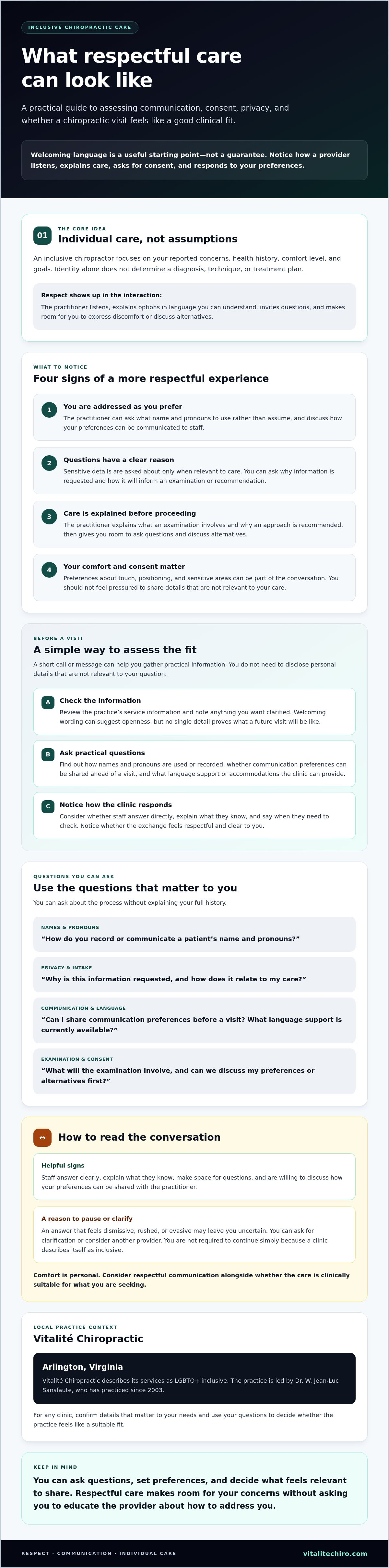
An inclusive chiropractor offers respectful, individualized care rather than relying on a label or a one-size-fits-all approach. Welcoming language can signal an intention to include patients, but it can’t guarantee how every interaction will feel. In practice, respect shows up in how a provider listens, explains options, asks for consent, and responds to your concerns.
This approach is closely connected to person-centered care, which considers a patient’s values and preferences as part of the care relationship. LGBTQ+ people aren’t a single group with identical experiences or needs. Identity may be relevant to a conversation, but it shouldn’t replace understanding your symptoms, health history, comfort level, and goals.
What can an affirming patient experience look like?
Respect can begin with simple questions. A practitioner can ask what name and pronouns to use rather than assume, and ask about a partner or relevant anatomy only when the information is needed for care. They can explain why they’re asking, invite questions, and respond without judgment. You can decide what personal details feel relevant to share and ask how information will inform an examination or recommendation.
These interactions don’t guarantee clinical fit, but they give you a chance to notice how the provider communicates. If an assumption is made, pay attention to how the provider responds when you correct it.
Why does individualized care matter in chiropractic?
Chiropractic care should begin with your reported concerns and a suitable clinical assessment, not assumptions based on identity. For example, you might want to discuss back discomfort, sensitivity around a particular area, or preferences about touch and positioning. Those concerns can guide a conversation about whether an examination or recommendation is appropriate. Identity alone doesn’t determine a diagnosis, technique, or treatment plan.
Before proceeding, the practitioner should explain what an examination involves and why they recommend a particular approach, using language you can understand. You should have room to ask questions, express discomfort, and discuss alternatives. A plan that reflects your symptoms and preferences can make the clinical relationship more collaborative and keep the assessment focused on your individual needs.
How Can You Recognize LGBTQ+ Inclusive Chiropractic Care?
A clinic’s website or welcoming language can offer a useful first impression, but neither predicts every interaction. Treat signs of inclusion as starting points for questions, then consider how the practice responds and whether its approach feels right for you. This matters in the broader context of LGBTQ health disparities.
Look for clear, respectful descriptions of whom the clinic serves and how it approaches care. Inclusive wording may suggest openness, while assumptions, unclear information, or language that doesn’t fit your needs may prompt follow-up questions. No single detail proves what a future visit will be like.
What can you check before making an appointment?
Review the practice’s service information and note anything you’d like clarified. Ask how staff use or record your name and pronouns, whether you can share communication preferences before a visit, and what language support is currently available. If you need interpretation or another accommodation, ask what the clinic can provide rather than assuming it’s available.
A short call or message can help you gather practical information before deciding. You don’t need to disclose personal details that aren’t relevant to your question. For example, you can ask how the office handles names on forms without explaining your full history.
What should you notice in your conversation with the clinic?
Pay attention to how staff handle your questions, not just the words they use. Do they answer directly, explain what they know, and say when they need to check? Are they willing to discuss how your preferences can be communicated to the practitioner? A clear, respectful exchange can help you decide whether to take the next step.
Notice the tone, too. An answer that feels dismissive, rushed, or evasive may leave you uncertain. It’s reasonable to ask for clarification or consider another provider. Comfort is personal, and clinical suitability matters alongside respectful communication. You’re not required to continue with a clinic simply because it describes itself as inclusive.
As you compare options, consider both communication and the care you’re seeking. Vitalité Chiropractic in Arlington describes its services as LGBTQ+ inclusive. If you’re considering the practice, review Vitalité Chiropractic’s information and contact the office to ask about communication or language needs.
What Concerns Might LGBTQ+ Patients Have About Seeing a Chiropractor?
You may wonder whether a provider will make assumptions, use the wrong name or pronouns, or misunderstand a physical concern. You might also feel uneasy sharing personal details or receiving hands-on care. Other patients may have different priorities. LGBTQ+ patients don’t all share the same concerns, histories, or preferred language, so let the individual guide the conversation.
You can ask why a question is being asked and how the answer will inform your care. For example: “Is that information necessary for the examination or treatment plan?” A clear explanation helps you decide what you’re comfortable sharing. You can also ask what information the clinic collects, who may access it, and how it’s used. Privacy practices vary, so ask the provider or office directly rather than assuming a particular policy.
How can you discuss privacy and personal information?
Share what feels relevant to the care you’re seeking, and ask for context if a question feels personal or unclear. You might say, “Could you explain why you need to know that?” or “Can we focus on how this relates to my symptoms?” You can seek clarification before answering. The goal is an informed conversation, not disclosure for its own sake.
How can you speak up about comfort and consent?
Consent is an ongoing conversation, especially in care that may involve examination, touch, or positioning. Before a technique is used, the practitioner should explain what they propose and why, then give you space to respond. You can pause at any point, ask for more information, or decline a technique. Useful phrases include:
- “Please explain what you’re going to do before you begin.”
- “Can we pause while I ask a question?”
- “I’m not comfortable with that technique. What other options are appropriate?”
A provider should take these requests seriously and discuss next steps without pressuring you. If a concern remains unresolved, raise it with the practitioner or contact the clinic before continuing care. You may also decide to seek another provider. Choosing an inclusive chiropractor involves more than a welcoming description. It also means being able to communicate concerns and participate in decisions about your care.
What Questions Should You Ask Before Choosing an Inclusive Chiropractor?
A few focused questions can help you decide whether a clinic’s approach matches your needs. First, identify what matters most for your visit, such as how staff address you, what you want help with, or any communication preferences. Then contact the clinic, ask about its process, and consider whether the answers are clear and respectful. You don’t need to share more personal information than feels relevant.
What should you ask when you call or schedule?
Use the conversation to understand what to expect, not to test yourself against a script. You might ask:
- “How can I share my name, pronouns, or communication preferences before my visit?”
- “What should I expect at an initial appointment, and how are examination findings and treatment choices explained?”
- “How do you discuss consent before an examination or adjustment?”
- “What language support is currently available, and how can I confirm scheduling details?”
For more background on the procedure, read this guide to professional chiropractic adjustments. It can help you prepare questions about what an adjustment involves and what you’d like clarified with the provider. Confirm language support and appointment options directly with the office, since those details can vary.
How can you assess whether the first visit feels right?
At the visit, describe your symptoms and goals in your own words. Notice whether the practitioner gives you time to explain, asks relevant follow-up questions, and connects recommendations to what you’ve shared. If an examination or proposed technique is unfamiliar, ask what it involves and why it may be appropriate for your situation.
A good clinical fit is both personal and practical. Consider whether you understand the plan, feel able to ask questions, and have a chance to discuss your comfort and preferences before care proceeds. Request clarification or raise a concern if something doesn’t feel right. The answers you receive, and how the practitioner responds to your needs, can help you judge whether this inclusive chiropractor is a provider you feel comfortable working with.
If you’re considering care at Vitalité Chiropractic, contact the clinic with questions before scheduling to discuss communication needs and confirm current appointment details.
Finding Inclusive Chiropractic Care in Arlington, Virginia
For people seeking chiropractic care in Arlington, Vitalité Chiropractic is a local practice that describes its services as LGBTQ+ inclusive. The clinic is led by Dr. W. Jean-Luc Sansfaute, who has practiced since 2003. That experience offers context about the practice, but doesn’t guarantee a particular experience or outcome. As with any inclusive chiropractor, it’s reasonable to ask questions and consider whether the clinic’s approach suits your needs.
Vitalité also lists multilingual support among its offerings. Available languages and appointment details can change, so confirm them directly with the practice. If language support is important to you, ask which languages are currently available and whether interpretation can be arranged. You can also discuss your communication preferences and ask how to share them with the practitioner.
What can you ask Vitalité Chiropractic before booking?
A brief conversation can help you understand what to expect without requiring you to disclose more than you’re comfortable sharing. Consider asking:
- “How can I let the team know my name, pronouns, or communication preferences?”
- “Can I describe the concern I’m seeking care for and ask questions about possible treatment?”
- “What language support is currently available?”
- “What appointment options are available, and how can I schedule?”
You might also explain what you hope to discuss during a visit, such as a symptom, a treatment question, or a communication preference. The clinic can clarify its process and help you determine what information to bring. Confirm current scheduling and language-support details directly rather than relying on assumptions.
How do you take a comfortable next step?
Before agreeing to care, make sure you understand the proposed examination or treatment and have had a chance to discuss your goals. Take time to ask for clarification. Vitalité offers chiropractic adjustments, decompression therapy, sports injury care, prenatal chiropractic care, orthotics, and therapeutic modalities. Ask the clinic which services may be relevant to the concern you want to discuss.
Choosing a provider is a personal decision. If Vitalité seems like a possible fit, you’re welcome to contact Vitalité Chiropractic about an appointment and ask about your care goals, communication needs, and current scheduling details.
Take the Next Step Toward Care That Feels Right
Choosing an inclusive chiropractor is a personal decision. Look beyond welcoming language and consider whether the provider listens, explains recommendations clearly, and respects your preferences around communication and consent. Asking questions before booking can help you understand what to expect and decide whether the practice feels like a suitable clinical fit.
In Arlington, Vitalité Chiropractic describes its services as inclusive for the LGBTQ+ community and lists multilingual support. The practice is led by Dr. W. Jean-Luc Sansfaute, who has practiced since 2003. These details can help you identify a local option, while a direct conversation can clarify whether the clinic’s current communication support and appointment options meet your needs.
You can take that step at your own pace. Contact Vitalité Chiropractic to discuss your questions and appointment options, including current language availability. You deserve care conversations where your concerns are heard and your preferences matter.
Frequently Asked Questions
What does inclusive chiropractic care mean?
Inclusive chiropractic care means receiving respectful, individualized attention without assumptions about your identity, body, relationships, or preferences. A provider listens to your concerns, explains examinations and recommendations clearly, and considers your goals. The label alone can’t guarantee a particular experience. Clinical decisions should reflect your symptoms, health history, and whether a recommendation is appropriate for your situation.
How can I find an LGBTQ+ friendly chiropractor near Arlington, Virginia?
Review clinic information for respectful, non-assumptive language, then contact the practice with questions about names, pronouns, communication preferences, and what to expect at a visit. Notice whether staff answer directly and respectfully. In Arlington, Vitalité Chiropractic describes its services as inclusive for the LGBTQ+ community. Contact the practice to discuss your needs and confirm current appointment and language-support details.
Should I tell my chiropractor that I am LGBTQ+?
You can decide whether to share that information. Your identity doesn’t need to be disclosed unless you feel it’s relevant to your care or want the provider to understand a particular concern or preference. Ask why a question is being asked and how the answer informs an examination or recommendation. Share what feels necessary, and ask the clinic directly about its information-handling practices.
What should I ask a chiropractor before my first appointment?
Ask how you can share your name, pronouns, or communication preferences, what to expect during an initial appointment, and how the provider explains examination findings and treatment choices. You might also ask how consent is discussed before hands-on care and whether language support is available. Describe your symptoms and goals in your own words, and confirm current appointment details directly with the clinic.
Can I stop or decline a chiropractic technique during an appointment?
Yes. You can ask the practitioner to pause, explain a technique, or stop if you’re uncomfortable. Before proceeding, ask what the proposed technique involves and why it’s being recommended. You can also decline it and discuss whether another approach is appropriate. Clear communication about your comfort and preferences is part of assessing whether the care feels right for you.
Does an inclusive chiropractor treat LGBTQ+ patients differently?
An inclusive chiropractor shouldn’t make assumptions or use identity alone to determine a diagnosis, technique, or treatment plan. Care should be based on your reported concerns, health history, clinical assessment, and preferences. A provider may discuss identity-related details if they’re relevant to your specific needs, but should explain why. Respectful, individualized care means listening and adapting communication without treating every LGBTQ+ patient as having the same experience.
Does Vitalité Chiropractic offer LGBTQ+ inclusive care in Arlington?
Yes. Vitalité Chiropractic, an Arlington, Virginia, practice, describes its services as inclusive for the LGBTQ+ community. The clinic is led by Dr. W. Jean-Luc Sansfaute, who has practiced since 2003, and lists multilingual support. Contact the practice to confirm which languages are currently available, discuss your communication preferences, and verify appointment details. These descriptions provide a starting point for questions, not a guarantee of a particular experience.


