
What if your postpartum recovery isn't just about "bouncing back" your muscles, but about recalibrating your entire nervous system? Most new mothers in Arlington expect the fourth trimester to be a period of endurance, pushing through chronic upper back pain from nursing and the nagging pelvic instability often called a "hip hike." You probably feel like core weakness or Diastasis Recti are simply the price of parenthood, but you don't have to accept constant discomfort as your new normal.
Specialized postpartum chiropractic care offers a sophisticated, gentle approach to help your body heal from the inside out. We promise to show you how targeted adjustments safely support your structural and neurological recovery during this delicate transition. This guide will examine the latest safety standards for 2026, debunk common myths about manual therapy after birth, and explain how restoring pelvic alignment can significantly improve your daily energy levels. You'll discover how a compassionate, clinical approach to spinal health can turn your recovery into a period of genuine physical renewal and freedom.
Key Takeaways
- Understand the fourth trimester as a critical 12-week window for physiological recalibration and essential spinal support.
- Learn how postpartum chiropractic care safely addresses pelvic instability and nursing-related back pain through gentle, manual adjustments.
- Identify specific red flags, including radiating leg pain or chronic headaches, that suggest your nervous system requires professional attention.
- Discover the clinical safety standards and appropriate timing for beginning care after both vaginal and C-section deliveries.
- Explore how a tailored recovery plan in Arlington can restore your pelvic alignment and improve your daily energy levels for long-term wellness.
The Fourth Trimester: Why Your Body Needs Structural Support
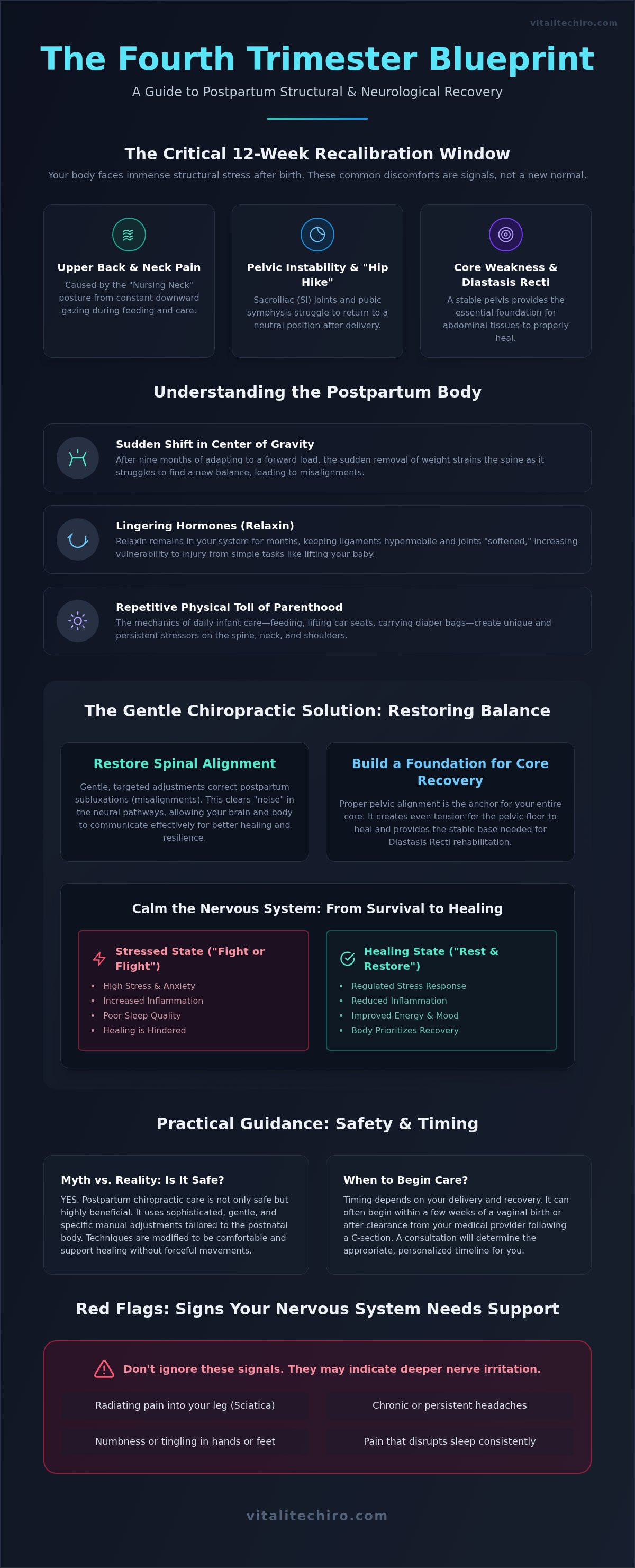
The fourth trimester is a critical 12-week window of profound physiological recalibration. Your body doesn't simply return to its pre-pregnancy state the moment labor ends. Instead, it enters a phase of intense transition where every system, from your hormones to your heart rate, must find a new baseline. One of the most overlooked aspects of this period is the abrupt shift in your center of gravity. For nine months, your spine adapted to a forward-leaning load. When that weight is suddenly removed, your musculoskeletal system often struggles to find its footing, leading to significant strain on the lower back and neck.
This structural chaos does more than cause physical discomfort; it taxes your nervous system. When your spine is misaligned, it creates "noise" in the neural pathways that manage your body's healing and stress responses. This interference contributes to the heavy mental load and exhaustion many new parents feel. Chiropractic care focuses on identifying and correcting these postpartum subluxations, which are minor misalignments caused by the mechanical forces of delivery and the repetitive motions of early infant care. By restoring alignment, we help your brain and body communicate clearly, supporting both physical recovery and emotional resilience.
The Lingering Impact of Relaxin
Relaxin doesn't disappear the moment you hold your baby. This hormone remains in your system for months, particularly if you're breastfeeding, keeping your ligaments and joints hypermobile. While this flexibility was necessary for birth, it now makes you vulnerable to injury. Lifting a growing infant or shifting a heavy car seat with "softened" joints can easily lead to misalignments. Maintaining precise alignment while your ligaments are in this temporary state is crucial. It ensures your bones settle into the correct positions as your body eventually firms up, preventing chronic pelvic instability or "hip hike" issues later in life.
The Physical Toll of New Parenthood
The repetitive mechanics of daily infant care create a unique set of stressors. "Nursing Neck" is a frequent result of the constant downward gaze used during breastfeeding or bottle-feeding, which strains the cervical spine and can cause persistent headaches. This is often exacerbated by the heavy, lopsided weight of diaper bags and the awkward grip required for car seats. Because chronic sleep deprivation naturally lowers your pain threshold, these minor strains can feel overwhelming. Gentle postpartum chiropractic care provides the structural support needed to manage these demands, helping you stay present and comfortable during those precious early months.
The Science of Postnatal Healing: Hips, Spine, and Nerves
The mechanical shifts of labor leave a lasting imprint on your musculoskeletal system. During delivery, the sacroiliac (SI) joints and the pubic symphysis expand to their physiological limits to allow for the baby's passage. Once birth is complete, these structures don't always return to their optimal neutral positions on their own. Misalignments in the SI joints can create a cascade of compensations, leading to the common "hip hike" sensation or localized lower back pain. A narrative review of the literature highlights how these profound biomechanical changes necessitate specialized attention to ensure long-term stability and function.
Your nervous system acts as the primary conductor of this recovery process. Spinal alignment is about more than just posture; it's about facilitating clear, uninterrupted communication between the brain and the rest of the body. When the spine is properly aligned, the vagus nerve can better regulate your stress response, which is often stuck in a "fight or flight" mode during the early weeks of parenthood. Manual therapy serves as a precise tool for reducing inflammation in overstretched ligaments and muscles. By calming the nervous system, postpartum chiropractic care helps your body transition from a state of high-alert survival to one of restorative healing.
Pelvic Floor and Core Synergy
Your pelvic floor muscles don't work in isolation. They are deeply integrated with the bony structure of your pelvis. If the pelvis is tilted or rotated, it creates uneven tension on the pelvic floor, which can significantly hinder your rehabilitation efforts. This alignment is also vital for managing Diastasis Recti, as a stable pelvis provides the necessary foundation for abdominal tissues to knit back together. Pelvic stability acts as the essential anchor for your entire core recovery process.
Nervous System Regulation and Mood
Physical pain is a significant driver of emotional stress and "brain fog." By addressing structural triggers, we support the parasympathetic nervous system, the state responsible for "rest and digest" functions. This shift is vital for new parents navigating the immense mental load of a newborn. When your body feels balanced, your emotional resiliency improves, making it easier to handle the daily challenges of parenthood. Reducing physical pain also allows you to reach a deeper state of relaxation during those precious, short windows of rest. If you're ready to support your body's natural healing process, consider how specialized chiropractic adjustments can stabilize your recovery.
Myth vs. Reality: Is Postpartum Chiropractic Care Safe?
Safety is the most common concern for new parents considering postpartum chiropractic care. Many worry that adjustments might be too forceful for a body still recovering from the intense physical demands of labor. In reality, clinical chiropractic care for new mothers is highly specialized and remarkably gentle. Whether you had a straightforward vaginal delivery or a complex C-section, the approach is adapted to your specific healing timeline. For C-section recovery, we focus on the upper back and neck initially, avoiding the abdominal incision area until your OB-GYN confirms the soft tissues have sufficiently closed. We don't replace your medical team; we work alongside them to ensure your structural recovery matches your internal healing.
A common misconception is that chiropractic care always involves high-velocity "cracking." While traditional adjustments are effective, postpartum sessions often prioritize gentle mobilization and soft tissue work. We use technical precision to restore joint mechanics without placing undue stress on sensitive areas. This supportive approach is designed to lower your body's stress levels, not increase them. By focusing on the relationship between the spine and the nervous system, we provide a safe environment for your body to recalibrate after the physical transition of birth.
Myth: "I should wait 6 weeks before my first visit."
While the six-week postpartum checkup is a standard medical milestone, you don't necessarily have to wait that long for a gentle chiropractic assessment. In fact, early intervention can prevent acute issues from becoming chronic patterns. For example, the postural strain of early breastfeeding can lead to "nursing neck" very quickly. If left unaddressed, this tension often triggers debilitating migraines during those first few months. Dr. Sansfaute, who has been practicing since 2003, carefully evaluates each individual’s birth experience to determine the safest time to start. We often see patients in our Arlington office within the first few weeks for light, restorative work that focuses on immediate comfort.
Myth: "Chiropractic is only for back pain."
Restricting chiropractic care to back pain ignores its profound impact on the rest of the body. New parents often struggle with De Quervain’s tenosynovitis, the painful wrist inflammation caused by repetitive lifting, as well as chronic headaches and even digestive sluggishness. At Vitalité Chiropractic, we take a whole-person approach that looks at how your entire system is functioning. We integrate therapeutic modalities and specialized manual techniques to address these varied symptoms. This inclusive care ensures that every family member receives the technical expertise needed to return to a state of physical freedom and renewed energy.
Practical Guidance: When to Start and What to Expect
Recognizing when your body needs professional support is the first step toward a functional recovery. While some soreness is expected, certain "red flag" symptoms shouldn't be ignored. If you're experiencing persistent pelvic pain that makes walking difficult, radiating pain down your legs, or chronic headaches that emerge during the day, your nervous system is likely under significant stress. These aren't just inconveniences; they're signals that your structural foundation needs recalibration. Watch for these specific indicators:
- Persistent pelvic instability or a "hip hike" sensation.
- Radiating pain, tingling, or numbness in the lower extremities.
- Chronic headaches that don't resolve with rest.
- Acute upper back pain that worsens during infant care.
Your initial postpartum chiropractic care consultation is designed to be thorough yet incredibly gentle. We begin with a detailed review of your birth history and current physical demands. This is followed by a digital posture scan and careful manual palpation to identify areas of joint restriction or muscular tension. For a deeper look at our clinical process, you can explore our guide on What to Expect at Your First Chiropractic Visit. Most care plans for the first 4 to 8 weeks involve one or two visits per week to stabilize the pelvis and spine while your ligaments are still hypermobile.
We also pay close attention to your foundation. Pregnancy hormones often cause the arches of the feet to flatten, which changes your entire gait. We may recommend custom orthotics to stabilize your walk and prevent secondary pain in your knees and hips. If you're ready to address these structural changes, you can book your postpartum assessment at our Arlington office today.
Integrating Care into a Busy Schedule
Life with a newborn is unpredictable. To support Arlington parents, we offer same-day appointments for acute pain and maintain a clinic environment where babies are always welcome. You don't need to worry about finding childcare just to take care of your health. Our team ensures the path from identifying discomfort to finding a solution is as seamless as possible, fitting into the natural rhythm of your new daily life.
Support for Breastfeeding Success
Maternal comfort is a cornerstone of a successful breastfeeding or bottle-feeding relationship. If your neck and shoulders are locked in tension, it's difficult to maintain the relaxed posture necessary for a good infant latch. During your sessions, we provide specific stretches and ergonomic advice tailored to your feeding positions. This structural support works in synergy with the work of local lactation consultants, ensuring both you and your baby are comfortable and supported during the fourth trimester.
Personalized Postpartum Recovery at Vitalité Chiropractic
Choosing a partner for your recovery requires a blend of technical mastery and genuine understanding. At Vitalité Chiropractic, Dr. W. Jean-Luc Sansfaute brings over two decades of clinical expertise, having practiced since 2003. This extensive experience allows for a nuanced application of specialized manual techniques, ensuring that your postpartum chiropractic care is both safe and effective. We recognize that every birth story is unique, and our clinical approach reflects that individuality. For parents facing severe disc issues or nerve compression following the physical shifts of pregnancy, we offer decompression therapy to alleviate pressure and promote long-term spinal health.
Our commitment to your well-being extends beyond immediate pain relief. We prioritize a whole-person perspective, understanding that physical restoration is deeply linked to your emotional and neurological health. We've built a practice that serves as a sanctuary for all modern families in Arlington. Our environment is explicitly inclusive and LGBTQ+ friendly, ensuring that every parent feels a sense of belonging and respect. We don't just treat symptoms; we partner with you to restore your physical freedom and energy.
A Community-Focused Approach in Arlington
Located in the heart of Arlington, our clinic is designed to meet the high demands of Northern Virginia’s active parents. We understand that our community is diverse, which is why we offer multilingual support to ensure clear communication and technical precision for all our patients. If you’re currently in the earlier stages of your journey, you may find it helpful to explore the Prenatal Chiropractic Care Benefits to prepare your body for the transitions ahead. We aim to be a foundational part of your local wellness team, providing the structural support necessary for a thriving family life.
Your Next Steps to Feeling Like Yourself Again
Recovery shouldn't be a logistical burden. We've simplified the process with easy online scheduling, allowing tired parents to book appointments during those rare quiet moments. You don't have to wait for debilitating pain to seek support; a proactive wellness check can identify minor misalignments before they disrupt your daily life. Taking this step is an investment in your long-term health and your ability to care for your growing family with ease. Schedule your postpartum evaluation at Vitalité Chiropractic today.
Reclaiming Your Physical Freedom in the Fourth Trimester
Your journey through the fourth trimester is a profound period of neurological recalibration and structural stabilization. By addressing the biomechanical shifts that occur during and after birth, you're not just managing immediate pain; you're setting a foundational stage for your long-term health. Specialized postpartum chiropractic care provides the technical precision needed to restore pelvic alignment, ease the strain of nursing, and support your body's natural healing rhythm. It's about moving from a state of survival into one of genuine physical renewal and comfort.
At Vitalité Chiropractic, we offer a sophisticated blend of clinical expertise and person-centered empathy. Dr. Sansfaute has over 20 years of experience, practicing since 2003, and leads a team dedicated to providing LGBTQ+ friendly and inclusive care for all Arlington families. We understand that your time is precious, which is why we offer same-day appointments for acute discomfort. You don't have to navigate the physical demands of new parenthood alone. Schedule Your Postpartum Wellness Visit Online today to begin your path toward a comfortable, energized recovery. You've worked hard to bring life into the world, and now it's time to support the body that made it possible.
Frequently Asked Questions
Is chiropractic care safe immediately after a C-section?
Chiropractic care is safe after a C-section, though the approach focuses on the cervical and thoracic spine initially. We avoid the abdominal region until the surgical incision is fully healed. By addressing postural strain in the upper back, we help manage the physical stress of recovery without interfering with your surgical site. This specialized care ensures that your spinal health is supported while your body completes its internal healing process.
Can postpartum adjustments help with breastfeeding or latching issues?
Postpartum adjustments support breastfeeding success by improving maternal comfort and posture. When your neck and mid-back are properly aligned, it's easier to maintain the relaxed positions necessary for a comfortable latch. Reducing physical tension in the mother often leads to a more calm feeding environment. We focus on the structural mechanics that allow you to hold your infant without the distraction of sharp, radiating pain or chronic shoulder tightness.
How soon after giving birth can I see a chiropractor?
You can often schedule a gentle assessment within the first two weeks after delivery. While many wait for their six-week medical clearance, early intervention can prevent minor misalignments from developing into chronic pain patterns. Dr. Sansfaute tailors the timing and technique to your specific birth experience, ensuring the care is restorative rather than aggressive. Starting postpartum chiropractic care early helps stabilize the pelvis while the hormone relaxin is still present in your system.
Will my insurance cover postpartum chiropractic visits in Virginia?
Coverage depends on your specific plan, but approximately 75% to 80% of commercial health insurance plans are expected to include chiropractic care as a benefit in 2026. Most plans that provide coverage have a limit ranging from 12 to 30 visits per calendar year. We recommend verifying your specific out-of-network benefits, as specialized postpartum providers may not be in every network. Our team can help you understand your options for utilizing your insurance benefits.
How does relaxin affect my chiropractic treatment plan?
Relaxin remains in your system for several months postpartum, keeping your ligaments and joints more flexible than usual. This hypermobility means your treatment plan must be exceptionally precise and gentle. Because your joints aren't as stable, we focus on manual techniques that support alignment without overstressing the connective tissues. This unique window of flexibility actually allows us to make significant improvements in your pelvic and spinal alignment as your body gradually returns to its pre-pregnancy state.
What is "Nursing Neck" and can a chiropractor fix it?
Nursing Neck is the postural strain caused by the repetitive downward gaze used during infant feeding. This constant flexion puts intense pressure on the cervical spine, often leading to tension headaches and mid-back pain. Chiropractic adjustments restore the natural curve of your neck and alleviate the muscle guarding associated with this position. We also provide ergonomic strategies to help you maintain better alignment while caring for your baby, preventing the return of acute discomfort.
Do I need a referral from my OB-GYN for postpartum care?
You generally don't need a formal referral from your OB-GYN to begin chiropractic care in Virginia. However, we believe in a collaborative approach to wellness and encourage open communication with your entire healthcare team. If you have had a complex birth or a C-section, we often coordinate with your medical provider to ensure our care plan aligns with their recovery protocols. This ensures your transition through the fourth trimester is as safe and thorough as possible.
Can chiropractic care help with postpartum depression or anxiety?
While chiropractic care isn't a direct treatment for clinical depression, it supports mental health by regulating the nervous system. By reducing chronic pain and physical stress, we help shift your body from a fight or flight state into a more relaxed, parasympathetic state. Improved physical comfort often leads to better sleep quality and higher energy levels, which are vital components of emotional resiliency. We view postpartum chiropractic care as a supportive part of your comprehensive wellness team.


