
What if the most critical phase of your physical recovery begins long after you leave the delivery room? While the birth is a monumental event, the weeks that follow represent a profound structural recalibration where specialized postpartum chiropractic care becomes an essential tool for healing. You might feel like your spine is out of alignment as the hormone relaxin slowly leaves your system, or perhaps you're dealing with the sharp, persistent tension of "Nursing Neck" from hours of feeding and carrying your newborn. It is completely normal to feel like your body hasn't quite returned to its center, but you don't have to navigate this transition in discomfort.
At Vitalité Chiropractic, we believe that the fourth trimester deserves as much clinical attention as the first three. Discover how this specialized approach facilitates physical recovery, supports hormonal balance, and restores structural alignment during this sensitive time. This article provides your essential 2026 recovery checklist, guiding you through the steps to reduce chronic pain, improve core stability, and achieve a faster return to your pre-pregnancy activity levels. We'll explore how targeted adjustments can bridge the gap between pregnancy laxity and long-term spinal health, ensuring you feel strong and supported as you embrace parenthood.
Key Takeaways
- Understand why the 12-week "fourth trimester" is a critical window for structural recalibration as your body transitions away from the influence of pregnancy hormones.
- Learn the essential timeline for your first assessment to ensure pelvic symmetry and spinal alignment, with specific guidance for both vaginal and C-section recoveries.
- Discover how postpartum chiropractic care effectively resolves "Nursing Neck" and the chronic upper body tension associated with feeding and carrying your baby.
- Find out how to safely rebuild core stability and return to your favorite activities by addressing rib cage expansion and mid-back discomfort.
- Explore a supportive, inclusive approach to recovery that prioritizes your long-term physical freedom and well-being within the Arlington community.
The Fourth Trimester: Why Your Body Needs Structural Support
The period following childbirth, frequently identified as The Fourth Trimester, is a 12-week window of profound physiological transformation. It's not just about healing from the birth itself. It's a time when your entire musculoskeletal system must find its new center after nearly a year of adaptation. Many people speak about "bouncing back," but this suggests a return to a previous state that no longer exists. Your body has been permanently changed by the journey of pregnancy. Instead, we view this phase as a "recalibration" of the spine and pelvis. Your body spent nine months shifting to accommodate another life. Now, it requires intentional support to settle into a stable, healthy alignment.
Hormonal Shifts and Joint Laxity
Relaxin, the hormone that allowed your ligaments to soften for delivery, doesn't disappear the moment your baby is born. It can remain in your system for several months, particularly if you're breastfeeding. This lingering presence keeps your joints in a state of hypermobility, which can feel like a lack of stability in the hips and lower back. This laxity makes you vulnerable to micro-misalignments during repetitive daily tasks. Lifting a heavy car seat, leaning over a crib, or twisting while changing a diaper can easily pull a joint out of its optimal position. Postpartum chiropractic care stabilizes hypermobile joints by restoring proper alignment and improving the neurological communication between your brain and your musculoskeletal system. This proactive approach prevents temporary discomfort from becoming a permanent structural issue.
The Pelvic-Spinal Connection
Your pelvis serves as the foundation for your entire spine. During pregnancy, the expansion of the pelvic ring and the forward shift of your weight significantly altered your lumbar spine curvature. Restoring your center of gravity is essential for long-term comfort. If the pelvis remains tilted or rotated after delivery, it creates a "domino effect" of tension up the spine and down the legs. There's also a powerful synergy between chiropractic care and pelvic floor health. A misaligned pelvis can create uneven tension on the pelvic floor muscles, which makes rehabilitation more difficult. By ensuring the bony structures are correctly positioned, we create the ideal environment for soft tissue recovery and core restoration. At Vitalité Chiropractic, we focus on this whole-person approach to ensure your foundation is secure for the years of parenting ahead.
The Ultimate Postpartum Recovery Checklist
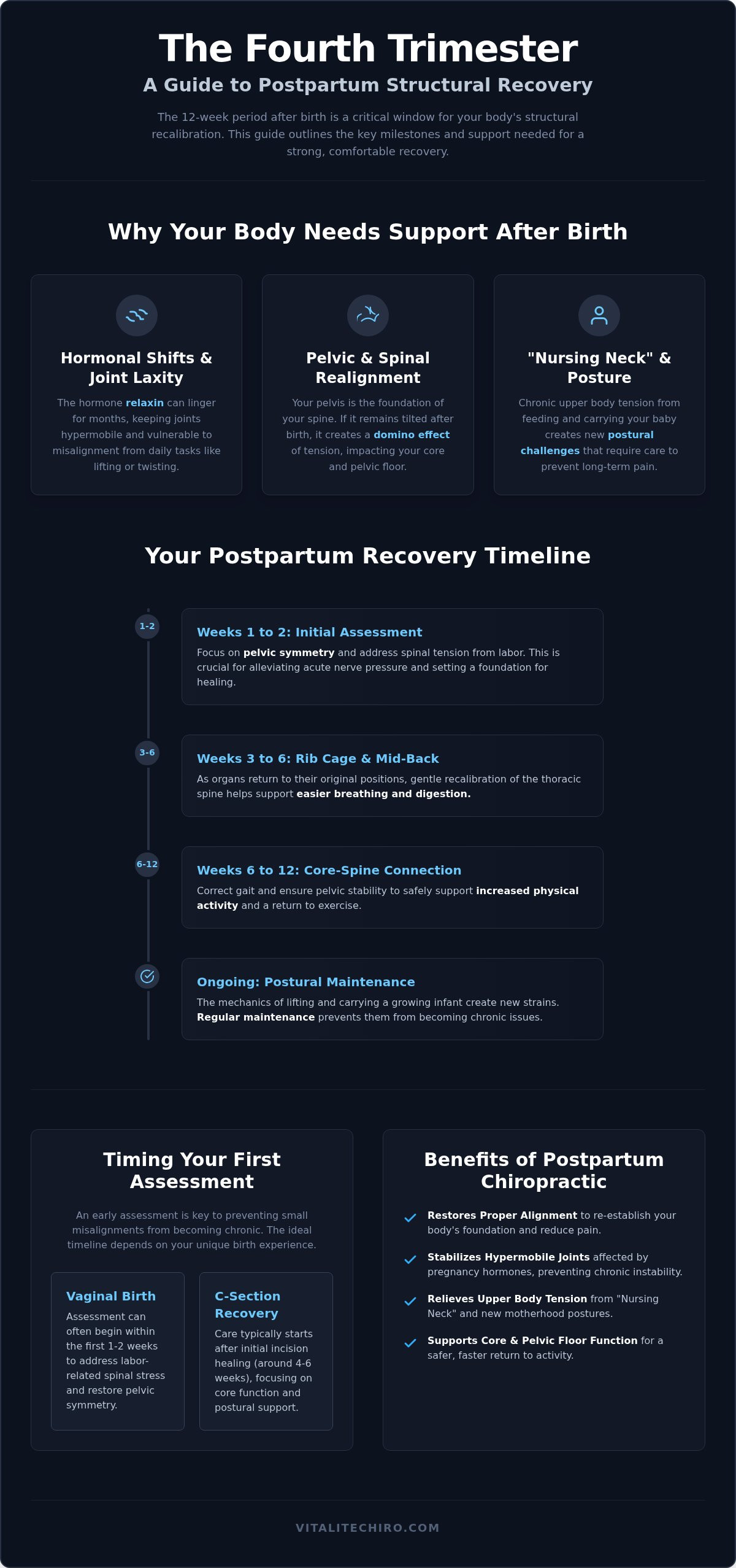
Recovery is not a single destination reached at your six-week checkup. It is a methodical journey of physical restoration. To help you navigate this transition, we've developed a structural milestone checklist that aligns with your body's natural healing rhythm. Following this timeline ensures that small misalignments don't settle into chronic patterns. Postpartum chiropractic care provides the clinical oversight needed to check these boxes safely and effectively.
- Weeks 1 to 2: Focus on an initial assessment of pelvic symmetry. We look for spinal tension resulting from labor positions and the immediate shift in your center of gravity.
- Weeks 3 to 6: Address rib cage expansion and mid-back discomfort. As your organs shift back to their original positions, the thoracic spine often requires gentle recalibration to support easier breathing and digestion.
- Weeks 6 to 12: Strengthen the core-spine connection. This phase focuses on correcting your gait and ensuring your pelvis is stable enough to support increased physical activity.
- Ongoing: Monitor for "Nursing Neck" and repetitive strain. The daily mechanics of lifting, carrying, and feeding a growing infant create new postural challenges that require regular maintenance.
Immediate Post-Birth Priorities
The intensity of labor is often compared to a marathon, yet it involves unique mechanical stresses that can lead to vertebral subluxations. Our primary goal in the first fortnight is to alleviate acute nerve pressure. If you are experiencing lingering leg pain, you may be dealing with sciatica relief during pregnancy that has persisted into the postpartum period. Addressing these issues early prevents the nervous system from remaining in a state of high alert, allowing for better rest and faster tissue healing. If you're feeling overwhelmed by acute discomfort, a gentle assessment at our Arlington office can provide much-needed clarity.
Long-Term Structural Milestones
As you move past the initial healing phase, we focus on deeper stability. Diastasis recti, the separation of the abdominal muscles, significantly impacts lower back stability. Without a functional core, your spine takes the brunt of every movement. We also evaluate the sacrum to ensure it is properly aligned for comfortable walking and sitting. Many parents find that pregnancy permanently changed their foot arch mechanics; in these cases, integrating custom orthotics can provide the necessary foundation for your entire kinetic chain. This comprehensive approach ensures you aren't just "getting by" but are truly thriving in your new role. If you're ready to start your recovery, consider scheduling a comprehensive postpartum evaluation to see where your body needs the most support.
Timing Your Care: Vaginal Birth vs. C-Section Recovery
While every birth journey is unique, the physical path to recovery differs significantly based on the method of delivery. Determining the right moment to begin postpartum chiropractic care depends on your body's healing rate and the specific stresses encountered during labor. We always advocate for open communication with your OB-GYN or midwife to ensure an integrated approach to your wellness. By aligning our care with your surgical or physiological milestones, we provide a safe bridge back to physical freedom. Our role is to act as your partner in health, ensuring that your structural recovery supports the healing work your medical team has already initiated.
Recovery After Vaginal Delivery
For most parents who have had a vaginal delivery, it's generally safe to begin gentle chiropractic work within the first two to three weeks. This early window is ideal for addressing the intense sacral and pelvic strain that occurs during the pushing stage. Labor positions, especially those involving prolonged time in stirrups or asymmetrical pushing, can leave the hips feeling "stuck" or misaligned. Our focus during these initial visits is on pelvic floor relaxation and sacral alignment. We use light-force techniques to ensure the foundation of your spine is level, which helps alleviate the deep-seated hip pain that often follows a long labor. Restoring this symmetry early on prevents the development of chronic compensatory patterns in your gait as you begin to move more frequently with your baby.
C-Section Specific Considerations
Recovery from a C-section requires a different level of clinical patience. Because this is a major abdominal surgery, we typically wait for your surgeon's clearance, often around the four to six-week mark, before performing any direct work on the midsection or lower lumbar spine. However, many C-section moms find relief in addressing upper body tension much sooner. The natural tendency to "hunch" forward to protect a surgical incision creates significant strain on the mid-back and neck. This protective posture, combined with the loss of abdominal wall support, forces the lower back to overcompensate for every movement. When you are ready, we employ specialized safety protocols. We use gentle, non-force techniques near the midsection to ensure your comfort while effectively relieving the back strain caused by your altered posture. Postpartum chiropractic care for C-section recovery is about more than just the spine; it’s about supporting the entire structural system as it heals from surgery and regains its stability.
Correcting "Nursing Neck" and Modern Motherhood Posture
The transition into parenthood introduces a unique set of mechanical stresses that can quickly lead to chronic discomfort. You likely spend hours each day looking down at your baby while feeding, rocking, or simply marveling at their features. This sustained forward flexion of the cervical spine is the primary cause of "Nursing Neck." This posture creates significant strain on the posterior neck muscles and upper back, often leading to tension headaches, stubborn knots between the shoulder blades, and even tingling or numbness in the arms. These symptoms are not just "part of being a mom"; they are often clinical indicators of nerve compression or structural misalignment.
In some cases, this persistent hunching leads to thoracic outlet syndrome, where the nerves and blood vessels between your collarbone and first rib become compressed. This can cause significant weakness or a "heavy" feeling in your hands. Through postpartum chiropractic care, we address these issues by performing targeted thoracic adjustments and cervical recalibration. By restoring the natural curve of your neck and opening the chest, we relieve the pressure on these vital pathways. This allows your nervous system to function without interference, helping you feel more present and physically capable during your daily routines.
Ergonomics for Feeding and Carrying
Small adjustments to your daily mechanics can prevent these postural issues from recurring. We recommend a three-step approach to protecting your spine during baby care:
- Step 1: Always use pillows to bring the baby up to your breast or the bottle. Never lean your body down toward the baby, as this creates immediate cervical strain.
- Step 2: Maintain a neutral spine while using baby carriers and wraps. Ensure the weight is distributed across your hips rather than pulling exclusively on your shoulders.
- Step 3: Alternate the side you use when carrying a car seat. Chronic carrying on one side leads to significant pelvic tilting and secondary spinal curvature.
Home Exercises for Postural Reset
Integrating simple movements into your day can help counteract the "closed" posture of motherhood. The "Bruegger’s Relief Position" is an excellent tool; sit at the edge of a chair, spread your knees, turn your palms outward, and gently squeeze your shoulder blades together while taking deep breaths. You can also perform chin tucks by gently pulling your head straight back, as if making a double chin, to strengthen the deep neck flexors and counteract forward head posture. To stretch the levator scapulae muscle, sit on one hand to keep your shoulder down, tilt your chin toward the opposite armpit, and use your other hand to apply very light pressure for thirty seconds. If you're struggling with persistent numbness or knots that won't release, schedule a postural assessment at Vitalité Chiropractic to restore your upper body's natural alignment.
Personalized Postpartum Wellness at Vitalité Chiropractic
Vitalité Chiropractic is more than a clinic; it's a sanctuary for families moving through the profound transitions of the fourth trimester. Dr. W. Jean-Luc Sansfaute has been practicing since 2003, bringing over two decades of clinical experience to every adjustment. This depth of expertise is particularly vital when managing the delicate structural shifts that occur after birth through specialized postpartum chiropractic care. We understand that the transition from prenatal chiropractic care to postpartum wellness is a pivotal moment for your long-term health. Our practice is built on a foundation of inclusivity, offering a welcoming environment for LGBTQ+ families and providing multilingual support to reflect the diverse community of Arlington, VA. Every individual who walks through our doors is treated with the dignity and specialized attention they deserve.
Our Arlington, VA Clinic Experience
Our facility is designed to accommodate the unpredictable nature of life with a newborn. We offer same-day appointments for busy parents dealing with acute postpartum pain, ensuring that relief is accessible when you need it most. Our whole-person approach extends beyond the adjustment table, incorporating nutritional guidance and lifestyle counseling to support your body's internal healing processes. We utilize gentle, diversified techniques tailored specifically for the unique requirements of a postpartum body. This specialized care focuses on restoring your physical freedom without adding unnecessary stress to your system. Whether you're recovering from a difficult labor or the daily physical demands of infant care, our goal is to provide a steady, methodical path toward wellness.
Your First Postpartum Visit
During your initial evaluation, we conduct a comprehensive structural and neurological assessment to identify exactly where your body is holding tension or misalignment. This isn't a one-size-fits-all process. We listen to your birth story and your specific physical goals to create a customized recovery plan that fits into your new schedule. If pelvic balance was a focus during your pregnancy, we may refer back to the principles in our Webster Technique guide to ensure your sacrum and hips are functioning optimally. This first visit establishes the logic of your care, moving from the identification of discomfort to the ultimate goal of restorative health. By choosing postpartum chiropractic care at Vitalité Chiropractic, you're partnering with seasoned experts dedicated to your physical and emotional well-being.
Reclaiming Your Physical Center
Reclaiming your physical center after birth is a journey that requires both patience and professional guidance. You have learned that the fourth trimester is a vital window for structural recalibration. Addressing joint laxity and postural strains like "Nursing Neck" early can prevent long-term chronic pain from settling into your system. Whether you are recovering from a vaginal delivery or a C-section, the ultimate goal remains the same: a steady return to stability, strength, and physical freedom.
At Vitalité Chiropractic, we are dedicated to supporting every family structure through this profound transition. With over 20 years of clinical experience, Dr. Sansfaute provides a seasoned, compassionate approach to postpartum chiropractic care that honors your body’s unique healing timeline. Our inclusive, LGBTQ+ friendly practice in Arlington, VA, offers a community-oriented space where your wellness is our primary focus. You don't have to navigate the physical demands of parenthood in discomfort. You deserve to feel strong, aligned, and fully supported.
Schedule your postpartum recovery assessment at Vitalité Chiropractic today. We look forward to being your partner in long-term health.
Frequently Asked Questions
Is postpartum chiropractic care safe right after a C-section?
It is safe to receive care after a C-section, though we modify our approach to respect your surgical healing. We typically wait for your surgeon's clearance, usually around four to six weeks, before performing direct adjustments on the lower back or pelvis. However, we can address upper body tension and neck pain much sooner. We use gentle, non-force techniques that avoid the incision site while relieving the compensatory strain caused by protective post-surgical posturing.
How soon after giving birth can I see a chiropractor?
Most parents who have had a vaginal delivery can safely schedule their first visit within two to three weeks. This window is ideal for addressing pelvic symmetry while your ligaments are still softening from pregnancy hormones. If you had a C-section, we generally wait until after your six-week checkup for localized spinal work. We always recommend consulting with your midwife or OB-GYN to ensure your specific recovery timeline is respected before beginning any new physical care.
Can chiropractic adjustments help with breastfeeding or milk supply?
Adjustments support breastfeeding by improving your physical comfort and structural alignment. While chiropractic care doesn't directly produce milk, reducing "Nursing Neck" and thoracic tension makes the feeding process significantly less painful. Proper spinal alignment also ensures your nervous system communicates effectively with the endocrine system, which regulates lactation hormones. When your body is in less pain and your stress levels decrease, your system can focus more efficiently on the physiological demands of breastfeeding your newborn.
Will my insurance cover postpartum chiropractic visits in Virginia?
Many private health insurance plans in Virginia provide coverage for chiropractic services, though individual benefits vary. Medicare Part B covers manual manipulation of the spine to correct subluxations, and the 2026 deductible is $283. After the deductible, Medicare typically pays 80% of the approved amount. We recommend contacting your provider to verify your specific postpartum chiropractic care benefits. Our Arlington office can provide a detailed superbill to assist you with the reimbursement process for out-of-network claims.
How many sessions will I need to feel better after pregnancy?
The number of sessions required depends on your structural needs and the intensity of your symptoms. Some patients experience significant relief after one or two adjustments, while others benefit from a structured recovery plan over six to twelve weeks. We create a personalized checklist based on your initial evaluation to track your progress. Our goal is to move from acute pain management to long-term stability as efficiently as possible, respecting the limited time you have as a new parent.
Can a chiropractor help with postpartum headaches and migraines?
Chiropractic adjustments are highly effective for resolving postpartum headaches, which often stem from cervical misalignments and upper back tension. These issues are frequently triggered by feeding positions, carrying heavy car seats, or sleep deprivation. By restoring proper motion to the neck vertebrae and reducing muscle spasms, we alleviate the pressure on nerves that often cause head pain. This drug-free approach is especially beneficial for parents who wish to avoid medications while nursing or caring for their infants.
Is it safe to bring my newborn to my chiropractic appointment?
We absolutely welcome newborns and children at Vitalité Chiropractic. Our Arlington clinic is designed to be a family-friendly environment where you can feel comfortable bringing your baby along. Many parents find it convenient to have their own assessment while their baby rests in a carrier nearby. We understand the logistical challenges of the fourth trimester and strive to make your visit as stress-free and inclusive as possible for every member of your family structure.
How does postpartum care differ from regular chiropractic adjustments?
Postpartum care is uniquely tailored to a body influenced by lingering pregnancy hormones and the physical demands of infant care. We use much gentler, diversified techniques to account for joint hypermobility caused by relaxin. Unlike regular adjustments, postpartum chiropractic care specifically focuses on pelvic floor synergy, rib cage recalibration, and the unique postural strain of "Nursing Neck." It's a specialized clinical approach that prioritizes structural stability and neurological balance during the critical 12-week recovery window after birth.


