
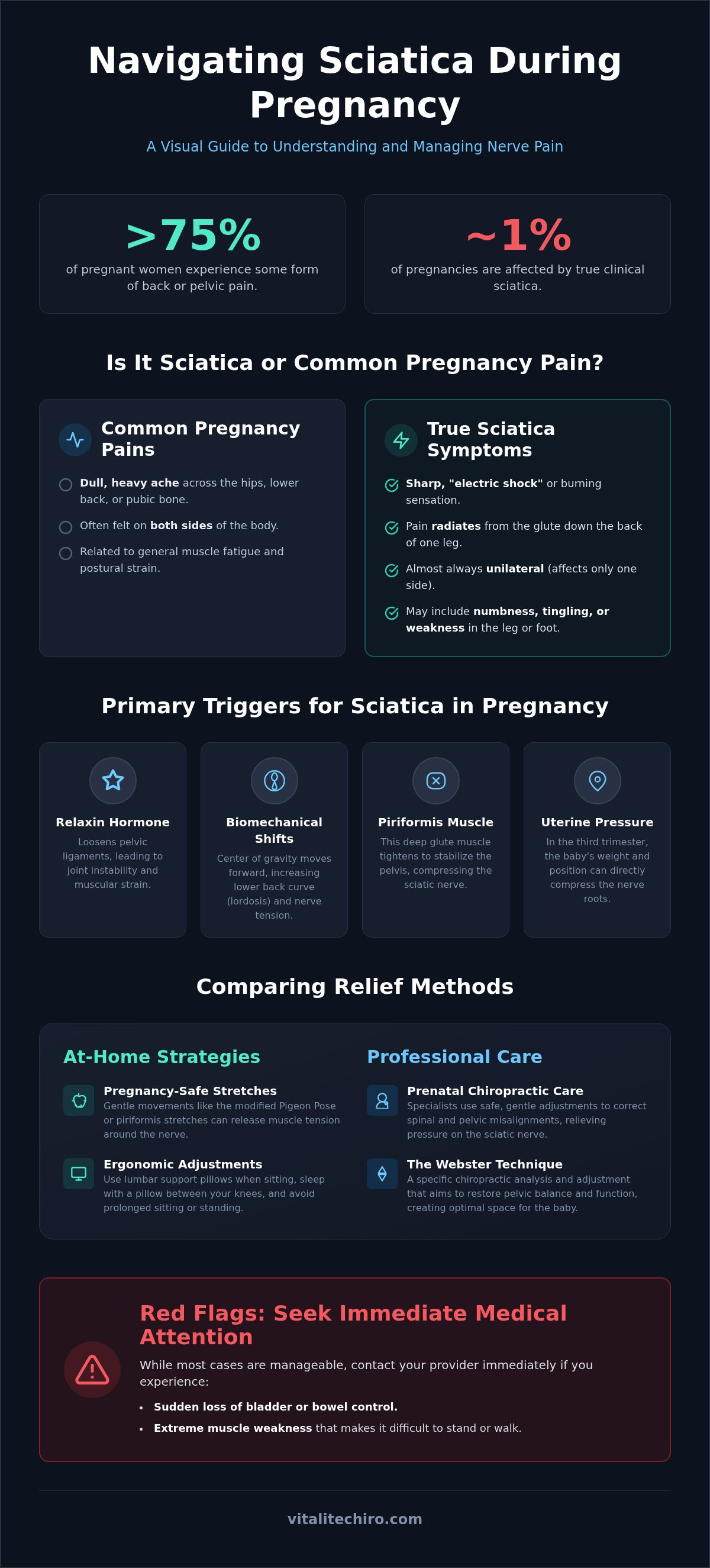
What if that sharp, electric jolt shooting down your leg wasn't just a part of your journey you had to endure? While research indicates that over 75% of women face some form of back or pelvic pain before delivery, true sciatica affects approximately 1% of the population, yet its impact on your daily life is profound. Finding effective sciatica relief during pregnancy is often the difference between a restful third trimester and one spent struggling to walk or sleep. You deserve to feel supported and safe as your body changes.
It's completely normal to feel anxious about which treatments are safe for your baby while you're desperate for a moment of physical peace. We understand that you need solutions that prioritize both your comfort and your child's well-being. This guide explores professional prenatal chiropractic care and targeted at-home strategies designed to restore your mobility. You'll learn how to identify your specific pain triggers, when to consult a specialist like Dr. W. Jean-Luc Sansfaute in Arlington, and how to reclaim your energy for the road ahead.
Key Takeaways
- Distinguish between standard pregnancy backaches and true sciatic nerve irritation by identifying specific symptoms like radiating pain and localized numbness.
- Understand the biomechanical role of the hormone Relaxin and fetal positioning in creating nerve pressure; this knowledge helps you choose the most effective interventions.
- Discover how specialized prenatal chiropractic care and the Webster Technique provide safe, effective sciatica relief during pregnancy by restoring pelvic alignment.
- Master a toolkit of pregnancy-safe stretches and ergonomic adjustments, such as the modified Pigeon Pose, to manage discomfort and improve sleep quality.
- Recognize the clinical indicators that signal when to transition from at-home remedies to professional care for lasting physical freedom.
Sciatica vs. Normal Pregnancy Aches: Identifying the Source
Understanding the difference between a standard backache and true nerve irritation is the first step toward finding effective sciatica relief during pregnancy. Sciatica occurs when the sciatic nerve, the largest and longest nerve in your body, becomes compressed or inflamed. This nerve originates in your lower back and travels through your hips and glutes, eventually extending down each leg. While clinical research suggests that up to 75% of expectant mothers face some form of back or pelvic pain, true sciatica is less common, affecting approximately 1% of pregnancies.
Most patients notice these symptoms peaking during the third trimester. As your center of gravity shifts forward and your baby descends into the birth canal, the physical pressure on the nerve roots increases significantly. This is distinct from pelvic girdle pain or standard lower back fatigue, which usually manifest as a dull, heavy ache across the hips or pubic bone. Sciatica is sharper, more localized, and travels along a specific path.
Common Symptoms of Pregnancy-Related Sciatica
True sciatica is often described as a sudden, "electric shock" sensation that radiates from the glutes down to the feet. Unlike general muscle soreness, this pain is almost always unilateral, meaning it affects only one side of the body at a time. You might find that simple actions like coughing, sneezing, or sitting in an unsupportive chair for long periods trigger a sharp flare-up. Common signs that you are dealing with nerve irritation include:
- Persistent tingling or a "pins and needles" feeling that moves down the leg.
- Numbness in the calf, foot, or toes.
- A burning sensation deep in the buttock or lower back.
- Weakness in the affected leg that makes it feel heavy or unstable.
When to Consult Your Healthcare Provider
While most nerve discomfort can be managed with conservative care, certain "red flag" symptoms require immediate medical attention. If you experience a sudden loss of bladder or bowel control, or if you notice extreme muscle weakness that makes it difficult to stand, contact your provider right away. Early intervention is vital to prevent chronic nerve irritation and ensure your comfort during the final weeks of your journey. Seeking a professional diagnosis ensures you aren't just treating the symptoms, but addressing the underlying biomechanical shift. At Vitalité Chiropractic in Arlington, we prioritize a thorough assessment to distinguish these nerve issues from standard musculoskeletal strain, ensuring your path to sciatica relief during pregnancy is both safe and individualized.
Why Pregnancy Triggers Sciatic Nerve Irritation
Pregnancy is a masterclass in physical adaptation, but sometimes your body's necessary changes create unintended pressure on your nervous system. The primary chemical driver behind this discomfort is a hormone called Relaxin. Its job is essential: it loosens the ligaments in your pelvic region to prepare your body for childbirth. However, this increased ligamentous laxity often leads to joint instability. When the sacroiliac joints shift out of their optimal alignment, the surrounding muscles must work overtime to provide support. This is a common hurdle for those seeking sciatica relief during pregnancy.
This muscular overcompensation leads to the "piriformis factor." The piriformis is a small muscle located deep within the glutes. As it tightens to stabilize your loosening pelvis, it can inadvertently compress the sciatic nerve that runs directly beneath it. Combined with lumbar lordosis—the exaggerated inward curve of your lower spine as your belly grows—the physical space for your nerves to travel becomes significantly restricted. Your body's center of gravity moves forward, resulting in the classic "pregnancy waddle" that further alters your biomechanics and increases nerve tension.
The Biomechanics of the Third Trimester
As you enter the final months of your journey, the physical weight of the uterus and the baby's specific position become the dominant factors in nerve irritation. If the baby's head rests directly on the sciatic nerve near the pelvic floor, it can cause immediate, sharp sensations. Fluid retention also plays a subtle but significant role; systemic swelling can increase internal pressure within the narrow neural pathways of the lower back. A pronounced anterior pelvic tilt effectively reduces the functional space available for the sciatic nerve to glide freely during movement.
Pre-existing Factors and Risk Levels
While any pregnancy can trigger nerve pain, certain factors increase your susceptibility. If you have a history of herniated discs, scoliosis, or chronic lower back pain, your nervous system may already be sensitized to these shifts. Rapid weight gain and poor ergonomic habits at work or home can also intensify the strain on your spine. Recognizing that prenatal chiropractic care benefits include addressing these biomechanical imbalances early can help you maintain your mobility. If you're feeling the strain of these changes, the team at Vitalité Chiropractic provides specialized support to help you navigate these transitions with confidence. We focus on gentle, effective strategies to ensure your pelvic health remains a priority throughout every trimester.
Comparing Relief Methods: Professional Care vs. At-Home Remedies
Finding a balance between professional intervention and personal management is essential for sustainable sciatica relief during pregnancy. While you might be tempted to reach for over-the-counter pain relievers, these options are often limited or restricted during pregnancy due to safety concerns for the developing baby. This makes conservative, non-invasive strategies the gold standard for care. By focusing on the structural cause of the nerve compression rather than just the sensation, you can achieve results that last far beyond a temporary fix.
Physical therapy and prenatal massage are excellent partners in this journey. While therapy builds the strength needed to support your changing weight, massage specifically targets the piriformis muscle. Releasing this deep gluteal tension is vital for freeing the trapped nerve, especially when dealing with the biomechanical shifts discussed earlier. However, for many individuals, the most direct path to comfort involves addressing the underlying bony alignment of the pelvis through specialized care.
The Role of Chiropractic Adjustments
Many expectant parents discover that chiropractic adjustments provide a level of precision that other methods often miss. By focusing on pelvic symmetry, this specialized care ensures that the sacrum and ilium are positioned to allow the sciatic nerve maximum space. It is a gentle, evidence-based process that prioritizes the health of your nervous system. This structural focus helps your body adapt to the rapid changes of the third trimester without the "electric" jolts that often hinder your daily movement and peace of mind.
Supportive At-Home Resources
Your daily routine at home can either support or undermine your professional care. Alternating between heat and ice is a simple yet effective way to manage nerve inflammation. Ice often works best for sharp, radiating sensations, while heat is ideal for soothing the surrounding muscular tightness. Finding the right path to sciatica relief during pregnancy also involves utilizing tools like a maternity belt, which can offer immediate third trimester back pain relief by redistributing your baby's weight. Don't overlook the importance of your foundation; custom orthotics or high-quality supportive footwear can stabilize your gait and prevent the pelvic tilts that trigger nerve pain. Using a foam roller gently on your glutes can also help maintain the tissue flexibility between your appointments.
Your Daily Sciatica Relief Toolkit: Stretches and Ergonomics
While professional care provides the structural foundation for recovery, your daily habits determine how quickly you find lasting sciatica relief during pregnancy. The goal of at-home management isn't just to mask the pain but to create a physical environment where your nerves can heal. By integrating specific stretches and ergonomic adjustments into your routine, you're actively reducing the mechanical stress on your lower back and pelvis. These techniques are especially vital during the third trimester, when your baby's weight exerts the most pressure on your sciatic nerve.
The modified Pigeon Pose is a cornerstone of prenatal mobility. To perform this safely, stand and place one foot on a sturdy chair or the edge of your bed, keeping your knee bent at a 90-degree angle. Keep your standing leg straight and your spine tall. Lean forward slightly from the hips, not the waist, until you feel a gentle release in your gluteal muscles. This modification protects your belly while targeting the deep hip rotators that often compress the nerve. For those spending hours at a desk, the Seated Glute Stretch offers a similar benefit. Sit on the edge of your chair, cross one ankle over the opposite knee, and hinge forward with a flat back. It's a discreet way to decompress the nerve throughout the workday.
Safe Prenatal Stretches for Nerve Pain
Adapting your yoga practice is essential as your center of gravity shifts. A wide-knee Child's Pose is excellent for elongating the lumbar spine; simply spread your knees far enough to accommodate your belly and rest your forehead on a bolster or stacked pillows. This position allows the lower back to release without abdominal strain. You can also use Bound Angle Pose, sitting with the soles of your feet together, to passively open the hips and reduce pelvic tension. If you use a foam roller, focus exclusively on the fleshy part of your glutes. Avoid rolling the lower back directly, as this can increase inflammation in the sensitive nerve roots.
Ergonomics for the Modern Expectant Parent
Small changes in how you sit, sleep, and move can significantly impact your comfort levels. When sitting, use a lumbar roll or a firm wedge to support the natural curve of your spine, which prevents the slouching that triggers flare-ups. Sleep quality often improves with the side-lying technique. Place a full-length body pillow or a firm standard pillow between your knees and ankles to keep your hips perfectly parallel. This prevents the top leg from pulling the pelvis into a twist during the night. Finally, when getting in and out of a car, sit on the seat first and then swing both legs in together. This "log roll" movement avoids the twisting forces that often lead to sharp jolts of pain. If you're ready for a personalized plan tailored to your specific biomechanics, schedule a prenatal consultation with our team today to ensure you're moving with ease.
Specialized Prenatal Chiropractic Care in Arlington, VA
When at-home stretches and ergonomic adjustments aren't enough to manage that sharp, radiating pain, professional intervention becomes a necessity. At Vitalité Chiropractic in Arlington, VA, we specialize in providing comprehensive sciatica relief during pregnancy through a lens of deep clinical expertise and compassionate care. Dr. W. Jean-Luc Sansfaute has been practicing since 2003, bringing over two decades of experience to every adjustment. We don't just treat the symptom; we look at the whole person to understand how your unique biomechanics are shifting during this transformative time. It's about balance.
The cornerstone of our prenatal approach is the Webster Technique. This specialized chiropractic method is widely recognized as the gold standard for prenatal alignment. It focuses specifically on the sacrum and pelvic ligaments to reduce torsion and improve overall pelvic balance. By restoring symmetry to the pelvis, we often see a significant reduction in the pressure placed on the sciatic nerve. This creates an optimal physical environment for both you and your baby. Our practice is also a dedicated community advocate, offering an inclusive, LGBTQ+ friendly space where every family feels a genuine sense of belonging. With multilingual support and same-day appointments for acute flare-ups, we ensure that specialized care is accessible when you need it most.
What to Expect at Your Prenatal Visit
Your first visit begins with a thorough evaluation that respects the delicate nature of your pregnancy. We use gentle, non-invasive techniques specifically adapted for your changing body. You won't find high-force manual manipulations here. Instead, our adjustments are precise and restorative. This whole-person evaluation considers your posture, lifestyle, and even your stress levels to create a path toward wellness that feels sustainable and safe. We're here to help you move with confidence.
Long-Term Wellness and Postpartum Recovery
Maintaining proper alignment throughout your third trimester does more than provide immediate sciatica relief during pregnancy; it prepares your body for a smoother labor and delivery. A balanced pelvis allows the baby to settle into the best possible position for birth. Once your baby arrives, our support continues with specialized postpartum chiropractic care to help your body navigate the recovery phase with strength. If you're ready to find lasting comfort and reclaim your mobility, visit our Arlington office to experience a personalized, expert approach to prenatal health.
Move Forward with Confidence and Comfort
Sciatic nerve pain shouldn't be a shadow over your pregnancy journey. By distinguishing between standard aches and true nerve irritation, you've already taken the first step toward recovery. Whether you're integrating ergonomic adjustments at your desk or practicing the modified Pigeon Pose, these daily habits provide a vital foundation for your comfort. However, addressing the underlying pelvic shifts through specialized techniques remains the most direct path to finding lasting sciatica relief during pregnancy.
You don't have to navigate this transition alone. At Vitalité Chiropractic, Dr. W. Jean-Luc Sansfaute has provided expert prenatal care since 2003, focusing on gentle, restorative methods like the Webster Technique. We prioritize your well-being through an inclusive, LGBTQ+ friendly environment and offer multilingual support to serve our diverse Arlington community. If you're facing an acute flare-up, take advantage of our same-day appointments to find the urgent relief you deserve. Schedule your prenatal consultation at Vitalité Chiropractic today! Your body is capable of incredible things, and we're here to ensure you experience them with physical freedom and peace of mind.
Frequently Asked Questions
Is it safe to see a chiropractor for sciatica while pregnant?
Chiropractic care is considered safe during pregnancy, with no known contraindications. Practitioners who specialize in prenatal care use adjusted tables and gentle techniques, such as the Webster Technique, to ensure the safety and comfort of both the parent and the baby. This approach focuses on restoring pelvic balance to alleviate nerve pressure. It's an effective way to find sciatica relief during pregnancy without relying on medications that may be restricted during this time.
How can I tell the difference between sciatica and normal back pain?
True sciatica is distinguished by a sharp, "electric shock" sensation that travels from the glutes down the leg. While standard pregnancy back pain is often a dull, heavy ache across the lower back, sciatica usually affects only one side. You might also experience numbness, weakness, or tingling in your foot. Identifying these specific radiating symptoms helps your provider determine the best strategy for your unique biomechanical needs and ensures you receive the correct care.
What is the best sleeping position for sciatica during pregnancy?
The most effective sleeping position is side-lying with a firm pillow placed between your knees and ankles. This alignment keeps your hips perfectly parallel and prevents the top leg from pulling your pelvis into a twist, which can compress the sciatic nerve. Using a full-length body pillow can provide additional support for your belly and spine. This small adjustment often leads to significantly improved sleep quality, especially during the challenging weeks of the third trimester.
Can sciatica during pregnancy affect the baby?
Sciatica is a maternal musculoskeletal condition and does not directly harm your baby's development. The irritation occurs in your own nerve roots due to external pressure from the growing uterus or shifting ligaments. However, the chronic pain and lack of sleep associated with it can impact your overall well-being and stress levels. Managing your symptoms ensures you have the energy and physical peace needed to support a healthy pregnancy journey and prepare for delivery.
Will my sciatica go away immediately after I give birth?
Many women experience a significant reduction in nerve pain shortly after delivery as the direct pressure on the sciatic nerve is released. However, your ligaments remain loose for several months due to lingering hormones like Relaxin. Postpartum posture, especially while nursing or carrying your newborn, can sometimes prolong the irritation. Continuing with specialized care helps your body transition back to its pre-pregnancy alignment and prevents the pain from becoming a chronic issue after your baby arrives.
How much does prenatal chiropractic care typically cost in Arlington?
Chiropractic costs in Arlington vary depending on the clinic's specialization and the specific needs of the patient. While national averages for a single visit are approximately $85, many local practices offer introductory specials for new patients. It's best to contact individual providers to inquire about their initial consultation fees and whether they accept your specific insurance plan. Investing in professional care often prevents the need for more costly or invasive interventions later in your pregnancy.
Are there any stretches I should avoid if I have sciatica?
You should avoid deep forward folds that cause you to round your lower back, as this can increase the pressure on your spinal discs. Straight-leg hamstring stretches can also inadvertently "tether" the sciatic nerve, worsening the radiating pain. Instead, focus on bent-knee movements like the modified Pigeon Pose or wide-knee Child's Pose. Always move slowly and stop immediately if a stretch triggers a sharp, electric sensation down your leg or into your foot.
How many sessions are usually needed to feel relief from pregnancy sciatica?
Every individual responds differently, but many patients report a noticeable improvement within one to three sessions. For those seeking sciatica relief during pregnancy, the initial focus is on reducing acute inflammation and restoring basic pelvic symmetry. More chronic cases or those occurring late in the third trimester might require consistent weekly visits to maintain comfort until delivery. Your provider will create a customized plan based on the severity of your symptoms and your overall health goals.


