
Back, neck, shoulder, hip, and knee discomfort are common reasons to explore Virginia Square chiropractic and wellness. Chiropractic care begins with an assessment of your symptoms and movement to determine whether an approach such as spinal adjustments may suit your needs. The next step is understanding what may be contributing to the discomfort and how it affects daily activities.
It’s reasonable to want more than a quick adjustment: you deserve to know what care involves and what to expect during a visit. This guide explains common concerns addressed through chiropractic care, how adjustments work, and when options such as decompression therapy and therapeutic modalities may be considered. You’ll also learn how a visit is structured so you can make an informed decision about support for pain and mobility.
Key Takeaways
- Notice how back and joint discomfort affects movement, and learn which symptoms may be appropriate to discuss in a chiropractic visit.
- Understand how an adjustment uses hands-on techniques to address joint movement and why the approach can vary from person to person.
- See what can shape a care plan and visit frequency, including the affected area, symptoms, and response to treatment.
- Explore how chiropractic adjustments, decompression therapy, sports injury care, and prenatal chiropractic care may support different needs.
Chiropractic and hands-on musculoskeletal care
In Arlington, chiropractic care can include a hands-on assessment and techniques such as spinal adjustments. The approach depends on your symptoms, movement, and health goals.
Potential Benefits of Chiropractic Care
People seek care for restricted movement and recurring muscle or joint discomfort. An assessment considers movement patterns and possible contributing factors, not only where pain appears. Prenatal care can adapt positioning and techniques to pregnancy, while pediatric care takes a child’s age and needs into account. Ask what a technique is intended to address and how progress will be evaluated.
Personalized Chiropractic Care Plans
A personalized plan starts with a conversation about your symptoms, daily activities, and relevant health history. The practitioner can assess your movement and discuss whether spinal adjustments or other hands-on techniques suit your concerns. For example, a desk worker with neck stiffness may need a different focus from a runner with hip discomfort. Care can also adapt as symptoms and mobility change, keeping appointments aligned with practical goals.
Choosing a Virginia Square Chiropractor
Ratings vary across review platforms, so no single chiropractor can be identified as definitively highest-rated here. Read reviews for recurring details about communication, appointment experience, and whether patients describe clear explanations. Virginia Square chiropractic and wellness clinics may differ in their hands-on techniques and the concerns they emphasize; compare those details with your needs, such as pregnancy-related care or sports demands.
Look for a chiropractor who clearly states their chiropractic education and holds an active Virginia license; relevant specialty credentials can also help you assess experience with prenatal or pediatric care. Ask how the practitioner will explain findings and discuss options. Clinic hours and contact details vary by location, so consult the clinic’s published listing when planning an appointment. In Arlington, check that the listed address matches the location you intend to visit.
Conditions treated, including back, neck, shoulder, hip, and knee pain
Chiropractic care may address discomfort that limits everyday activities, from sitting at a desk to climbing stairs. Where symptoms occur, what triggers them, and how they affect movement help shape a practical care plan.
Back Pain, Neck Pain, and Sciatica
For back or neck discomfort, note when it began, which movements change it, and how it affects daily tasks. A practitioner can assess spinal movement and discuss whether hands-on care fits your needs. Sciatica describes pain that travels along a nerve’s path, often from the lower back into the leg. Share where symptoms travel and which activities worsen them, as these details help guide the assessment.
Shoulder, Hip, and Knee Pain
Shoulder pain may make reaching overhead, dressing, or carrying a bag difficult. Hip discomfort can make walking or getting up from a chair harder, while knee pain may affect stairs or standing. These examples describe changes in function, not the cause. During an appointment, explain which movement brings on discomfort and whether it began after activity, an injury, or gradually.
Treatment for Pain and Other Conditions
A treatment plan should connect the person’s symptoms with specific goals, such as turning the neck more comfortably or walking with less limitation. Chronic pain may involve several contributing factors, so describe its pattern, duration, and impact rather than focusing only on one painful spot. Arthritis and joint pain also call for an individualized assessment; care should account for the affected joint and its mobility. Headaches are worth mentioning too, particularly if neck movement or posture seems related. Chiropractic care may support pain relief and movement, but it isn’t a substitute for evaluating the cause of symptoms. To explore a local care option, see chiropractic care in Arlington.
Chiropractic adjustments
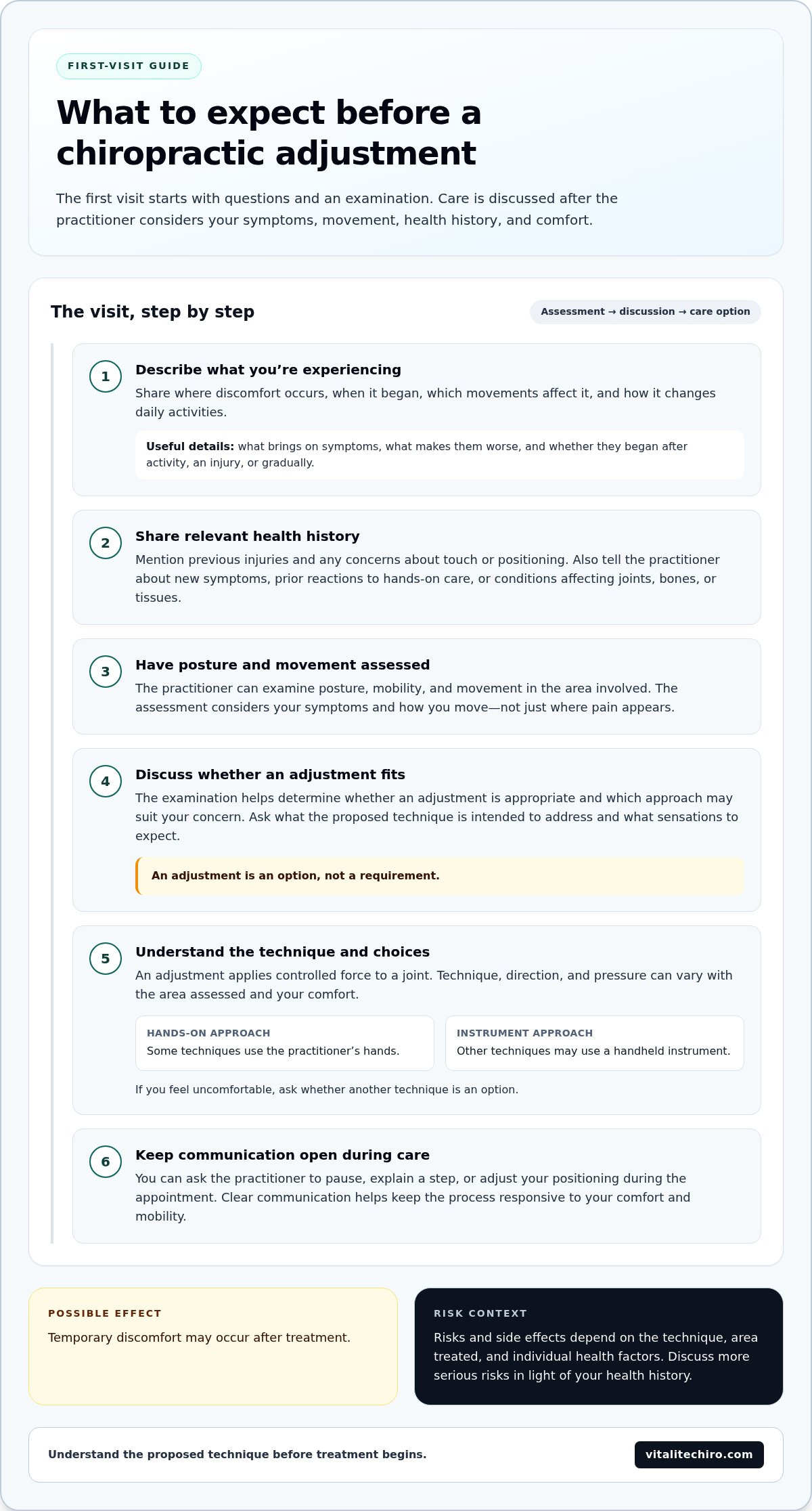
Chiropractic adjustments use hands-on techniques to address joint movement and musculoskeletal concerns. A first appointment typically begins with questions and an examination before care is discussed.
New-Patient Examination
At a first visit, describe where discomfort occurs, which movements affect it, and how it changes your daily activities. Share relevant health history, including previous injuries and any concerns about touch or positioning. The practitioner can assess posture, mobility, and movement in the area involved. This helps determine whether an adjustment is appropriate and which approach may suit your needs.
Spinal Adjustments
Spinal adjustments involve a practitioner applying controlled force to a joint. The technique, direction, and pressure can vary depending on the area assessed and your comfort. Some approaches use the hands; others may use a handheld instrument. Ask what the adjustment is intended to address, what sensations to expect, and whether another technique is an option if you feel uncomfortable.
Adjustment Risks and Side Effects
Risks and side effects depend on the technique, area treated, and individual health factors. Effects may include temporary discomfort after treatment; more serious risks should be discussed in light of your health history. Before an adjustment, mention any new symptoms, previous reactions to hands-on care, or conditions affecting your joints, bones, or tissues.
Understand the proposed technique before treatment begins. You can ask the practitioner to pause, explain a step, or adjust your positioning during the appointment. Clear communication keeps the process responsive to your comfort and mobility. An adjustment is an option, not a requirement; the examination and discussion help determine whether it suits the concern being addressed.
Treatment approach and average visits per injury
Care planning starts with the injury, its effect on movement, and your goals. There is no average visit count that applies to every injury; the area involved, symptoms, and progress all influence the plan. A consultation helps establish what to assess and which steps may support relief.
A chiropractor in Arlington may consider how an injury affects work, sport, sleep, or routine activities. A runner with ankle discomfort, for example, may need a different plan from someone with back stiffness after prolonged sitting. The practitioner can track changes in symptoms and function, then adapt care if progress or daily demands change. A customized plan should make the purpose of each stage clear.
Soft-tissue concerns can accompany joint discomfort, so describe tenderness, stiffness, and the movements that trigger symptoms. Chiropractic care may include adjustments; decompression therapy and sports injury care are distinct options for relevant concerns. These are not regenerative medicine treatments. Regenerative medicine refers to a different category of interventions, so ask what a proposed treatment involves and what goal it addresses.
Massage, acupuncture, and physical therapy are separate disciplines from chiropractic care. Their availability near Virginia Square Metro depends on individual practices; this section focuses on how chiropractic treatment planning works. For an injury-related concern, bring a clear example of a movement or task that has become difficult. That gives the consultation a practical starting point and helps connect care decisions to your everyday goals.
If you’re ready to discuss a chiropractic approach for an injury, request an appointment.
Vitalité Chiropractic: Chiropractic Adjustments
Vitalité Chiropractic offers chiropractic adjustments for people seeking hands-on care for back or joint discomfort and movement concerns. Care options also include decompression therapy, sports injury care, and prenatal chiropractic care, tailored to the reason you’re seeking support. Dr. W. Jean-Luc Sansfaute leads the practice, which uses diversified chiropractic techniques.
Consider an appointment if discomfort affects daily activities, you’re managing a sports injury, or you’re seeking chiropractic support during pregnancy. An initial discussion can connect your symptoms and goals with an appropriate care approach. Chiropractic care is not emergency care or a substitute for surgery or primary care.
For an appointment or more information, contact Vitalité Chiropractic.
Take the Next Step Toward Easier Movement
A useful next step is to identify one movement you want to do more comfortably, such as reaching overhead, turning while driving, or returning to a regular walk. This clear goal can guide a conversation about care and make progress easier to notice in daily life. Virginia Square chiropractic and wellness should connect with your priorities, not rely on a one-size-fits-all routine.
As you consider care, briefly note what triggers discomfort, what eases it, and which activities matter most to you. These details help shape a practical discussion about suitable options and how they relate to your goals. Your needs and response to care guide the next steps.
If you’re ready to discuss your goals and possible care options, contact Vitalité Chiropractic. A thoughtful conversation can help you decide how to move forward with greater clarity and confidence.
Frequently Asked Questions
What chiropractic and wellness clinics are located in Virginia Square, Arlington, VA?
Vitalité Chiropractic is an Arlington option for people seeking Virginia Square chiropractic and wellness services. Its listed address is 1530 Wilson Blvd, #1040, Arlington, VA 22209. The business serves Arlington, but this address shouldn’t be described as being inside Virginia Square. Use the street address to assess proximity from your starting point, then plan your route and appointment accordingly.
What services do Virginia Square chiropractors offer?
Services vary by practice. Vitalité Chiropractic offers Chiropractic Adjustments, Decompression Therapy, Sports Injury Care, Prenatal Chiropractic Care, orthotics, and therapeutic modalities. These options address different care needs, from hands-on chiropractic treatment to support for sports injuries and pregnancy. Consider which concern you want to address first, such as recurring discomfort during activity or support for a prenatal care plan, when comparing services.
How much does a chiropractic visit cost in Virginia Square?
The cost depends on the care involved and is provided after a quote request. Factors include the service, assessment needs, and recommended treatment plan. A visit involving a different type of care can have different cost considerations. For a useful estimate, describe the concern and the type of appointment you’re considering when requesting a quote, rather than relying on a general average.
Do Virginia Square chiropractic clinics accept insurance or offer payment plans?
Vitalité Chiropractic accepts most major insurance plans and offers flexible payment options. Coverage and out-of-pocket responsibility depend on your plan benefits and the care received. Review your policy’s chiropractic benefits before arranging care so you can discuss payment options with a clearer understanding of how your coverage applies.
What should I expect at a first chiropractic appointment in Virginia Square?
At Vitalité Chiropractic, the first-visit process begins with patient forms and a consultation about your health concerns. The examination includes chiropractic and neurological testing, with X-ray studies when necessary. You’ll then receive a report of findings explaining your condition and proposed treatment plan. Bring relevant health history and be ready to describe how symptoms affect activities such as work, exercise, or sleep.


