
If you're wondering how to know if a chiropractor is good, look for a thorough examination, clear explanations, verifiable credentials, and a treatment plan tailored to your needs. You should feel heard, not rushed or pressured, and be referred to another health professional when your condition calls for it. These signs matter more than a polished office or confident promises.
It’s reasonable to want relief while making sure the care is right for you. A chiropractor should explain what they recommend, what the care may address, and how progress will be assessed, while making room for your questions and concerns.
This guide covers examinations, credentials and reviews, referrals, supplement recommendations, and the overall clinic experience. You’ll find practical ways to assess whether a chiropractor’s approach is informed, respectful, and suited to your needs.
Key Takeaways
- Look for an initial assessment that considers your symptoms, medical history, and posture before treatment is recommended.
- Use patient reviews to understand the clinic experience, and check a chiropractor’s credentials and disciplinary history through state resources.
- Notice whether the chiropractor recognizes when another health professional should be involved in your care.
- Nutrition guidance should address your needs without pressuring you to purchase supplements from the practice.
- Pay attention to how staff treat you, whether your questions are welcomed, and whether the care plan responds to your progress.
1. Health history and physical examination before treatment
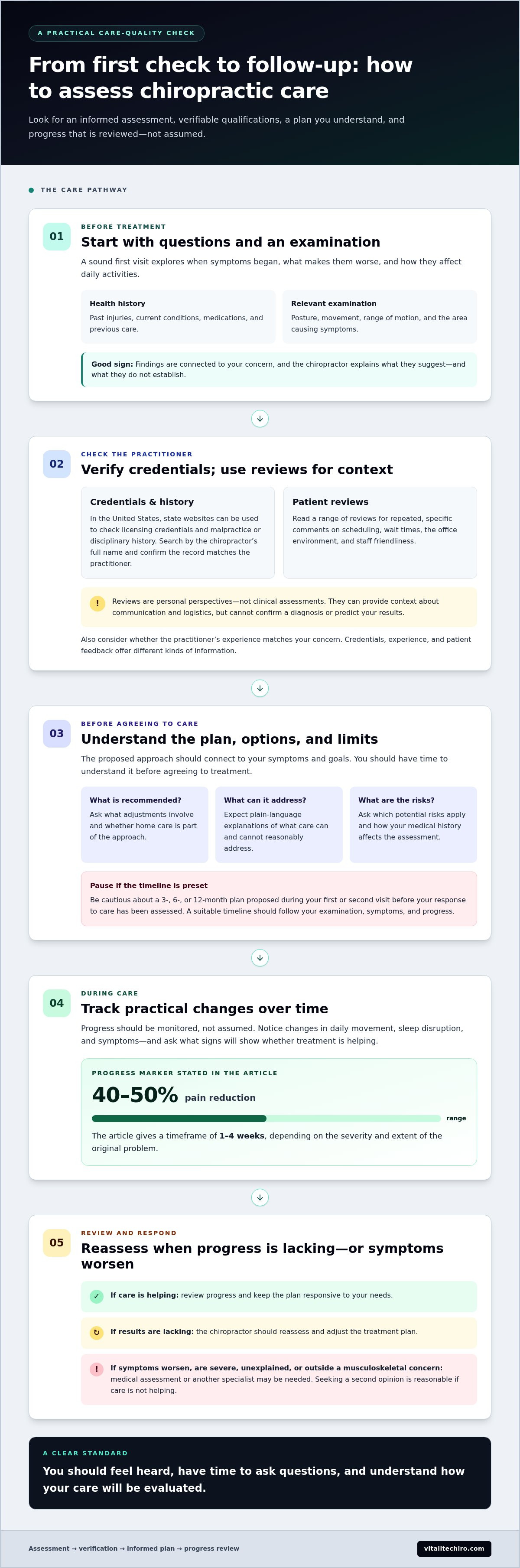
A sound first visit starts with questions, not an adjustment. The chiropractor should ask when your symptoms began, what worsens them, and how they affect daily activities. Your medical history matters too, including past injuries, current conditions, medications, and previous care. An assessment of posture and movement can help connect your symptoms with examination findings. For example, discomfort that changes when you bend may guide which movements the chiropractor evaluates.
The examination should relate to your concern. A chiropractor may assess your range of motion, posture, and the area causing symptoms, then explain how those findings inform a working diagnosis. Ask what the examination suggests and what it doesn’t establish. MDPI reports that evidence does not support chiropractic care for conditions unrelated to the spine, so recommendations should address a relevant musculoskeletal concern, not promise to treat unrelated health problems.
Before treatment, expect a clear explanation of the proposed approach and alternatives. A useful treatment plan connects each recommended step to your symptoms and goals. Ask what chiropractic adjustments involve, what you may feel during care, and whether home care is part of the approach. The chiropractor should use plain language and explain what care can and cannot reasonably address. You should have time to understand the plan before agreeing to treatment.
What are the risks and side effects of chiropractic adjustments? Adjustments are generally safe when performed properly, but the chiropractor should explain potential risks and make sure you’re comfortable before proceeding. Ask which risks apply to the proposed procedure, how your medical history affects the assessment, and what to do if your symptoms change afterward.
When should you avoid chiropractic treatment or see a medical doctor first? See a medical doctor first if symptoms are severe, unexplained, or outside a musculoskeletal concern. A chiropractor should refer you to another specialist when your condition requires care beyond chiropractic treatment.
Be cautious if a chiropractor proposes a three-, six-, or 12-month plan during your first or second visit, before assessing your response to care. A suitable timeline should follow your examination, symptoms, and progress rather than a preset package. Ask what signs will show that treatment is helping and when the plan will be reviewed.
Progress should be monitored, not assumed. Track practical changes, such as whether a daily movement becomes easier or symptoms interfere less with sleep. Pain should be reduced by 40-50% after one to four weeks of chiropractic care, depending on the severity and extent of the original problem. If results are lacking, the chiropractor should reassess and adjust the treatment plan. If care isn’t helping or symptoms worsen, seeking a second opinion is reasonable.
2. Checking patient reviews and chiropractor credentials
Start with verifiable qualifications, then use patient reviews to understand what an appointment may feel like. In the United States, state websites let patients check a chiropractor’s credentials and malpractice or disciplinary history. Search the state’s licensing records by the chiropractor’s full name. Confirm that the record belongs to the practitioner you’re considering, especially when names are similar.
A credential is a starting point, not a complete measure of care. Consider the chiropractor’s experience with your concern and whether they explain their approach clearly. Experience alone doesn’t guarantee a good fit, but relevant experience can help you judge whether the practitioner’s focus matches your needs. If you’re considering a particular procedure, ask about their experience performing it and how they explain potential complications.
Reviews on Google or Yelp can add practical context. Look for repeated, specific comments about scheduling, wait times, the office environment, and staff friendliness. A detailed review describing how a patient was treated may tell you more than general praise. Read a range of reviews, and notice whether responses to concerns are respectful and professional.
Patient reviews are personal perspectives, not clinical assessments. They can help you anticipate communication and logistics, but can’t confirm a diagnosis or predict your results. Compare review themes with what matters to you. For example, if you need appointments that fit your work schedule, comments about booking and waiting may be especially useful.
Planning to use insurance? Check whether the chiropractor participates in your plan and whether your benefits cover chiropractic care. If you’re considering telehealth, check whether your insurance covers those services too. Coverage and network participation are separate from clinical credentials, so assess both before deciding. Even when choosing an in-network chiropractor, consider credentials, experience, outcomes, and hospital quality.
What are signs of a trustworthy chiropractor versus a chiropractor to avoid? A trustworthy chiropractor has verifiable credentials, answers questions directly, and discusses care without pressure or promises. Be cautious if credentials are difficult to verify, your questions are brushed aside, or reviews repeatedly describe unresolved concerns about communication or the clinic experience.
Use the same criteria to assess any practice offering chiropractic care in Arlington. A careful review of records, patient feedback, and insurance details helps you enter a first appointment with clearer expectations and informed questions.
3. Referrals and coordination with other health professionals
A chiropractor should recognize when another professional’s assessment is needed. If your symptoms or examination findings point beyond a musculoskeletal concern, the chiropractor should recommend an appropriate referral rather than continue care that doesn’t address the problem. For example, persistent symptoms that don’t respond to the current approach may prompt a discussion about seeing a medical doctor or another specialist.
A useful referral has a clear reason. Ask what finding or concern prompted it, which type of specialist could help, and what to discuss at that appointment. The chiropractor should explain how the referral relates to your symptoms without presenting a possible cause as a confirmed diagnosis. Clear reasoning helps you understand the next step and prepare relevant questions.
Coordination matters when you already see a physician, physical therapist, or other health professional. Tell the chiropractor who else is involved in your care and what treatments you’re receiving. Ask how the proposed chiropractic approach fits alongside that care. A practitioner who considers your existing treatment can help identify overlapping recommendations or issues that need discussion between professionals.
Before an appointment with a specialist, gather useful details. Write down when your symptoms began, what changes them, and which treatments you’ve tried. Bring relevant records or imaging reports if you have them, and ask the chiropractor what information would help the specialist understand the referral. These steps make it easier to describe your situation accurately without relying on memory during the visit.
The handoff should leave you knowing what happens next. Ask whether you should pause, continue, or modify chiropractic care while awaiting the specialist’s assessment. The right choice depends on the reason for referral and the care involved, so the chiropractor should explain the rationale rather than leave you guessing. If a recommendation is unclear, ask for the concern and next step in plain language.
A referral doesn’t always mean chiropractic care must stop. It means the care plan should account for the specialist’s assessment when relevant. For example, a medical doctor may evaluate a concern that needs medical attention, while a chiropractor can clarify which symptoms prompted the referral. Each professional has a distinct role, and your care should reflect the information each contributes.
Notice how the chiropractor responds when you mention advice from another clinician. They should consider relevant information, explain any differences in recommendations, and avoid dismissing another professional without reason. You can ask, “How does this recommendation fit with the plan from my doctor?” A direct, respectful answer supports informed decisions and keeps appointments focused on your needs.
After the referral, keep track of the specialist’s guidance and share relevant updates at your next chiropractic appointment. If the assessment changes your diagnosis or care priorities, the chiropractor should revisit the plan with you. This follow-through connects the referral to your ongoing care rather than treating it as a separate step with no effect on treatment.
4. Avoiding pressure to buy supplements
Nutrition can be part of a health conversation, but it shouldn’t become a sales test. A chiropractor should discuss your nutrition needs without pressuring you to buy supplements sold by the practice. Notice the difference between a conversation about your eating habits and a recommendation tied to an immediate purchase. You should be able to consider the advice without feeling that buying a product is required for care.
If a supplement comes up, ask what specific need the chiropractor believes it addresses. For example, ask how the recommendation relates to your goals, symptoms, or eating patterns. A clear answer should explain the reasoning in language you understand. If it relies on broad promises rather than your circumstances, ask for more detail before deciding.
Ask for the product’s full name, ingredient list, and directions, then take time to review them. If you use medication or already take other supplements, tell the chiropractor and ask whether those details should be discussed with your pharmacist or medical doctor. This gives you a practical next step without assuming a product is suitable simply because it was suggested during an appointment.
Pay attention to how the recommendation is presented. A respectful discussion leaves room for questions such as, “Is there another way to address this nutrition concern?” or, “Can I think about it before deciding?” Pressure looks different, for example, being told you must buy a particular product before receiving care. The key distinction is whether the recommendation remains your choice.
You can also ask how the chiropractor will assess whether the nutrition advice is useful. Request a specific, understandable goal, such as keeping a simple record of meals or discussing a concern with another qualified professional. A recommendation should fit into a broader conversation about your needs, not replace an examination or become the only explanation for a muscle or joint symptom.
Before leaving the appointment, summarize the advice in your own words. Confirm the product or nutrition topic discussed, the reason for the recommendation, and any follow-up step. If you’re uncomfortable, say so and decline to purchase. A practitioner who respects that choice and continues discussing your care without pressure shows that the focus is your needs, not a sale.
Overall clinic experience
The clinic experience includes every step, from booking to follow-up. Notice whether staff explain how to prepare, answer practical questions, and treat you respectfully. During the appointment, the chiropractor should listen without rushing or disregarding your needs and feelings. A calm, attentive interaction helps you share important details, such as which movements worsen your symptoms or what makes you uncomfortable.
Pay attention to timing, too. Waiting 45 minutes past an appointment time is one example of a delay that can leave patients feeling rushed. A delay alone doesn’t define clinical quality, but repeated long waits and hurried visits can affect whether you have space to discuss concerns. Notice whether staff communicate about delays and whether the practitioner gives your appointment their attention.
Before scheduling, ask whether the practice is accepting new patients. You can also arrange a conversation to meet and interview the chiropractor. Notice whether the answers are direct and understandable. For example, ask how the practice handles questions during visits or how you can raise concerns about comfort. The interaction gives you a practical sense of communication before care begins.
The atmosphere should support dignity and privacy. Notice how staff address you, whether conversations about your health are held discreetly, and whether instructions are clear. If you use mobility aids or need an adjustment to feel comfortable, observe how the team responds. Respectful communication matters at reception and in the treatment room, not only during a conversation with the chiropractor.
Consider whether the clinic experience supports continuity. You should know how to share changes between appointments and who to speak with about a concern. If several professionals are involved, such as a chiropractor and a therapist, the practice should communicate respectfully about their distinct roles. A national survey reported that 83% of respondents were satisfied with their chiropractic care, but your own experience depends on whether the clinic listens and responds to your needs.
Telehealth can be useful for some conversations, but it doesn’t replace hands-on, in-person visits. Ask whether telehealth is offered and whether your insurance covers it if that option matters to you. Then consider what the appointment requires: a discussion might work remotely, while an examination or hands-on care calls for an in-person visit. The format should fit the purpose.
Use your first interaction as a practical test: did you feel heard, understand the next step, and have time to speak? If you’re ready to discuss care in a setting that prioritizes attentive appointments, plan your next chiropractic appointment.
Vitalité Chiropractic: Chiropractic Adjustments
Vitalité Chiropractic provides chiropractic adjustments for people seeking care for musculoskeletal concerns in Arlington, Virginia. If your symptoms affect movement or daily activities, start a conversation about your needs and the care that may fit. The practice also provides decompression therapy, sports injury care, and prenatal chiropractic care.
Use the signs in this guide to frame that conversation: explain what you’re experiencing, share relevant health history, and ask how care will be tailored to your concern. Clear answers can help you understand the proposed approach and decide whether it feels appropriate. If your condition calls for another type of professional, referral is an important part of responsible care.
For information about chiropractic care at Vitalité Chiropractic, visit vitalitechiro.com.
Choose care that keeps you involved
Choosing a chiropractor also means choosing how you want to take part in your care. Let your next conversation clarify what matters most to you, whether that’s understanding each recommendation, feeling comfortable speaking up, or knowing how progress will guide future decisions. Your questions are part of the process, not an interruption.
If you’re still asking how to know if a chiropractor is good, consider whether you can make informed choices without feeling rushed or pressured. A strong working relationship allows honest discussion and adjustments to the approach as your needs change. You deserve to feel respected throughout the process.
When you’re ready to discuss your care, contact Vitalité Chiropractic today. Take the next step at a pace that feels right, with your needs at the center of the conversation.
Frequently Asked Questions
Where to Find a Good Chiropractor?
Start with a state licensing directory, recommendations from a health professional, and patient reviews. If you’re searching in Arlington, Virginia, compare local practices by verified credentials, experience relevant to your concern, and how clearly they explain their approach. One practical way to know if a chiropractor is good is to see whether what you learn matches what happens in your first conversation.
How to verify a chiropractor's license and disciplinary history in the U.S.?
Use the licensing or chiropractic board website for the state where the chiropractor practices. Search the practitioner’s full name and confirm the record matches the right person and location. Review the license status and any posted disciplinary history, then check another state’s records if the practitioner previously practiced elsewhere. Save the board’s contact details in case you need clarification about a record.
What qualifications and training should a good chiropractor have?
Look for an active state license and credentials that match the chiropractor’s name in official records. Then review their education and any additional training they describe, especially if your concern calls for a specific technique or area of care. Ask what experience informs their approach to your symptoms. A clear explanation is more useful than a long list of titles you can’t interpret.
What questions should you ask a chiropractor before starting treatment?
Ask what the proposed care is intended to address, what alternatives are available, and how you’ll assess whether it’s helping. You can also ask about possible risks, what to expect during treatment, and whether to coordinate with another health professional. If you plan to use insurance, ask your insurer whether the practitioner and proposed care are covered under your plan.
What evidence-based treatments should a reputable chiropractor offer?
For musculoskeletal pain, studies indicate that multiple treatment modalities can work best. A reputable chiropractor should explain why a method fits your specific concern and how its effects will be assessed, rather than presenting one technique as suitable for everyone. Chiropractic adjustments, decompression therapy, and therapeutic modalities are examples of care options. The appropriate approach depends on the condition being addressed.
How to compare chiropractors near me using reviews, referrals, and credentials?
Compare each practitioner using the same criteria: verified state records, experience relevant to your concern, and recurring themes in patient feedback. Ask a trusted health professional for a referral, then assess whether the recommended practitioner’s focus matches your needs. If insurance network status matters, verify it with your insurer. For in-network options, also consider credentials, experience, outcomes, and hospital quality.
What should a first chiropractic appointment include, including examination and informed consent?
A first appointment should include a discussion of your health history and symptoms, a relevant physical examination, and an explanation of the proposed care. Before hands-on treatment, the chiropractor should explain potential risks and make sure you’re comfortable proceeding. Ask what each step involves and raise concerns before treatment begins. You should understand the plan well enough to make an informed choice.


