
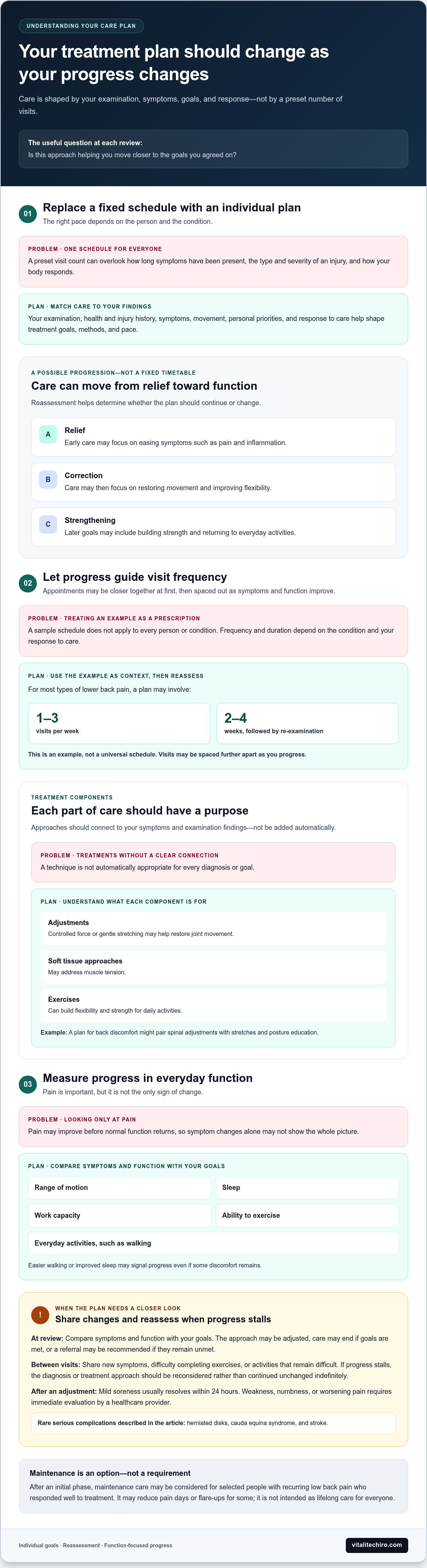
Understanding your chiropractic treatment plan starts with knowing that it should reflect your examination, symptoms, goals, and response to care, not a preset number of visits. Appointments may be closer together at first, then spaced out as symptoms and function improve. Regular reassessment helps show whether the approach is working and what, if anything, should change.
It’s natural to want a clear sense of how long care may take and what progress might look like. A thoughtful plan connects each visit to practical goals, such as easing discomfort, moving more freely, and returning to everyday activities. This article explains what shapes a plan, why visit frequency can change, and how to recognize whether care is meeting your needs.
You’ll also see how your health and injury history, examination findings, and personal priorities contribute to treatment decisions. The aim is to make the process easier to understand, so you can take part in conversations about your progress with greater confidence.
Key Takeaways
- A care plan should reflect your diagnosis, symptoms, goals, and response to treatment rather than a preset visit count.
- Understand how adjustments, supportive therapies, and home exercises each connect to your recovery goals.
- Visit frequency can change as symptoms and function improve; reassessment helps guide those changes.
- Your health and injury history, examination findings, and movement all help shape appropriate care.
- Look for measurable progress in daily activities, not only changes in pain, and expect the plan to be reconsidered if progress stalls.
Why individualized chiropractic care differs from a one-size-fits-all approach
Chiropractic care should reflect your condition, how long you’ve had symptoms, and how your body responds. These factors shape the goals, treatment methods, and pace of progress, rather than a standard schedule for every patient.
Relief, Correction, and Strengthening Phases
Relief, correction, and strengthening describe a possible progression from easing symptoms to restoring movement and building function. These phases connect each part of care to a practical goal. Early care may focus on pain and inflammation, while later treatment may target flexibility, strength, and everyday activities. Reassessment helps determine whether the plan should continue or change.
This sequence is a guide, not a fixed timetable. Some people may notice relief within a few visits, while longer-standing issues may take several weeks of consistent care. The type of tissue involved and the severity of an injury also matter: a muscle problem and a more significant ligament injury place different demands on recovery. A plan shaped around these differences is more relevant than the same schedule for everyone.
Goals should extend beyond pain relief. Pain may improve before normal function returns, so progress can also involve movement, muscle balance, and tolerance for daily tasks. If discomfort limits walking or work, consider whether those activities are becoming easier. This broader view keeps care focused on function as well as short-term symptom changes.
Multiple Visits and Ongoing Maintenance
Multiple visits allow care to respond to changing symptoms and recovery needs; occasional maintenance afterward may be an option, not a requirement. Some conditions may initially call for appointments several times a week. For most types of lower back pain, a plan may involve 1 to 3 visits per week for 2 to 4 weeks, followed by a re-examination.
That example is not a universal prescription. Visit frequency and duration depend on the condition and your response to care. A chiropractor may space visits further apart as you progress. Re-examination provides an opportunity to review goals and adjust the schedule. If you’re considering changing or stopping care, discuss your progress and concerns with your chiropractor rather than relying on a preset visit count.
After the initial phase, maintenance care may be considered for selected people with recurring low back pain who responded well to treatment. It may reduce pain days or flare-ups for some, but it isn’t intended as lifelong care for everyone. Understanding your chiropractic treatment plan means knowing the goal of each visit and that ongoing care is optional.
What is a Chiropractic Treatment Plan?
A chiropractic treatment plan connects examination findings to therapies, visit frequency, and goals for addressing a health concern. It may include spinal adjustments, exercises, education, and progress reviews, with changes guided by your response.
Adjustments, Soft Tissue Therapy, and Exercises
Adjustments, soft tissue therapy, and exercises are treatment components that may address specific symptoms and movement goals. An adjustment applies controlled force to a joint or gently stretches it to help restore movement. Soft tissue approaches can address muscle tension, while exercises can build flexibility and strength for daily activities.
These approaches can work toward complementary goals. For example, a plan for back discomfort might pair spinal adjustments with stretches and posture education. The combination should make sense for your symptoms and examination findings, rather than being added automatically. Evidence for common treatments should be considered by condition and treatment type; no single approach applies to every diagnosis.
Progress Reviews and Plan Changes
Progress reviews compare your symptoms and function with the goals set for care, helping determine whether treatment should continue or change. At re-evaluation, the chiropractor may adjust the approach, release you from care if your goals are met, or recommend a referral if they remain unmet.
Share changes between visits, including new symptoms or difficulty completing exercises. If a stretch increases discomfort or work remains difficult, for instance, that information can help guide a revised plan. If progress stalls, the diagnosis or treatment approach should be reconsidered rather than continued unchanged indefinitely.
Assessing Whether a Plan Is Working
A plan is showing progress when measurable changes bring you closer to your agreed goals. Pain matters, but it is not the only measure: range of motion, sleep, work capacity, and ability to exercise can also show functional change.
Easier walking or improved sleep may signal progress even if some discomfort remains. Ask how each treatment connects to a goal, and discuss your results during re-evaluation. If pain worsens or symptoms persist without improvement, you can discuss your options, including seeking another opinion or stopping care.
What are the risks and side effects of chiropractic adjustments? Mild soreness usually resolves within 24 hours. Weakness, numbness, or worsening pain after an adjustment requires immediate evaluation by a healthcare provider; rare serious complications include herniated disks, cauda equina syndrome, and stroke.
How much does chiropractic treatment cost in the United States? Cost depends on the case, including the type and number of visits and treatments needed; fees are given after a quote request. Does health insurance cover chiropractic treatment? Coverage varies by insurance plan and benefits, so review the terms that apply to your policy.
Can you stop chiropractic treatment or get a second opinion? Yes. You can stop care or seek another opinion, particularly if pain worsens or symptoms do not improve.
How visit frequency may change as symptoms improve
A chiropractor considers your diagnosis, symptom severity and duration, and response to care when deciding visit frequency. An evaluation of pain, movement, and daily function helps determine whether appointments should remain close together or become less frequent.
Customized Visit Frequency
Customized visit frequency means scheduling appointments around your condition and changing symptoms, rather than following one schedule for everyone. Depending on the condition, visits may initially be several times a week to stabilize an area and reduce symptoms. As relief and movement improve, appointments may be spaced further apart.
Progress means more than a temporary drop in pain. Improved range of motion or returning to an activity can help show whether care is meeting its goals. If symptoms flare or function remains limited, that information can prompt another evaluation. The schedule should reflect those changes, not simply continue unchanged.
Treatment Duration and Visit Needs
Treatment duration is the period of care needed to address the condition’s goals, with visit needs shaped by severity and response. For most types of lower back pain, a recommendation may be 1 to 3 visits per week for 2 to 4 weeks, followed by a re-examination. That example gives context, not a universal schedule for every diagnosis.
Research examples also show why frequency is considered in context. One study found 3 to 4 treatments per week for 4 weeks provided substantial back-pain relief. Another compared 0, 6, 12, or 18 sessions over 6 weeks; the group receiving 12 treatments, or 2 per week, had slightly better results. These findings do not establish a schedule for every person.
At re-examination, the chiropractor can compare your symptoms and movement with earlier findings. If progress is clear, visits may be reduced; if improvement stalls, the diagnosis or approach may need reconsideration. A longer-standing issue may need several weeks of consistent treatment, while some patients notice relief within a few visits.
Ask how the planned frequency connects to your symptoms and goals. For example, clarify what changes in pain, movement, or daily activity would prompt a schedule adjustment. This keeps each appointment tied to an observable purpose and helps you understand why treatment duration may change as your response becomes clearer.
Health and injury history, physical examination, and movement assessment
A chiropractic assessment begins with questions about your health, lifestyle, symptoms, and previous injuries. The timing and nature of an injury can help distinguish a recent problem from one that has persisted. For example, if you have recurring back discomfort, describe when symptoms began, which activities affect them, and how they change throughout the day. This history gives context for the physical examination and connects treatment goals to daily function.
The physical examination may assess posture, range of motion, and physical symptoms. A chiropractor may observe how comfortably you bend or turn, then compare those movements with activities that feel difficult at home or work. Posture and alignment are considered alongside symptoms, not in isolation. If reaching overhead causes discomfort, for instance, that movement may clarify how the problem affects function and what the care plan should address.
Movement assessment adds practical detail to the examination. It can show where motion feels restricted, which movements bring on symptoms, and whether a task is easier on one side. A previous sports injury, for example, may affect how you move during exercise even after the initial pain changes. Examining these patterns helps relate your injury history to current function, rather than relying on a symptom description alone.
Imaging may be considered when needed to evaluate a condition. X-rays or MRI may help assess structural issues, but imaging is not automatically part of every chiropractic assessment. Your health history and examination provide important context for deciding whether imaging may be useful. For example, movement assessment findings can be considered alongside imaging when evaluating symptoms and planning care.
Your history, examination, and movement findings together help shape an individualized treatment plan. Previous injuries, current symptoms, posture, range of motion, and general health each contribute relevant information. If the examination shows that a particular movement limits daily activity, that limitation can become a functional goal. As symptoms or movement change, these findings also help determine whether the plan remains appropriate.
A treatment plan may include a review of your medical history, lifestyle, and previous injuries. The chiropractor develops the plan after examining you, asking about your health, and potentially conducting tests.
When needed, imaging studies such as X-rays or MRIs may help evaluate a condition, and a chiropractor may use an X-ray or MRI to identify structural issues when creating the plan. Overall health can also affect how long a tendon takes to heal, providing another consideration when discussing recovery.
Signs of an appropriate treatment plan
An appropriate treatment plan follows an examination, sets measurable goals, and explains how progress will be reviewed. Its recommendations should connect to your diagnosis and symptoms, not a preset schedule or business target.
Questions Before Agreeing to a Plan
Questions before agreeing to a plan can clarify its purpose, expected progress, and how decisions may change. They help you understand what each treatment is intended to address and how your feedback matters.
Ask: “What finding from my examination supports this approach?” “What functional change will we track?” “When will we review progress?” Also ask how the plan may change if a muscle remains painful or daily activities stay difficult. Clear answers should connect the proposed care to your specific symptoms and recovery goals.
Assessing Plan Appropriateness
An appropriate plan explains its clinical reasoning, measures progress, and responds to your results. That structure makes it easier to judge whether treatment is helping healing and function, rather than relying only on how you’re feeling after one appointment.
Look for a specific goal, such as moving more easily during work or tolerating exercise better. Progress with back and neck pain can also be assessed through range of motion, sleep, work capacity, and ability to exercise. Pain may improve before function fully returns, so ask how these measures fit your recovery.
Some warning signs deserve a direct conversation. A plan set before an examination, a fixed visit count regardless of diagnosis, or discouragement from seeking another opinion warrants further questions. So does continuing the same treatment without measurable progress. If a muscle problem or other symptoms aren’t changing as expected, the diagnosis or approach should be reconsidered rather than continued indefinitely.
Use each review to compare your current abilities with the goals discussed at the start. Note whether walking, sleeping, or completing a work task has become easier. If you’re not seeing meaningful changes, share a specific example and ask what it means for the next phase of care. Clear communication helps your concerns inform clinical decisions.
Maintenance care should be presented as an option, not an obligation. For recurring low back pain, it may help selected people who responded well to treatment, but it isn’t a universal requirement for lifelong care. Ask what benefit a proposed follow-up is intended to support, and how you and the chiropractor will decide whether it remains useful.
For care centered on your symptoms, goals, and progress, explore chiropractic care options.
Vitalité Chiropractic: Chiropractic Adjustments
Vitalité Chiropractic offers chiropractic adjustments for people seeking care for joint discomfort, back or neck pain, or movement concerns. A treatment approach can be shaped around your symptoms, examination findings, and goals, with progress reviewed as care continues.
Depending on your needs, care may also include Decompression Therapy, Sports Injury Care, or Prenatal Chiropractic Care. These offerings address different concerns, so the appropriate option depends on the reason you’re seeking care. If you’re weighing whether chiropractic care fits your situation, a conversation about your symptoms and goals can help clarify the next step.
Contact Vitalité Chiropractic or visit vitalitechiro.com to learn more.
Make Your Next Care Decision With Clarity
A fuller understanding of your chiropractic treatment plan can help you take an active role in the next conversation about your care. Consider what you most want to do more comfortably, whether that means returning to a familiar activity, moving through work with less difficulty, or feeling more confident during exercise. A specific personal goal gives your care discussion a useful focus.
Before your next appointment, think about what has changed in your daily routine and what still feels challenging. Share those observations and discuss how they relate to your priorities. Vitalité Chiropractic in Arlington offers Chiropractic Adjustments, Decompression Therapy, and Sports Injury Care for different concerns. Start with what matters to you and discuss the care approach that fits your needs.
Contact Vitalité Chiropractic to discuss your care. Each thoughtful step can help you move forward with greater confidence.
Frequently Asked Questions
What Happens If You Aren’t Improving?
If you aren’t improving, discuss the change with your chiropractor so the diagnosis or treatment approach can be reconsidered. Describe what remains difficult, such as sitting through work or turning your head while driving, and note any new symptoms. These details can help guide the next evaluation. If care still isn’t addressing your concerns, you can seek another opinion or ask whether another healthcare specialist should assess you.
What Happens When I Finish the Plan?
When you finish a plan, your chiropractor reviews whether your goals have been met and discusses what comes next. You may be released from care, given exercises or education to continue independently, or offered occasional maintenance visits as an option. If you can return to a valued activity, for example, discuss how to maintain that function and what changes should prompt another assessment.
What is a chiropractic adjustment?
A chiropractic adjustment uses a quick, controlled force on a joint or gently stretches joints beyond their usual range of motion. The aim is to restore movement in the spine or another joint. Your chiropractor can explain the specific technique and purpose before treatment. Share relevant health concerns and say if a movement or position feels uncomfortable, so the approach can account for your needs.
What should I expect at my first visit?
At Vitalité Chiropractic in Arlington, Virginia, your first visit includes a consultation about your concerns, followed by a chiropractic and neurological examination. X-ray studies may be used when necessary. You’ll receive an explanation of the findings and a treatment plan before care begins. Intake forms help record your history, so be ready to describe your symptoms, previous injuries, and the activities you hope to resume.
What should a chiropractic treatment plan include?
A useful plan connects your health concern to clear goals, recommended therapies, visit frequency, and expected outcomes. It should also explain how progress will be reviewed and what may happen if results differ from expectations. For example, ask how the plan will track a specific task, such as lifting at work, and whether home exercises or education support that goal.
How often should you see a chiropractor during treatment?
Visit frequency depends on the condition’s severity and how your symptoms and function respond. Rather than treating the calendar as fixed, use each appointment to report meaningful changes, such as whether sleep, work tasks, or movement have become easier. Your chiropractor can use those observations during reassessment to decide whether the schedule still serves your care goals or should be adjusted.


