
Pain relief doesn’t have to mean choosing between medication and doing nothing. Alternatives to pain medication in Arlington, VA, may include physical therapy, acupuncture, massage, chiropractic care, or a plan that combines approaches to support daily function. These options can complement medical care, but don’t stop or change prescribed medication without guidance from the prescribing clinician.
Ongoing pain can make ordinary routines harder, so it’s understandable to look for options that address movement and comfort as well as symptoms. The right approach depends on what may be contributing to the pain, how it affects your activities, and which methods fit your needs.
This article explains how movement-based and multimodal care may fit into pain management, what to consider when personalizing a plan, and how acupuncture, massage, and chiropractic care differ. You’ll also find practical ways to think about your next step in Arlington, with a focus on individualized care rather than a one-size-fits-all answer.
Key Takeaways
- Explore how physical therapy and other non-drug approaches can support movement and fit into a broader pain-management plan.
- Learn which personal factors can shape a plan, including how pain affects your daily activities and emotional well-being.
- Compare acupuncture, massage, and chiropractic care as possible complementary approaches to chronic pain.
- Understand why persistent pain can have different causes and why identifying its impact matters when considering care options.
- See how behavioral therapy, mindfulness, or a structured pain-management program may complement physical approaches, and when chiropractic adjustments may be relevant.
Physical therapy and multimodal pain management
Physical therapy uses movement practice and physical modalities to support goals such as walking, lifting, or sitting more comfortably. A plan may pair specific exercises with heat, cold, electrical stimulation, or manual therapy. For example, someone whose back pain interrupts desk work might practice controlled movements and track how long they can sit comfortably. This connects treatment to a daily activity, not just the location of pain.
Start by identifying a movement affected by pain, such as climbing stairs or reaching overhead. A physical therapy plan can then use targeted exercises and selected modalities to work on that task. Track observable function, such as completing a household activity or moving with greater control. For a herniated disc, rest, physical therapy, and oral medication may help; treatment choices depend on the person’s needs and symptoms.
Physical modalities include heat, cold, manual therapy, and electrical stimulation. TENS delivers low-voltage electric current to the pain site through electrodes placed on the skin. This is one example of a physical approach, distinct from exercise or hands-on techniques. A doctor may also order electrical stimulation therapy as part of pain care. Modalities can be combined with exercises rather than used as the only approach.
Multimodal pain management combines two or more analgesic agents with nonpharmacologic techniques. The American Pain Society proposed multimodal strategies for chronic pain while addressing the dangers of opioid addiction. Rather than treating medication and physical care as competing choices, this approach combines methods. A plan might pair medication with exercises or a physical modality. Multimodal management has been reported to help many patients, particularly during or after orthopedic surgery, with minimal side effects.
Physical medicine and rehabilitation connects care with movement and function. A pain medicine doctor may order physical therapy, electrical stimulation, cognitive-behavioral therapy, or counseling as part of pain care. These examples show how rehabilitation can fit into a broader plan. For spinal pain, a clinician may consider exercises alongside other approaches, depending on treatment goals and affected activities.
What are the risks and limitations of non-medication pain treatments? Exercises require active participation, and physical modalities don’t provide medication’s analgesic action. A practical pitfall is starting techniques without a clear functional target. Tracking a task, such as walking or lifting, makes the purpose of each approach easier to assess.
In multimodal care, medications may be combined to retain their analgesic effect while minimizing side effects such as reduced energy, impaired mobility, and memory loss. The aim is to consider pain relief alongside treatment’s possible effects on energy, movement, and memory. When medication is considered with movement-based care, discuss both pain control and the ability to take part in daily activities. Balancing analgesic effects and side effects is one consideration in a broader plan, alongside physical approaches that address movement and function.
Personalized pain management plans
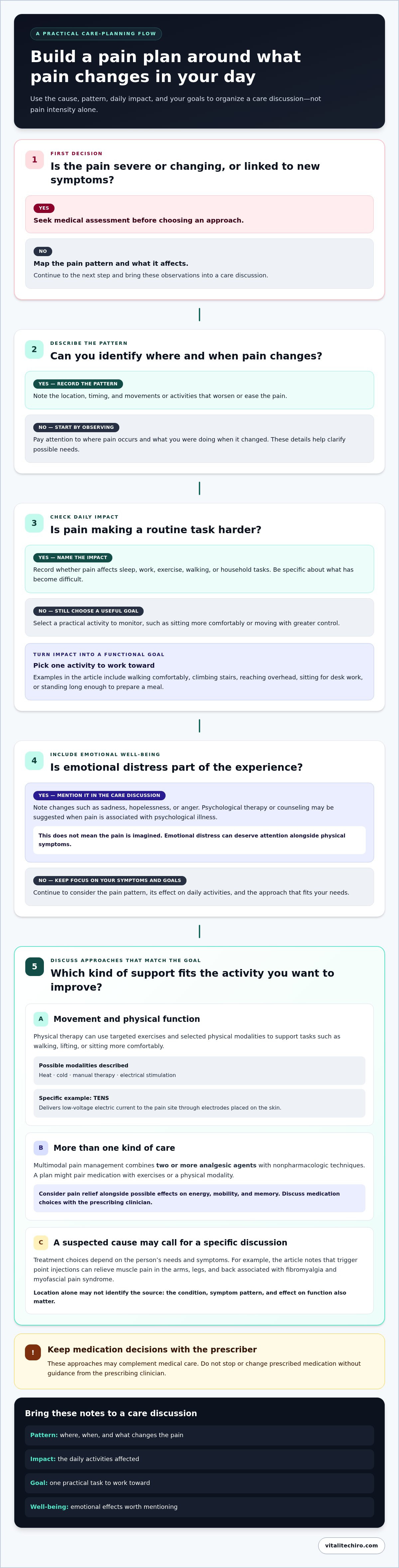
A useful pain-management plan starts with the cause, pattern, and impact of pain. Note where it occurs, what movements change it, and which daily tasks become difficult. For example, record whether back pain interrupts sleep, limits walking, or worsens after lifting. These details connect treatment choices to specific needs rather than pain intensity alone. If you’re exploring alternatives to pain medication in Arlington, VA, use these observations to clarify your priorities.
How do I choose an alternative pain treatment based on the cause and severity of pain? Match the approach to the likely source, affected activities, and symptoms, then set a practical goal, such as walking comfortably or returning to a routine task. Severe or changing pain, or pain linked to new symptoms, calls for medical assessment before choosing an approach.
Use these steps to organize information for a care discussion:
- Describe the pattern: Identify the location, timing, and activities that worsen or ease the pain.
- Name the impact: Record whether pain affects sleep, work, exercise, or household tasks.
- Set a functional goal: Choose an activity, such as standing long enough to prepare a meal.
- Review emotional effects: Note changes in mood, including sadness, hopelessness, or anger.
Emotional health can be relevant to pain care. Psychological therapy may be suggested when pain is associated with psychological illness, including increased sadness, hopelessness, or anger. This doesn’t mean the pain is imagined. It recognizes that emotional distress can be part of a person’s experience and may deserve attention alongside physical symptoms. For example, counseling might be included when persistent pain and hopelessness occur together.
The suspected cause also guides which interventions may make sense. Trigger point injections can relieve muscle pain in the arms, legs, and back associated with fibromyalgia and myofascial pain syndrome. This example shows why location alone isn’t enough: a clinician considers the tissue or condition involved, the symptom pattern, and the effect on function. A treatment suited to muscular pain may not address pain from a different source.
Personalization also means reviewing whether a chosen method supports your goal. If you want to return to regular walks, track distance, comfort, and recovery afterward. If pain limits sleep, note how often it interrupts rest and which positions affect it. These observations help clarify whether the plan is improving symptoms or daily activity, and provide a basis for adjustments. They can also help you compare alternatives to pain medication in Arlington, VA, against specific goals.
For a conversation centered on movement goals, consider an individualized pain-care discussion. Bring symptom notes, the activities you want to resume, and details of prior care. A focused discussion can connect those priorities with appropriate options and clarify how progress will be judged.
Alternative therapies including acupuncture, massage, and chiropractic care
Acupuncture, massage, and chiropractic care are recognized approaches to pain management. Consider evidence by treatment and condition rather than treating these methods as interchangeable. In Arlington, start by matching each approach to a specific goal, such as easing muscle tension or moving more comfortably. That makes the choice more practical than selecting a therapy based on its name alone.
Acupuncture uses fine needles placed at selected points on the body. Massage uses hands-on techniques to work with soft tissues. Chiropractic care focuses on musculoskeletal concerns and may involve chiropractic adjustments. Since these approaches differ, consider which method relates most closely to your pain pattern and the everyday activity you want to address. Someone with muscle tightness, for example, may have different priorities from someone whose main concern is discomfort with movement.
What evidence supports physical therapy, acupuncture, and other non-drug pain treatments? Physical therapy, acupuncture, massage, and chiropractic care are established pain-management approaches, but evidence for one method doesn’t prove that another works equally well. The relevant question is how an approach fits your condition and functional goal.
Bioelectric therapy is another non-drug option. It applies electrodes to the skin to deliver electric currents and is believed to stimulate the body’s production of endorphins. This describes the proposed mechanism, not a guaranteed outcome. It also illustrates why “alternative therapy” covers distinct methods: electrode-based stimulation differs from acupuncture needles, massage, and chiropractic care.
Use a simple comparison to organize the decision:
- Define the goal: Name an activity affected by pain, such as reaching overhead or sitting through a work task.
- Match the approach: Compare the therapy’s method with the pain pattern and the movement goal.
- Track your response: Record comfort and function after care, using the same activity for comparison.
- Review the fit: Keep attention on whether the approach supports the goal, not only on short-term sensations.
Chiropractic care can be considered for musculoskeletal concerns, while prenatal chiropractic care is a distinct option during pregnancy. Decompression therapy is another specific approach, separate from acupuncture and massage. Naming the method helps clarify what the treatment involves and the goal it is intended to support. For example, if you’re exploring chiropractic care, identify whether your priority is movement, comfort, or a particular activity before discussing a care plan.
Combining approaches can also be part of pain management. Someone might use massage for hands-on care while working toward a movement goal through physical therapy. Each component should have a clear purpose that can be evaluated separately. This helps a person and clinician identify which method relates to which outcome if the plan changes.
Chronic pain and conditions that cause it
Chronic pain lasts several months, so its impact can extend beyond a single painful moment. Discomfort may recur during work, movement, sleep, or household tasks. The label describes duration, not one specific cause. A herniated disc, fibromyalgia, and myofascial pain syndrome are examples of conditions connected with pain in the research for this article. Each calls for attention to the person’s symptoms and affected activities.
Describe the pattern rather than relying on a broad label such as “back pain.” Record where discomfort occurs, when it appears, and which activity is affected. For example, note whether back pain limits sitting at a desk or makes lifting difficult. Add what changes it, such as rest or movement. These details distinguish a specific functional problem from a general description and give a clinician clearer information to consider.
A herniated disc illustrates why the suspected cause matters. Rest, physical therapy, and oral medication may help with a herniated disc. Connect care to a concrete difficulty, such as sitting, walking, or completing a work task. Record which activity is affected and whether the pattern changes. This keeps attention on both the condition and the practical impact of pain.
Muscle pain can follow a different pattern. Trigger point injections can relieve muscle pain in the arms, legs, and back associated with fibromyalgia and myofascial pain syndrome. This shows why both location and suspected condition matter. An arm, leg, or back symptom alone doesn’t identify its cause. When describing the problem, note the location, movement involved, and effect on daily function.
A brief symptom record can capture useful details without complicated tracking. Keep entries focused on observable changes:
- Location: Note whether discomfort is in the back, arm, or leg.
- Activity: Record whether sitting, walking, or lifting is affected.
- Pattern: Describe when pain appears and whether rest or movement changes it.
- Daily effect: Note a specific task that has become harder to complete.
Use the record to discuss function as well as pain. Compare, for instance, how sitting at work feels with how walking feels, rather than treating all discomfort as one experience. If a care plan includes physical therapy or another approach, connect it to the activity you want to manage. A clear example, such as difficulty lifting a household item, makes the goal more specific than simply saying the pain persists.
When pain lasts several months, duration is only part of the picture. The suspected condition, location, pattern, and effect on daily activities add context. Organizing these details can make pain-management discussions more focused and connect treatment choices with the problems you want to address.
Does Arlington, VA offer pain-focused behavioral therapy, mindfulness, or pain management programs?
Pain care can include behavioral therapy and counseling alongside physical approaches. A pain medicine doctor may order cognitive-behavioral therapy or counseling as part of pain care. These approaches address how pain affects daily coping and routines, rather than treating pain as only a physical sensation. In Arlington, consider whether a care plan addresses both movement and the emotional strain of persistent symptoms.
Psychological therapy may be suggested when pain is associated with psychological illness, including increased sadness, hopelessness, or anger. These feelings deserve attention in their own right. Someone whose ongoing pain coincides with hopelessness can discuss both concerns as part of care planning. The aim is to consider emotional health alongside the practical effects of pain, not to imply that symptoms are imagined.
Cognitive-behavioral therapy, often shortened to CBT, is one form of behavioral support used in pain care. Counseling is another option a pain medicine doctor may order. You might discuss how pain changes sleep routines, work tasks, or participation in valued activities. These specific examples keep the conversation grounded in daily life and clarify which concerns behavioral support should address.
Mindfulness can be a structured pause to notice present experience. For example, someone might sit quietly and observe their breathing before a difficult routine, such as preparing for a commute. This is a practical self-reflection exercise, not a substitute for diagnosis or prescribed care. Pairing it with a clear goal, such as reducing tension around a daily task, makes the practice easier to evaluate.
To prepare for a discussion about behavioral support or a pain-management program, write down:
- One emotional change: Note sadness, hopelessness, or anger that occurs alongside pain.
- One affected routine: Identify a work, sleep, or household activity that has changed.
- One care priority: Describe what you want help managing, such as coping during a daily task.
- One question: Ask how counseling or CBT could fit with other parts of your pain care.
A pain-management program can bring different approaches together around a person’s goals. For example, a plan could include counseling for emotional strain and physical care for movement-related limits. Each method has a distinct role: behavioral support addresses coping and emotional effects, while physical approaches address movement or other bodily concerns. Keeping those purposes clear can focus a care discussion.
If pain also limits movement, explore decompression therapy options as a physical-care consideration alongside behavioral support. This approach addresses a different aspect of care than counseling or mindfulness, so identify the movement-related concern you want to discuss.
A pain medicine doctor may also perform therapeutic injections and nerve blocks, which can be discussed as part of an individualized pain-care plan when exploring alternatives to pain medication in Arlington, VA.
Vitalité Chiropractic: Chiropractic Adjustments
Vitalité Chiropractic offers Chiropractic Adjustments for people exploring hands-on care for musculoskeletal concerns. This may be a relevant next step if pain affects movement or a daily activity, such as turning, bending, or walking. Care may also include Decompression Therapy, Sports Injury Care, or Prenatal Chiropractic Care when those needs fit.
Describe where discomfort occurs, which movements affect it, and what activity you hope to manage. This can focus a conversation about whether chiropractic care aligns with your goals. Chiropractic care can complement a broader pain-management approach; don’t replace prescribed medication without guidance from the prescribing clinician.
To discuss chiropractic care in Arlington, contact Vitalité Chiropractic.
Choose a next step that supports your goals
If you’re considering alternatives to pain medication in Arlington, VA, focus on the activity you most want to manage. A clear goal can guide a conversation about care, whether you’re aiming for easier movement, a return to sport, or support during pregnancy. The right approach depends on your symptoms, health history, and priorities, so share those details when discussing options.
Vitalité Chiropractic offers Chiropractic Adjustments, Decompression Therapy, and Sports Injury Care. These options may be relevant when musculoskeletal discomfort or an injury affects movement. They can form part of a broader approach to care alongside other support that fits your needs. Keep your goal specific, such as returning to a familiar activity or moving through daily routines more comfortably.
Take the next step at your pace. Contact Vitalité Chiropractic to discuss whether its chiropractic care aligns with your movement goals. A thoughtful conversation can help you identify a practical direction and move forward with greater clarity.
Frequently Asked Questions
What non-medication pain treatment options are available in Arlington, VA?
Options to discuss for pain care in Arlington include physical therapy, acupuncture, massage, chiropractic care, cognitive-behavioral therapy, and counseling. Therapeutic modalities such as electrical stimulation may also be part of care. For example, if pain makes it difficult to return to a hobby, ask how an approach relates to that activity. These methods serve different purposes, so your condition, daily needs, and personal goals can help guide the conversation.
What chiropractic and massage therapy options in Arlington, VA help with pain?
Chiropractic care may include adjustments, while massage uses hands-on techniques focused on soft tissue. Vitalité Chiropractic offers Chiropractic Adjustments, Decompression Therapy, and Sports Injury Care for people considering care related to movement or musculoskeletal concerns. Massage is a separate type of therapy. To compare approaches, identify the movement or activity you want to address, then discuss how each method relates to your goal and symptoms.


