
Nearly 69% of children aged 5-15 report neck pain associated with tech neck syndrome, so this concern isn’t limited to adults. Age alone doesn’t determine whether care may be appropriate; discomfort, posture habits, and effects on daily activities matter. People exploring tech neck treatment Arlington VA options can start by considering when symptoms occur and what movements feel difficult. A posture-focused assessment can help clarify possible contributors and suitable next steps.
It makes sense to wonder whether phone or computer use is affecting your neck, especially when looking down is part of your daily routine. This article explains how device habits can contribute to discomfort, how posture-focused care addresses it, and what to expect as treatment progresses. Understanding what tech neck treatment Arlington VA may involve can help you consider how screen habits, movement, and care fit into your routine. You’ll also find practical ways to adjust device use and learn why care should be guided by your symptoms and movement needs.
Key Takeaways
- Notice how screen height, head position, and long periods in one posture may contribute to neck strain; small adjustments to your setup can help reduce repeated loading.
- Posture-focused care considers movement and daily habits alongside discomfort, helping shape practical changes that support more comfortable screen use.
- Progress depends on factors such as symptom patterns, activity demands, and how your body responds over time; track changes in comfort and function, not just pain.
- Chiropractic adjustments may be part of care when neck discomfort is affecting daily life, with the approach tailored to your needs and goals.
Causes of tech neck and device-related posture strain
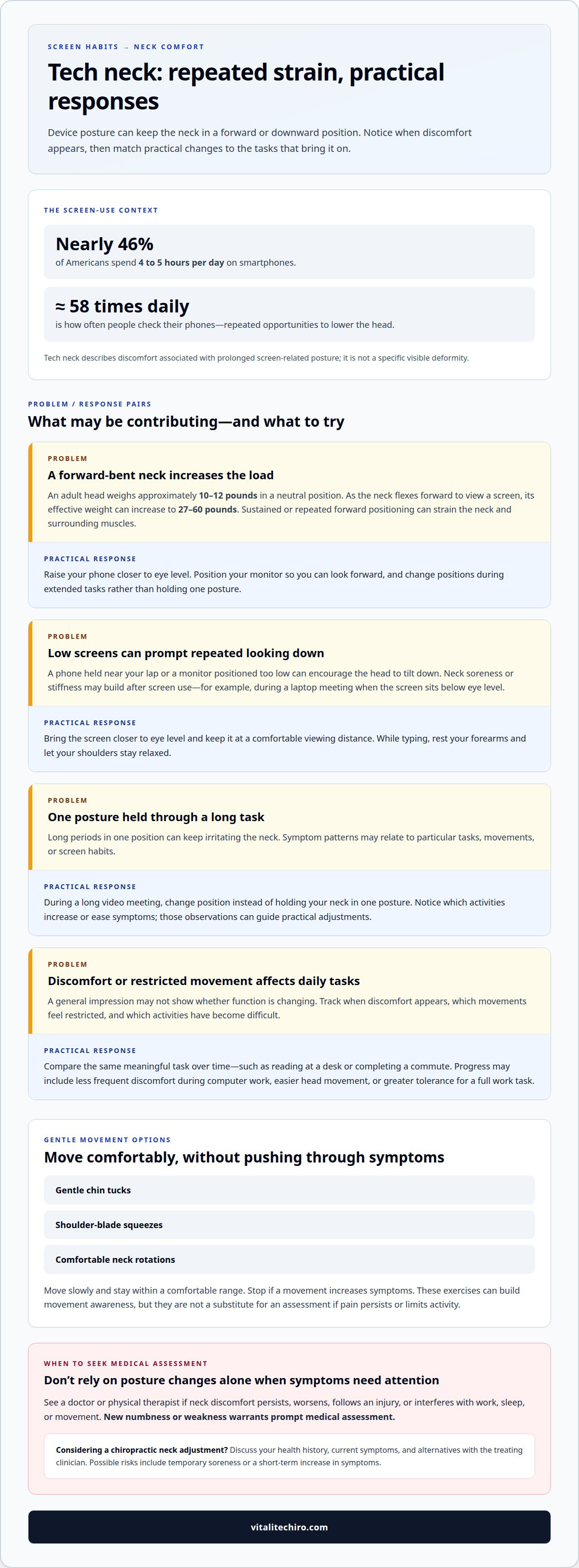
Nearly 46% of Americans spend 4 to 5 hours per day on smartphones. People check their phones approximately 58 times daily, creating repeated opportunities to lower the head. An adult head weighs approximately 10-12 pounds in a neutral position. As the neck flexes forward to view a screen, its effective weight can increase to 27-60 pounds. Sustained or repeated forward positioning can strain the neck and surrounding muscles.
Tech neck describes discomfort associated with prolonged screen-related posture, not a specific visible deformity. You may notice your head held forward, shoulders rounded, or neck bent while reading a phone. Common signs include neck soreness and stiffness, particularly after screen use. For example, symptoms may build during a laptop meeting if the screen sits below eye level and your head stays tilted down.
Your setup and daily habits affect how long your neck stays in one position. Holding a phone near your lap encourages looking down, and a monitor positioned too low can prompt the same posture. Try raising the screen closer to eye level, placing it within comfortable viewing distance, and changing positions during extended tasks. These adjustments reduce repeated downward looking, though they don’t identify the cause of every neck symptom.
See a doctor or physical therapist if neck discomfort persists, worsens, follows an injury, or interferes with work, sleep, or movement. New numbness or weakness also warrants prompt medical assessment. A clinician can consider when symptoms occur, your daily activities, and any movement limitations when assessing the problem.
Chiropractic neck adjustments can carry risks, including temporary soreness or a short-term increase in symptoms. Before an adjustment, discuss your health history, current symptoms, and alternatives with the treating clinician. This conversation can help determine whether an adjustment is appropriate for you.
Postural reeducation and addressing pain mechanisms
Care focuses on movement patterns and daily tasks that may keep irritating your neck. Posture changes are most useful when they fit your real routines.
Addressing Pain Mechanisms
An assessment considers where discomfort occurs, which movements affect it, and how work or screen habits shape your symptoms. For example, pain that builds during laptop use may point to desk setup and prolonged positioning as areas to address. Care can then focus on comfortable movement and reducing repeated strain. Track which activities increase or ease your symptoms; these details can guide practical adjustments and help show whether daily function is changing.
Exercises and At-Home Treatments
At-home options may include gentle chin tucks, shoulder-blade squeezes, and comfortable neck rotations. Move slowly, stay within a comfortable range, and stop if a movement increases symptoms. These exercises can build movement awareness, but they aren’t a substitute for an assessment if pain persists or limits activity.
Pair movement with changes to your screen setup. Raise your phone closer to eye level, position your monitor so you can look forward, and rest your forearms while typing. During a long video meeting, change position instead of holding your neck in one posture. Small adjustments make it easier to keep your head and shoulders relaxed during everyday tasks.
Build a simple routine around an existing cue, such as finishing a call or closing your laptop. Notice whether your shoulders feel tense, bring your head back over your torso, and move gently before returning to the task. Note which changes improve comfort while reading, commuting, or working at a computer. That record can help identify patterns to discuss during care.
If neck discomfort keeps interfering with daily tasks, explore posture-focused care options in Arlington.
Treatment duration and expected progress
There’s no single timeline for tech neck care. Progress depends on how long symptoms have been present, which activities trigger them, and how consistently posture changes fit your daily routine. For example, discomfort tied mainly to one workstation differs from symptoms that affect driving, sleep, and household tasks. These details help shape the care plan and define useful signs of progress.
Start with a clear baseline. Record when discomfort appears, which movements feel restricted, and what activities have become difficult. For example, note whether turning your head while backing a car feels easier after changing your workday setup. Comparing the same task over time gives you a more practical picture than relying on a general impression of improvement.
Progress can show up in several ways: less frequent discomfort during computer work, easier head movement, or greater tolerance for a full work task. Track one or two meaningful activities, such as reading at a desk or completing a commute. If pain decreases but movement remains limited, that distinction matters. It highlights an area that may still need attention.
Care should adapt to these changes. At follow-up, review symptom patterns, movement, and the activities that remain challenging. For instance, if desk work feels easier but carrying a bag still aggravates your neck, the next focus can reflect that demand. Reviewing results and adjusting the plan to daily function is more informative than repeating the same approach without reassessment.
Consistency between visits also influences progress. Use agreed-upon posture strategies during tasks that trigger symptoms, then note what changes. A laptop user might compare comfort during a work session before and after correcting screen position. Share those observations at reassessment. They can help show whether an adjustment made the task easier and guide decisions about continuing, modifying, or progressing care.
Tech neck treatment in Arlington, Virginia
Tech neck treatment in Arlington, VA can involve different approaches, each with its own methods and goals. Compare the focus of care with your symptoms, daily demands, and preferences.
Physical therapy commonly emphasizes movement, strength, and strategies for managing daily tasks. Chiropractic care may use hands-on techniques, including adjustments, while massage focuses on soft-tissue work. Acupuncture involves stimulation at specific body points. These approaches aren’t interchangeable, so consider which concerns you want to address and how each method fits your needs.
The Centers for Disease Control and Prevention reports that acupuncture and massage have been associated with improved pain, function, or both for specific chronic pain conditions. That review didn’t establish their effectiveness for tech neck, so it doesn’t prove results for screen-related neck symptoms.
Physical therapy costs in Arlington depend on factors such as the evaluation, treatment approach, visit frequency, and insurance benefits. The price depends on the case and is given after a quote request; expected services and the number of visits affect the total.
Insurance coverage for physical therapy or chiropractic care in Virginia depends on your plan’s benefits, network rules, referral terms, and coverage criteria. These details vary by policy, so review the terms that apply to your plan before choosing care.
To compare options, write down your main goal, such as turning your head comfortably or completing desk work with less disruption. Then consider which approach addresses that goal and offers practical guidance for managing tasks that aggravate symptoms. A useful plan connects the care provided with an observable activity, rather than focusing only on a treatment label.
For example, if discomfort builds during computer work, you may prioritize movement guidance and workstation strategies. If you’re considering hands-on care, focus on how it relates to your symptoms and daily function. Reassessing the same activity can show whether an approach is useful. Choosing tech neck treatment in Arlington, VA starts with matching care to the task you want to manage more comfortably.
Vitalité Chiropractic: Chiropractic Adjustments
Vitalité Chiropractic offers chiropractic adjustments for people seeking care for neck discomfort linked with screen use. A visit can focus on how symptoms affect movement and daily tasks, such as turning your head at work or sitting comfortably at a computer. This connects care to the activities you want to manage more comfortably.
Chiropractic adjustments may be considered when neck stiffness or discomfort interferes with everyday function. The appropriate approach depends on your symptoms and health history. Share which movements aggravate your neck, how long you’ve had discomfort, and what you hope to do more easily. Vitalité Chiropractic also offers Decompression Therapy as a separate care option.
If you’re ready to discuss your concerns and care options, contact Vitalité Chiropractic.
Make your next step a practical one
Choose one screen-related task that regularly feels uncomfortable, then note what you want to do more easily. That goal can make a conversation about care more specific: describe the activity, the movement that feels restricted, and any changes you’ve already tried. For tech neck treatment in Arlington, VA, this kind of detail helps connect your concerns with an approach suited to your daily routine. If neck discomfort overlaps with an active lifestyle or an injury, Sports Injury Care may also be relevant to discuss. The next step doesn’t need to be complicated. Bring your questions and priorities into a conversation about the care options that fit your needs. Explore care options with Vitalité Chiropractic and take a thoughtful step toward more comfortable movement.
Frequently Asked Questions
Am I Too Young for Tech Neck Treatment?
Age alone doesn’t rule out care for neck discomfort associated with device use. The key questions are whether symptoms affect daily activities and which movements feel limited. For a young person who struggles to turn their head during sports or homework, an assessment can help identify contributing habits and suitable next steps. A parent or caregiver can describe when symptoms occur and what changes them.
Are the Treatments Painful?
How treatment feels depends on the approach and your symptoms. An exercise may feel like a gentle stretch, while hands-on care can involve pressure or movement sensations. Tell the practitioner if a position or technique feels uncomfortable, and describe any tenderness before care begins. For example, mention whether turning your head already feels sensitive so the practitioner can take that response into account.
How Long Do the Results Last?
How long relief lasts can be influenced by symptom triggers, daily posture habits, and how well care supports the activities that matter to you. If long computer sessions bring discomfort back, screen setup and movement habits remain important after treatment. Track which tasks feel easier and which still provoke symptoms. This record can guide follow-up decisions and support lasting changes to daily routines.
How Soon Will I See the Results After Treatment?
Progress is assessed through changes in comfort and function, not by a fixed number of days. Notice whether checking a blind spot, reading, or working at a desk feels different after care. Your symptom pattern, the activities that trigger discomfort, and your response to treatment all inform progress. Share specific changes at follow-up so your care approach can respond to what you’re experiencing.
Is There Any Downtime?
Downtime depends on the type of care, your symptoms, and how your body responds. Consider your plans for the day and discuss work, driving, or exercise demands before treatment. If neck movement feels more sensitive afterward, avoid pushing through activities that aggravate it and follow the guidance provided during care. Clear communication about your schedule helps align treatment with your daily responsibilities.
What is tech neck and what causes it?
Tech neck is a common term for neck discomfort associated with repeated device use and sustained viewing positions. It can develop alongside habits such as reading a phone below eye level or using a laptop without changing position. The term describes a pattern of symptoms, not a diagnosis by itself. A clinician can assess your movement and symptom history to understand what may be contributing.


