
Heel pain isn’t always solved by adding more cushioning. Custom orthotics for plantar fasciitis in Arlington, VA, are designed around an individual’s foot structure, movement, symptoms, and daily activities. Worn regularly, they may support foot mechanics and ease pressure on the heel.
It’s understandable to want an insert that feels comfortable and works with the shoes you actually wear. This guide explains what custom orthotics are, how shoe-specific options are designed and fitted, and how they may help with plantar fasciitis heel pain. You’ll also learn how orthotic materials and design choices can differ, what to expect during fitting, and how to think about next steps for your foot comfort.
Key Takeaways
- Custom orthotics are designed around your foot structure, gait, symptoms, and everyday needs, rather than using a one-size-fits-all approach.
- Support and fit can differ between full-support, dress-shoe, and sport-shoe options, so consider which footwear you use most.
- Learn how assessment, foot modeling, and an in-person fit check shape the design and allow for adjustments.
- Orthotics can support and cushion the heel, but they’re one part of understanding and managing plantar fasciitis discomfort.
What are custom orthotics?
Custom orthotics are made for an individual’s foot structure, gait, symptoms, and activity needs. For heel pain, they can support or cushion the foot and influence its alignment while worn.
In special circumstances, custom orthotics can be produced in Arlington within 24 hours. That is a special-case timeframe, not a standard production estimate.
Foot Evaluation and Digital Gait Analysis
An evaluation considers foot shape, symptoms, walking pattern, and activities that trigger discomfort. Digital gait analysis can show how each foot moves while walking, adding information beyond a static view of the arch. These findings help guide decisions about support and where the orthotic should cushion or control movement.
Weight Distribution and Foot Imbalances
Foot imbalances can change how weight travels through the feet while standing and walking. Excessive pronation or supination may contribute to pain in the feet, knees, hips, or back. An orthotic can be designed to support alignment and redistribute pressure, with support shaped around your foot mechanics rather than a generic insert.
Functional foot orthotics are designed to support the foot’s 26 bones and control abnormal motion. Semi-rigid options use materials such as plastic or graphite to provide control while allowing movement. The goal is to improve function, not to cure the underlying foot problem; the orthotic changes foot mechanics while it’s worn regularly.
For plantar fasciitis, support and cushioning may help relieve pressure around the heel. Soft orthotics made from compressible foam absorb shock and reduce pressure on sore spots. They’re also used in diabetic foot care to cushion pressure areas, but their bulk may require roomier shoes. An evaluation helps match material and design to your symptoms, foot shape, and footwear needs.
Full-support, dress shoe, and sport shoe orthotics
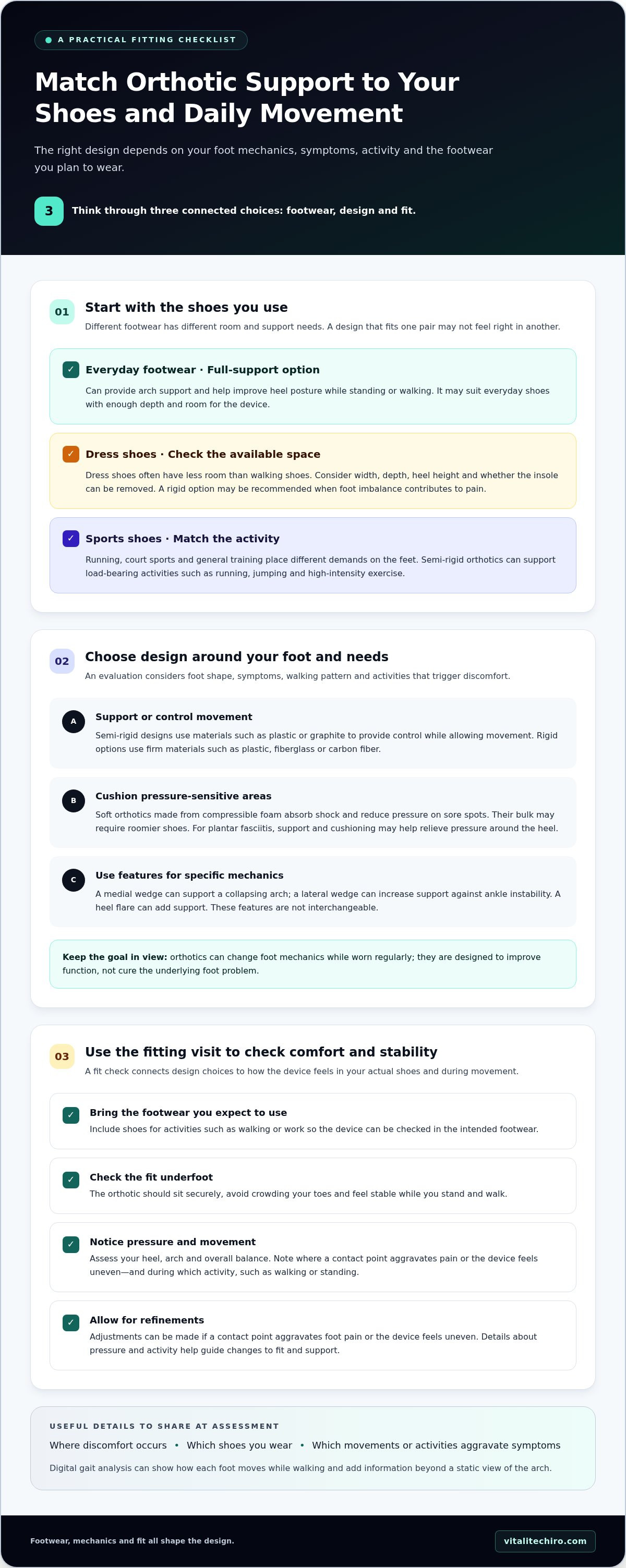
The right orthotic must suit both your foot and your shoes. A full-support design can provide arch support and help improve heel posture while standing or walking. It may work well in everyday footwear with enough depth and room for the device. The best fit depends on your symptoms, foot shape, activity, and shoe construction.
Dress shoes often have less space than walking shoes. A rigid orthotic may be recommended for walking or dress shoes when foot imbalance contributes to pain in the legs, thighs, or lower back. Before choosing a design, consider the shoe’s width, depth, heel height, and removable insole. These details affect how comfortably the orthotic sits and whether it can support your foot without crowding your toes.
Sports shoes need a design suited to the activity. Running, court sports, and general training place different demands on the feet, so consider the movements and footwear involved. Semi-rigid orthotics can support the foot during load-bearing activities such as running, jumping, and high-intensity exercise. Their purpose is to support movement and manage pressure, not to make every shoe feel identical.
Biomechanics and sports experience matter because an orthotic should reflect how your feet move during the activities you want to continue. At an appointment, describe where discomfort occurs, which shoes you wear, and what movements aggravate your symptoms. For example, heel discomfort during a run may call for different support considerations than pressure during long periods of standing. This information helps connect the design to real-world use.
Think through your weekly routine before settling on one pair: work shoes, walking footwear, and sports shoes may each need different space and support. A design that fits one pair may not transfer comfortably to another. If you’re considering a shoe-specific fit, explore orthotic care and fitting as a next step in matching support to daily and athletic use.
Orthotic design, fitting, and adjustments
Custom design turns an assessment into devices shaped for a person’s anatomy and footwear. Material, support features, and fitting all influence how an orthotic feels in daily use.
Orthotic Design
Design starts with the foot’s shape, movement, symptoms, and activity demands. A 3D scan can create a model used to produce an orthotic, helping reduce production and delivery time. Semi-rigid designs combine foam with a thin plastic shell, while rigid options use firm materials such as plastic, fiberglass, or carbon fiber.
Specific features address different needs. A medial wedge can support a collapsing arch, while a lateral wedge can increase support against ankle instability. A heel flare can add support, too. These features aren’t interchangeable, so design choices should reflect the foot mechanics and pressure patterns found during evaluation.
Fitting and Adjustments
Fitting gives you a chance to try the devices in your shoes and assess comfort, pressure, and movement. Bring the footwear you expect to use, such as walking or work shoes. Check that the orthotic sits securely, doesn’t crowd your toes, and feels stable while you stand and walk.
If a contact point aggravates foot pain or the device feels uneven, adjustments can be made. Note where pressure occurs and during which activity, such as walking or standing. Those details help guide refinements to fit and support. A well-fitted orthotic should suit the shoe’s interior and intended use, not just match your foot when removed.
Some designs prioritize cushioning; others focus on controlling motion. Fitting connects those choices to how the device feels under load. Use the trial to assess your heel, arch, and overall balance in each intended shoe. For example, a fit that feels comfortable in walking shoes may require a separate shoe-specific design for dress footwear.
Custom orthotics for plantar fasciitis heel pain
Custom orthotics can be part of a plan to manage plantar fasciitis heel pain. Their value depends on how well their cushioning and support suit your symptoms, footwear, and daily activities.
Heel Pain Support for Plantar Fasciitis
Accommodative orthotics provide cushioning and support that may help relieve heel pain and pressure. Semi-rigid designs support the foot during load-bearing activities such as standing, walking, running, and jumping. Athletes may need support suited to sport movements, while someone who stands at work may prioritize comfort throughout a shift.
Consider when your heel hurts and what you’re doing at the time. That pattern can help determine whether a device’s support suits your routine. Orthotics may be used alongside other treatments, including stretching and exercise, rather than as a stand-alone cure. They influence foot function while worn regularly.
Health insurance may cover custom orthotics, depending on the plan. For custom orthotics for plantar fasciitis in Arlington, VA, an assessment can connect your heel symptoms, foot mechanics, and footwear needs to an individualized design.
In Arlington, look for an orthotic fitting that considers both your foot and the shoes you’ll use. To discuss custom orthotics for plantar fasciitis in Arlington, VA, schedule an orthotic evaluation focused on your heel discomfort and activity goals.
Risks and Drawbacks
Custom devices don’t cure plantar fasciitis; they influence foot function while worn. Soft devices can be bulkier than other inserts, and some shoes may not have enough room. Consider the shoes you wear most, since a crowded fit can reduce comfort and make an otherwise suitable device impractical.
Custom devices also cost more than off-the-shelf options. In some cases, an over-the-counter orthotic paired with stretching and exercise may be as effective. Compare how each option suits your symptoms, foot shape, and activities rather than assuming custom support is always necessary.
Physical therapy may also be recommended alongside orthotics. Combining approaches can address both support and movement while you manage heel discomfort.
Vitalité Chiropractic: Chiropractic Adjustments
Vitalité Chiropractic offers orthotics and chiropractic adjustments for people seeking care for musculoskeletal concerns alongside foot discomfort. If heel pain affects how you move, an appointment can help you discuss your symptoms and whether chiropractic care fits your broader needs. Orthotics address foot support, while chiropractic adjustments focus on musculoskeletal care.
Care options also include decompression therapy, sports injury care, and prenatal chiropractic care. Athletes managing an injury alongside heel discomfort may find sports injury care relevant. The appropriate approach depends on the concern being addressed, and orthotics remain a separate option for foot support.
For a conversation about your care, contact Vitalité Chiropractic.
Take the Next Step Toward More Comfortable Movement
Your next step is to clarify what your feet need throughout the day. Keep a brief note of which activities bring on heel discomfort, the shoes you wear, and how symptoms affect your routine. These observations can make a conversation about custom orthotics for plantar fasciitis in Arlington, VA, more focused on your priorities and movement goals.
Vitalité Chiropractic offers orthotics alongside chiropractic adjustments, decompression therapy, and sports injury care. If heel pain affects your activity or you’re considering foot support as part of broader musculoskeletal care, book an appointment to discuss an appropriate next step. Not every service is right for every concern.
Contact Vitalité Chiropractic to discuss your care. A thoughtful next step can help you move forward with greater clarity and confidence.
Frequently Asked Questions
How do orthotics work?
Orthotics change how the foot is supported while you stand or move. A functional device helps guide foot motion, while a cushioning style reduces pressure on sensitive areas. For example, an athlete’s needs during repeated running differ from those of someone seeking comfort during long periods of standing. The design supports foot function during its intended activities; it doesn’t permanently change the foot.
How long do I wear orthotics?
Wear orthotics during the activities and in the footwear they were designed to support, following the wear instructions provided with them. For example, a device intended for everyday walking won’t help during a walk if it’s left in another pair of shoes. Keep track of when you use them and how your feet feel during those activities, so you can describe any changes at a fitting.
What are shoe inserts?
Shoe inserts are removable pieces placed inside footwear to add cushioning, support, or pressure relief. Some are general-purpose products sized to fit a range of shoes; others are designed around a particular foot and its needs. Check that an insert fits securely and leaves enough room for your toes. A crowded shoe can undermine comfort, even if the insert feels supportive outside the shoe.
Are custom orthotics more effective than prefabricated insoles for plantar fasciitis?
Not in every case. An over-the-counter orthotic combined with stretching and exercise can be as effective as a custom device for some people. Custom designs provide individualized corrective support, which may suit specific foot mechanics or footwear needs. Compare how each option performs during your usual activities rather than assuming a custom device is automatically the better choice.
How are custom orthotics prescribed, fitted, and made?
Custom orthotics are made with a prescription from a licensed medical doctor. The process uses information about foot structure and gait, then captures the foot with a mold or digital scan. A lab fabricates the device to the patient’s needs. During fitting, try it in the shoes you plan to wear and note any rubbing, crowding, or uneven contact for adjustment.
How long do custom orthotics last, and when should they be replaced?
Custom orthotics are described as lasting longer than off-the-shelf devices, but their useful life depends on wear and condition. Look for visible material damage, loss of shape, or a fit that no longer feels stable in your usual shoes. If these changes affect comfort or support, have the device assessed to determine whether it needs adjustment or replacement.


