
What if the best next step after a sports injury isn’t simply pushing through or stopping all movement? When pain or restricted motion interrupts training, sport, or everyday tasks, it’s understandable to wonder whether to rest, seek an assessment, or begin easing back in. Thoughtful sports injury care starts with understanding what’s affected and what you need to do comfortably and confidently.
Recovery isn’t one-size-fits-all. The right approach depends on your symptoms, movement, goals, and how the injury affects daily life. An individualized assessment can guide care, which may include chiropractic techniques and rehabilitation suited to your needs.
In this guide, you’ll learn practical first steps after an injury, what an assessment can clarify, and how individualized care can support recovery. We’ll also explore a gradual, function-focused return to activity, without treating a fixed timeline as a guarantee. At Vitalité Chiropractic in Arlington, Dr. W. Jean-Luc Sansfaute brings experience dating back to 2003 to sports injury rehabilitation and personalized care.
Key Takeaways
- Notice how the injury affects movement, training, work, and daily tasks, not just where discomfort occurs.
- A sports injury care assessment connects your injury history, symptoms, activity demands, and goals to an individualized plan.
- Chiropractic care is one part of recovery when an assessment indicates it suits your needs; no single approach fits every injury.
- Build activity back in distinct steps, from everyday movement to modified training and full sport participation, guided by symptoms and function.
Sports injury care starts with understanding what changed
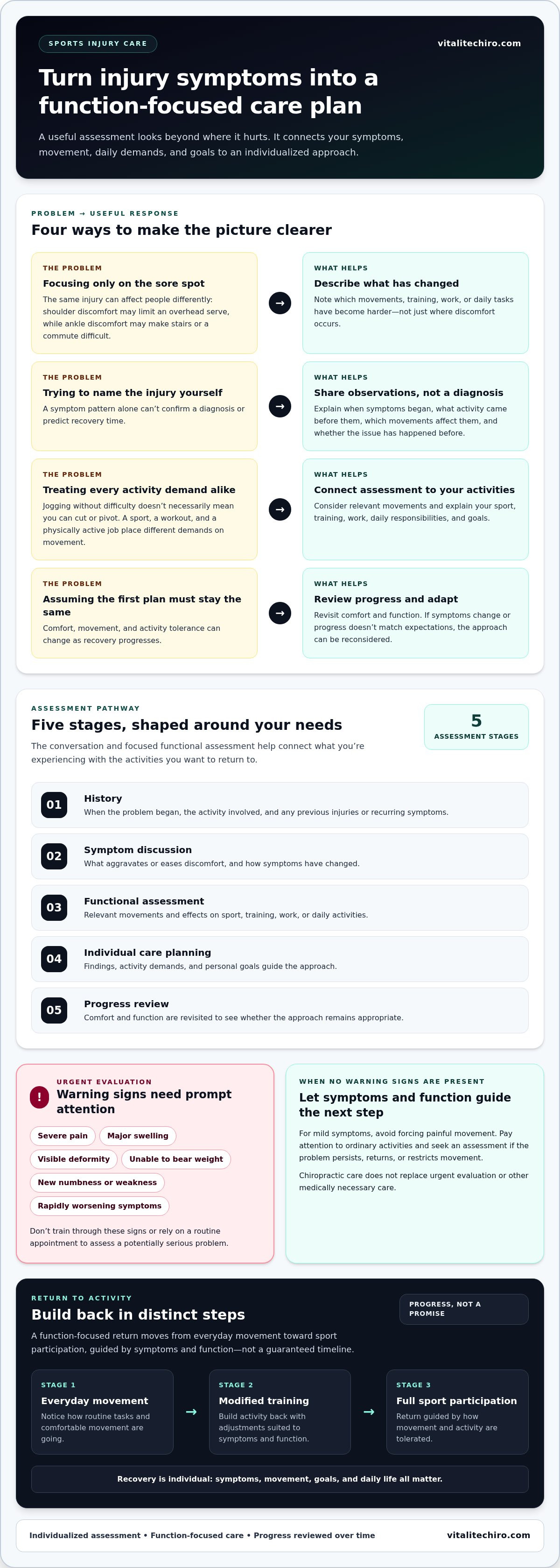
Effective sports injury care begins with a clear picture of what has changed, not an assumption based on where it hurts. It involves assessing activity-related musculoskeletal concerns and tailoring support to your symptoms, needs, and goals. The same injury can have very different effects: a sore shoulder may limit an overhead serve, while ankle discomfort may make stairs or a work commute difficult. Your activity level, daily responsibilities, and goals all help put the problem in context.
Some injuries begin suddenly, such as discomfort that appears during a quick turn, awkward landing, or lift. Others develop gradually as repeated activity places demands on the body over time. Note when symptoms began, which movements affect them, whether they return during certain activities, and what has become harder to do. These details can guide an assessment, but symptom patterns alone can’t confirm a diagnosis or predict recovery time. The general Sports Injury overview describes common types and causes, but each person’s symptoms need to be understood in context.
Which sports injuries can interrupt everyday movement?
An ankle sprain, muscle strain, or shoulder injury can affect more than a game or workout. You might change how you walk, avoid reaching, reduce the weight you lift, or struggle with a movement that was previously routine. The change in function matters: an athlete who can jog but can’t cut or pivot has different activity needs from someone whose discomfort interferes with standing at work.
Consider the full story rather than trying to label the injury yourself. What activity were you doing? Did the problem start all at once or build over repeated sessions? Has it happened before, and what movements or daily tasks are now limited? Sharing these observations gives a practitioner useful context without assuming that a particular symptom points to one specific injury.
When does an injury need prompt medical attention?
Some signs call for prompt medical evaluation rather than routine sports injury care. Seek urgent evaluation for severe pain, major swelling, visible deformity, or an inability to bear weight. New numbness or weakness also needs prompt attention, as do symptoms that are worsening rapidly. Don’t train through these warning signs or rely on a routine appointment to assess a potentially serious problem.
If symptoms are mild and none of those warning signs are present, avoid forcing the painful movement while you decide on an appropriate next step. Pay attention to how the problem affects ordinary activities, and seek an assessment if it persists, returns, or restricts movement. An evaluation helps clarify what needs attention and whether individualized sports injury support is appropriate. Chiropractic care doesn’t replace urgent evaluation or other medically necessary care.
How a sports injury assessment shapes an individual care plan
A useful assessment combines a conversation with a focused look at how your body is functioning. It connects what you’re experiencing with the activities you want to return to, rather than selecting care based on a symptom alone. In sports injury care, this context helps shape chiropractic care and rehabilitation around your needs.
The process commonly moves through these stages:
- History: Discuss when the problem began, the activity involved, and any previous injuries or recurring symptoms.
- Symptom discussion: Describe what aggravates or eases discomfort and how it has changed.
- Functional assessment: Consider relevant movements and how the concern affects your sport, training, work, or daily activities.
- Care planning: Use the findings, activity demands, and personal goals to shape an individualized approach.
- Progress review: Revisit comfort and function to understand whether the approach remains appropriate.
What information helps clarify an injury?
Before an assessment, think through the details you’ll want to share. When did symptoms start, and what activity came before them? Have you experienced a similar problem, or do symptoms return during particular movements? Explain what seems to aggravate discomfort and what, if anything, makes movement feel easier. You don’t need to arrive with a diagnosis. Clear observations are more useful than trying to name the cause yourself.
Your activity context matters, too. Recreational running differs from court sports, strength training, or a physically active job. Training frequency, recent changes in activity, and everyday responsibilities help show which movements and goals should guide the assessment. A plan should reflect your symptoms, function, and goals, not just the name of an injury.
How can care adapt as function changes?
An initial plan is a starting point, not a promise that the same approach will fit indefinitely. During progress reviews, a practitioner can consider whether comfort has changed, how movement is going, and what level of activity you can tolerate. If your needs shift, the care approach can shift as well. A movement that felt difficult at first may become more manageable, while another demand may still need attention.
Ongoing review supports decisions based on your response, rather than a fixed visit count or universal recovery schedule. Chiropractic techniques and rehabilitation can be tailored to your circumstances. If progress doesn’t match expectations or symptoms change, share that information during the next conversation so the plan can be reconsidered.
At Vitalité Chiropractic in Arlington, sports injury rehabilitation is individualized around functional needs and goals. Learn more about sports injury rehabilitation and how it can fit into a considered recovery plan.
Does chiropractic care belong in sports injury recovery?
Chiropractic care can be part of recovery for some activity-related musculoskeletal concerns, but it isn’t a universal answer for every sports injury. A sprain, strain, or other injury may call for different considerations depending on its nature, symptoms, and effect on movement. Care should follow an assessment, not an assumption that one technique works for every person or condition.
Treatment choice depends on assessment, symptoms, and functional goals. A practitioner considers which movements are limited, what activities matter to you, and whether the findings support a chiropractic approach. If symptoms suggest a serious or concerning problem, prompt medical evaluation takes priority over routine care. Chiropractic care can support an appropriate recovery plan, but it doesn’t replace emergency evaluation or other medically necessary care.
What can chiropractic sports injury care involve?
Depending on your needs, care may include chiropractic techniques, rehabilitation, or therapeutic modalities. These options can be considered in light of how the injury affects movement and the activities you hope to resume. An approach suited to one person may not suit another, even if their symptoms seem similar.
Adjustments aren’t a stand-alone answer for every injury, and they shouldn’t be presented as a guaranteed way to heal tissue or speed recovery. A thoughtful plan considers which types of support are appropriate and how they relate to your functional needs. Someone whose daily movement is affected may have different priorities from an athlete working toward the demands of a particular sport. Care should reflect those differences, with your response informing ongoing decisions.
How do you weigh benefits and limitations?
When clinically appropriate, chiropractic care and rehabilitation may help address comfort, movement, and practical functional goals as part of individualized support. The value lies in matching the approach to the assessment and your needs, not promising a particular result. Ask what each part of a proposed plan is intended to address and how progress will be considered. That conversation can help you understand the rationale and take part in decisions about your care.
Keep expectations realistic. No treatment can guarantee pain relief, a particular recovery outcome, or a return-to-play date. The pace and course of recovery vary, so plans should respond to symptoms and function rather than a promised timeline. Supportive musculoskeletal care has clear limits: it isn’t emergency treatment, surgery, or general primary care. Severe or rapidly worsening symptoms warrant prompt medical evaluation. Understanding both the potential role and the limits of chiropractic care helps keep recovery decisions measured, individualized, and focused on safe next steps.
Returning to sport: build activity back around function
Getting back to sport is a progression, not a single decision made because pain has eased or one workout went well. A thoughtful sports injury care plan considers how you respond to activity, what movements you can manage, and what your sport asks of you. Walking comfortably, completing a modified practice, and taking part fully place different demands on the body, so they shouldn’t be treated as interchangeable milestones.
Progress should reflect your individual guidance and the demands of your activity. Someone returning to swimming may need to rebuild tolerance for repeated arm movement; a court-sport athlete may need to work toward the direction changes and pace of play. These examples aren’t a universal checklist. They show why the next step depends on current function and the specific activity you’re aiming to resume.
What can a gradual return to activity look like?
Begin with daily movement that feels manageable, then consider modified training before progressing toward full sport participation. Increase activity thoughtfully rather than making a sudden jump in duration, intensity, or complexity. The appropriate pace depends on your symptoms, function, and individualized care guidance.
- Everyday movement: Notice how ordinary tasks feel, including walking, reaching, or movements relevant to your routine.
- Modified training: Reintroduce selected sport-related activity at a level that fits your current tolerance, following your care guidance.
- Full participation: Build toward the demands of regular sport when your function and response to activity support that progression.
Pay attention during activity and afterward. Note whether discomfort changes, movement becomes more restricted, or symptoms settle as expected for you. One good session doesn’t prove that your body is ready for every demand; your response across activities and over time gives more useful context. If symptoms significantly worsen or function declines, pause the progression and discuss what happened with your practitioner before increasing the load again.
How can athletes support recovery between appointments?
Follow the individualized guidance provided during care rather than adding exercises or increasing training abruptly. A brief activity log can make progress reviews more specific. Record the type and level of activity, how movement felt during it, and whether symptoms changed afterward. A few clear observations can reveal patterns that are easy to overlook when relying on memory alone.
Keep the goal functional. The question isn’t only whether you can complete an activity once, but how well it fits your current capacity and recovery plan. For broader performance-focused context, read this sports performance chiropractic care guide. The same focus on function can help frame your return to activity.
Sports injury care in Arlington: what to expect at Vitalité Chiropractic
For Arlington athletes and active people, an injury can raise practical questions: what might be contributing to the change in movement, and what kind of support fits the activities you want to return to? Vitalité Chiropractic provides sports injury rehabilitation shaped around individual needs. The practice is led by Dr. W. Jean-Luc Sansfaute, who has been practicing since 2003. His experience informs a person-centered approach focused on understanding your concerns and functional goals.
How Vitalité Chiropractic approaches sports injury care
An initial conversation and assessment help clarify your symptoms, activity demands, and what you hope to do more comfortably. From there, chiropractic adjustments, rehabilitation, and therapeutic modalities are considered as parts of an individualized plan. The approach isn’t one-size-fits-all: the care reflects your needs and the findings of your assessment, without a guaranteed result or recovery timeline.
Chiropractic adjustments are one possible element of care, not an automatic answer for every injury. Their role is considered in relation to your situation and broader functional needs. For more background on what adjustments involve, explore this professional chiropractic adjustments guide.
The aim is to make care relevant to your life, whether your priority is comfortable everyday movement, returning to recreational exercise, or working toward the demands of a sport. Sharing what activities you do, what has changed, and what you hope to resume helps make the conversation specific. Your questions matter, too. Understanding the purpose of each recommended element can help you take an informed role in decisions about your care.
What is a practical next step for Arlington athletes?
If an injury is affecting your activity, an appointment gives you time to discuss what happened and your individual care needs. Bringing a clear account of when symptoms began, what movements are difficult, and how the problem affects your routine can make that conversation more useful. The assessment helps clarify potential next steps and shape an individualized chiropractic and rehabilitation approach.
Vitalité Chiropractic offers same-day appointments in Arlington. If symptoms are severe or concerning, seek prompt medical evaluation rather than waiting for routine care. For non-emergency sports injury concerns, learn more about sports injury care at Vitalité Chiropractic.
Make your next step a thoughtful one
You don’t need a diagnosis or a complete recovery plan before asking for guidance. Start by identifying one activity you most want to return to and what currently makes it difficult. That gives the conversation a clear starting point, while leaving room for an assessment to shape what comes next. Your priorities may change as your needs do, and that’s a useful part of planning.
Good sports injury care isn’t about rushing toward a deadline. It’s about making informed decisions as your abilities change and choosing goals that matter to your everyday life. Bring your questions and share what you hope to do, whether that’s resuming a favorite activity or feeling more at ease with your regular routine.
At Vitalité Chiropractic, you can discuss your concerns and explore individualized support for your needs. Schedule an appointment with Vitalité Chiropractic to begin that conversation. A considered first step can help you move forward with greater clarity.
Frequently Asked Questions
Can chiropractic care help with a sports injury?
Chiropractic care may be one part of an individualized plan when an assessment indicates it’s appropriate. Depending on your needs, care may include chiropractic techniques and rehabilitation, guided by the activities and movements that matter to you. Sports injury care isn’t a guaranteed route to faster healing or a particular return-to-sport date, and outcomes vary. Severe or concerning symptoms need prompt medical attention rather than routine care.
How soon should I seek care after a sports injury?
How soon to seek care depends on symptom severity and how your function has changed. Get prompt medical evaluation for severe pain, visible deformity, inability to bear weight, new weakness or numbness, or symptoms that are rapidly worsening. Don’t wait for these signs to settle. If symptoms are less severe but persist or keep returning, an assessment can help clarify appropriate next steps, especially if ordinary movement remains difficult.
Should I keep playing through sports injury pain?
Continuing the same activity through worsening pain may aggravate symptoms, so don’t treat pain as something you must push through. Stop or modify activity if discomfort changes how you move, affects control, or makes a familiar task difficult. The safest response depends on the injury and its severity, not a universal return-to-play rule. Seek urgent evaluation for serious warning signs, and arrange an individualized assessment if symptoms persist.
How long does sports injury recovery take?
Recovery time varies with the injury, symptom severity, health history, activity demands, and your response to care. A return to casual walking, for example, doesn’t necessarily mean you’re ready for the repeated demands of training. Changes in comfort, movement, and activity tolerance can help inform progress discussions. No clinic can responsibly promise the same timeline or return date for every athlete, so use individualized guidance rather than comparing your recovery with someone else’s.
Do sports injuries always need imaging?
No. Imaging isn’t automatically needed for every sports injury; whether it’s appropriate depends on symptoms and clinical assessment. Severe symptoms or concern about a significant injury may change the next steps. You can’t determine the need for a specific test from pain alone, so describe what happened and how your function has changed during an evaluation. Seek prompt assessment if pain, reduced function, or other symptoms raise concern.
What should I bring to a sports injury appointment?
Bring a clear account of when symptoms began, what activity was involved, any previous injuries, and movements that affect how you feel. If available, relevant medical records or imaging reports may provide helpful context, but they aren’t required to start a conversation. Wear comfortable clothing that allows movement to be assessed. You might also note the sport or training activities you hope to resume, so your goals are part of the discussion.
What happens if sports injury pain returns after I resume training?
Recurring symptoms are useful information, not a signal to force your training progression. Reduce or pause the activity that seems to aggravate them, and note what you were doing and how symptoms changed afterward. Arrange an assessment if the problem persists or affects function. Severe or rapidly worsening symptoms need prompt medical evaluation. A return of pain alone doesn’t establish its cause, so avoid guessing and use the details to guide a careful review.


