
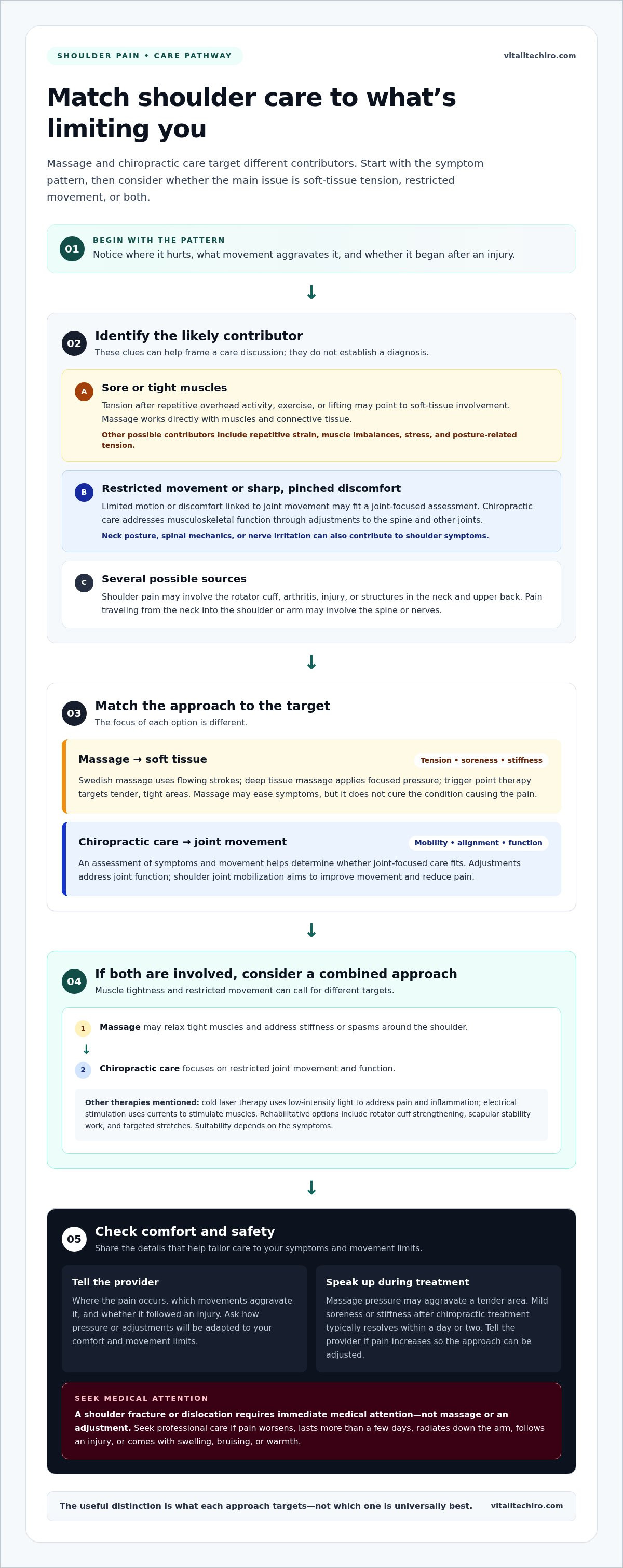
Neither massage nor chiropractic care is automatically the better choice. Choosing massage or chiropractic for shoulder pain depends on what may be causing the discomfort. Massage focuses on tight or sore soft tissues, while chiropractic care focuses on joint movement and musculoskeletal function. If muscle tension and restricted movement are both involved, a combined approach may be worth considering.
It makes sense to seek a clear answer when reaching, lifting, or getting comfortable starts to hurt. The useful distinction is what each approach targets, not which one is universally best. Pain can involve muscles, tendons, joints, or structures beyond the shoulder. Noting how it began and which movements affect it can help clarify your next step.
This guide explains common causes of shoulder pain, how massage and chiropractic care differ, and when using both may make sense. You’ll gain a clearer way to think about your symptoms and which kind of care may fit them.
Key Takeaways
- Notice whether your discomfort feels mainly muscular or comes with restricted joint movement; that distinction can help clarify which approach may fit.
- Shoulder pain can have several causes, including rotator cuff problems, arthritis, repetitive strain, and posture-related tension.
- Massage and chiropractic care target different contributors, so combining them may be useful when muscle tightness and movement limitations occur together.
- Persistent, worsening, radiating, or injury-related pain deserves attention; the article explains when chiropractic adjustments may be part of care.
Massage or Chiropractor for Neck and Shoulder Pain?
Massage targets soft tissue, while chiropractic care focuses on joint movement. When muscle tension and restricted motion both affect reaching overhead, the approaches may address different contributors.
Relieving Muscle Tension and Soreness
Massage therapy works on muscles and connective tissue to ease tension and soreness. Swedish massage uses flowing strokes, while deep tissue massage applies focused pressure; trigger point therapy targets tender, tight areas. These techniques may loosen tissue, improve circulation, and provide relief after repetitive overhead activity or exercise. Massage can ease symptoms, but it doesn’t cure the condition causing shoulder pain.
Combining Massage and Chiropractic Adjustments
Using massage before an adjustment may relax tight muscles, while chiropractic care targets restricted joint movement. Soft-tissue treatment can address stiffness and spasms around the shoulder; adjustments address joint function. The study included 70 patients whose age was 42.18±10.42 years, according to The authors of the subacromial impingement study.
Other therapies may complement care. Cold laser therapy uses low-intensity light to address pain and inflammation, while electrical stimulation uses currents to stimulate muscles. Rehabilitative exercises can build strength and mobility to support the shoulder. Examples include rotator cuff strengthening, scapular stability work, and targeted stretches. Suitable options depend on whether symptoms involve muscle tightness, limited movement, or both.
Choosing a Qualified Provider and Understanding Risks
Choose a massage therapist or chiropractor who can explain how their approach relates to your symptoms, treatment options, and expected outcomes. Describe where the pain occurs, which movements aggravate it, and whether it began after an injury. These details can guide the discussion. Ask how pressure or adjustments will be tailored to your comfort and movement limits.
Massage may cause discomfort if pressure aggravates a tender area. After chiropractic treatment, mild soreness or stiffness typically resolves within a day or two. Tell your provider if pain increases during treatment so the approach can be adjusted. A shoulder fracture or dislocation requires immediate medical attention, not massage or an adjustment.
Combining massage and chiropractic care
Massage and chiropractic care target different contributors to shoulder discomfort. Matching the approach to the source of pain helps keep care focused on movement and function.
Choosing Care Based on Pain Source
The source of pain can help distinguish when massage therapy or chiropractic care may be a better fit. Sore, tight muscles after repetitive activity point to soft-tissue tension, while restricted motion or sharp, pinched discomfort can involve joint movement or nerve irritation. Neck posture and spinal mechanics can also contribute to shoulder symptoms. Noting what aggravates the pain, such as reaching overhead or turning your neck, can guide your choice.
Chiropractic Care for Neck and Shoulder Pain
Chiropractic care addresses musculoskeletal function through adjustments to the spine and other joints. For neck or shoulder pain associated with restricted joint movement, an adjustment can target mobility and alignment. This differs from massage, which works directly with soft tissue and tight muscles. A thorough assessment of symptoms and movement helps determine whether joint-focused care fits the pattern of discomfort.
Evidence for Chiropractic Treatment
Evidence supports considering chiropractic care when neck and shoulder pain relates to spinal misalignment or nerve compression. Adjustments may target joint function and nerve interference, while shoulder joint mobilization aims to improve movement and reduce pain. These approaches address specific mechanical contributors; they aren’t evidence that every shoulder condition responds the same way. The likely source of symptoms matters when weighing treatment options.
Combining massage with chiropractic care can address muscle tension alongside restricted motion. Massage may relax surrounding tissue before an adjustment, while chiropractic treatment focuses on joint function. Seek professional care if pain worsens, lasts more than a few days, radiates down the arm, follows an injury, or comes with swelling, bruising, or warmth. For a joint-focused approach, explore chiropractic adjustment care.
Common causes of shoulder pain
Shoulder pain can begin in the joint, surrounding tissues, or structures in the neck and upper back. The rotator cuff consists of four muscles and tendons that stabilize the shoulder and support its range of motion. Repetitive overhead work, sports, or lifting can strain these tissues. Arthritis, injury, and muscle tension are other possible causes. The right care depends partly on which structures appear to be involved.
Age and joint changes can also matter. Primary shoulder osteoarthritis is generally seen in people over age 50. The Arthritis Foundation estimates that one in three people over age 60 have some degree of shoulder osteoarthritis. Stiffness and reduced range of motion may accompany it, particularly during reaching or lifting. For someone asking whether to choose massage or chiropractic for shoulder pain, the source of symptoms is a useful starting point.
Chronic neck and shoulder discomfort may relate to poor posture, repetitive injuries, muscle imbalances, stress, or poor ergonomics. Nerve compression, spinal stenosis, and herniated discs can also contribute. For example, pain traveling from the neck into the shoulder or arm may involve the spine or nerves, rather than only the shoulder joint. Back discomfort and shoulder pain can occur together when posture or spinal mechanics strain connected areas.
Treatment choices depend on the suspected cause and severity of symptoms. Massage may suit muscle soreness or tightness, while chiropractic care may address restricted joints or movement problems. Choosing massage or chiropractic for shoulder pain also means considering the symptom pattern and its effects on daily activities. A minor strain differs from a fracture or dislocation, which requires immediate medical attention. Pain that worsens, follows an accident, radiates down the arm, or occurs with swelling, bruising, or warmth warrants prompt professional attention. Identifying the trigger and affected movements can help guide care and recovery.
How chiropractic care addresses joint movement and alignment
Chiropractic care focuses on the musculoskeletal system, especially the spine and joints. For shoulder discomfort, the focus is whether restricted movement or posture-related strain affects function.
Adjustments and Joint Mobilization
Chiropractic adjustments apply specific, controlled force to spinal joints, while joint mobilization uses movement to address restricted joints. These techniques have different applications, depending on which area feels stiff and how motion is limited. For example, discomfort while turning the neck may direct attention to spinal movement, while difficulty raising an arm may involve shoulder joint mobility.
The goal is to support function and reduce movement-related strain, not to treat every shoulder problem in the same way.
Addressing Joint Restrictions
Joint restriction can make everyday movements, such as reaching for a shelf or fastening clothing, uncomfortable. Chiropractic care may address this limitation with adjustments to the spine or other joints. The relevant area depends on the movement affected and the pattern of symptoms. Restricted neck motion, for example, may contribute to tension around the shoulder and affect posture.
Assessing movement helps identify where focused care may be appropriate.
Supporting Joint Mobility
Improving mobility means helping joints move more freely through their available range. Chiropractic techniques may include spinal adjustments or shoulder joint mobilization, selected according to the restriction. Better movement can make daily tasks easier, while attention to posture may help reduce ongoing strain during desk work or overhead activity.
For chronic symptoms, mobility care is one part of a broader approach to function. Explore chiropractic adjustments for care focused on joint movement and alignment.
Vitalité Chiropractic: Chiropractic Adjustments
Vitalité Chiropractic in Arlington offers chiropractic adjustments for people whose shoulder discomfort may involve restricted joint movement or related musculoskeletal concerns. If pain persists, limits everyday movement, or follows a sports injury, an assessment can help clarify whether chiropractic care fits your symptoms. Sports Injury Care and Decompression Therapy are also available when relevant. The appropriate approach depends on your symptoms and movement patterns, with care focused on you rather than a one-size-fits-all plan.
For shoulder pain after an accident, or with signs such as swelling or bruising, seek prompt medical attention. For other concerns about whether adjustments may suit your situation, contact Vitalité Chiropractic in Arlington or visit vitalitechiro.com.
Take the Next Step Toward Easier Movement
Use what you’ve noticed about your shoulder to start a focused conversation: which movements feel limited, what activities bring on discomfort, and how it affects your routine. Those details can help clarify whether massage or chiropractic for shoulder pain is the more relevant direction to explore. You don’t need to arrive with a diagnosis. A clear account of your experience is a useful place to begin.
Vitalité Chiropractic offers Chiropractic Adjustments, Decompression Therapy, and Sports Injury Care. These options provide a path to discuss joint movement, spinal concerns, or discomfort connected with an injury. The next step is simply to share what you’re experiencing and learn whether chiropractic care aligns with your needs. Contact Vitalité Chiropractic to begin that conversation. With a clearer understanding of your symptoms and care options, you can move forward with greater confidence and support.
Frequently Asked Questions
What Does a Chiropractor Actually Do?
A chiropractor evaluates how the spine and other joints move, then may use manual or instrument-assisted adjustments to address function. A first visit may include a health history, physical examination, possible X-rays, and an adjustment. Mention specific tasks that trigger symptoms, such as lifting a bag or reaching behind your back. Those examples help explain how shoulder discomfort affects daily movement.
When Should You Seek Professional Help for Shoulder Pain?
Seek professional help if shoulder pain worsens, lasts more than a few days, radiates down your arm, or follows an accident. Swelling, bruising, or warmth alongside pain are also reasons to seek care. A fracture or dislocation needs immediate medical attention. Before an appointment, note when symptoms began and which activities make them worse; that timeline can help explain the problem.
Are These Treatments Covered by Insurance?
Coverage depends on your plan and the type of care. Vitalité Chiropractic in Arlington accepts most major insurance plans for its services. Massage therapy coverage may apply when a healthcare provider prescribes it. Before scheduling, review your plan’s benefits for chiropractic care or prescribed massage, including any referral or authorization requirements. Coverage details are specific to your policy.
How Do These Techniques Improve Circulation and Reduce Muscle Tension?
Massage uses pressure and strokes on soft tissue, which may loosen tense muscles and improve local circulation. The technique matters: broad, flowing strokes differ from focused pressure on a tender spot. Chiropractic adjustments target joint movement rather than working directly with muscle tissue. When muscle tension and restricted motion occur together, addressing each with an appropriate approach may support easier movement.
How Effective Is Massage for Short-Term Pain Relief?
Randomized controlled trials involving more than 700 participants found significant immediate relief from massage for neck and shoulder pain compared with inactive treatments. This supports massage as an option for short-term symptom relief, particularly when discomfort involves tight soft tissue. The findings address immediate effects, not a lasting cure for the underlying cause, so persistent pain still deserves attention.
Is One Treatment More Effective Than the Other?
Neither approach is universally more effective; the better fit depends on the source of symptoms and your goal for care. Massage may suit discomfort centered in soft tissue, while chiropractic treatment addresses joint movement and function. Evidence of immediate relief from massage doesn’t establish that it outperforms chiropractic care. Compare what each approach targets with the movement or activity you want to improve.


