
A disc problem doesn’t automatically mean surgery is the next step. Non-surgical disc treatment in Arlington may include spinal decompression, a form of controlled traction that alternates pulling and releasing along the spine. At Vitalité Chiropractic in Arlington, decompression therapy is one conservative option for disc-related discomfort. Other care may also help address back or neck symptoms and related nerve discomfort.
It’s understandable to want a clear explanation before considering treatment. Some torn discs heal with time and rest, while pain that travels into an arm or leg, tingling, or numbness can make everyday movement harder. The right care starts by understanding what may be contributing to those symptoms.
This article explains how spinal decompression works, what other non-surgical options may be considered, and how disc conditions can relate to back pain, neck pain, sciatica, and nerve discomfort. It also covers the factors that shape a treatment plan and how an evaluation can help clarify your next step.
Key Takeaways
- Disc changes don’t always require surgery; some torn discs heal with time and rest.
- Learn how bulging or herniated discs can add pressure in narrowed areas of the spine and contribute to symptoms.
- Understand how an evaluation considers pain patterns, mobility, and nerve symptoms to shape a treatment plan.
- See how spinal decompression uses controlled traction and why it may be combined with other conservative approaches.
- Explore how chiropractic adjustments and targeted exercises may support movement, spinal support, and everyday function.
Disc herniations and bulging discs
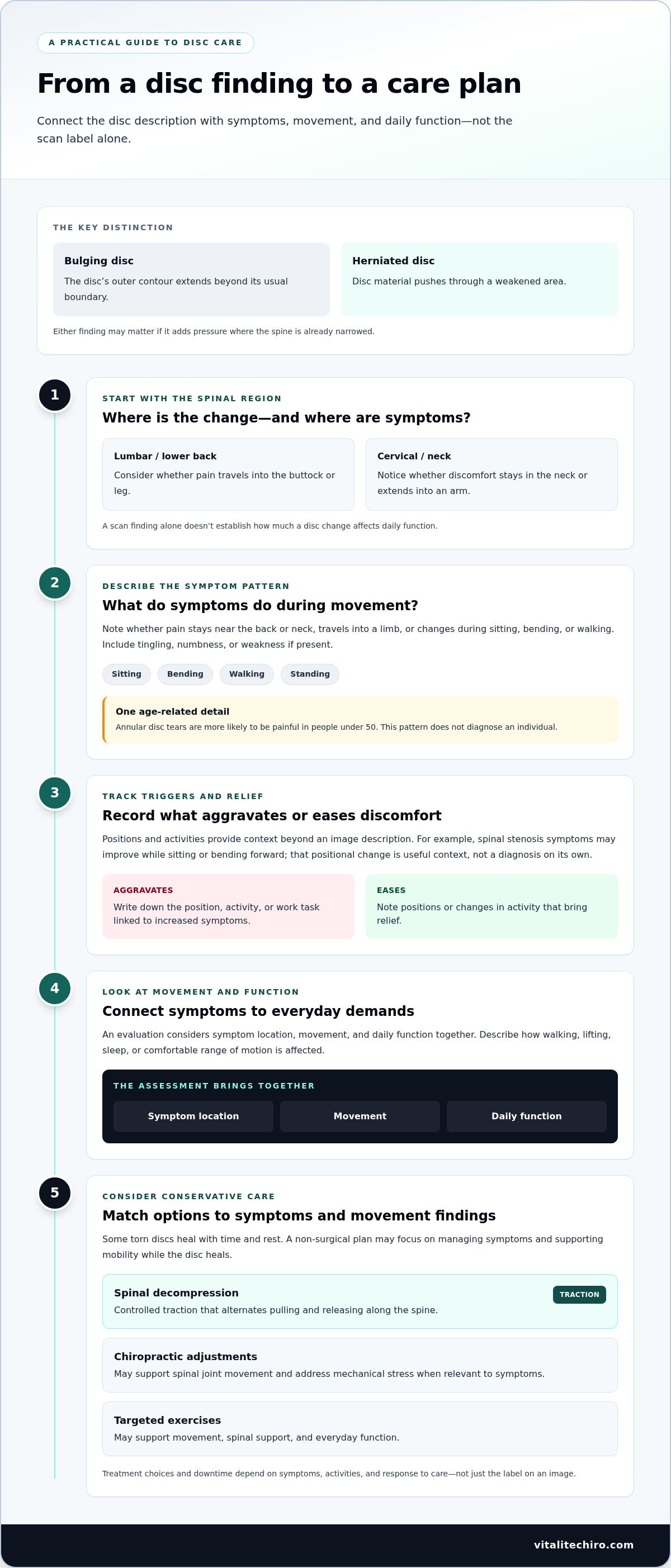
A bulging disc and a herniated disc describe different changes in spinal discs. Either may matter if it adds pressure to areas of the spine that are already narrowed.
A disc sits between spinal bones and helps absorb everyday loading. With a bulge, its outer contour extends beyond its usual boundary; with a herniation, disc material pushes through a weakened area. These terms describe structure, not a complete explanation of pain. Symptoms, movement, and the location of pressure also shape what the finding means.
For example, a lumbar disc change may be considered alongside pain traveling into the buttock or leg. A cervical disc change may be considered alongside neck discomfort or symptoms extending into an arm. A scan finding alone doesn’t establish how much it affects daily function. The useful step is to connect the location and type of disc change with the person’s symptoms and movement.
Herniated Disc Care
Care for a herniated disc begins by looking at symptom patterns, the affected spinal region, and movement limitations. Note whether pain stays near the back or neck, travels into a limb, or changes during sitting, bending, or walking. Many torn discs heal on their own with enough time and rest. A treatment plan should account for this possibility and consider function as well as imaging findings.
Annular disc tears are more likely to be painful in people under 50 years old. That age-related pattern doesn’t diagnose an individual, but it makes age one relevant detail alongside symptoms and examination findings. The next step is to identify which activities aggravate discomfort and whether nerve symptoms accompany it. This helps distinguish a structural finding from the problems that need attention in daily life.
Bulging Disc Care
Bulging disc care also considers whether the disc adds pressure where the spine is already narrowed. Location matters: a change in the lower back and one in the neck can affect different regions and movement patterns. Record which positions ease or aggravate symptoms, such as bending forward, sitting, or standing. These details help guide a treatment plan beyond the scan description.
A bulging disc doesn’t automatically explain every ache, and an image doesn’t show how symptoms affect routine tasks. A practical review considers walking, lifting, sleep, and comfortable range of motion. For instance, pain during a specific activity may call for attention to that movement and its demands on the spine. The goal is to understand pressure, symptoms, and function together, rather than treating the word “bulge” by itself.
Herniated and bulging disc care therefore starts with a few clear steps: identify the spinal region, describe symptom patterns, and assess how movement is affected. The same finding can have different significance depending on those details. Non-surgical care may focus on managing symptoms and supporting mobility while the disc heals. Downtime and treatment choices depend on symptoms, activities, and response to care, not just the label on an image.
Chronic low back and neck pain
Persistent back or neck pain can make ordinary tasks harder, from sitting at a desk to turning your head while driving. Disc changes are one possible contributor, but spinal joints and narrowed spaces around nerves can also affect symptoms. A useful assessment looks beyond the location of pain and considers how it behaves during specific movements.
Wear and tear in spinal joints may contribute to inflammation and narrowing. When space around spinal nerves is reduced, spinal stenosis may cause lower back pain, discomfort radiating into the buttocks or legs, numbness, tingling, or leg weakness. The cervical spine can also be affected. If you have neck pain, note whether symptoms stay local or extend toward an arm.
Track patterns before an evaluation. For example, record whether symptoms increase during standing, walking, prolonged sitting, or a particular work task. Note what eases them, too. Spinal stenosis symptoms may improve while sitting or bending forward. That positional change is useful context, not a diagnosis on its own. Also describe whether numbness or weakness appears with pain and which activities become difficult.
Chronic pain calls for a broader view than a single sore area. Consider how sleep, commuting, lifting, and routine movement are affected. If back pain travels toward the legs, or neck discomfort extends into an arm, those details help clarify whether nerve irritation may be involved. Bring a concise symptom record, including triggers and positions that ease discomfort, to make the discussion more focused.
A practical evaluation connects three things: symptom location, movement, and daily function. The clinician considers whether joint wear, narrowing, disc changes, or more than one factor could contribute. The treatment plan can then target relevant limitations rather than relying on a pain label alone. For example, reduced neck rotation and arm symptoms call for a different functional focus than low back pain during walking.
Chiropractic care may be considered as part of a conservative approach when joint movement and mechanical stress are relevant to symptoms. Addressing restricted spinal joint motion can support mobility and reduce mechanical stress. A targeted plan should match movement findings and goals, such as sitting through work or walking with less limitation. Progress is best considered through those functional changes.
Persistent pain, leg weakness, or recurring numbness deserves thoughtful attention, especially when it limits walking or everyday activity. For a focused discussion of how chiropractic adjustments may fit into care for movement-related discomfort, consider an evaluation that reviews symptoms, mobility, and daily demands together.
How Are Disc Tears Commonly Treated?
A typical non-surgical disc treatment plan begins with a review of symptoms, movement, and daily function. It may then combine conservative care with targeted exercises, adjusting the approach as symptoms and mobility change.
Personalized Evaluation and Planning
Start by describing where symptoms occur, when they began, and what changes them. Include examples such as pain during walking, numbness after sitting, or sciatica traveling toward a leg. The evaluation also considers spinal movement, strength, and the effect on daily activities. These details help distinguish an imaging finding from the limitations that need attention.
An evaluation using the SANS framework can structure the conversation, but it should not replace an individualized assessment. Review symptoms, the affected spinal area, nerve-related changes, and functional goals. For example, a bulging disc with no limiting symptoms presents differently from pain accompanied by leg weakness. The relevant question is how the condition affects movement and function.
Typical Treatment Plan
The plan generally moves from assessment to tailored care and progress review. A practitioner may consider spinal decompression, mobility-focused care, or corrective exercises based on symptoms and examination findings. Your response helps determine which elements remain useful. Changes in walking, sitting, or comfortable movement provide practical measures for discussing progress.
Make each review more useful by noting which activities have changed and which symptoms persist. A brief record might compare walking tolerance, sleep, or discomfort during work tasks. If an approach increases symptoms or brings new numbness, mention that change at your next visit. Treatment should reflect your actual response, rather than follow a fixed sequence regardless of function.
Evaluation is especially relevant when spinal stenosis symptoms include leg numbness or tingling, leg weakness, or pain while standing or walking. These signs can help identify whether narrowed spaces around nerves may contribute. A clinician considers the pattern, location, and effect on movement together, rather than treating one symptom in isolation. Seek prompt evaluation for worsening weakness or changes that interfere with safe daily activities.
For a disc tear or bulging disc, an alternative to surgery may focus on symptom management, spinal support, and restoring practical movement. Not every treatment fits every person. The plan considers symptom location, nerve involvement, mobility, and goals such as returning to comfortable walking. In Arlington, share those details during an evaluation so the discussion reflects your daily needs.
Bring prior imaging or reports if available, along with a short list of activities that trigger symptoms. A scan can inform the assessment, while an examination and symptom history clarify how the finding relates to function. This step-by-step view helps shape care around you, not just the words “disc tear” or “herniation.”
Sciatica and nerve pain
Sciatica describes pain or other symptoms that travel along a nerve pathway, often from the lower back toward the buttock or leg. Disc changes can contribute, but nerve symptoms may also relate to spinal narrowing or alignment. The pattern matters: note where discomfort begins, where it travels, and whether numbness, tingling, or weakness accompanies it.
Spinal stenosis means narrowing around the spinal cord or nerves, most commonly in the lumbar or cervical spine. In the lower back, it may cause pain radiating into the buttocks or legs, numbness, tingling, or leg weakness. In the neck, narrowing can affect nerves in the cervical region. Symptoms vary with the area involved and the structures under pressure.
Age-related thickening or enlargement of spinal joints and discs can reduce space around nerves. Wear and tear may also contribute to inflammation and narrowing. For example, someone may notice leg pain or tingling while standing or walking, then feel better sitting or bending forward. Report that positional pattern during an evaluation, along with the activities that trigger symptoms.
Spinal alignment is another consideration. Spondylolisthesis can alter alignment and increase stress on spinal nerves, potentially contributing to pain or altered sensation. A clinician considers this alongside disc findings, movement, and symptom location. A scan may describe a structural change, but a useful assessment also connects it to daily function, such as walking, sitting, or turning the neck.
Seek an evaluation for symptoms that include leg numbness or tingling, leg weakness, or pain while standing or walking. Describe when each symptom occurs and whether it changes with posture or motion. For instance, note if discomfort travels from the lower back into one leg, or if tingling appears during a walk. Clear observations help clarify the pattern and guide the next clinical steps.
During an assessment, key questions concern the affected spinal region, nerve-related symptoms, and how movement changes them. Mention whether symptoms are stable, worsening, or shifting to a new area. Also describe limitations, such as needing to sit after walking or avoiding a neck turn while driving. These functional details help place sciatica within the broader picture of disc and nerve-related conditions.
Non-surgical care focuses on factors contributing to nerve irritation and your movement needs. Spinal decompression is one treatment approach used for disc conditions; whether it fits depends on an evaluation of symptoms and spinal mechanics. Recovery planning also considers daily activities and your response to care. Severe or increasing weakness, persistent numbness, or worsening pain warrants prompt medical evaluation rather than waiting for routine symptom tracking.
Non-surgical treatment for disc conditions
Non-surgical care addresses disc-related symptoms and movement limits without an operation. For people considering non-surgical disc treatment in Arlington, the approach depends on symptoms, disc findings, and affected daily activities.
Treatment Effectiveness
Physical therapy, chiropractic care, and spinal decompression use different approaches. Exercise-based therapy can target spinal support and movement; chiropractic care addresses restricted joint motion; decompression applies controlled traction along the spine. Track changes in function, such as walking, sitting, or completing work tasks, to assess progress. Consider relief alongside those changes, not an image alone.
Insurance coverage varies by plan and treatment. Vitalité Chiropractic accepts most major insurance plans, though coverage depends on the individual policy and service. In Arlington, Vitalité Chiropractic offers non-surgical disc care, including decompression therapy and chiropractic adjustments. An evaluation connects symptoms, spinal findings, and functional goals to the proposed approach.
Treatment Timeline
There is no single timeline for every disc condition. Progress depends on symptom severity, injury history, nerve involvement, daily demands, and response to care. Track changes in pain, motion, sleep, and activities such as sitting or walking. Those observations make it easier to discuss whether the plan supports recovery or needs adjustment.
A treatment plan typically begins by identifying limitations and selecting appropriate conservative methods. It then reviews symptoms and function over time, adjusting activities or therapy in response. For example, you might track whether sitting through a workday becomes easier or walking feels less restricted. Some torn discs heal with time and rest, so symptom changes also inform the course of care.
Treatment Risks and Side Effects
Risks and side effects vary by method and a person’s health history. Exercise places demands on movement, while hands-on care and decompression apply physical forces. Before treatment, describe prior procedures, current symptoms, and movements that aggravate pain. Report new numbness, weakness, or worsening symptoms promptly so the care plan can be reassessed.
Surgery is a separate option considered in relation to the condition and its effect on function. Non-surgical care focuses on managing symptoms and supporting movement; it cannot promise a particular result. During decompression, a table applies controlled traction along the spine, alternating pulling and releasing. This differs from exercise or adjustments, so treatment should reflect the assessment.
If you want to discuss whether non-surgical disc treatment in Arlington fits your symptoms and movement goals, request an evaluation.
Spinal decompression uses controlled traction along the spine to address disc-related concerns. Vitalité Chiropractic also offers Blueprint exercises designed to enhance spinal correction, which can be done at the clinic or at home.
Vitalité Chiropractic: Chiropractic Adjustments
Vitalité Chiropractic offers chiropractic adjustments and decompression therapy for people exploring conservative care for disc-related discomfort. An evaluation considers your symptoms, spinal movement, and daily activities to help determine whether these approaches fit your needs. For active people managing a sports-related injury, Sports Injury Care may also be relevant; Prenatal Chiropractic is available for pregnancy-related chiropractic needs.
If back or neck pain, sciatica, or restricted movement is affecting your routine, share how symptoms change with activity and which tasks have become difficult. That context helps guide a focused discussion about appropriate care. Contact Vitalité Chiropractic to discuss an evaluation and possible next steps.
Take the Next Step Toward More Comfortable Movement
Choosing non-surgical disc treatment in Arlington is a chance to focus on what you want daily movement to look like, not only what an image shows. Before your next conversation, consider which activities matter most, such as walking comfortably, working without frequent interruptions, or returning to a valued routine. Clear goals can make it easier to discuss care options and recognize meaningful changes over time.
Vitalité Chiropractic offers care tailored to your symptoms and movement goals. An evaluation can help you understand how chiropractic adjustments, decompression therapy, or sports injury care may fit your needs. Your questions matter, especially if pain or nerve symptoms are affecting your routine.
Contact Vitalité Chiropractic to discuss your options and take a thoughtful next step toward moving with greater confidence.
Frequently Asked Questions
What is Spinal Decompression Therapy?
Spinal decompression therapy uses a table to apply controlled traction along the spine. The pulling and release cycles change disc pressure and support fluid exchange within the disc. For example, a care plan may consider decompression when symptoms and examination findings suggest a disc-related concern. The approach is selected in relation to your symptoms and movement, rather than the scan description alone.
What non-surgical treatments are available for herniated or bulging discs?
Non-surgical options include decompression therapy, chiropractic adjustments, and targeted corrective exercises. These approaches serve different purposes: decompression uses traction, adjustments address joint motion, and exercises build spinal support and stability. Therapeutic modalities may also be part of care. For instance, if symptoms limit bending, a plan may address comfortable movement and support daily tasks rather than focus only on the disc image.
What types of disc conditions can be treated without surgery?
Non-surgical care may address symptoms associated with bulging discs, herniated discs, and annular tears. Relevant considerations include the spinal region, pain pattern, nerve symptoms, and movement limits. A disc finding doesn’t by itself establish the cause of discomfort or determine treatment. For example, a lumbar disc condition with leg symptoms calls for a different functional assessment than a neck condition affecting head movement.
When should someone with disc pain consider surgery or urgent medical care?
Seek prompt medical evaluation for leg numbness or tingling, leg weakness, or pain while standing or walking. Worsening weakness or symptoms that interfere with safe daily activities deserve particular attention. Surgery is a separate decision based on the condition and its effect on function; a medical professional can discuss whether conservative care remains appropriate. Bring details about symptom changes and movement limits to that discussion.


