
Yes, forward head posture can often improve with consistent exercises and changes to everyday habits. When the head shifts forward, each inch adds roughly ten pounds of load to the neck muscles and joints. Fixing forward head posture in Arlington can start with chin tucks, better monitor positioning, and less time spent holding your neck in a strained position.
If your neck feels tense after working at a screen, it’s natural to wonder whether a simple exercise can help. Chin tucks are a useful starting point, but lasting progress also depends on how you position your head and upper body throughout the day.
This guide covers how to do chin tucks, adjust your monitor, and understand the link between forward head posture and cervical spine strain. You’ll also learn what a steady, practical approach to improving posture can involve.
Key Takeaways
- Practice chin tucks with controlled movement and relaxed breathing to build awareness of a more neutral head position.
- Set your monitor so your eyes meet the top third of the screen, helping reduce the need to lean your head forward.
- Pair neck exercises with upper-back mobility and strengthening to address posture beyond the neck alone.
- Use brief posture check-ins throughout your workday to notice and reset positions that may contribute to ongoing strain.
Can forward head posture be corrected?
Consistent posture habits, mobility work, and strengthening can help improve forward head posture.
-
Recognize Neck and Upper-Back Strain
Notice when your head drifts forward while sitting, reading, or using a screen. Forward head posture can place extra strain on the neck muscles and joints. This extra demand can contribute to neck tension, shoulder tightness, and upper-back discomfort. Track when symptoms appear, and avoid staying in one position for long periods.
-
Try Neck Stretches and Yoga
Add gentle stretching to your routine, and stop if a movement increases discomfort. For a doorway or corner chest stretch, hold the position for up to a minute. A standing yoga pose for neck pain can also be held for at least one minute. For sleep, choose a cervical pillow that feels supportive; evidence doesn’t clearly favor one pillow type for forward head posture.
-
Strengthen Deep Neck Extensors
Build strength gradually with controlled chin tucks, keeping your jaw level rather than tilting your head down. Deep cervical flexor training can support a more neutral head position. Include thoracic extensor strengthening, too: strengthening these upper-back muscles reduces neck and back pain more effectively than isolated cervical treatment. Move slowly and comfortably instead of forcing your neck into position.
-
Seek Professional Guidance
Arrange an assessment if neck or back pain persists, worsens, or interferes with daily activities. A doctor or physical therapist can assess movement, strength, and symptoms, then guide an appropriate plan. Seek prompt medical attention for new arm weakness, numbness, or severe symptoms. Virginia insurance coverage for posture-related physical therapy depends on your plan’s benefits and medical-necessity criteria; coverage varies by policy.
Chin tuck exercises
Chin tucks, thoracic mobility drills, and upper-back strengthening can support better head alignment. Exercises alone may not change habits that repeatedly pull your head forward, so combine practice with comfortable positioning throughout the day.
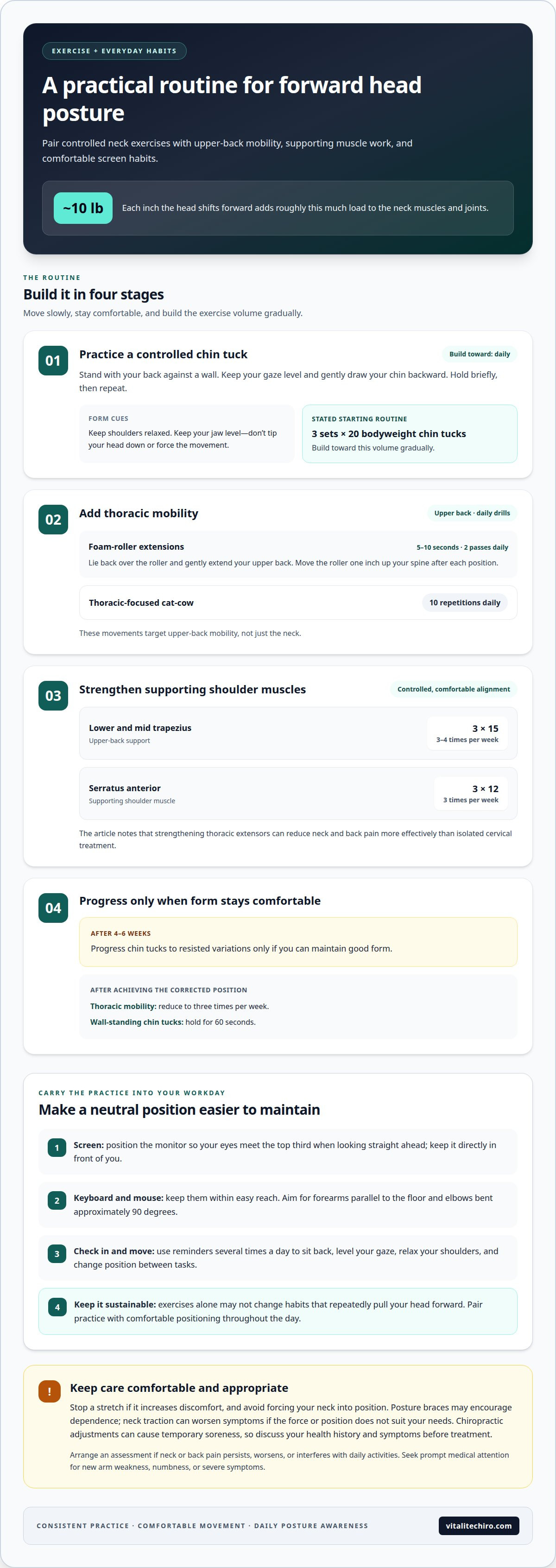
- Practice a controlled chin tuck. Stand with your back against a wall, keep your gaze level, and gently draw your chin backward. Hold the position briefly, then repeat the movement. Keep your shoulders relaxed; don’t tip your head down or force the movement. A separate starting routine recommends 3 sets of 20 bodyweight chin tucks daily, so build toward that volume gradually.
- Add thoracic mobility. Lie back over a foam roller and extend your upper back gently, holding each position for 5 to 10 seconds. Move the roller one inch up your spine after each position, completing two passes daily. You can also perform 10 thoracic-focused cat-cow repetitions daily. These exercises target upper-back movement, not just the neck.
- Train supporting shoulder muscles. Strengthen the lower and mid trapezius with 3 sets of 15 repetitions, three to four times per week. Add serratus anterior exercises for 3 sets of 12 repetitions, three times per week. Begin with controlled movement and maintain comfortable alignment. After four to six weeks, progress chin tucks to resisted variations if you can maintain good form.
- Use hands-on care thoughtfully. Posture braces may encourage dependence, while neck traction can worsen symptoms if the force or position doesn’t suit your needs. Chiropractic adjustments can cause temporary soreness, so discuss your health history and symptoms before treatment. For guidance on posture-related care, consider how professional support may complement a consistent exercise routine.
After achieving the corrected position, reduce thoracic mobility work to three times per week. Hold wall-standing chin tucks 60 seconds; move the foam roller one inch after each extension and complete two passes daily.
Ergonomic computer monitor positioning
Adjust your workstation so your eyes and neck stay aligned during screen tasks. These steps can reduce forward leaning and make a neutral position easier to maintain.
- Set the screen height. Position the monitor so your eyes meet the top third of the screen when you look straight ahead. If the display sits too low, raise it with a stable stand or books. If it’s too high, lower it. Keep your chin level rather than tilting your head up or down to read.
- Center the display. Place the monitor directly in front of your chair, not off to one side. Turn your whole chair when you need to use another screen, instead of repeatedly twisting your neck. This reduces sustained rotation and makes it easier to keep your head aligned over your shoulders.
- Arrange the keyboard and mouse. Keep both within easy reach so you don’t stretch forward. Set your forearms parallel to the floor, with elbows bent approximately 90 degrees. Rest your hands comfortably while typing, and keep your shoulders relaxed. Adjust the chair or desk until this position feels natural.
- Build in movement. Set a phone reminder to check your posture several times a day. When it goes off, sit back, level your gaze, and let your shoulders relax. Change position between tasks instead of holding one posture throughout a long work session. A physical therapist can also assess movement habits that contribute to strain.
- Review your setup during real tasks. Open the documents and applications you use most, then check whether you lean toward small text. Increase the text size or move the screen closer if needed, while maintaining a comfortable viewing distance. Fixing forward head posture across Arlington starts with changes you can sustain. Combine a well-positioned monitor with regular movement to support progress.
Forward head posture and cervical spine strain
- Compare neutral and forward head positions. An adult head weighs about 10 to 12 pounds, and neutral posture places an estimated 10 to 12 pounds of effective weight on the spine. At a 45-degree forward angle, that estimate rises to 49 pounds. This comparison explains why prolonged forward positioning can challenge the cervical spine, even without a single lifting event.
- Notice how strain changes with posture. When your head moves ahead of your shoulders, neck muscles work to support it, while your upper back may round. While sitting, check whether your chin projects toward the screen or your shoulders creep upward. Note whether tension eases when you return to a comfortable, neutral position. Observing posture describes a movement pattern, not a diagnosis of spinal damage.
- Track function alongside alignment. Record when cervical tension appears, such as after reading or computer work, and which movements feel restricted. In the program described, strengthening exercises can produce measurable changes in muscle activation patterns during weeks four to eight. The corrected position becomes the default for most daily activities by months four to six in that program. These markers help distinguish gradual improvement from a brief change in appearance.
- Use persistent symptoms as a reason to seek guidance. If neck tension or back pain disrupts work, sleep, or ordinary motion, arrange a professional assessment. A clinician can consider your symptoms, posture, and movement together rather than judging alignment from one photograph. For help addressing cervical strain, request a posture-focused appointment. Pair any care plan with consistent movement and strengthening so daily habits support a more neutral position.
Forward head posture can increase strain on the cervical spine. As you review your routine, consider where your head tends to drift and whether you maintain that position during everyday tasks. Notice changes in comfort as you adjust toward a more neutral alignment, but don’t use one observation to conclude that an injury is present or absent.
Use these observations to describe your experience clearly during an assessment: which situations bring on tension, what feels easier after repositioning, and whether symptoms interfere with usual activities. This keeps posture in perspective as one part of the overall picture and supports a thoughtful discussion of next steps.
Vitalité Chiropractic: Chiropractic Adjustments
Vitalité Chiropractic offers Chiropractic Adjustments for people seeking support with neck discomfort and movement related to forward head posture. If persistent tension affects sitting, work, or daily activities, an assessment can help clarify how posture and spinal movement relate to your symptoms.
Care may include Chiropractic Adjustments, with Decompression Therapy as another available offering. The appropriate approach depends on your concerns and health history. These services can complement posture exercises and workstation changes, rather than replace the daily habits that support comfortable alignment.
Contact Vitalité Chiropractic in Arlington to discuss your neck discomfort and schedule an assessment.
Make posture progress part of your routine
Choose a simple way to notice how your neck feels during everyday activities. For example, check in after reading or screen work, then note whether tension changes when you adjust your position. These observations can help you recognize patterns and make practical changes that fit your day.
Fixing forward head posture in Arlington means building habits you can sustain, rather than chasing a perfect pose. If discomfort keeps interfering with work, rest, or movement, professional guidance can help you choose a thoughtful next step. Vitalité Chiropractic offers care to consider alongside your ongoing posture routine.
Contact Vitalité Chiropractic today to discuss your concerns and explore a suitable next step. Small, consistent choices can support a more comfortable relationship with movement and daily life.
Frequently Asked Questions
How long does it take?
Improving forward head posture takes sustained practice, and the pace depends on your starting alignment, daily routines, and consistency. Someone who regularly changes positions and follows a strengthening routine may progress differently from someone whose work keeps them leaning forward. Track comfort and function, such as whether turning your head feels easier during everyday tasks, instead of judging progress by appearance alone.
What causes forward head posture and what are common symptoms?
Forward head posture often develops through repeated habits, such as leaning toward a laptop or looking down at a phone. Neck tension, shoulder tightness, upper-back discomfort, and headaches can accompany this position. Look for patterns: for example, symptoms that build during screen use may relate to sustained positioning. A clinician can assess persistent symptoms and distinguish posture-related strain from other causes.
How should I set up my desk and phone to improve head and neck posture?
Keep your desk screen centered and readable without leaning toward it, and bring your phone closer to eye level instead of lowering your head for long periods. Place frequently used items within easy reach so you don’t repeatedly stretch forward. Alternate screen tasks with brief movement breaks. These adjustments make a more comfortable head position easier to maintain at work and while using your phone.
How long does it take to improve forward head posture with exercises or physical therapy?
Improvement through exercise develops with consistent practice, while the pace depends on symptoms, movement habits, and how regularly you complete the program. One studied intervention combining manual therapy and stabilizing exercises lasted six weeks, with a one-month follow-up. That schedule describes the intervention, not a universal timetable. A physical therapist can adapt exercises to your movement and track changes in comfort and function.


