
What if getting back to golf starts with understanding how your swing and movement affect your body? Repeated rotation and forceful swings can place demands on the back, hips, shoulders, elbows, and wrists. If discomfort is changing your swing or everyday movement, an individualized assessment can help identify what may be contributing. At Vitalité Chiropractic, a golf injury chiropractor Arlington golfers can turn to, care is shaped around your symptoms, movement, and goals.
It’s understandable to wonder whether pain relates to swing mechanics, limited mobility, strength, or something else. The same symptom can have different causes, so an assessment is more useful than guessing or relying on a plan that worked for another golfer.
This article explains how golf’s rotational demands can affect different parts of the body and what to expect from a sports injury assessment and personalized care plan. You’ll also learn how Vitalité Chiropractic’s sports injury care and therapeutic modalities can fit into rehabilitation. Located in Arlington, Virginia, the clinic is led by Dr. W. Jean-Luc Sansfaute, who brings more than 20 years of experience. The aim is practical guidance and a considered path toward returning to golf with greater confidence.
Key Takeaways
- Golf-related pain can affect more than your swing. Understanding how symptoms relate to movement demands is an important first step.
- A golf injury chiropractor Arlington golfers visit can begin with a conversation and individualized examination before care options are considered.
- Different care approaches serve different purposes. Your symptoms, examination findings, and goals help guide the plan.
- If pain interrupts practice or play, pause activity that aggravates it and note what you experience rather than pushing through worsening symptoms.
- Vitalité Chiropractic offers sports injury care and rehabilitation to help you plan a thoughtful next step toward returning to golf.
Golf Injury Chiropractor in Arlington, VA: Why Can a Golf Swing Cause Pain?
Pain can change a round before you reach the first green. A stiff back may make turning uncomfortable; an aching shoulder or wrist can distract you during practice and take some enjoyment out of the game. If you searched “golf injury chiropractor Arlington,” you may be looking for a clear explanation, not a guess about what hurts. Golf-related injury is a broad description for pain or movement limitation associated with golf’s physical demands. It isn’t a diagnosis, and similar symptoms can have different causes.
A swing combines rotation, weight transfer, and a held setup posture, then repeats those movements across practice and play. The body coordinates these actions from the ground up: the feet and legs support weight transfer, the hips and trunk turn, and the arms and hands guide the club. Several areas contribute, even when discomfort seems concentrated in one spot.
Which parts of the body can golf-related pain affect?
Back discomfort is a familiar concern among golfers, but it isn’t the only one. You might notice shoulder soreness during the backswing, elbow tenderness while gripping or at impact, or wrist discomfort while controlling the club. Symptoms can also occur around the hips or knees, which help support stance, balance, and weight transfer.
Pain location alone doesn’t explain its cause. Two people with similar elbow symptoms, for example, may have different activity patterns or movement limitations. Golfer's elbow is a term for a specific elbow condition, but an ache in that area doesn’t establish that diagnosis. When symptoms arise, which movements affect them, and how they influence everyday activity all provide useful context for an individual assessment.
How can swing mechanics contribute to discomfort?
During a swing, the trunk turns while the golfer shifts weight between the legs; the shoulders, arms, and wrists help direct and control the club. If one area has limited mobility, another may contribute more to complete the motion. That doesn’t prove the swing caused an injury, but it helps explain why symptoms should be considered in the context of the whole movement.
A golf swing distributes movement across the feet, legs, hips, trunk, shoulders, arms, and hands. Repeating that coordinated effort may feel more demanding when practice increases, activity resumes after a break, or mobility and movement habits change. A long session can also involve holding the setup posture between swings, adding time in a fixed position.
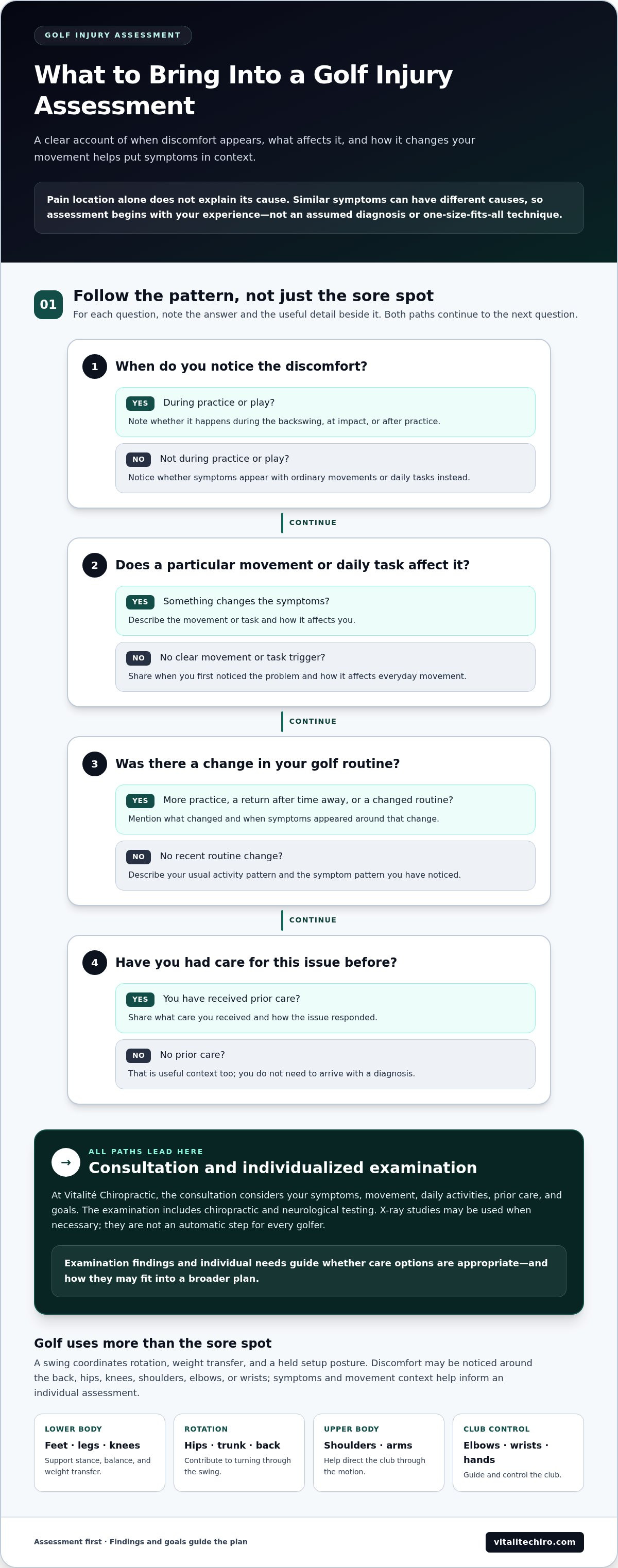
Notice the pattern, not just the sore spot. Does discomfort appear during the backswing, at impact, after practice, or during ordinary movements later? These details can help guide an assessment without trying to self-diagnose. A golf injury chiropractor Arlington golfers consult can consider symptoms alongside movement demands instead of assuming every golfer’s pain has the same explanation.
What Does a Golf Injury Chiropractor Assess Before Recommending Care?
An assessment should start by understanding your experience, not by assuming one technique is right for every golfer. At Vitalité Chiropractic, the process includes a consultation and examination with chiropractic and neurological testing. Dr. Sansfaute considers what you’re feeling, how it affects movement and daily activities, and what you want to return to doing. X-ray studies may be used when necessary as part of the evaluation.
This gives the conversation a practical focus. A golfer who feels discomfort only after a long practice session may describe a different pattern from someone whose symptoms affect routine activities or appear with a particular movement. Those details inform the examination, but don’t replace it. Symptom location alone can’t identify the cause, so the goal is to understand the broader picture before discussing care.
What should golfers share during the consultation?
Describe when you first noticed the problem and what was happening around that time. Mention whether symptoms appear during practice, play, or afterward, and whether they change with particular movements or daily tasks. A recent increase in practice, a return to golf after time away, or a change in your usual routine can provide useful context.
Share any relevant prior care and how the issue affects your goals. Perhaps you want to turn comfortably, practice without symptoms worsening, or manage everyday movement more easily. You don’t need to arrive with a diagnosis. Clear observations are more useful than trying to match your symptoms to a label.
How do examination findings shape a care plan?
During the examination, chiropractic and neurological testing help the clinician consider how your body is functioning and which next steps may be appropriate. Findings are considered alongside your symptom history, movement, daily needs, and goals. X-ray studies are used only when necessary; they aren’t an automatic step for every golfer.
Findings and individual needs guide the care plan, not a one-size-fits-all technique. If chiropractic adjustments are considered, Dr. Sansfaute can explain how they may fit into the broader approach. For background on this type of care, explore professional chiropractic adjustments.
A thoughtful plan should make sense to you. It should connect the assessment to practical priorities, such as moving more comfortably in daily life or working toward golf-related goals, without promising a particular recovery timeline or result. As a golf injury chiropractor Arlington golfers consult, Vitalité Chiropractic uses the consultation and examination to shape individualized next steps. Learn more about sports injury care in Arlington and how an assessment can help clarify a way forward.
Which Golf Injury Care Options May Fit Your Symptoms and Goals?
Golf injury care isn’t a menu where every golfer needs every option. Dr. Sansfaute considers examination findings, the symptoms you describe, and what you want to work toward before discussing a plan. One person may need care focused on an area of discomfort, while another may benefit from a broader rehabilitation approach. The plan is tailored to the individual, and no care option guarantees pain relief or a particular return-to-golf timeline.
How can chiropractic adjustments fit into golf injury care?
Chiropractic adjustments may be considered as one part of care when the examination and your needs support that option. They aren’t a universal response to golf pain, and they don’t automatically correct swing mechanics or prevent future injuries. Dr. Sansfaute can explain the purpose of an adjustment within your overall plan and how it relates to your symptoms and goals. For broader context, the sports performance chiropractic care guide discusses care for active individuals.
When might rehabilitation or therapeutic modalities be considered?
Sports Injury Rehab may be appropriate when the plan needs to address more than an isolated symptom. Rehabilitation can be organized around movement and activity goals, while therapeutic modalities may form another component of individualized sports injury care. Vitalité Chiropractic offers Electrical Stimulation, Decompression, Mechanical Traction, Cryotherapy, Moist Heat Therapy, and Work Hardening Rehab. Which options are included depends on the individual assessment and plan.
A golfer’s priorities can influence the focus of care. Someone whose symptoms limit everyday movement may have different needs from someone mainly concerned about gradually returning to practice. Dr. Sansfaute can discuss which options align with the assessment and what each is intended to address, then adjust the plan as appropriate. Treatment selection and progress vary from person to person.
It can help to think about the available approaches by their role:
- Chiropractic adjustments: A potential component of care, considered in light of examination findings and individual needs.
- Sports Injury Rehab: Rehabilitation organized around a person’s movement and activity goals.
- Therapeutic modalities: Options that may be included in a personalized plan, with selection guided by the patient’s presentation.
These approaches aren’t substitutes for an appropriate medical evaluation when one is needed. A useful discussion clarifies why an option is being considered and how it fits your priorities. Ask what the plan is intended to address, how your response will inform next steps, and how golf activity can be approached as part of your individual care process.
For golfers exploring a golf injury chiropractor Arlington option, Vitalité Chiropractic provides sports injury care that can incorporate adjustments, rehabilitation, and therapeutic modalities as appropriate to the plan. Care is individualized, not a promise of a shortcut. Learn more about individualized sports injury care as you consider your next step.
What Should You Do When Golf Pain Interrupts Practice or Play?
When pain changes your swing or makes practice uncomfortable, pushing through isn’t the only option. A measured response can help you make informed decisions without guessing what’s causing the symptoms. Pause activity that clearly aggravates the problem, note what you’re experiencing, and arrange an assessment if the discomfort persists, affects daily movement, or concerns you.
How can golfers adjust activity while seeking guidance?
Temporarily modify the parts of golf or everyday activity that reliably make symptoms worse. That might mean stopping a practice session rather than repeating swings through increasing discomfort. This isn’t a return-to-play schedule or a recommendation to avoid all movement. It’s a way to avoid provoking symptoms while you decide on an appropriate next step.
Keep a short record to help describe the pattern during an assessment:
- When the discomfort began and whether it followed a change in activity.
- Which movements or activities seem to increase or ease it.
- Whether symptoms affect practice, play, sleep, work, or routine tasks.
- How symptoms change over time, including whether they’re getting worse.
These observations offer useful context, but they can’t diagnose the cause. Avoid treating a generic exercise routine as a substitute for an evaluation, especially if a movement increases your discomfort. Exercises and stretches that suit one golfer may not suit another, so personalized guidance matters.
When should golf pain receive prompt medical attention?
Seek prompt medical evaluation for sudden, severe, or otherwise concerning symptoms. If a situation feels urgent, use appropriate urgent or emergency medical services rather than waiting for a chiropractic appointment. Chiropractic care isn’t emergency care or a substitute for primary medical evaluation when it’s needed.
This article is educational and can’t determine what’s causing your pain. An assessment can help clarify appropriate next steps, but the need for medical evaluation depends on your circumstances. Don’t rely on symptom location alone to decide what’s happening or whether it’s safe to keep playing.
Returning to golf isn’t governed by one fixed timeline. Consider how symptoms are changing, how you’re managing relevant movements and daily activities, and the guidance you receive from a clinician. The next step may be an assessment and an individualized plan rather than testing your limits with a full round. If you’re looking for a golf injury chiropractor Arlington golfers can consult about sports-related concerns, Vitalité Chiropractic offers sports injury care in Arlington.
Arrange an assessment with Vitalité Chiropractic’s Arlington team to discuss your symptoms and possible next steps.
How Can Vitalité Chiropractic Help Arlington Golfers Plan Their Next Step?
Golf pain can leave you unsure whether to rest, change your routine, or seek guidance. Vitalité Chiropractic provides sports injury care and rehabilitation in Arlington, Virginia, with an individualized process to help clarify possible next steps. The focus isn’t a guaranteed shortcut back to the course. It’s understanding your concerns, examining how they relate to movement and daily function, and discussing care options in light of your needs and goals.
What can golfers expect from care at Vitalité?
Dr. W. Jean-Luc Sansfaute brings more than 20 years of experience to care at the clinic. The patient journey starts with a consultation, followed by an examination and a discussion of the findings. From there, a personalized treatment plan may include chiropractic adjustments, Sports Injury Rehab, or therapeutic modalities, as appropriate. The clinic reports a 4.7-star Google rating and 83+ five-star reviews.
This process connects recommendations to your individual presentation rather than assuming every golfer needs the same approach. Describe how symptoms affect your swing, practice, or everyday activities, then discuss which goals matter most to you. The plan is based on the consultation and examination, with care options selected to fit the findings. Treatment and progress can vary from person to person.
How can Arlington golfers schedule an appointment?
Vitalité Chiropractic is located at 1530 Wilson Blvd, #1040, Arlington, VA 22209. Same-day appointments are offered, and you can schedule online or call the office at (703) 879-5144. This gives local golfers a straightforward way to arrange an assessment when discomfort interferes with practice, play, or daily movement.
Before your visit, note when symptoms began, which activities affect them, and how they’re changing. That information can help make your consultation more focused. You don’t need a diagnosis or a preferred treatment in mind. The visit is an opportunity to discuss your concerns and understand the examination findings before planning next steps.
If you’re looking for a golf injury chiropractor Arlington golfers can visit for individualized sports injury care, Vitalité Chiropractic welcomes you to take the next step. Book your appointment with Vitalité Chiropractic online or call the office to arrange a visit.
Take a Thoughtful Step Toward Your Next Round
Your next step doesn’t have to be deciding when you’ll play a full round. Start by understanding what your body is ready to do now and setting a practical goal from there. A measured approach gives you room to make choices based on your symptoms and function, rather than pressure to return on someone else’s schedule.
If you’re considering a golf injury chiropractor Arlington golfers can turn to for personalized sports injury care, Vitalité Chiropractic can help you discuss a path forward. Bring your questions, describe what you hope to get back to, and start with your individual needs. Care isn’t a promise of a particular outcome; it’s an opportunity to make an informed plan with guidance.
Book your appointment with Vitalité Chiropractic and take a considered step toward moving with greater confidence, on the course and beyond.
Frequently Asked Questions
Can a chiropractor help with a golf-related back injury?
A chiropractor can assess back symptoms connected with golf and discuss whether chiropractic care or another next step may be appropriate. The useful question isn’t only where your back hurts, but how discomfort relates to turning, standing, walking, or other activities. Share whether symptoms began during a swing or appeared later, and whether they’re changing. An evaluation can help guide care, but it can’t guarantee a particular result.
Is chiropractic care appropriate for shoulder or elbow pain from golf?
It may be an option, depending on the examination and your individual needs. Shoulder or elbow discomfort can affect gripping, lifting, dressing, or reaching as well as swinging, so describe any changes in those activities. Don’t assume a particular diagnosis based on the location of pain. A clinician can consider your symptoms and movement before discussing whether chiropractic care or another approach fits your situation.
Should I stop playing golf if my swing causes pain?
If swinging clearly increases your pain, pause or modify that activity rather than forcing repeated swings. Notice whether symptoms settle with rest or continue during everyday tasks, and make a note of what brings them on. This isn’t a prescribed rest period or a return-to-play schedule. If pain persists, worsens, or limits ordinary movement, arrange an assessment before testing your tolerance with another round.
What happens at a golf injury chiropractic appointment?
At Vitalité Chiropractic, an appointment includes a consultation about your concerns and a chiropractic and neurological examination. Dr. Sansfaute may recommend X-ray studies when necessary, then explain the findings and discuss a personalized treatment plan. For your visit, bring a clear account of what you were doing when symptoms began and any relevant prior care. A golf injury chiropractor Arlington patients see should connect recommendations to individual needs.
Can chiropractic care help me return to golf?
Chiropractic care may be part of an individualized plan, but it can’t promise when or whether you’ll return to golf. A clinician can discuss your goals and consider how symptoms and function relate to the demands of playing. For example, being able to swing once without discomfort may not reflect how your body responds to a full practice session. Follow individualized guidance rather than a fixed timeline or someone else’s experience.
When should golf-related pain be evaluated urgently?
Seek prompt medical evaluation for sudden, severe, or otherwise concerning symptoms. If you believe the situation is urgent, use appropriate urgent or emergency medical services rather than waiting for a chiropractic visit. An online article can’t determine the cause of pain or assess how serious it is. For symptoms that aren’t urgent but persist or interfere with daily activities, arrange an appropriate evaluation to discuss what you’re experiencing.


