
A useful wellness plan starts with an assessment, not a one-size-fits-all routine. Whole-person wellness care in Arlington begins by considering your physical concerns alongside the factors that shape daily well-being. The next steps can then reflect your needs and goals, with practical, conservative care focused on movement and function.
It makes sense to want clear guidance before starting a care plan. An assessment helps organize what you’re experiencing and identify which concerns are most relevant to address.
This article explains what an assessment may consider, how collaborative care works, and where conservative rehabilitation and in-person support fit. You’ll have a clearer picture of how to get started and what to expect as care takes shape.
Key Takeaways
- A clinical assessment can connect physical concerns with daily routines and other factors that shape well-being, helping clarify what to address first.
- Collaborative care works best when your priorities and experiences help guide the plan and communication stays open and respectful.
- Conservative musculoskeletal care may include hands-on treatment and rehabilitation approaches selected around your symptoms, movement, and goals.
- Learn what to consider when looking for in-person wellness support in Arlington and how to identify care that fits your needs.
Comprehensive intake and clinical assessment
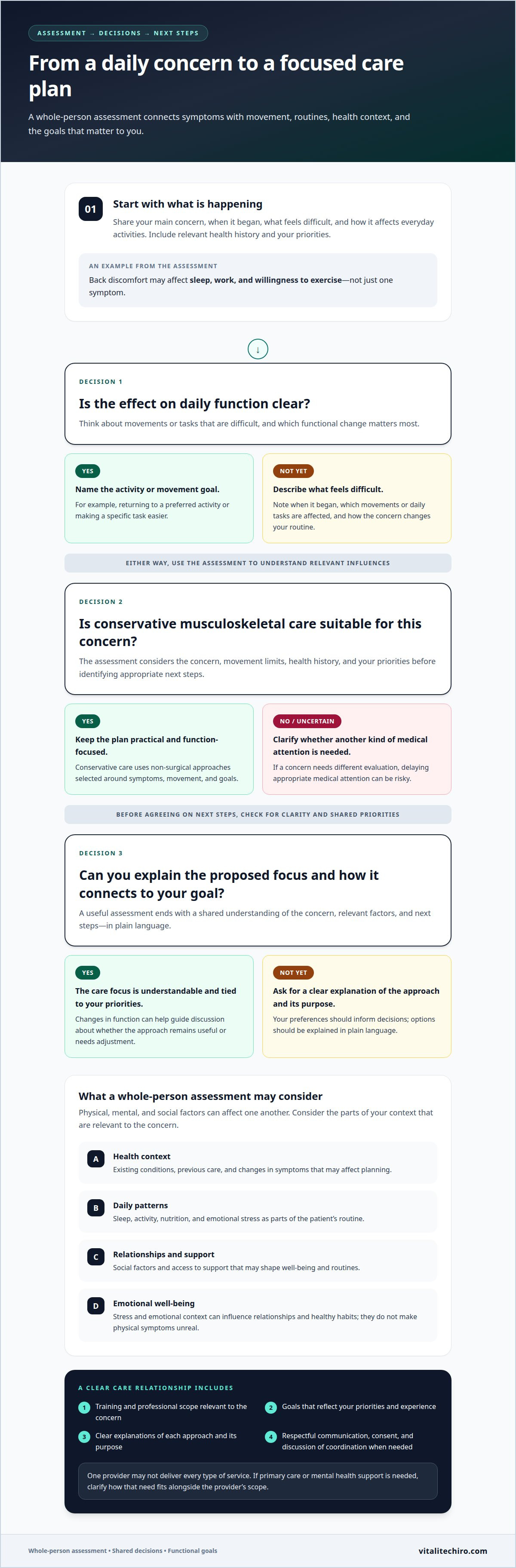
A comprehensive intake begins with your main concerns, health history, and priorities. The clinician asks what feels difficult, when it began, and how it affects daily activities. For example, back discomfort may affect sleep, work, and willingness to exercise. These details shape an assessment around your experience, not just one symptom.
Whole-person care considers physical, mental, and social factors together. An assessment can explore how pain, stress, relationships, routines, and access to support affect one another. A challenge in one area may make it harder to maintain well-being elsewhere. The goal is to understand relevant influences and identify appropriate next steps, rather than focus only on symptom relief.
- Describe the concern: Note what movements or daily tasks feel difficult, such as walking or lifting.
- Review health context: Discuss existing conditions, previous care, and changes in symptoms that may affect planning.
- Explore daily patterns: Consider sleep, activity, nutrition, and emotional stress as parts of the patient’s routine.
- Set priorities: Identify which functional goal matters most, such as returning to a preferred activity.
These steps give the clinician a clearer basis for a focused assessment. Findings can help determine whether conservative care is suitable, which concerns to address first, and how to discuss progress. Nutrition, for instance, can be considered in relation to diet and lifestyle rather than as an isolated choice. Emotional well-being also matters because it can influence stress, relationships, and healthy habits.
Integrative and holistic treatments have limits. An approach that supports comfort or daily function may not address every underlying condition. If a concern needs a different kind of medical attention, delaying appropriate evaluation can be risky. An assessment should clarify the treatment’s purpose and how it fits with your existing care.
A useful assessment ends with a shared understanding of the concern, relevant factors, and next steps. You should be able to explain the proposed focus in plain language, such as improving a specific movement or addressing a barrier in your routine. That clarity keeps care centered on meaningful goals.
Collaborative, affirming care
Compare relevant clinical training, professional scope, and experience with your concern. Also look for care that welcomes your priorities, explains its approach, and respects your identity and choices.
Collaborative Care Planning
A collaborative plan makes your goals part of care decisions. If pain affects work and sleep, for example, discuss which change matters most to you first. Active listening means hearing your full concern rather than preparing a reply. A clinician can reflect what you’ve said, explain options in plain language, and invite your preferences before agreeing on next steps.
Affirming communication makes room for emotional and social context without reducing you to a diagnosis. You can share what feels relevant, including how stress or relationships affect your routines. Respectful language, clear explanations, and consent before each step help build trust. These practices make it easier to raise concerns and understand how a plan connects with your priorities.
Provider Credentials and Care Approaches
For whole-person wellness care in Arlington, compare a provider’s stated credentials with the care they deliver. Check that their clinical training and professional scope relate to the concern being addressed. Then consider whether the approach includes assessment, clear goals, and a way to review progress. A thoughtful explanation should connect each proposed method to your needs, not rely on broad promises.
Care approaches differ in focus. Some address physical function, while a whole-person perspective also recognizes mental and social influences on well-being. If you need primary care or mental health support, clarify how that need fits alongside the provider’s scope. Collaborative care can include discussion of relevant needs without implying that one provider delivers every type of service.
- Notice how decisions are made: Your goals should inform the plan.
- Look for clear explanations: Each approach should have a stated purpose.
- Consider respectful communication: Your identity and concerns should be treated with dignity.
- Discuss coordination: Relevant needs may involve care beyond one provider’s role.
These criteria help you recognize a care relationship built around listening, shared decisions, and defined scope. If in-person support for a musculoskeletal concern is your priority, explore collaborative, in-person care as a practical next step.
Conservative musculoskeletal care and rehabilitation
Conservative care addresses musculoskeletal concerns through non-surgical approaches and functional goals. A plan might consider how shoulder discomfort affects reaching, dressing, or work tasks. The clinician considers the specific concern, movement limits, health history, and your priorities. This keeps treatment focused on practical changes rather than a generic routine.
Rehabilitation can connect care with the movements you want to regain. For example, someone returning to gardening may need support with bending, lifting, and standing comfortably. Keeping those activities central helps make progress relevant. Changes in function can guide discussion about whether the current approach remains useful or needs adjustment.
Physical symptoms also sit within a wider health context. Illness, disrupted sleep, or stress may affect activity and recovery habits. Mental health can shape how you experience discomfort and stay engaged with a routine. Compassionate care makes room for these factors without treating emotional concerns as proof that physical symptoms are unreal.
- Define a functional goal: Choose an activity, such as walking through a grocery store or lifting a work bag.
- Connect care to the goal: Discuss how the selected approach relates to that movement or task.
- Review changes: Note what feels easier, what remains limited, and how symptoms affect daily routines.
- Adjust the focus: Use those observations to guide the next conversation about care.
Conservative rehabilitation is not a single technique. The appropriate approach depends on your concern, assessment findings, and goals. Clear explanations help you understand the purpose of each part of care and how it fits your needs. If a concern changes or daily function becomes harder, bring that up in your next clinical discussion.
In-person support can make movement assessment and care planning more direct. A clinician can observe you performing a relevant task, such as turning your neck or reaching overhead, and discuss the findings. Connecting symptoms with function helps keep the plan grounded in everyday life.
Which whole-person wellness clinics are in Arlington, Virginia?
For in-person whole-person care in Arlington, Virginia, start with the concern you want addressed. A clinic focused on musculoskeletal health may help with movement limits, back discomfort, or sports-related injuries. Other concerns may call for a different type of clinical support. The right setting depends on the care you need, not simply the word “wellness” in a clinic’s description.
Use practical criteria to narrow your options. Consider whether the clinic provides in-person assessment, explains its approach, and connects treatment to functional goals. If shoulder pain makes reaching difficult, for example, the discussion should address that movement and its effect on daily tasks. Clear explanations help you understand how the proposed care relates to your concern.
- Match the focus: Identify whether your main need involves movement, pain, or another aspect of health.
- Look for assessment: Choose a setting that considers your symptoms and relevant health context before planning care.
- Review the approach: Ask how care relates to a specific goal, such as returning to regular walking.
- Consider in-person support: Decide whether face-to-face assessment and care suit your needs.
These steps help distinguish a clinic’s actual focus from broad wellness language and keep your decision grounded in your priorities. A clinic serving Arlington should make its location and in-person care arrangements clear, while explaining which concerns its clinical approach addresses. For persistent or complex health needs, consider how the clinic’s scope fits with your existing care.
If your priority is in-person support for a musculoskeletal concern, explore Arlington wellness care and consider whether its clinical focus aligns with your needs. A useful first step is to describe the movement or activity you want to address. That gives the care conversation a practical starting point and helps connect your concern with an appropriate next step.
Vitalité Chiropractic
Vitalité Chiropractic is an option when your wellness concerns involve movement, discomfort, or physical function. Its care includes chiropractic adjustments, decompression therapy, sports injury care, and prenatal chiropractic care. An assessment helps identify the concern you want addressed and guide an appropriate conservative approach.
If an injury is affecting your activity, sports injury care may be relevant. For pregnancy-related musculoskeletal concerns, prenatal chiropractic care is a specialized option. An assessment can connect your symptoms and goals with a suitable direction for care, keeping the discussion centered on your needs.
Contact Vitalité Chiropractic to discuss your concerns and take the next step toward care.
Take the Next Step Toward More Supportive Care
Your next step can be a focused conversation about what you want to change in daily life. For whole-person wellness care in Arlington, bring one priority to the discussion, such as moving more easily or returning to an activity you value. A clear starting point makes the conversation more practical and personal.
Vitalité Chiropractic offers Chiropractic Adjustments, Decompression Therapy, and Sports Injury Care for people seeking support with musculoskeletal concerns. The right direction depends on your needs and the clinical assessment. If you’re ready to discuss what may fit, contact Vitalité Chiropractic to get started.
Taking that first step can help you move from uncertainty toward a clearer plan, with your goals guiding the conversation.
Frequently Asked Questions
How do I get started?
Start by identifying the concern you want help addressing, such as discomfort that interrupts sleep or limits a favorite activity. Bring relevant health information and a clear example of how the concern affects your day. This can help focus the initial discussion. Vitalité Chiropractic accepts appointment requests by phone or through its online booking option.
What conditions do you treat?
Vitalité Chiropractic focuses on chiropractic care for concerns involving back or neck discomfort, headaches, sports injuries, and pregnancy-related musculoskeletal needs. Its offerings include Chiropractic Adjustments, Decompression Therapy, Sports Injury Care, and Prenatal Chiropractic Care. The appropriate approach depends on your concern and clinical findings. The practice does not replace general primary care, so broader health needs may require a different clinical setting.
What does wellness mean?
Wellness means supporting health and daily functioning, rather than defining health only by the absence of illness. For one person, that may mean moving comfortably through a workday; for another, maintaining routines that support physical, emotional, and social well-being. The meaning is personal, and useful goals connect with the activities and relationships that matter to you.
What does whole-person wellness care include?
Whole-person care considers how physical health, emotional well-being, and social circumstances relate to your needs. For example, a demanding schedule may affect rest and activity, shaping how you manage a physical concern. This perspective informs the care discussion; it doesn’t mean one clinic provides every type of health service. The focus remains on relevant needs and appropriate care.
How can I find a whole-person wellness provider in Arlington and book an appointment?
Look for an Arlington, Virginia, provider whose clinical focus matches your concern and whose care approach is clearly explained. Vitalité Chiropractic is located at 1530 Wilson Blvd, #1040, Arlington, VA 22209. To arrange an appointment, call (703) 879-5144 or use the “Book Your Appointment” option. Choose the booking route that works best for you.
What should I expect at a first whole-person wellness appointment?
At Vitalité Chiropractic, your first visit begins with patient forms and a consultation about your health concerns. The clinical examination includes chiropractic and neurological testing. X-ray studies are used when necessary. The provider then explains the findings and care plan in a report, so you can understand the proposed approach before treatment begins.


