
Sciatica can start in the lower back but travel through the buttocks and down the leg. It’s pain associated with irritation or compression of the sciatic nerve, often alongside tingling, numbness, or weakness. At Vitalité Chiropractic in Arlington, Virginia, a sciatica pain relief chiropractor serving the Ballston area can assess possible contributing factors and discuss care options suited to your symptoms.
If pain shoots down your leg, you may wonder whether a disc is involved and what could help. Sciatica has several possible causes, including a herniated disc, a narrowed spinal canal, bone spurs, or tight hip muscles. Identifying the likely source helps guide the next step.
Here, you’ll learn how nerve compression can shape sciatica symptoms, what an assessment may involve, and what research says about chiropractic care for back pain. You’ll also see how chiropractic adjustments and decompression therapy may fit into a broader approach, and when symptoms such as bowel or bladder changes call for immediate medical attention.
Key Takeaways
- Understand how disc changes and other sources of nerve irritation may contribute to sciatica, and why persistent symptoms deserve careful assessment.
- Recognize how sciatic nerve compression can cause pain, tingling, numbness, or weakness that travels into the leg.
- Learn which symptom changes call for immediate medical attention and what a sciatica evaluation may consider.
- Explore what research says about chiropractic care for back and leg pain, and how adjustments or decompression therapy may fit into care.
What Causes Sciatica & Disc Pain?
Sciatica describes pain linked to irritation or compression of the sciatic nerve. A herniated disc may press on a nerve root; spinal stenosis narrows the spinal canal and can also contribute. Bone spurs and tight hip muscles are other possible causes. Because similar symptoms can come from the lower back or hip, identifying the source matters.
Disc-related pain can begin when disc material bulges or ruptures near a nerve. Other possible contributors include injury, pregnancy, obesity, piriformis syndrome, and prolonged sitting. These factors don’t establish a diagnosis. An assessment considers where pain travels and whether numbness, tingling, or weakness accompanies it. Pain extending from the lower back into a leg, for example, may suggest nerve involvement.
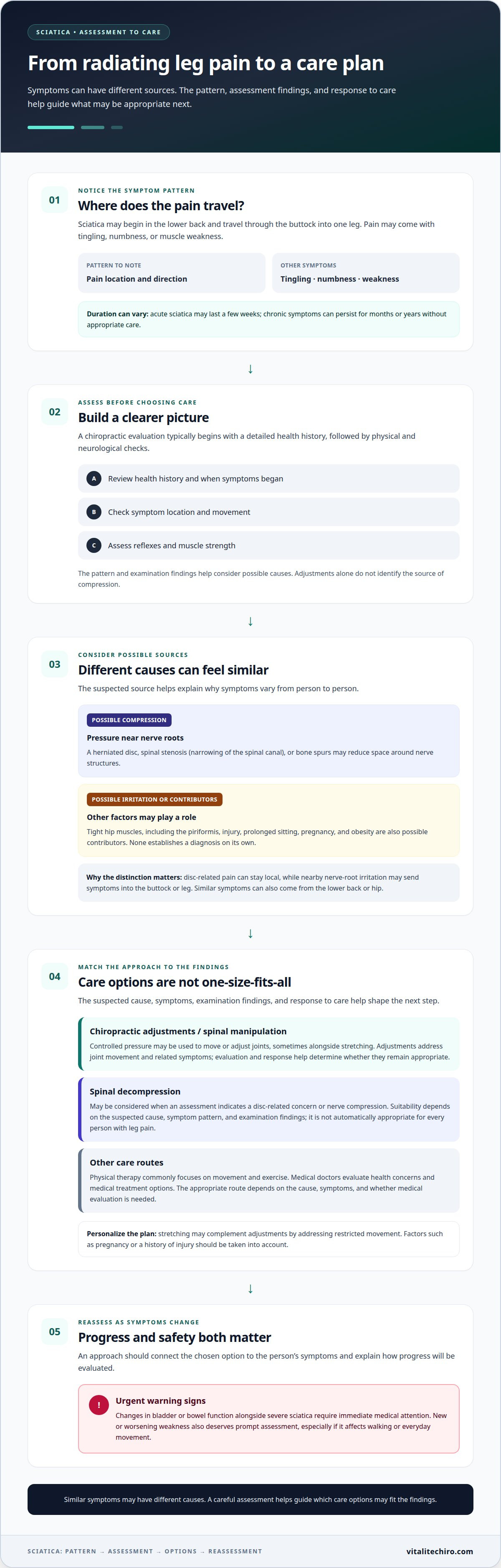
For persistent sciatica, spinal manipulation may be considered as part of care. It uses controlled pressure to move or adjust joints, sometimes alongside stretching. Chiropractic adjustments address joint movement and related symptoms, but don’t identify the cause on their own. The evaluation and your response help determine whether adjustments remain appropriate as care progresses.
Spinal decompression may be considered when an assessment indicates a disc-related concern or nerve compression. Suitability depends on the suspected cause, symptom pattern, and examination findings, so it isn’t automatically appropriate for every person with leg pain. Stretching may complement adjustments by addressing restricted movement. A personalized approach should account for factors such as pregnancy or a history of injury.
Chiropractors, physical therapists, and doctors take different approaches to sciatica care. A chiropractor may assess symptoms and provide adjustments; physical therapy commonly focuses on movement and exercise, while medical doctors evaluate health concerns and medical treatment options. The appropriate route depends on the cause, symptoms, and whether medical evaluation is needed.
For Ballston-area sciatica care, look for an approach that assesses the suspected source before choosing manipulation, adjustments, or decompression therapy. A sciatica-focused chiropractor should connect those options to the person’s symptoms and explain how progress will be evaluated, rather than treating every case with the same technique.
Common causes of sciatic nerve compression
Compression occurs when nearby structures press on nerve roots connected to the sciatic nerve. The suspected cause helps explain why symptoms vary from person to person.
Sources of Nerve Compression
A herniated disc can press near a nerve root and trigger pain along its path. Bone spurs and spinal stenosis can also reduce space around nerve structures. The affected area and the direction pain travels can help distinguish these possible causes.
A narrowed spinal canal, for example, may affect nerve roots differently from a disc pressing locally. An assessment considers symptom patterns alongside movement and physical findings. Adjustments address joint movement but don’t identify compression on their own, so establishing the likely source comes first.
Causes of Nerve Irritation
Not every irritated sciatic nerve is compressed by a disc. Tight hip muscles, including the piriformis, may irritate nearby nerve tissue. Injury can also trigger symptoms, while prolonged sitting may aggravate discomfort. The location and circumstances of your pain help clarify possible causes.
Nerve irritation may cause pain, tingling, or numbness along the affected leg. Pregnancy and obesity are also possible contributors, but neither points to one cause in every case. An assessment can consider when symptoms began, your daily activities, and whether movement changes them.
Causes of Sciatica and Disc Pain
Disc pain and sciatica can overlap, but they describe different experiences. A disc may cause local pain, while nearby nerve-root irritation can send symptoms into the buttock or leg. Herniation, spinal canal narrowing, bone spurs, and injury are possible contributors. A detailed history can connect symptoms with events such as lifting or prolonged sitting.
Because several causes can produce similar symptoms, the evaluation should consider more than pain alone. The clinician reviews where discomfort travels and whether tingling, numbness, or weakness is present. That pattern helps guide decisions about next steps, including whether spinal adjustments fit the findings. For a closer look at care for sciatica symptoms, consider how a focused assessment can clarify potential causes.
Sciatica symptoms
Sciatica can cause pain that begins in the lower back and travels through the buttocks into a leg. The sciatic nerve runs through the pelvis and down each leg, branching toward the feet. Symptoms may affect one leg and include shooting pain, tingling, numbness, or muscle weakness. Their location and pattern help distinguish nerve-related discomfort from pain limited to the back.
Symptoms vary with the cause. A disc pressing on a nerve root may send pain down the leg, while spinal stenosis narrows space around nerves. Some people feel a sharp flare during movement; others notice persistent discomfort. Acute sciatica may last a few weeks, while chronic symptoms can persist for months or years without appropriate care.
Changes in bladder or bowel function alongside severe sciatica require immediate medical attention. These symptoms differ from ordinary leg tingling or soreness and should not wait for a routine appointment. New or worsening weakness also deserves prompt assessment, especially if it affects walking or everyday movement.
A first chiropractic appointment typically begins with a detailed health history, followed by physical and neurological checks. The examination may assess reflexes, muscle strength, symptom location, and movement. Chiropractors will most likely take an X-ray during an evaluation to help identify factors contributing to sciatica. These findings help shape a treatment plan around the person’s symptoms.
Tell the chiropractor when symptoms began, where they travel, and what changes them. Mention numbness, weakness, previous injuries, and any bladder or bowel changes. During an adjustment, let the practitioner know how the pressure feels and whether you prefer more or less force. Your feedback helps guide care and keep the focus on your comfort.
Research on chiropractic care for back pain
Research on sciatica care compares spinal manipulation with other approaches, including surgery. Results offer context, but study design and patient selection matter.
Research on Sciatica Care
A study involving 80 patients referred for microdiscectomy compared surgery with chiropractic care. One year after treatment, researchers reported no obvious difference in outcomes between the groups. Around 60% of participants who hadn’t improved with other approaches benefited from spinal manipulation to a similar degree as surgical intervention.
These findings don’t establish one treatment as best for every case. The strongest evidence for pain relief in the supplied findings is comparative: manipulation helped some patients with persistent sciatica, while surgery produced similar outcomes in that study. A 2001 study also reported better long-term pain management among patients receiving chiropractic care for lower back and leg pain.
Chiropractic techniques may include stretching and controlled pressure applied to joints through spinal manipulation or adjustments. The approach depends on symptoms and examination findings, including whether a herniated disc is suspected. Research on outcomes such as reduced shooting pain or improved mobility should be interpreted in light of the patients studied.
For safety, treatment should follow an assessment of your symptoms and relevant health history. A study result doesn’t show that every technique is suitable for every person. New weakness or bowel or bladder changes require prompt medical attention.
Treatment Time to Work
Research findings report that most patients with sciatica see reduced pain and inflammation within six to eight weeks after starting chiropractic treatment. This describes a reported pattern, not a fixed schedule for every person. Progress depends on symptoms, their cause, and response to care.
Insurance coverage and payment plans depend on individual policy terms and clinic arrangements. To discuss whether chiropractic adjustments may suit your symptoms, schedule a chiropractic assessment.
Vitalité Chiropractic
Vitalité Chiropractic in Arlington can help you explore next steps when sciatica pain, tingling, or leg discomfort interferes with daily movement. Care considers your symptoms and their possible causes before matching an approach to your needs. Chiropractic adjustments and decompression therapy are available for back-related concerns. Sports injury care may be relevant if symptoms began after athletic activity, and prenatal chiropractic care is available for pregnancy-related chiropractic needs.
Persistent radiating pain or changes in mobility are reasons to seek an evaluation and discuss whether chiropractic care fits your situation. The findings can guide a focused plan and clarify which approach suits your symptoms.
Contact Vitalité Chiropractic in Arlington to discuss your sciatica concerns and arrange an appointment.
Take the Next Step Toward Moving More Comfortably
Persistent leg pain can make everyday routines harder, from commuting to sleeping comfortably. Connect your symptoms with the movements and activities that matter to you: note what limits your day and discuss those priorities during an evaluation. This context can help shape care around your needs, not just the location of the pain.
If you’re considering a sciatica pain relief chiropractor in Ballston, choose a conversation that gives you room to explain your concerns and understand the proposed approach. The plan should reflect your symptoms, examination findings, and response to care. Ask how progress will be assessed and what changes might prompt a reassessment.
Reach out to Vitalité Chiropractic to discuss your next step. A clear, thoughtful plan can help you move forward with greater confidence.
Frequently Asked Questions
What Is Sciatica?
Sciatica is pain associated with irritation or compression of the sciatic nerve or its roots. It describes a pattern of symptoms, not a specific cause. Pain may travel from the lower back through the buttock and down one leg. Identifying the cause, such as a disc issue or narrowed spinal canal, helps guide care in Arlington.
What causes sciatica and what are common symptoms?
Sciatica may result from a herniated disc, spinal narrowing, bone spurs, tight hip muscles, injury, or prolonged sitting. Symptoms can include radiating pain, tingling, numbness, or weakness in the affected leg. Note whether symptoms extend below the knee or change with movement. These details can help distinguish a nerve-related pattern from discomfort limited to the lower back.
Can chiropractic care safely help relieve sciatica pain?
Chiropractic care may be considered for sciatica after an assessment of your symptoms and relevant health history. Techniques may include stretching and controlled pressure applied to joints. During an adjustment, tell the practitioner if the force feels uncomfortable. Care should reflect your presentation, not follow a fixed routine. Severe symptoms or bladder or bowel changes require urgent medical attention.
What are the risks and warning signs that require urgent medical care?
Severe sciatica with new bladder or bowel changes requires immediate medical attention. Don’t wait for a routine chiropractic visit if these symptoms occur. Increasing leg weakness also warrants prompt evaluation, particularly if it affects walking or everyday tasks. If surgery is being considered, discuss its potential risks, which can include nerve root damage, bleeding, and infection.


