
Chiropractic care may influence nervous system activity, not just spinal comfort. A chiropractor may support improving nervous system function by addressing joint mobility and pressure around spinal nerves. Adjustments may also affect autonomic activity, which helps regulate involuntary processes such as heart rate and digestion.
If you’re wondering whether an adjustment can help a pinched nerve or encourage the body’s rest-and-digest response, the answer depends on what’s contributing to your symptoms. Chiropractic care isn’t a universal fix, but understanding how it may affect nerve communication can help you consider whether it belongs in your care plan.
This article explains how chiropractic adjustments may affect the nervous system, what they can and can’t do for nerve compression, and how the parasympathetic nervous system relates to relaxation and digestion. You’ll also learn about possible short-term effects, including soreness or fatigue, so you can approach the topic with clear expectations.
Key Takeaways
- Learn how spinal alignment and joint mobility may relate to nerve communication and symptoms associated with nerve compression.
- Understand how chiropractic adjustments may affect nervous system activity, and why that doesn’t mean they treat every nerve-related concern.
- Know that temporary soreness or tiredness can occur after an adjustment, helping you set realistic expectations for recovery.
- Explore how the parasympathetic system supports rest, digestion, and recovery, and how chiropractic care may relate to these functions.
How do chiropractors treat pinched nerves?
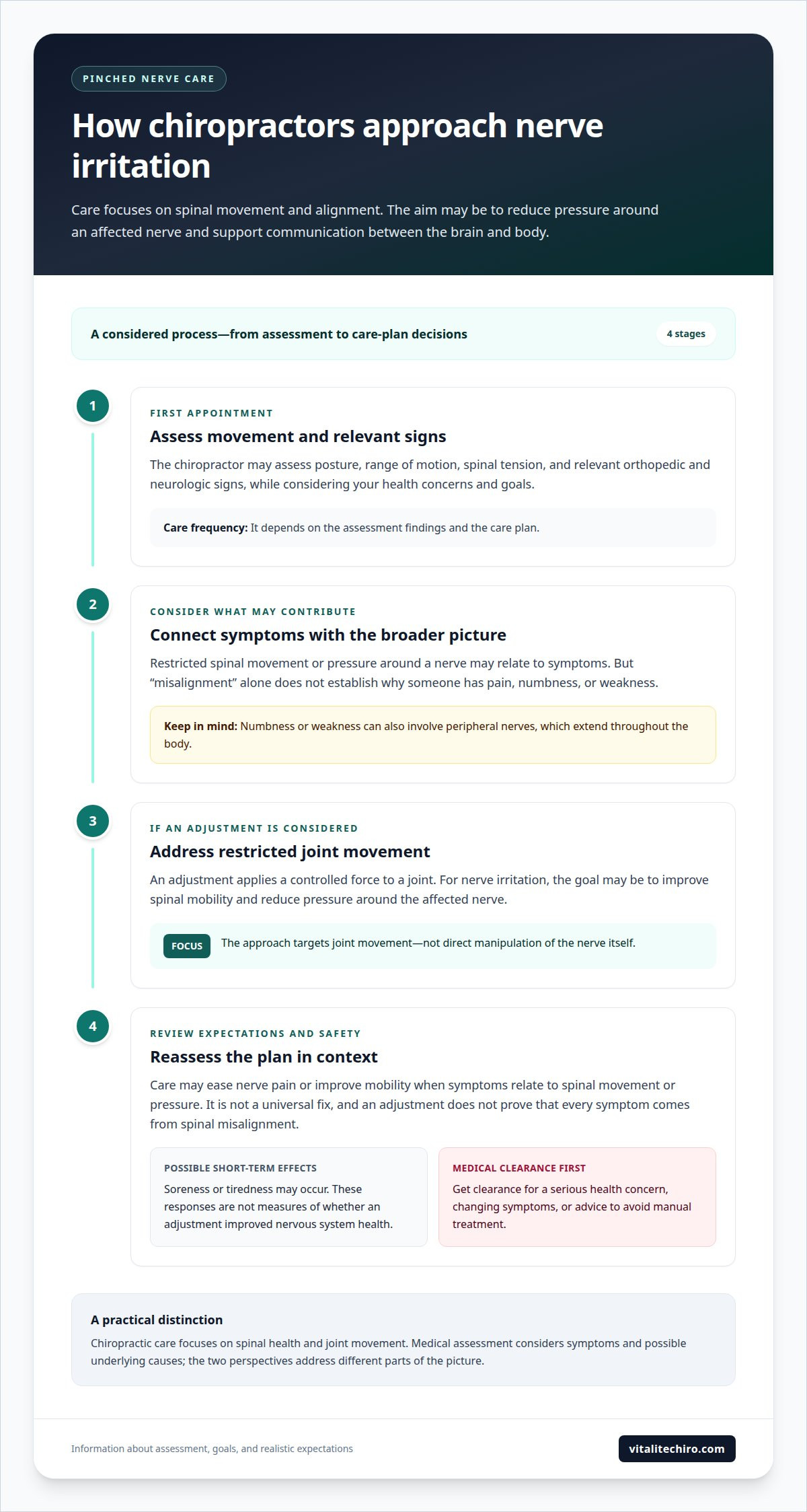
A pinched nerve involves pressure or irritation affecting a nerve, which can cause pain or other symptoms. Chiropractic care focuses on spinal movement and alignment, with the aim of reducing nerve pressure and supporting communication between the brain and body.
Spinal Alignment and Nerve Communication
Spinal alignment describes how the vertebrae are positioned and move around the spinal cord and nearby nerves. Restricted movement or misalignment may affect nerve function, so a chiropractor assesses posture, range of motion, spinal tension, and relevant orthopedic and neurologic signs. When choosing a chiropractor, look for an active state license and clear explanations of examination findings, care options, and risks.
In the United States, the price depends on the case and is given after a quote request; visit type and insurance benefits can affect the cost. Insurance coverage varies by plan.
Adjustments and Nerve Irritation
A chiropractic adjustment applies a controlled force to a joint to address restricted movement. For nerve irritation, the goal may be to improve spinal mobility and reduce pressure around the affected nerve, rather than directly manipulating the nerve itself. A 2013 study in the Journal of Manipulative and Physiological Therapeutics reported that simulated nerve root compression can change autonomic nervous system activity.
Care may ease nerve pain or improve mobility when symptoms relate to spinal movement or pressure. People with a serious health concern, changing symptoms, or advice to avoid manual treatment should get medical clearance first.
Nerve Signaling Between Brain and Body
The spinal cord runs within the spine, and nerves carry signals between the brain and the rest of the body. Adjustments aim to improve joint movement and may help nerve signals travel more freely, but they don’t establish that every symptom comes from spinal misalignment. For example, numbness or weakness can involve peripheral nerves, which extend throughout the body.
At a first appointment, a chiropractor assesses posture, movement, spinal tension, and relevant orthopedic and neurologic signs, then considers your health concerns and goals. Visit frequency depends on those findings and the care plan.
How Does a Chiropractor Affect Your Nervous System?
The brain and spinal cord form the central nervous system, while spinal nerves carry signals throughout the body. Chiropractic care focuses on spinal health and joint movement as factors that may influence this communication.
Spinal Alignment and Nervous System Function
Spinal alignment describes the position and movement of vertebrae around the spinal cord and nearby nerve pathways. Restricted joints or misalignments may interfere with nervous system function, which is why chiropractors assess mobility alongside symptoms. A 2017 systematic review and meta-analysis in the Journal of Manipulative and Physiological Therapeutics reported that chiropractic adjustments can influence autonomic nervous system activity and heart rate variability.
The Spinal Cord as an Information Relay
The spinal cord carries information between the brain and the body. Sensory signals travel toward the brain, while messages from the brain help coordinate movement and other functions. This communication supports the body’s responses to touch, balance, and movement. Joint restrictions can affect movement-related processing, so spinal mobility is one part of a broader picture of nervous system health.
Perspectives on Spinal Misalignment
Chiropractic care often considers spinal alignment and joint motion when assessing symptoms, while medical assessment considers symptoms and possible underlying causes. The term “misalignment” alone doesn’t establish why a person has pain, numbness, or weakness. A 2015 study in the Journal of Bodywork and Movement Therapies reported that joint restrictions can alter motor cortex excitability. That finding describes a possible relationship, not a diagnosis for an individual.
Adjustments and Brain-Body Communication
Chiropractic adjustments use controlled forces to address restricted joint movement. A 2011 study in the Journal of Chiropractic Medicine reported that restoring joint mobility can improve sensorimotor integration, the coordination of sensory information and movement. For readers considering a chiropractor to support improving nervous system function, this is one area of study, not a guarantee of benefit. Chiropractic care differs from physical therapy’s guided movement and medical treatment’s broader evaluation. Learn about chiropractic adjustments as one option for addressing spinal mobility.
Are there chiropractic adjustment side effects?
After an adjustment, you may feel tired or sore. These short-term responses can occur as the body adapts to changes in joint motion and muscle tension. For example, tenderness around a treated area may be noticeable after an appointment. Fatigue can also affect how energetic you feel during ordinary activities.
Chiropractic adjustments also provide sensory input from joints. The nervous system processes that input through pathways involved in movement and sensation, so a person’s response may include changes in sensitivity or muscle coordination. Responses differ from person to person; soreness and tiredness are possible effects, not measures of whether an adjustment has improved nervous system health.
Blood pressure is regulated in part by the autonomic nervous system, which also controls involuntary functions such as heart rate and digestion. Chiropractic treatment can influence autonomic activity, but that connection doesn’t mean an adjustment treats high blood pressure. Blood pressure concerns need to be considered as a distinct health issue, rather than assumed to resolve through changes in vertebrae or spinal motion.
Brain responses are another area of study. Chiropractic treatment may activate brain areas involved in movement and sensation, and research has described possible effects on cognitive processing in the prefrontal cortex. These findings concern nervous system responses; they don’t establish that adjustments reliably improve memory, concentration, or other aspects of brain function for every person.
Pay attention to how you feel after care. Note whether soreness or fatigue affects movement, rest, or daily tasks, and share those details at a later appointment. This gives your practitioner useful information about your response and helps guide decisions about adjustment technique. Relief, easier movement, or a temporary increase in soreness are different experiences, so describe the specific change rather than treating every response as the same.
Parasympathetic nervous system and rest-and-digest functions
The autonomic nervous system has two components: sympathetic and parasympathetic. The sympathetic division supports the fight-or-flight response, while the parasympathetic division supports rest and digestion. It helps slow heart rate, reduce blood pressure, and stimulate digestive activity. After stress or exertion, this activity supports recovery and repair rather than preparing the body for immediate action.
Chronic stress can negatively affect nervous system function. An overactive sympathetic response may be associated with anxiety, digestive issues, and high blood pressure, while ongoing stress can also contribute to muscle tension. These experiences don’t prove that the parasympathetic system is impaired. They do show why it can be useful to consider sleep, stress, digestion, and physical tension together when thinking about nervous system health.
Chiropractic care may affect autonomic activity, including sympathetic and parasympathetic tone. Adjustments may support relaxation, but they don’t directly switch off stress or guarantee better digestion or sleep. For a broader approach, pair appropriate care with habits that encourage recovery: deep breathing can activate parasympathetic activity, while meditation can help manage stress and muscle tension. A consistent bedtime and wake-up time also supports quality sleep, which allows tissue repair.
The practical takeaway is to view rest-and-digest activity as one part of overall wellbeing, not a standalone measure of optimal health. Notice whether stress coincides with changes in sleep, digestion, or muscle tightness, and share those patterns during a care discussion. This context helps connect treatment goals with daily experience. If you’re considering how chiropractic care fits your needs, schedule a chiropractic appointment to discuss your concerns and goals.
Vitalité Chiropractic
Vitalité Chiropractic in Arlington can help you explore whether chiropractic care fits your concerns about nerve symptoms, spinal movement, or physical tension. Care options include Chiropractic Adjustments, Decompression Therapy, Sports Injury Care, and Prenatal Chiropractic Care, selected in relation to your health concerns and goals.
If discomfort, restricted movement, or sports-related symptoms affect your daily activities, a conversation can help clarify which approach may be appropriate. Share what you’re experiencing, when it occurs, and how it affects movement or rest. This context helps connect your concerns with relevant chiropractic care and supports a thoughtful discussion of next steps.
Contact Vitalité Chiropractic in Arlington to discuss your concerns and care options.
Choose a Care Plan That Fits Your Goals
Your next step can be a thoughtful conversation about what you want to change, whether that means moving with less discomfort, understanding recurring symptoms, or feeling more at ease during daily activities. If you’re considering improving nervous system function with a chiropractor, focus on how your symptoms affect your life and what progress would look like for you.
Bring those priorities into a discussion of your health concerns, previous care, and questions about treatment. A clear understanding of your goals can help shape an approach that feels relevant and manageable. Chiropractic care is one part of health support, and persistent or changing symptoms deserve careful attention.
For a personal conversation about your concerns and possible next steps, contact Vitalité Chiropractic. You can take the process one question at a time and make informed choices at a pace that feels right for you.
Frequently Asked Questions
What Happens After an Adjustment?
After an adjustment, you can return to your usual routine as your comfort allows, while noticing how your body responds. Temporary soreness or tiredness can occur. If you’re tracking progress, note any change in a specific activity, such as turning your head while driving or reaching overhead. Those details give a clearer picture than a general impression of feeling better or worse.
What function do chiropractic adjustments serve?
Chiropractic adjustments address restricted joint movement and support improved mobility. Their purpose is not to treat every health condition or replace other care. A practical goal might be making it easier to turn, bend, or manage a familiar daily task. The relevant measure is whether that activity changes, alongside the symptoms that led you to consider an adjustment.
What is the science behind a chiropractic adjustment?
An adjustment stimulates sensory receptors in spinal joints, which send information to the brain. The nervous system processes those signals as part of movement and muscle control. This offers a physiological explanation for why joint input can affect how the body coordinates motion. It doesn’t prove that every adjustment produces the same response or that a particular symptom has one spinal cause.
Who can benefit from going to a chiropractor?
People with movement-related discomfort or restricted joint mobility may consider chiropractic care as one part of addressing those concerns. Whether it fits depends on the person’s symptoms, health history, and goals, rather than a general promise of benefit. For example, someone whose discomfort interferes with turning or bending can discuss that specific limitation during an assessment and consider whether chiropractic care is appropriate.
How does chiropractic care affect nervous system function?
Chiropractic care can provide sensory input from spinal joints, which the brain and nervous system process during movement. Research has also examined autonomic responses, including heart rate variability. Such measures describe nervous system activity, but they aren’t the same as proving improved health or symptom relief. A useful discussion connects these possible effects with the concern that matters to you, such as movement or discomfort.
What evidence supports chiropractic adjustments for nervous system health?
Studies have examined outcomes such as autonomic regulation, heart rate variability, and sensorimotor integration after adjustments. A 2014 study in the Annals of Vertebral Subluxation Research reported changes in heart rate variability associated with autonomic regulation. These findings contribute to scientific discussion, but they don’t establish that adjustments treat every nervous system condition or produce a consistent result for every person.


