
What if the persistent tension in your neck or lower back has very little to do with where you actually feel it? If you have cycled through endless quick fixes only to find your pain returning days later, you already recognize the exhaustion of chasing isolated symptoms. A dedicated whole body wellness chiropractor views your body through a wider clinical lens, evaluating how your nervous system, spinal mechanics, and daily movement patterns function as one integrated unit.
You shouldn't have to settle for hurried appointments, conveyor-belt adjustments, or forceful techniques that fail to address why your discomfort began. In this guide, you'll discover how root-cause care restores natural biomechanical harmony and fosters sustainable, long-term vitality. We'll explore the physiological link between spinal alignment and systemic health, outline what comprehensive functional assessments look like, and show you how to choose an empathetic, patient-centered practitioner for lasting relief.
Key Takeaways
- Understand the structural difference between temporary symptom relief and how a whole body wellness chiropractor restores nervous system function by targeting root causes.
- Discover how combining precise chiropractic adjustments with supportive modalities and decompression therapy cultivates lasting joint mobility and tissue recovery.
- Recognize the vital link between lower-extremity biomechanics, such as foot stability, and chronic tension throughout your spine and neck.
- Learn actionable criteria for evaluating an integrative clinic so you can confidently partner with a practitioner focused on personalized, long-term health.
What Is a Whole Body Wellness Chiropractor?
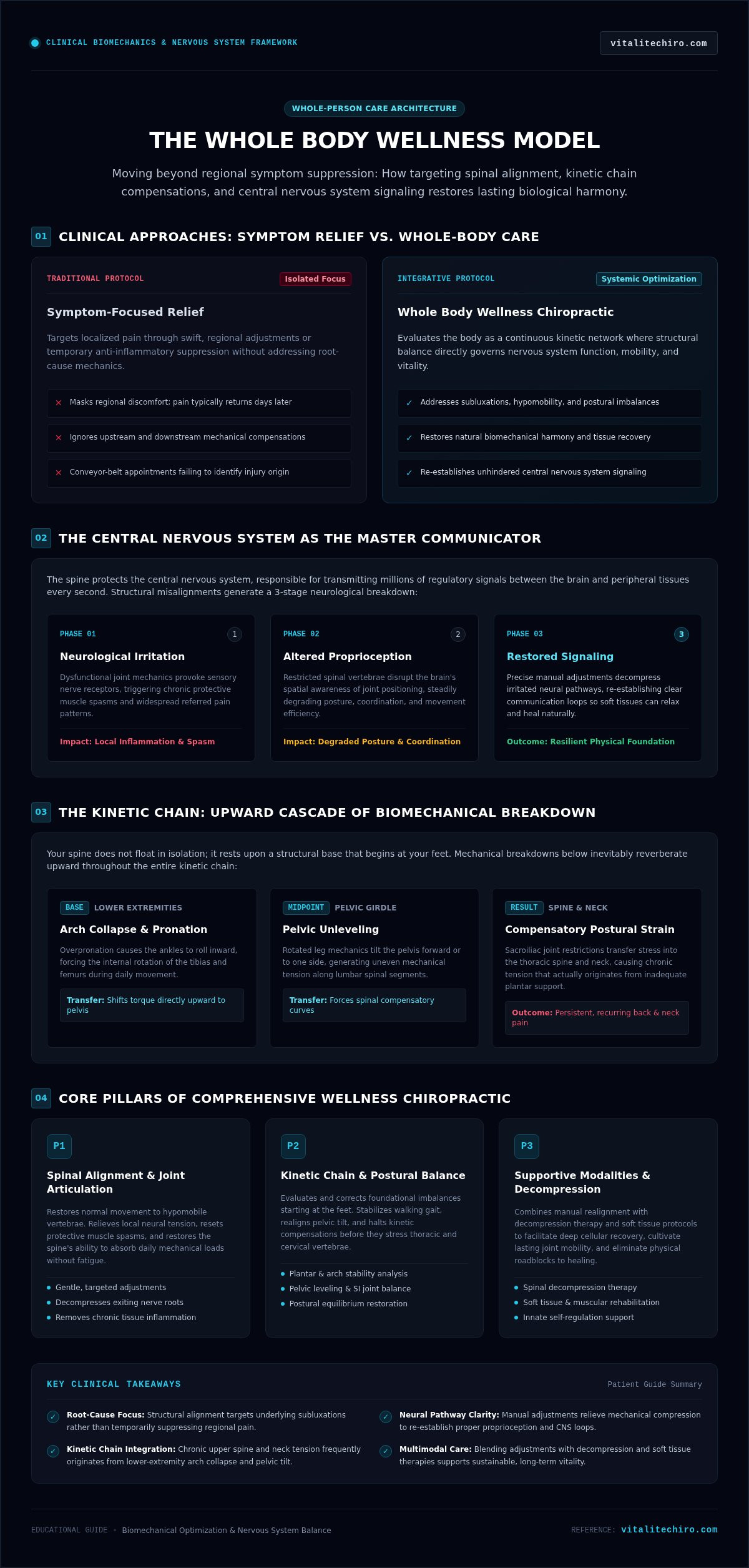
Most people associate spinal care with swift relief for an acute ache, such as a sharp pinch in the lower back or a stiff neck after sleeping awkwardly. However, a whole body wellness chiropractor practices an entirely different philosophy of care. Rather than simply suppressing localized pain signals, this approach examines your complete neuro-musculoskeletal system. It views the body as a continuous kinetic network where structural alignment directly governs nervous system health, daily mobility, and systemic vitality.
Rooted in established clinical science, Chiropractic focuses on diagnosing and restoring disorders of the musculoskeletal system and their downstream effects on general health. When you seek care from a whole body wellness chiropractor, the goal shifts from temporary symptom management to lasting biomechanical optimization. By addressing spinal subluxations, joint restrictions, and postural imbalances across the entire body, this care removes physical interference so your body can function and recover naturally.
Systemic Health Beyond Temporary Symptom Relief
Masking regional discomfort with quick adjustments or anti-inflammatory measures rarely resolves the origin of tissue stress. When a single joint loses its normal range of motion, your body creates compensatory movement patterns. A restricted sacroiliac joint in the pelvis can alter your walking gait, quietly transferring mechanical stress upwards into your thoracic spine or downwards into your knees. Whole-body care identifies these kinetic chain compensations, restoring balance to every joint to halt repetitive tissue breakdown.
The Central Nervous System as the Master Communicator
Your spine houses and protects the central nervous system, the command center responsible for sending millions of regulatory signals between your brain and peripheral tissues every second. Structural misalignments trigger localized inflammation and biomechanical irritation, disrupting these vital pathways:
- Neurological irritation: Dysfunctional joint mechanics provoke sensory nerve receptors, often leading to chronic protective muscle spasms and referred pain.
- Altered proprioception: Restricted vertebrae disrupt your brain's spatial awareness of joint positioning, degrading posture and coordination.
- Restored neural signaling: Precise manual adjustments decompress irritated pathways, re-establishing clear communication loops so your soft tissues can finally relax and heal.
By prioritizing nervous system clarity over quick fixes, you build a resilient physical foundation capable of handling everyday physical stressors.
Core Pillars of a Comprehensive Wellness Chiropractic Approach
Achieving sustainable spinal stability demands more than a rapid thrust to an aching vertebra. A dedicated whole body wellness chiropractor integrates structural adjustments with functional diagnostics, soft tissue therapies, and mechanical corrections. This framework aligns directly with the broader philosophy of chiropractic, which respects the body's innate capacity to self-regulate when mechanical roadblocks are methodically removed.
Rather than relying on isolated treatments, a whole-person protocol evaluates your foundation, muscular balance, and neural pathways simultaneously across three distinct pillars.
Spinal Alignment and Joint Articulation
Restoring motion to hypomobile vertebrae forms the baseline of structural health. When spinal segments lose normal movement, surrounding tissues accumulate inflammation while compressive loading irritates exiting nerve roots. Through targeted, gentle chiropractic adjustment protocols, your practitioner re-establishes healthy joint articulation. This precise restoration relieves local neural tension, resets protective muscle spasms, and helps your spine absorb daily mechanical forces without fatigue.
Kinetic Chain and Postural Balance
Your spine does not float in isolation; it rests upon a structural base that begins at your feet. Biomechanical breakdowns below inevitably reverberate upward:
- Arch collapse: Overpronation causes the ankles to roll inward, forcing internal rotation of the tibias and femurs.
- Pelvic unleveling: Rotated leg mechanics tilt the pelvis forward or to one side, creating uneven tension along lumbar spinal segments.
- Compensatory postural strain: Desk workers and active individuals often struggle with recurrent lower back tension that actually stems from inadequate plantar support.
During an evaluation, a whole body wellness chiropractor conducts full-body postural analysis from the ground up. Consulting an experienced lower back pain chiropractor Arlington VA can uncover whether custom orthotics are necessary to stabilize your foundation and preserve spinal corrections throughout long workdays.
Supportive Therapeutic Modalities and Soft Tissue Care
Muscles and ligaments hold your bones in place. If chronically shortened myofascial trigger points remain unaddressed, tight muscles simply pull newly adjusted vertebrae back out of alignment. Complementary techniques such as therapeutic modalities, targeted soft tissue work, and mechanical decompression therapy provide focused relief. Decompression gently separates spinal segments, drawing hydrating nutrients back into compromised discs while targeted modalities quiet acute inflammation. Combining these therapies accelerates neuromuscular re-education, helping you hold adjustments significantly longer.
If you're ready to move past temporary fixes, exploring personalized whole-person chiropractic care can help pinpoint the exact structural imbalances driving your discomfort.
Wellness Chiropractic vs. Traditional Symptom-Focused Care
The core difference between conventional clinical treatment and wellness-based chiropractic lies in timing and intent. Traditional symptom-focused care operates reactively, intervening only after micro-trauma or postural strain escalates into acute pain. In contrast, a whole body wellness chiropractor works proactively. By identifying hidden biomechanical restrictions early, this method restores balance across the musculoskeletal system before wear and tear forces tissue failure.
| Clinical Dimension | Traditional Symptom-Focused Care | Whole Body Wellness Chiropractic |
|---|---|---|
| Primary Objective | Immediate pain suppression | Biomechanical balance and functional longevity |
| Diagnostic Scope | Isolated examination of the painful site | Comprehensive evaluation of posture, gait, and spine |
| Treatment Strategy | Segmental adjustments or passive pain relief | Adjustments paired with modalities and postural correction |
| Discharge Criteria | When acute pain drops to zero | When proper joint mechanics and mobility stabilize |
Reactive Pain Management vs. Proactive Optimization
Consider the common struggle of recurring tension headaches. A reactive approach frequently centers on the upper neck alone, offering localized relief until stress triggers another episode. An experienced whole body wellness chiropractor looks deeper. They assess whether upper cervical nerve irritation stems from forward head carriage, thoracic spinal stiffness, or an uneven pelvic base during prolonged sitting.
Treating isolated symptoms leaves underlying kinetic compensations untouched. Over time, those silent compensations accelerate joint degeneration, restrict your range of motion, and lock you into a frustrating cycle of recurring flare-ups. Proactive care breaks that cycle by restoring healthy movement patterns across your entire frame.
Lifestyle Counseling and Active Patient Participation
Lasting structural correction cannot happen entirely on an adjustment table. True wellness care treats you as an active partner in your recovery, reinforcing in-office progress with practical lifestyle adjustments:
- Ergonomic fine-tuning: Correcting monitor height, chair lumbar support, and keyboard positioning removes thousands of hours of unnecessary spinal shear stress.
- Targeted mobility training: Daily active mobility drills preserve joint articulation between clinical appointments.
- Core stabilization routines: Tailored home strengthening exercises engage the deep postural stabilizers that keep your pelvis and spine aligned.
This collaborative approach empowers you with practical biomechanical awareness. Instead of remaining dependent on repeated acute interventions, you gain the knowledge, movement habits, and stability needed to protect your spinal health for life.
Signs You Could Benefit from a Whole-Person Chiropractic Approach
Chronic physical stress rarely appears out of thin air. Instead, your body leaves subtle clues long before severe pain sets in. Recognizing these early warning signs allows you to intervene before repetitive compensation patterns cause deeper joint wear. Consulting a whole body wellness chiropractor is especially helpful when daily discomfort lingers despite your best efforts to rest or stretch.
Pay close attention to these common indicators of systemic structural imbalance:
- Uneven footwear wear: Look at the bottoms of your everyday shoes. Heavy wear on the outer edge of one heel points toward an asymmetrical gait, pelvic rotation, or uneven leg loading.
- Persistent postural exhaustion: Feeling an uncontrollable urge to slump after just an hour at your desk signals deep postural stabilizer fatigue.
- Frequent cervicogenic headaches: Dull, throbbing tension starting at the base of your skull and wrapping forward often stems from upper neck joint restrictions.
- Athletic recovery plateaus: Experiencing recurring hamstring pulls or localized hip tightness during workouts usually indicates compensatory movement rather than simple muscle tightness.
Sedentary Strain, Postural Slump, and Tech Neck
Desk-bound routines impose severe mechanical loads on the human frame. When you crane your head forward to view screens, the effective gravitational weight of your head multiplies rapidly. This forward carriage strains upper thoracic vertebrae, pulling your shoulders forward and collapsing your chest. Over time, this slumped posture restricts the ribs, limiting full diaphragmatic breathing and leaving upper back muscles in constant spasm. A whole body wellness chiropractor systematically restores rib mobility, mobilizes locked upper thoracic joints, and provides actionable ergonomic strategies to relieve daily screen-related strain.
Compensatory Movement Patterns and Chronic Imbalances
Your body is brilliant at finding the path of least resistance. If you sustained an old ankle sprain years ago, you may have subtly shifted weight away from that joint without realizing it. That slight shift alters your knee tracking, rotates your hip, and forces the lower lumbar spine to absorb uneven shock with every step. Unilateral back spasms are frequently the downstream result of this upstream restriction. By conducting thorough full-body kinetic assessments, a whole-person practitioner traces chronic discomfort back to its true mechanical origin.
If these daily warning signs sound familiar, take the first step toward lasting structural harmony and schedule a comprehensive evaluation with our team today.
Partnering with an Integrative Chiropractor for Sustainable Health
Selecting the right practitioner is the critical turning point between short-lived pain relief and genuine physical restoration. When searching for a dedicated whole body wellness chiropractor, look beyond convenient clinic locations or promises of instant fixes. You deserve an empathetic partner who listens closely, investigates the unique history of your body, and respects your comfort boundaries at every phase of care.
If you're seeking experienced care in Northern Virginia, connecting with an established holistic chiropractor Arlington VA ensures you receive root-cause solutions built around evidence-based protocols rather than assembly-line care.
The Comprehensive Initial Clinical Evaluation
A thorough clinical intake never rushes you straight onto an adjustment table. Instead, your initial appointment establishes an objective functional baseline through detailed diagnostics:
- Detailed health history: Reviewing old sports collisions, repetitive work habits, and past accidents to discover what silent injuries initiated your modern symptoms.
- Orthopedic and mobility tests: Measuring precise active and passive ranges of motion to isolate hypomobile vertebrae from hypermobile compensations.
- Neurological screening: Evaluating dermatomes, deep tendon reflexes, and muscle strength to verify whether disc bulges or bone spurs irritate exiting nerve roots.
This systematic assessment provides peace of mind. You'll know precisely what mechanical breakdowns exist, why your discomfort developed, and how every recommended therapy directly addresses your underlying issue.
Crafting Your Tailored, Multi-Phase Care Plan
Healing connective tissue and resetting deep-seated neuromuscular habits requires structured progression. A whole body wellness chiropractor tailors your treatment into clear, measurable phases:
- Acute Relief: Quieting localized inflammation, releasing muscle guarding, and restoring baseline spinal motion.
- Structural Stabilization: Strengthening deep core stabilizers, introducing orthotic support if needed, and retraining healthy postural mechanics.
- Active Wellness and Maintenance: Preserving optimal spinal mobility through periodic checkups, active lifestyle coaching, and ergonomic vigilance.
Regular objective progress evaluations ensure your plan constantly evolves alongside your physical improvements. By committing to a collaborative relationship with an experienced clinician, you take decisive control of your mobility, resilience, and lifelong physical vitality.
Reclaim Your Vitality with Root-Cause Chiropractic Care
Living with chronic physical tension isn't an inevitable consequence of aging or a demanding workday. Sustainable health requires looking at your entire neuro-musculoskeletal system as one interconnected unit. When you partner with a dedicated whole body wellness chiropractor, care moves far beyond short-term symptom masking. You resolve foundational spinal misalignments, restore natural neural communication, and eliminate compensatory strain patterns before they cause permanent joint breakdown.
Serving the Arlington community with individualized care since 2003, Vitalité Chiropractic provides an inclusive, welcoming clinical environment focused on authentic root-cause healing. By seamlessly combining precise manual adjustments, decompression therapy, and targeted therapeutic modalities, our team creates personalized care plans tailored to your specific biomechanical needs. You don't have to accept recurring pain as your baseline. Schedule your comprehensive wellness consultation with Vitalité Chiropractic today and take your first step toward lifelong physical vitality.
Frequently Asked Questions
What makes a whole body wellness chiropractor different from a traditional chiropractor?
A whole body wellness chiropractor treats the entire neuro-musculoskeletal system rather than just addressing an isolated site of discomfort. Traditional care often discharges patients once immediate pain subsides. In contrast, wellness-focused practitioners evaluate kinetic chain mechanics, posture, and nerve function to correct root causes. In Arlington, clinics like Vitalité Chiropractic combine manual adjustments with supportive modalities to ensure long-term structural resilience.
How often should I visit a wellness chiropractor if I am not in pain?
Maintenance frequency depends on your daily physical stress, spinal history, and personal wellness goals. Most individuals without acute pain benefit from a checkup every two to six weeks. These routine visits allow your practitioner to identify subtle joint restrictions and postural strain before they trigger muscle spasms or inflammation. Regular preventative care preserves joint mobility and prevents minor mechanical issues from becoming chronic setbacks.
Can a whole body wellness chiropractor help with headaches and postural fatigue?
Yes, whole-person care is highly effective for resolving both tension headaches and persistent postural fatigue. Many recurring headaches stem from cervicogenic dysfunction, where restricted upper neck vertebrae irritate surrounding nerves and trigger muscle spasms. By restoring mobility to cervical joints, addressing forward head posture, and providing ergonomic guidance, a whole body wellness chiropractor relieves pressure on your nervous system so your upper body can maintain natural alignment.
Is whole-body chiropractic care safe for children, athletes, and pregnant individuals?
Gentle, whole-person chiropractic care is safe and beneficial across diverse age groups and life stages when performed by an experienced practitioner. Techniques are specifically adapted to each patient's physiology and comfort level. Athletes receive focused sports injury care and joint mobilization, while pregnant individuals benefit from gentle prenatal adjustments that optimize pelvic alignment and relieve lower back pressure without aggressive force.
What should I expect during my first wellness chiropractic consultation?
Your initial consultation begins with an in-depth conversation about your health history, daily physical demands, and specific mobility goals. Next, your provider conducts orthopedic evaluations, spinal motion palpation, posture screening, and nervous system checks. In our Arlington office, this thorough assessment reveals kinetic compensations. Your clinician explains the findings clearly before presenting an individualized care plan combining adjustments, modalities, or lifestyle recommendations.
Do whole body chiropractors only adjust the spine or other joints as well?
Whole body chiropractors evaluate and adjust extraspinal joints in addition to the vertebrae. Because your skeleton operates as an interconnected kinetic chain, dysfunctions in the feet, ankles, knees, hips, shoulders, and wrists directly alter spinal mechanics. Providers often assess your gait and arch stability, providing extremity adjustments or custom orthotics alongside spinal care to remove compensatory strain throughout your entire frame.
How do lifestyle counseling and ergonomic guidance factor into chiropractic wellness plans?
Lifestyle and ergonomic guidance bridge the gap between clinical appointments and your daily physical routine. In-office adjustments restore joint movement, but prolonged sitting, poor workstation setups, and improper movement habits can quickly undo those improvements. Wellness practitioners evaluate how you sit, stand, and sleep, offering practical ergonomic adjustments and targeted home mobility exercises. This collaborative approach gives you practical tools to protect your posture every day.


