
What if jaw pain, clicking, or limited opening isn’t just a dental concern? Chiropractic care may help address TMJ-related symptoms by assessing how the jaw, surrounding muscles, and upper neck move together. A TMJ pain relief chiropractor in Arlington can consider whether clenching or teeth grinding contributes, rather than focusing on one symptom alone.
Jaw discomfort can make chewing, speaking, and yawning difficult, and may occur alongside headaches or ear pain. It’s understandable to want to know what’s causing it and whether chiropractic care is appropriate. This article explains common TMJ symptoms, how clenching and grinding can affect the jaw, and what an evaluation may involve. You’ll also learn why care may include gentle approaches to jaw movement and related muscle tension, and when symptoms call for a different kind of care.
Key Takeaways
- Jaw pain, clicking, locking, or limited opening can be signs of a TMJ-related problem, especially when chewing or yawning is uncomfortable.
- Clenching and teeth grinding may add strain to the jaw, so noticing these patterns can help explain recurring discomfort.
- TMJ symptoms can involve the jaw joint, surrounding muscles, and neck; an assessment considers how these areas work together.
- Chiropractic care may include approaches to support jaw and neck movement, with the plan shaped around the symptoms and findings.
Jaw pain and movement symptoms
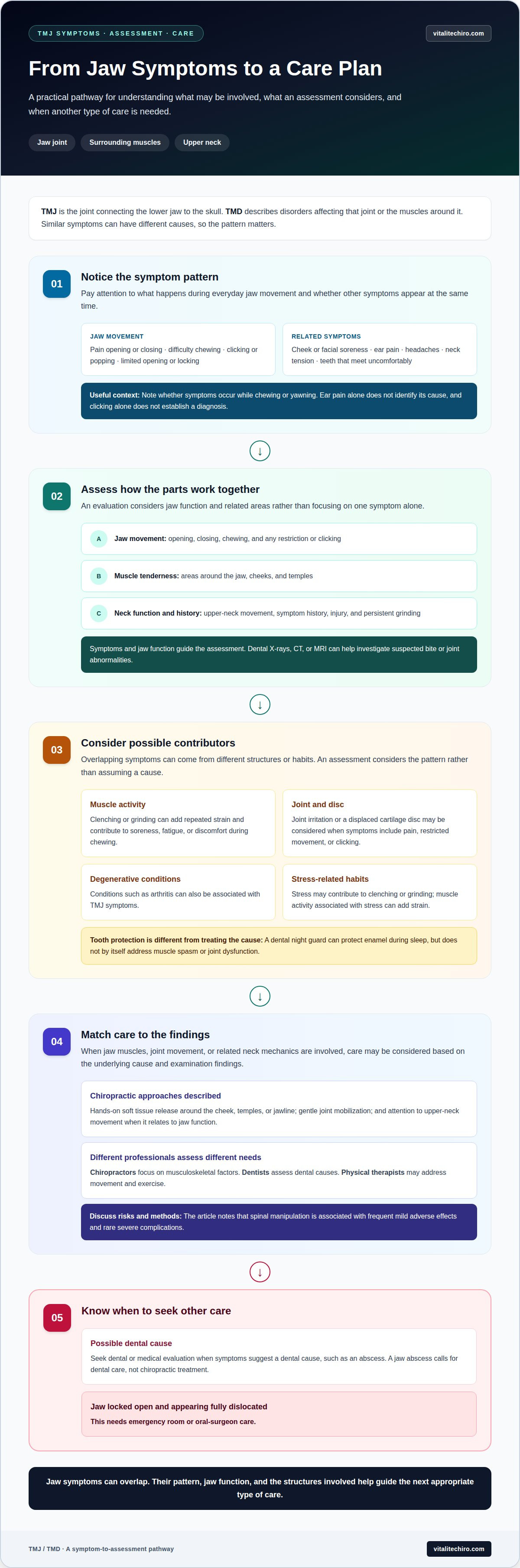
TMJ disorders, also called temporomandibular disorders or TMD, affect the jaw joint and the muscles that move it. Symptoms can affect chewing, speaking, yawning, and how the teeth meet.
Jaw Pain and Restricted Movement
Jaw pain and restricted movement mean discomfort or reduced opening when the jaw moves. Pain may be felt in the jaw, cheek, or teeth, while clicking or popping can occur during chewing or yawning. Limited opening or a jaw that locks can make eating and speaking difficult. These changes matter because symptoms may involve the joint, its cartilage disc, or the muscles that guide the jaw.
Ear Symptoms and Facial Pain
TMJ-related ear and facial symptoms can include earaches, sharp ear pain, and soreness across the cheek or jaw. Headaches, dizziness, and hearing issues may also occur. These symptoms can overlap with jaw discomfort, so noting whether they happen during chewing or yawning gives useful context for an assessment. Ear pain alone doesn’t identify its cause; the pattern of symptoms and jaw movement matters too.
Common TMJ symptoms include pain when opening or closing the mouth, difficulty chewing, jaw clicking or popping, and locking. Some people notice that their upper and lower teeth no longer fit together comfortably when the mouth closes. Tension or neck pain may accompany jaw symptoms, but neither confirms a TMJ diagnosis on its own.
Seek dental or medical evaluation when symptoms suggest a dental cause, such as an abscess. A jaw locked open and appearing fully dislocated needs emergency room or oral-surgeon care. Diagnosis considers symptoms and jaw function; imaging such as dental X-rays, CT, or MRI can help investigate suspected bite or joint abnormalities.
Insurance coverage for chiropractic treatment of TMJ disorders depends on the individual plan’s benefits and terms. Your plan determines whether this care is covered and what costs apply.
Clenching and teeth grinding
Bruxism is repeated clenching or grinding of the teeth, often during sleep or periods of concentration. A person may also brace the jaw while awake without noticing. These habits load the temporomandibular joint and surrounding soft tissue through repeated muscle activity. Over time, this added tension may contribute to jaw soreness, fatigue, or discomfort during chewing. Grinding can also wear tooth enamel, even when the jaw doesn’t hurt.
Stress and anxiety may contribute to TMJ pain by increasing clenching or grinding. Emotional stress alone doesn’t cause a temporomandibular disorder, but the muscle activity associated with stress can add strain. For example, someone facing a demanding workday may hold their teeth together for long periods. If jaw tightness or morning soreness follows, that pattern can help explain how stress relates to symptoms.
Clenching and grinding affect the jaw differently from a brief, ordinary bite. Sustained pressure keeps the jaw muscles working, while grinding adds repeated movement between the teeth. The resulting tension may extend through the muscles around the cheeks and temples. Some people notice soreness after waking, tooth sensitivity, or more discomfort when chewing. Clicking or popping may occur too, but the sound alone doesn’t show whether grinding is the cause.
A dental night guard can protect teeth from enamel wear during sleep; it doesn’t by itself address muscle spasm or joint dysfunction. Occlusal devices may separate the teeth and help keep the jaw in place overnight. A professional assessment can consider how grinding, soft tissue tension, and jaw movement relate to symptoms. Explore care for jaw discomfort when recurring clenching or grinding accompanies persistent pain.
Can Chiropractic Help TMJ?
Chiropractic care may address TMJ symptoms when jaw muscles, joint movement, or related neck mechanics are involved. The appropriate approach depends on the underlying cause.
TMJ Definition and Jaw Joint Function
TMJ means temporomandibular joint, the joint connecting the lower jaw to the skull; TMD describes disorders affecting that joint or its surrounding muscles. The joint and muscles coordinate opening, closing, chewing, and speaking. A change in this system can affect several everyday movements. For example, clicking during a bite may involve joint movement, but the sound alone doesn’t establish a diagnosis.
Muscle, Joint, and Degenerative Causes
TMJ symptoms can arise from jaw-muscle strain, joint irritation, a displaced cartilage disc, or degenerative conditions such as arthritis. These causes can produce overlapping signs, including pain, restricted movement, or clicking. An assessment considers the pattern rather than assuming a cause. A history of jaw injury, persistent grinding, or pain during chewing can help clarify which structures may be involved.
Manual Therapy and Joint Mobilization
Manual therapy uses hands-on techniques to address muscle tension and joint movement. For TMJ symptoms, approaches may include soft tissue release around the cheek, temples, or jawline, followed by gentle joint mobilization. Care may also address upper-neck movement when it relates to jaw function. These techniques aim to ease restricted movement; the choice depends on examination findings and your symptoms.
Choosing a Licensed TMJ Chiropractor in Arlington
Look for a licensed chiropractor who assesses jaw movement, muscle tenderness, neck function, and symptom history before recommending care. Chiropractors focus on musculoskeletal factors; dentists assess dental causes, while physical therapists may address movement and exercise. A jaw abscess calls for dental care, not chiropractic treatment. The National Library of Medicine notes that spinal manipulation is associated with frequent mild adverse effects and rare severe complications, so discuss relevant risks and treatment methods.
Chiropractic adjustments for TMJ
Chiropractic adjustments for TMJ focus on motion and function, not forceful jaw cracking. The approach depends on whether symptoms involve the jaw joint, neck, or surrounding muscles.
Chiropractic Adjustment Approach
A chiropractic adjustment approach uses controlled techniques to address motion in the spine, particularly the neck and upper back, as part of care for TMJ symptoms and headaches. Low-force mobilization may also target the temporomandibular joint. This matters because restricted neck movement or jaw muscle tension can affect comfortable jaw function. Treatment focuses on examination findings, not a standard adjustment for every patient.
Care may also address tight soft tissue around the cheek, temples, and jawline before joint mobilization. If you report clenching and temple tension, the practitioner can consider how muscle tightness relates to jaw movement. A history of trauma matters too, since symptoms following an injury may need a different assessment from recurring tension without an injury.
What Happens During an Appointment
A TMJ chiropractic appointment involves discussing your symptoms and health history, followed by a physical examination of jaw and related movement. The practitioner may assess how your mouth opens, whether movement is limited, and how your neck and upper back move. These findings help guide which techniques fit your situation and whether another type of evaluation is needed.
For example, if opening the mouth causes discomfort, the assessment can focus on jaw range and surrounding muscle tension. Care may then involve gentle joint mobilization, soft tissue techniques, or adjustments addressing neck and upper-back motion. Patients can describe changes in pain, headaches, or chewing comfort during follow-up, helping shape the next stage of care. To discuss jaw and neck care options, take the next step toward an individual assessment.
Vitalité Chiropractic
Vitalité Chiropractic in Arlington can help you explore whether jaw symptoms may relate to movement and musculoskeletal factors. If pain, restricted motion, or clenching is affecting daily activities, an assessment can consider your symptoms and whether chiropractic care is appropriate. Care may include chiropractic adjustments as part of an individualized approach.
Jaw symptoms with a dental cause, such as an abscess, need dental evaluation; a jaw that appears fully dislocated and locked open needs emergency care. For other persistent symptoms, discussing your jaw and neck concerns with a chiropractor can help clarify a suitable next step.
Contact Vitalité Chiropractic to discuss your jaw symptoms and care options.
Take the Next Step Toward Comfortable Jaw Movement
Persistent jaw discomfort can affect how you eat, speak, and move through your day. The next step is to connect those symptoms with the activities and patterns that affect you, so care can focus on what matters in daily life. A TMJ pain relief chiropractor in Arlington can discuss whether chiropractic adjustments may be appropriate and how your jaw and related movement can be assessed.
Before seeking care, consider which movements feel difficult and how symptoms affect your routine. Sharing those details makes the conversation specific to your experience. If a dental cause or a locked, dislocated jaw is involved, seek appropriate urgent dental or emergency care instead.
Contact Vitalité Chiropractic to discuss your jaw concerns and possible next steps. A thoughtful, individualized approach can help you move forward with greater clarity.
Frequently Asked Questions
What Are The Symptoms?
TMJ symptoms can include pain or tenderness around the jaw, difficulty chewing, and changes in comfortable mouth opening. You may notice discomfort after a long meal or feel that your bite meets differently than usual. Symptoms can vary over time and may involve the face or head as well as the jaw. A clear description of when discomfort appears helps guide an assessment.
What Is TMJ And What Causes It?
TMJ is the temporomandibular joint, which connects your lower jaw with your skull. Symptoms can arise from several factors, including jaw injury, prolonged mouth opening during dental care, repeated clenching, or irritation involving joint structures and muscles. These factors don’t affect everyone in the same way. A clinician considers your history and movement to understand which issues may contribute.
What Is TMJ Disorder?
TMJ disorder, also called TMD, describes problems involving the jaw joint or the muscles that control jaw movement. The joint includes a cartilage disc that helps the jaw move smoothly, and symptoms may involve that disc, the joint surfaces, or surrounding muscles. TMD is a broad term, not a single diagnosis. Identifying the structures involved helps determine appropriate care.
Are you going to “crack” my jaw?
No. Chiropractic care for jaw symptoms doesn’t require cracking the jaw. Gentle mobilization may support joint movement, while soft tissue techniques can address tension around the cheek, temples, or jawline. The approach depends on the assessment and your comfort. Tell the practitioner if a movement feels uncomfortable so the technique can be adjusted or stopped.
Can a chiropractor adjust my jaw?
A chiropractor may use gentle mobilization to address temporomandibular joint movement, alongside neck adjustments when relevant to jaw function. That doesn’t mean forcefully manipulating the jaw. A TMJ pain relief chiropractor in Arlington assesses your symptoms and movement first, then selects an approach suited to the findings. Dental concerns, including an abscess, need dental evaluation rather than chiropractic care.
How can a chiropractor help treat TMJ pain and reduce the chance it will return?
A chiropractor may address jaw and neck movement, muscle tension, and contributing habits such as clenching. Guidance on posture, ergonomics, or exercises may also support comfortable movement during daily activities. For example, repeated jaw tension during desk work can be part of the discussion. Ongoing care focuses on factors linked to your symptoms, while improvement and recurrence vary by individual.


