
The neck can be part of a headache problem, not just a separate source of discomfort. For people considering chiropractic for chronic headaches in Clarendon, care may focus on neck movement and tension when these appear connected to symptoms. Many patients begin with 1-2 visits per week for several weeks, while migraines may take longer than a few visits to show a meaningful reduction.
Recurring headaches can disrupt work, rest, and daily routines. If you’re searching for chiropractic for chronic headaches Clarendon, it helps to know what an assessment involves, when neck-focused care may be relevant, and what to expect before treatment begins.
This guide explains how chiropractic care may fit into a broader approach and when headaches call for prompt medical attention. No single treatment suits every headache or every person, so the right next step depends on your symptoms and assessment.
Key Takeaways
- Learn how headache symptoms and patterns can help distinguish migraines from other types of headaches.
- Understand what adjustments and soft-tissue care may involve, and why treatment should be tailored to your symptoms and neck movement.
- Recognize headache changes and accompanying symptoms that call for prompt professional evaluation.
- See how an assessment of neck pain and mobility can inform a chiropractic approach to recurring headaches.
Can chiropractic care help with migraines?
Chiropractic care may help some chronic headaches, particularly when neck pain, posture, or restricted movement accompany symptoms. The headache pattern matters: migraines and tension headaches have different features, and treatment should reflect that distinction.
Headache Symptoms, Causes, and Triggers
Migraines may involve intense head pain and symptoms that disrupt daily activities. Tension headaches often feel like pressure or tightness, while headaches associated with the neck may worsen with restricted movement. The pattern and accompanying symptoms help guide an evaluation.
Posture, prolonged desk sitting, neck strain, stress, whiplash, inflammation, and other health concerns may be associated with headaches. Note whether symptoms begin in your neck, worsen after sitting, or return after medication. These details can help identify possible contributors without assuming one root cause.
Tension Headaches and Migraine Types
Tension headaches, migraines, and cervicogenic headaches are not interchangeable. Cervicogenic headaches are linked to the neck, so neck pain or reduced mobility may be relevant clues. Spinal manipulation is most directly considered when headaches have a neck-related component, not for every recurring headache.
Can chiropractic care help chronic headaches? It may help when symptoms are associated with neck strain or restricted neck movement, but responses to migraine care vary. Frequent migraines may take longer than a few visits to show a noticeable reduction, so headache type and changes over time matter.
Chiropractic Care for Chronic Headaches
Care may involve assessing neck movement, posture, and areas of tension before deciding whether spinal treatment is appropriate. Chiropractic adjustments may be considered when the evaluation suggests a neck-related contribution. The goal is to address relevant movement or tension factors, not to assume all headaches have the same cause.
For example, headaches that begin around the neck and worsen after desk sitting offer different clues from migraines without neck symptoms. A practitioner considers these patterns alongside injury history and changes in symptoms. This helps shape care around your presentation.
Evidence for Chiropractic Treatment
What evidence supports chiropractic treatment for chronic headaches? The clearest stated role is for cervicogenic headaches, where the neck is implicated. The information here does not cite a named study or quantified outcome supporting a broader claim for migraines.
That distinction matters: migraine symptoms may improve for some people, but results should not be assumed from information about neck-related headaches. A careful evaluation considers the headache pattern, neck findings, and response to treatment, while recognizing that other health concerns may also need attention.
Is chiropractic treatment safe for headaches?
Chiropractic care is a non-invasive, drug-free approach considered safe for most patients when performed by a licensed practitioner. Safety starts with an assessment, not an automatic adjustment. A clinician reviews your headache history, neck movement, posture, previous injuries, and symptoms such as nausea before deciding whether spinal treatment is appropriate.
An assessment helps distinguish neck-related tension from symptoms that may need medical evaluation. The clinician can consider, for example, whether shoulder tightness and restricted neck movement accompany your headache. X-rays may be used if needed for further diagnosis. Findings guide whether an adjustment is appropriate and which areas need attention.
Chiropractic adjustments apply controlled force to joints to support movement through the neck and upper spine. The technique should reflect your presentation, including tenderness, mobility, and comfort during the assessment. If a movement causes discomfort, share that information so it can guide the next step rather than pushing through it.
Soft-tissue treatment can address muscle tension alongside joint care. Techniques may include trigger-point work and myofascial release, which target tight areas around the neck and shoulders. For instance, a clinician may focus on tender shoulder muscles if they contribute to restricted neck movement. Care may also include posture or ergonomic coaching, stretching, and strengthening exercises.
Does health insurance cover chiropractic treatment for headaches in Clarendon? Coverage depends on your plan’s benefits and terms, so there is no single answer for every patient. Your plan’s rules for chiropractic care and headache treatment determine what it covers.
For a clearer picture of how an assessment and tailored care can address headache-related neck tension, explore chiropractic care for headaches.
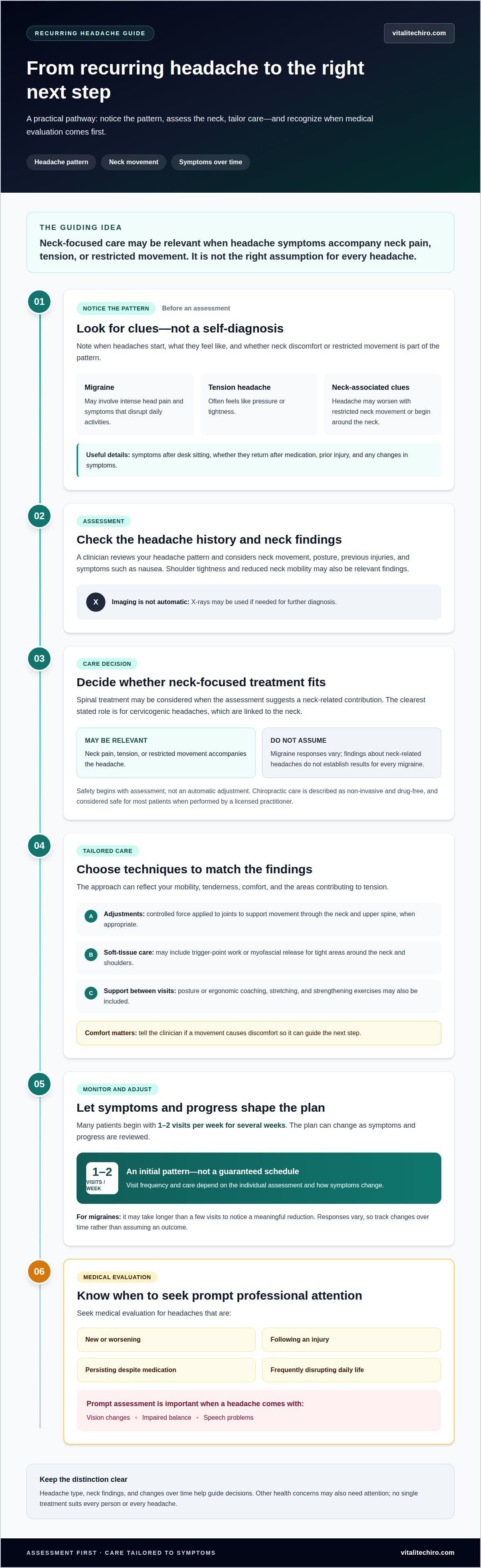
When to seek chiropractic care for recurring headaches
Recurring headaches that begin in the neck or worsen with desk sitting may warrant an evaluation. In Arlington, Virginia, chiropractic care can assess neck movement, posture, and headache patterns to see whether spinal treatment fits. Many patients begin with 1-2 visits per week for several weeks; progress and symptoms help shape the plan. A clinician may also recommend stretching or strengthening exercises to support neck movement between visits.
When should someone with chronic headaches see a doctor instead of a chiropractor? Seek professional medical evaluation for headaches that are new or worsening, follow an injury, persist despite medication, or frequently disrupt daily life. Vision changes, impaired balance, or speech problems alongside a headache also call for prompt assessment, because these neurological symptoms need attention beyond routine chiropractic care.
Children and teens with recurring headaches also need an evaluation that considers their age, symptoms, and daily functioning. A clear account of when headaches occur, how they affect school, and whether neck discomfort accompanies them can inform that assessment. If a young person has a headache after an injury or develops vision, balance, or speech problems, seek prompt medical evaluation.
How do I find a licensed chiropractor specializing in headaches near Clarendon, Virginia? Look for care that starts with a headache history and considers neck mobility, posture, injury, and neurological symptoms before recommending adjustments. A focused assessment can help determine whether your headache pattern appears related to the neck and whether chiropractic treatment is an appropriate part of care.
Exercise may complement treatment when muscle tension or restricted movement contributes to symptoms. A clinician can select stretching and strengthening movements based on your assessment, then adapt the plan as mobility and headache patterns change. Tracking whether headaches return after prolonged sitting, stress, or particular activities can help guide follow-up.
Chiropractic approach to neck pain and headaches
Neck symptoms can offer useful clues when headaches recur. Limited motion, discomfort when turning your head, or tension after desk work may point to a neck-related component. A careful assessment considers how these findings align with your headache pattern, rather than assuming spinal alignment explains every symptom. This helps determine whether neck-focused care is relevant.
An evaluation typically begins with your headache history, neck movement, posture, and areas of tenderness. The clinician considers when symptoms appear, which activities trigger them, and whether movement changes their intensity. X-rays may be used if needed for further diagnosis. These findings inform a personalized plan and whether an adjustment is the right next step.
When appropriate, spinal adjustments may support function and movement through the neck and upper spine while reducing stress on irritated nerves. The aim is not to promise a cure or treat every headache as a neck problem. Instead, care responds to the assessment, including your mobility, symptoms, and comfort with treatment.
Care may also address surrounding soft tissue. Trigger-point work and myofascial release can target muscle tension, while posture and ergonomic coaching can address repeated positions, such as looking down at a screen. Stretching and strengthening exercises may support neck movement. These approaches address different contributors, so a clinician can select and adapt them to your needs.
Progress is assessed through changes in headache patterns, neck motion, and the activities that provoke symptoms. If your pattern changes or new symptoms appear, share that information so it can guide the next clinical decision. Neck-focused care is most relevant when assessment findings connect neck function with your headaches.
Request a neck and headache assessment to discuss whether a personalized chiropractic approach fits your symptoms.
Vitalité Chiropractic
Vitalité Chiropractic can assess whether your recurring headaches may involve neck pain or restricted movement. If you’re considering chiropractic for chronic headaches in Clarendon, an evaluation can take your symptoms, posture, and relevant injury history into account before discussing care.
Tell the practitioner how headaches affect your daily routine and what changes you hope to make. This context supports a focused conversation about chiropractic for chronic headaches in Clarendon and whether a personalized approach fits your needs.
Contact Vitalité Chiropractic to discuss your headaches and possible next steps.
Move Toward a Clearer Care Plan
Choosing chiropractic for chronic headaches in Clarendon starts with what you hope to change. Consider which parts of daily life your headaches interrupt most, such as concentrating at work, resting comfortably, or keeping plans. Naming a meaningful goal can make conversations about care more focused and help you assess whether the approach remains relevant over time.
Headache patterns can shift, so an ongoing conversation matters as much as the initial assessment. Share changes in how symptoms affect your routine and discuss what progress would look like for you. A thoughtful plan connects care to those priorities and allows for reassessment when your needs or symptoms change. If another concern seems more pressing, raise it during the conversation.
If you’re ready to discuss your situation and possible next steps, contact Vitalité Chiropractic. A considered first conversation can help you move forward with greater clarity and confidence.
Frequently Asked Questions
How long does it take to see results from chiropractic care for headaches?
There is no single timeline for every headache pattern. Migraines may take longer than a few visits to show a meaningful reduction, and progress depends on the symptoms being treated. To check in on your progress, note whether headache intensity, frequency, or disruption to daily activities changes over time. These patterns help show whether the care plan is addressing your goals.
How long does it take to see results?
Timing varies with headache type and whether neck symptoms are involved. A headache linked with limited neck movement may follow a different course from recurring migraines. Rather than judging progress after one appointment, consider whether symptoms and daily function change over the course of care. Share any new or worsening pattern with the practitioner so it can inform next steps.
What if my headaches are stress-related?
Stress can be associated with headaches, but it may not be the only contributing factor. Mention situations that seem to precede symptoms, such as a demanding workday or sustained tension, during your assessment. The clinician can also consider neck discomfort and movement. This helps distinguish what chiropractic care may address from concerns that need another kind of evaluation.
What are the risks and side effects of chiropractic neck manipulation for headaches?
Chiropractic care is considered safe for most patients when performed by a licensed practitioner, but an adjustment may not suit every person or headache. Discuss your health history, previous injuries, and any new symptoms before treatment. Vision, balance, or speech changes with a headache warrant prompt professional evaluation rather than routine neck manipulation. The assessment helps determine whether an adjustment is appropriate.
What should I expect at a first chiropractic appointment for chronic headaches?
Expect your first visit to begin with intake forms and a conversation about your health concerns. The practitioner then conducts a chiropractic and neurological examination; X-rays may be used when necessary. You’ll receive an explanation of the findings and a proposed treatment plan before care begins. Mention past injuries, medications, and how headaches affect work, sleep, or other activities.
How many chiropractic visits are typically recommended for chronic headaches?
A common starting schedule is 1-2 visits per week for several weeks, with the course shaped by symptoms and progress. This is a starting pattern, not a fixed number of appointments for every person. For example, the practitioner may consider whether headaches return less often and whether neck movement changes when reviewing the plan. Migraine improvement may take longer than a few visits.


