
What if the movement you fear most is actually the essential catalyst for your recovery? When you're managing persistent discomfort, it's natural to retreat into rest, yet clinical research suggests that strategic activity is your most powerful tool for healing. If you've spent years at a desk or felt the frustration of recurring stiffness, you might feel trapped by conflicting advice. Current guidelines from the American College of Physicians now prioritize non-pharmacologic treatments, emphasizing that tailored therapeutic exercises for back pain are foundational to long-term spinal health. These movements aren't merely stretches; they're precise clinical prescriptions designed to stabilize your spine and protect your nervous system.
You deserve a clear, professional roadmap that replaces hesitation with confidence. In this clinical guide, we'll explain how specific, doctor-prescribed exercises work in tandem with chiropractic care to accelerate your recovery and restore the mobility you need for both work and sports. We'll explore the mechanics of spinal stabilization and provide a structured approach to help you move without fear. By understanding the logic behind each movement, you can transition from a state of protective tension to one of renewed energy and physical freedom.
Key Takeaways
- Understand why clinical exercise prescriptions are more effective than random stretching for correcting biomechanical imbalances. It's about precision rather than just movement.
- Discover why core endurance is more vital for spinal protection than raw strength and how to perform these movements safely.
- Learn why a professional diagnosis is essential to determine whether your specific condition requires flexion or extension movements.
- Explore how combining chiropractic adjustments with therapeutic exercises for back pain ensures your muscles fire correctly while your joints stay aligned.
- Establish a sustainable recovery plan that integrates 10-minute daily routines into your professional life for long-term health.
What Is an Exercise Prescription for Back Pain?
A clinical exercise prescription is far more than a suggestion to stay active. It's a targeted set of movements designed to correct specific biomechanical imbalances that lead to chronic discomfort. Many patients arrive at our Arlington clinic after trying generic stretches they found online. While well intentioned, these random movements often fail because they don't account for the unique structural needs of the individual. In some cases, stretching an already hypermobile joint can actually worsen the condition by creating further instability.
At Vitalité Chiropractic, Dr. Sansfaute utilizes over 20 years of experience to evaluate your gait and posture before recommending any movement. This clinical assessment identifies which muscles are inhibited and which are overactive. We also focus heavily on proprioception, which is the brain's ability to sense the position and movement of the spine. By training your nervous system to communicate better with your spinal muscles, we create a foundation for lasting relief. This neurological connection ensures that your body supports itself correctly during daily tasks, from lifting groceries to sitting at a desk.
Prescription vs. General Fitness
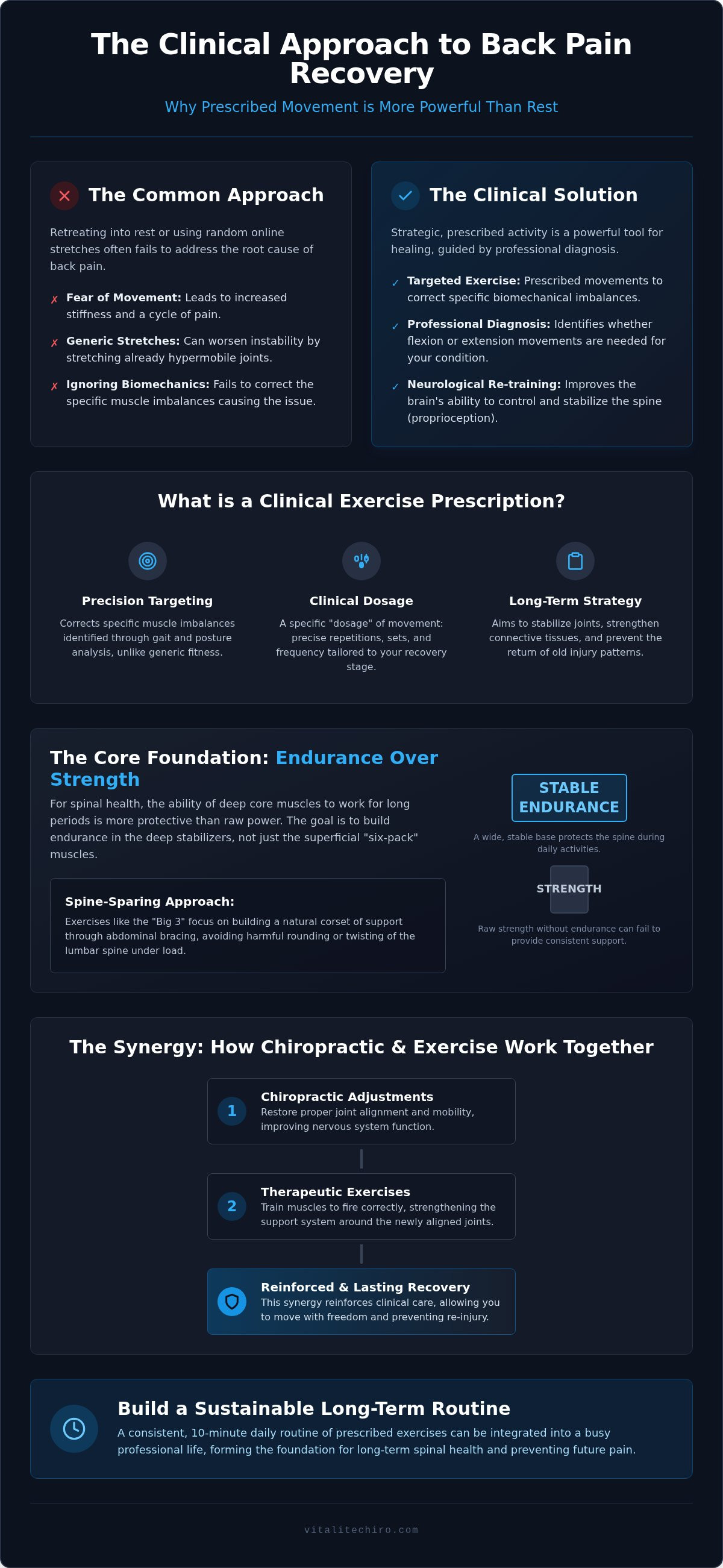
While walking or swimming is excellent for cardiovascular health, these activities don't always target the deep stabilizing muscles of the core. An exercise prescription serves as a clinical tool specifically engineered to restore and maintain spinal stability. This approach involves a precise dosage of movement, including specific repetitions, sets, and frequency tailored to your current recovery stage. We focus on targeted muscle activation, ensuring the correct tissues are doing the work rather than allowing larger, global muscles to compensate for underlying weaknesses. This precision is what differentiates a clinical recovery plan from a standard gym routine.
The Goals of Therapeutic Exercise
The primary objective of therapeutic exercises for back pain is to foster an environment where healing can occur. Controlled mobilization helps reduce localized inflammation by improving circulation and flushing out chemical irritants from the soft tissues. This is particularly relevant for those managing Low back pain, where stiffness often leads to a cycle of increased sensitivity and fear of movement.
Beyond immediate pain reduction, these exercises stabilize hypermobile joints and strengthen the supportive connective tissues. This process significantly improves the long-term efficacy of chiropractic adjustments. When your muscles are trained to support your spine in its new, corrected alignment, the results of your clinical care are reinforced. This synergy allows you to move with greater freedom and prevents the return of old injury patterns.
The Core Foundation: Essential Stabilization Exercises
When it comes to spinal health, clinical research emphasizes endurance over raw strength. Many people focus on building "six-pack" muscles, yet the deep stabilizers are what truly protect the spine from injury. A foundational set of movements, often referred to as the "Big 3," focuses on building this endurance without placing excessive strain on the vertebral discs. By incorporating specific therapeutic exercises for back pain, you train your core to maintain a neutral spine during daily activities. This is particularly vital for desk workers in Arlington who face the structural challenges of prolonged sitting, which often leads to inhibited core muscles and a weakened pelvic floor connection.
Safety is the primary objective in these movements. We prioritize a "spine-sparing" approach, meaning we avoid rounding or twisting the lumbar spine under load. Instead, we use abdominal bracing to create a natural corset of support. If you're ready to begin your recovery journey, you can schedule a movement assessment at Vitalité Chiropractic to ensure your form is precise.
Step 1: The Bird-Dog for Spinal Balance
The Bird-Dog is a premier movement for improving cross-body coordination and posterior chain stability. To perform this, start on your hands and knees with your back flat like a table. Simultaneously extend the opposite arm and leg, focusing on reaching toward the walls rather than the ceiling. Avoid the common mistake of arching your neck or over-extending your leg, which can pinch the low back. We typically prescribe 5 to 10 second holds for 3 repetitions on each side to build steady control.
Step 2: The Modified Curl-Up
Unlike a traditional sit-up, the modified curl-up protects the neck and lumbar discs. Place your hands under the natural curve of your low back to act as a monitor, ensuring your spine doesn't flatten against the floor. Lift only your head and shoulders slightly while tucking your chin. This movement emphasizes abdominal bracing, which supports our holistic chiropractor Arlington VA philosophy of treating the body as an integrated system rather than isolated parts.
Step 3: The Side Plank for Lateral Support
Lateral stability is often the missing piece in a recovery plan. The side plank targets the quadratus lumborum (QL), a muscle that frequently causes "side-bending" pain when weak. Beginners can start with a modified version on their knees, while advanced patients move to a full plank on their feet. This exercise is a staple in sports performance chiropractic care because it builds the resilient lateral support needed for both athletic pivots and everyday reaching. These foundational therapeutic exercises for back pain provide the structural integrity required for long-term wellness.
Tailoring Exercises to Specific Back Conditions
Every spine tells a different story, which is why a clinical diagnosis is the non-negotiable first step before beginning any recovery routine. Without a clear understanding of the underlying pathology, even well-intentioned movements can backfire. We categorize therapeutic exercises for back pain based on "directional preference." This means we determine whether your spine finds relief through flexion (bending forward) or extension (arching backward). Using the wrong direction for your specific injury is a common reason why self-guided recovery often stalls.
For many patients, we integrate spinal decompression therapy to create the necessary physical space within the vertebral column before introducing active movement. This modality gently stretches the spine, relieving pressure on discs and nerves, which makes subsequent exercises significantly more comfortable and effective. However, you must listen to your body's feedback. If an exercise causes pain to travel further down your leg (peripheralization), stop immediately. Our goal is centralization, where the pain moves out of the limb and back toward the spine, signaling that the pressure on the nerve is lifting.
Exercises for Disc Issues and Sciatica
When managing a herniated or bulging disc, the "Press-Up" or McKenzie method is often a primary tool. By gently arching the back while lying face down, you help nudge the disc material away from the sensitive nerve roots. During acute flare-ups, it's vital to avoid forward bends, as these can increase intradiscal pressure. To maintain the benefits of these movements throughout the day, we often recommend custom orthotics. These specialized inserts stabilize your foundation, ensuring that every step you take supports the corrected alignment of your pelvis and spine.
Movements for Spinal Stenosis and Arthritis
In contrast to disc issues, conditions like spinal stenosis or osteoarthritis often respond better to "opening" the spinal canal through gentle flexion. The Pelvic Tilt is a foundational move for this purpose. By flattening your low back against the floor and tilting your pelvis upward, you create a mild decompression effect that eases the crowding of the nerves. This approach is particularly helpful for older adults or athletes managing chronic stiffness. It provides a methodical way to restore mobility without over-stressing arthritic joints, allowing for a more active and comfortable lifestyle.
The Synergy: How Chiropractic Care Enhances Exercise
A common mistake in recovery is attempting to strengthen a body that is out of alignment. We follow the "Adjustment First" rule to ensure your joints are moving freely before you begin your therapeutic exercises for back pain. If a vertebral segment is restricted, the muscles attached to it cannot fire with optimal efficiency. By utilizing the Diversified technique, Dr. Sansfaute, who has over 20 years of clinical experience, restores proper joint play. This immediately increases the receptivity of the surrounding soft tissues. This clinical sequence ensures that your effort in the gym or at home translates into actual structural stability rather than just temporary relief.
The 24-hour window following an adjustment is a critical time for your nervous system. During this period, your brain is processing the new sensory input from the corrected joints. Engaging in gentle, prescribed movement during this timeframe helps "lock in" the adjustment by reinforcing the correct motor patterns. It transitions the body from a state of protective tension to a state of functional mobility. This methodical approach bridges the gap between passive care and active recovery, ensuring your spine remains resilient between visits.
Restoring the Mind-Body Connection
Adjustments serve to reduce what we call neurological "noise." When spinal segments are restricted, the brain receives distorted information about the body's position. This often leads to poor balance and compensatory movement patterns that invite further injury. Proprioceptive training, integrated with your adjustments, re-teaches your nervous system how to stabilize your spine in real-time. We look beyond the immediate area of pain to evaluate how your hips and feet contribute to your overall spinal health, creating a truly whole-body wellness strategy that supports long-term freedom of movement.
Inclusive Care for Arlington Athletes
Our clinic serves a diverse population of runners, weightlifters, and weekend warriors across the region. We understand that an athlete's recovery requires a high level of technical specificity and a supportive environment. Vitalité Chiropractic is a multilingual and LGBTQ+ friendly clinic where every individual is treated with dignity and respect. We design individualized plans that respect your lifestyle and your specific athletic goals. If you're seeking a partner who understands the intersection of clinical science and personal well-being, you can schedule your assessment with our expert team today.
Building Your Long-Term Spinal Health Routine
Recovery isn't a sprint; it's a series of sustainable habits. While many feel tempted to perform an hour of therapeutic exercises for back pain once a week, clinical evidence supports short, daily sessions. Consistency is the primary driver of neuroplasticity and muscle endurance. Ten minutes of focused movement every day provides the steady stimulus your nervous system needs to maintain spinal stability. This approach prevents the "boom and bust" cycle often seen in weekend warriors, where intense activity leads to inflammation and subsequent rest.
For the many professionals at an Arlington office desk, your workspace is where your spinal health is either preserved or compromised. We advocate for ergonomic integration, where movement is woven into your workday. Simple actions like seated pelvic tilts or chin tucks can counteract the postural strain of long meetings. By shifting your mindset from "exercise time" to "movement throughout the day," you ensure your spine remains resilient even during high-stress work weeks.
As your pain decreases, your prescription must evolve. This is the transition from the acute phase to the maintenance phase. Progressive loading involves safely increasing the challenge of your exercises by adding resistance or complexity. This ensures your supportive tissues continue to adapt and grow stronger, moving you beyond simple pain relief and toward a state of proactive wellness. We guide you through this progression to ensure your body is ready for the increased demands of daily life and sports.
Daily Habits for a Healthy Spine
Incorporate the "Micro-break" technique into your schedule. Every 30 minutes, stand up and reset your posture for 30 seconds. This small interruption prevents the soft tissues from "creeping" into a slumped position. Hydration also plays a vital role; your spinal discs are primarily water, and staying hydrated ensures they maintain their height and cushioning ability. Daily therapeutic movement is the most reliable insurance policy for your long-term physical freedom.
When to Re-Evaluate Your Prescription
Your body is a dynamic system, and a plan that worked six weeks ago may no longer be appropriate. Scheduled check-ins with Dr. Sansfaute allow us to adjust your routine based on your functional progress. If you've reached your initial mobility goals and can perform your routine without discomfort, you might be ready for more advanced sports injury care to help you return to competitive activities. Ready for a personalized plan? Schedule your consultation at Vitalité Chiropractic today.
Your Path to Lasting Spinal Resilience
Reclaiming your physical freedom begins with shifting your mindset from passive relief to active, clinical recovery. We've established that therapeutic exercises for back pain are most effective when they're precisely tailored to your unique biomechanical needs and reinforced by professional chiropractic adjustments. This integrated approach doesn't just manage symptoms; it builds the structural endurance necessary to protect your spine during the demands of daily life and athletic pursuits. By moving with intention and clinical guidance, you transition from a state of protective fear to one of empowered mobility.
You deserve a healthcare partner who treats you as an individual with unique goals and challenges. Dr. W. Jean-Luc Sansfaute brings over 20 years of clinical experience to our welcoming, multilingual, and LGBTQ+ inclusive clinic in Arlington. We prioritize your comfort and safety, offering a supportive environment where long-term wellness is the ultimate objective. If you're ready to start your personalized recovery plan, Book Your Arlington Chiropractic Appointment Online today. Same-day appointments are available to help you find relief and begin your journey toward a stronger, more resilient spine. Your future of pain-free movement starts here.
Frequently Asked Questions
Is it okay to exercise if I have sharp back pain?
You should stop immediately if you experience sharp, stabbing, or radiating pain during any movement. Sharp pain is a protective signal from your nervous system indicating acute inflammation or potential nerve impingement. Before starting any therapeutic exercises for back pain, it's essential to seek a professional evaluation at our Arlington clinic to identify the source of the discomfort. Rest is often the priority until the acute inflammatory phase has stabilized.
How long does it take for therapeutic exercises to work?
While some patients experience a reduction in stiffness within the first few days, structural improvement typically takes longer. You'll likely notice improved mobility and decreased daily discomfort after 2 to 3 weeks of consistent daily practice. However, building the deep core endurance required to stabilize your spine long-term usually requires 8 to 12 weeks of adherence to your specific clinical prescription. Consistency is the most important factor in seeing these lasting results.
Can I do these exercises at home without special equipment?
Most foundational movements are designed to be performed at home or in your office without any specialized gym equipment. We prioritize bodyweight-based therapeutic exercises for back pain, such as the Bird-Dog and pelvic tilts, which only require a flat surface or a yoga mat. This approach ensures that your recovery plan is accessible and easy to integrate into your daily schedule. If your plan eventually requires resistance, we'll provide specific guidance.
What is the difference between physical therapy and chiropractic exercise prescriptions?
The primary difference lies in the integration with spinal alignment. While physical therapy focuses on general rehabilitation, our chiropractic exercise prescriptions are specifically designed to support and "lock in" the changes made during your adjustments. We focus on the neurological connection between your brain and your spinal muscles. This ensures that your joints stay in their corrected positions during movement, creating a more stable foundation for your overall whole-body wellness.
Will insurance cover my therapeutic exercise sessions in Arlington?
Coverage for therapeutic services varies significantly between different insurance carriers and individual plans. Many providers in the Arlington area do include chiropractic care and rehabilitative exercises as covered benefits when they're part of a medically necessary treatment plan. We recommend contacting your insurance company directly to verify your specific outpatient benefits. Our administrative team is also available to help you understand your coverage options and ensure your care remains accessible.
Are there specific exercises for back pain during pregnancy?
Specialized movements are essential during pregnancy to manage the shifting center of gravity and hormonal changes that affect ligament stability. We provide prenatal chiropractic care that includes gentle, low-impact exercises tailored to each trimester. These movements focus on pelvic stabilization and relieving pressure on the lower back without straining the abdominal wall. Our goal is to help you maintain mobility and comfort as your body prepares for the physical demands of labor and delivery.
How often should I see a chiropractor while doing these exercises?
Your visit frequency depends on your current stage of recovery and the complexity of your condition. During the initial phase, more frequent visits ensure your joints are properly aligned so your muscles can fire correctly during exercise. As your spine stabilizes and your pain decreases, we'll transition you to a maintenance schedule. These periodic check-ins allow Dr. Sansfaute to monitor your form, re-evaluate your progress, and safely advance your exercise prescription as you heal.


