
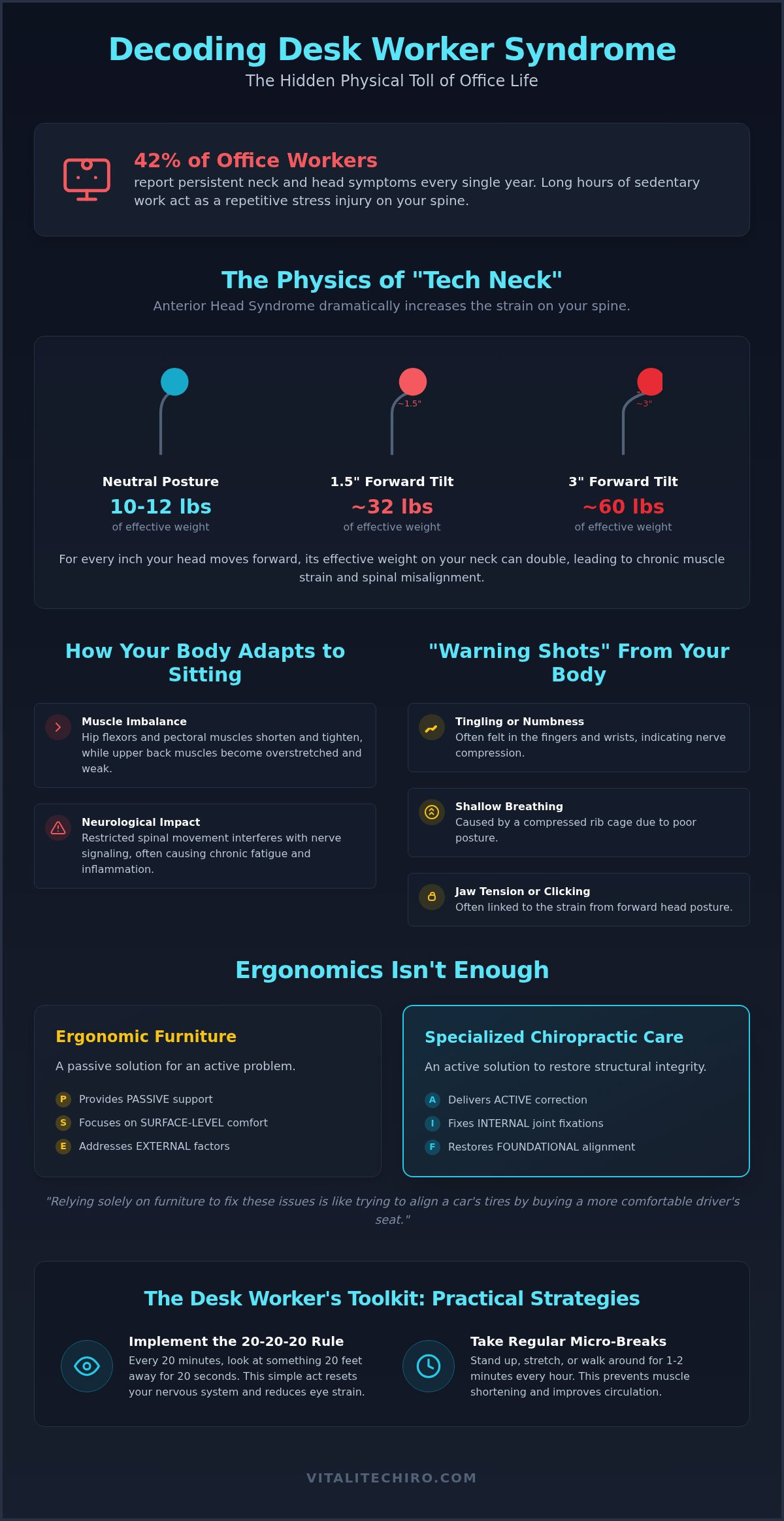
Did you know that 42% of office workers report persistent neck and head symptoms every single year? While your workstation might feel like a neutral environment, the reality is that long hours of sedentary labor act as a repetitive stress injury on your spine. At Vitalité Chiropractic, we believe that specialized chiropractic care for desk workers is the essential bridge between merely enduring a painful shift and actually thriving in your professional life. We frequently see Arlington professionals who arrive with shoulders hunched toward their ears and leave with a renewed sense of physical freedom.
It's exhausting to finish a long workday only to find that your lower back stiffness follows you home, stealing your evening relaxation and focus. We understand that even the most expensive ergonomic chairs are often insufficient to correct deep seated postural imbalances. This article will show you how targeted adjustments and decompression therapy can reverse years of "tech neck" and spinal compression. We'll explore the clinical reasons behind your discomfort and provide a clear path toward pain free productivity and a more energized daily lifestyle.
Key Takeaways
- Understand why long hours of sitting constitute a repetitive stress injury and how "Desk Worker Syndrome" impacts your musculoskeletal health.
- Learn how the physics of anterior head syndrome places an immense load on your neck and shoulders, leading to chronic tension and headaches.
- Discover why specialized chiropractic care for desk workers provides active correction that ergonomic furniture alone cannot achieve.
- Implement practical strategies like micro-breaks and the 20-20-20 rule to reset your nervous system throughout the workday.
- Explore how a holistic, person-centered approach using the Diversified Technique can restore your posture and long-term vitality.
The Sedentary Crisis: Why Desk Work is a Repetitive Stress Injury
Many professionals view their office job as physically "safe" because it doesn't involve heavy lifting or high-risk environments. However, the modern workspace has created a different kind of health crisis: Desk Worker Syndrome. This condition is a form of cumulative trauma where the musculoskeletal system sustains damage through repetitive, static positioning. In clinical terms, sitting for eight to ten hours a day is often classified as a Repetitive Stress Injury. It isn't a single event that causes the damage, but the relentless consistency of the strain.
At Vitalité Chiropractic, we often discuss the "Arlington Office Toll." This is the combined physical impact of long commutes and stationary desk time. When you sit, your body enters a state of constant spinal flexion. Your vertebrae lose their natural curves, and your discs endure uneven pressure. These micro-stresses might seem insignificant during a single Tuesday afternoon. Over months and years, they inevitably lead to macro-misalignments that require specialized chiropractic care for desk workers to resolve.
The Silent Evolution of Postural Distortion
Your body is a master of adaptation. If you spend the majority of your waking hours hunched over a keyboard, your tissues begin to reorganize themselves to support that position. This process involves the shortening of hip flexors and pectoral muscles while the upper back muscles become overstretched and weak. This distortion does more than ruin your silhouette. It has a direct neurological impact. Restricted spinal movement interferes with proper nerve signaling, which often manifests as a chronic lack of energy. When you try to "power through" the discomfort, you're actually fueling a cycle of inflammation that makes recovery more difficult over time.
Signs You Need More Than an Ergonomic Chair
While a high-end office chair is a helpful tool, it's a passive solution for an active problem. External supports cannot fix internal joint fixations. You might be experiencing "warning shots" from your nervous system without even realizing it. These include:
- Tingling or numbness in the fingers and wrists.
- Shallow breathing caused by a compressed rib cage.
- Jaw tension or clicking, often linked to forward head posture.
Relying solely on furniture to fix these issues is like trying to align a car's tires by buying a more comfortable driver's seat. True restoration requires the clinical expertise found in chiropractic care for desk workers, focusing on the underlying structural integrity of the spine rather than just the surface-level comfort of your workstation.
Understanding Text Neck and Anterior Head Syndrome
The physics of the human head are surprising. In a neutral position, your head weighs approximately 10 to 12 pounds. However, for every inch your head shifts forward from its center of gravity, its effective weight on the neck doubles. By the time you're leaning three inches forward to read a spreadsheet, your cervical spine is supporting nearly 60 pounds of pressure. This mechanical strain is a primary reason why chiropractic care for desk workers is essential for long term health. It isn't just about feeling "tight"; it's about the structural load your body wasn't designed to carry for hours on end.
This constant forward pull places an immense burden on the upper trapezius and levator scapulae muscles. These tissues become chronically overextended, leading to the familiar burning sensation between your shoulder blades. While an optimized ergonomic setup can help reduce the frequency of this lean, it cannot reverse the existing tension that has already settled into your frame. At Vitalité Chiropractic, we look beyond the surface to address how these forces are impacting your underlying spinal alignment.
The Anatomy of a Forward Head Lean
When you spend years leaning toward a screen, your neck undergoes a process called hypolordosis. This is the gradual straightening or loss of the natural C-shaped curve in your cervical spine. As this curve disappears, the surrounding joints lose their fluidity. This change often restricts the range of motion in your shoulders, making it difficult to reach overhead or sit upright without significant effort. Anterior Head Syndrome is the clinical loss of cervical curve due to screen usage. Seeking chiropractic care for desk workers allows for a professional assessment of these structural changes before they become permanent.
From Neck Tension to Migraine Relief
The suboccipital muscles, located at the very base of your skull, are often the most impacted by these shifts. When they become tight, they can compress the nerves that travel from the spine into the head, triggering frequent tension headaches or even migraines. Specialized text neck treatment focuses on reducing this nerve pressure through precise adjustments. By restoring the natural cervical curve, we help the body return to a state where the head is balanced effortlessly over the shoulders. If you've been struggling with daily headaches, a visit to Vitalité Chiropractic can help you find lasting relief and reclaim your focus.
Chiropractic Care vs. Ergonomics: Finding the Right Balance
Many professionals believe that investing in a high-end ergonomic chair or a standing desk is the final solution to their office pain. While these tools are valuable for following ergonomic principles, they represent a passive form of recovery. They aim to fit the environment to the worker, which is helpful but fundamentally incomplete. True health requires active correction. This is where chiropractic care for desk workers becomes the missing piece of the puzzle. It addresses the internal structural issues that no piece of furniture, no matter how expensive, can reach.
A standing desk might feel like a relief at first, but it often just shifts the physical burden from your neck to your lower back or ankles. If you have an underlying spinal misalignment, you're simply standing on a crooked foundation. Similarly, many patients ask if stretching at their desk is enough to stay healthy. While stretching is excellent for temporary muscle relief, it cannot move a joint that is physically fixated or locked. Incorporating chiropractic care for chronic pain relief into your preventative wellness plan ensures that your skeletal structure is sound, allowing those daily stretches to be truly effective.
The Myth of the Perfect Chair
Even the most advanced chair cannot correct a vertebral subluxation or a joint that has lost its proper motion. In fact, many high-end chairs can encourage "active slouching," where the body becomes too reliant on external supports and loses its natural core stability. A chair is a static tool, but your spine is a dynamic, living system. Professional joint mobilization is required to address the fixations that develop after years of sedentary work. At Vitalité Chiropractic, we provide the precise adjustments necessary to restore the fluid movement your body needs to function at its best.
Integrating Adjustments into a High-Performance Career
Think of chiropractic adjustments as essential maintenance for your most important professional asset: your body. When your spine is aligned, your nervous system functions without interference. This leads to better oxygenation and improved mental clarity, which are vital for a high-performance career in Arlington. There is a powerful synergy between a well-set-up office and a well-adjusted spine. When both are in harmony, your productivity can finally match your potential, allowing you to finish your day with energy left for your personal life.
The Desk Worker’s Toolkit: Practical Strategies for Spinal Health
Managing the physical demands of a high-pressure office environment requires more than just willpower. It requires a tactical approach to movement. We often recommend the "20-20-20 Rule" as a foundational habit for our patients. While traditionally used to prevent eye strain, it's equally effective for the spine. Every 20 minutes, take 20 seconds to look at something 20 feet away while simultaneously performing a gentle postural reset. These frequent micro-breaks are essential for resetting your nervous system, preventing the static load from cementing into a permanent misalignment.
For the busy Arlington professional, consistency is often the biggest hurdle. Integrating these small shifts into your existing workflow ensures that you aren't just waiting for the weekend to recover. When these habits are paired with regular chiropractic care for desk workers, you create a powerful defense against the cumulative trauma of sedentary labor. It's about building a sustainable routine that protects your health without interrupting your productivity.
The 5-Minute Desk Reset Routine
You don't need a gym to counteract the effects of sitting. This three step routine can be done right at your workstation to provide immediate relief. First, perform chin tucks by drawing your head straight back, as if making a double chin, to combat anterior head lean. Second, move into scapular retractions by squeezing your shoulder blades together and down, which helps open the chest cavity and improves breathing. Finally, perform seated pelvic tilts to release lower back pressure. These movements encourage joint lubrication and keep your tissues resilient throughout the afternoon.
Optimizing Your Foundation: Shoes and Orthotics
Spinal health actually begins at the ground level. Your footwear choices, even when working from a home office in Arlington, significantly impact your pelvic alignment. Many desk workers suffer from fallen arches or "overpronation," which creates a kinetic chain reaction that ends in chronic lower back pain. Custom posture correction through orthotics provides the structural stability your body needs for long periods of sitting or standing. By supporting the three functional arches of the foot, orthotics ensure that your spine remains in a neutral, stress free position. If you're ready to address your pain from the foundation up, schedule your assessment at Vitalité Chiropractic to see if custom supports are the right solution for your office fatigue.
A Whole-Body Approach to Professional Wellness in Arlington
Choosing the right healthcare provider is about finding a partner who understands the unique pressures of the modern workspace. At Vitalité Chiropractic, we move beyond the superficial to provide a person-centered approach that honors your individual health journey. We specialize in chiropractic care for desk workers by utilizing the Diversified Technique, a widely respected manual adjustment method that allows for high precision in restoring joint mobility. This clinical expertise ensures that your care is as effective as it is comfortable, targeting the specific segments of the spine that have become fixated during your work hours.
Sometimes, the toll of sedentary work goes deeper than muscle tension. When years of sitting lead to significant disc pressure or nerve irritation, we often recommend spinal decompression therapy. This specialized modality creates a gentle vacuum effect within the spinal discs, encouraging nutrient rich fluids to flow back into the area and promote healing. For Arlington professionals facing acute crises, such as a "stuck neck" or sudden back spasms, we offer same-day appointments to provide immediate relief when you need it most.
Multilingual and Inclusive Care for a Diverse Workforce
Trust is the foundation of any therapeutic relationship. We believe that every patient deserves to feel safe, seen, and deeply understood in a clinical environment. Vitalité Chiropractic is proud to be a multilingual and LGBTQ+ friendly practice, serving the diverse community of professionals that makes Arlington so vibrant. By removing language barriers and fostering an inclusive atmosphere, we ensure that our patients can focus entirely on their recovery. This commitment to dignity and respect leads to better patient outcomes, as you can communicate your concerns and goals with complete confidence.
Your First Visit: From Assessment to Adjustment
Your journey toward wellness begins with a comprehensive spinal evaluation. We don't believe in one size fits all solutions. Instead, we perform a detailed assessment of your posture, range of motion, and neurological function to identify the root cause of your office related pain. From there, we develop a personalized treatment plan that respects your busy work-life balance and long-term health goals. Dr. Sansfaute’s 20+ years of experience ensures a safe, methodical transition to wellness. We take the time to explain every step of the process, ensuring you feel empowered and informed as you reclaim your physical freedom.
Reclaim Your Vitality and Professional Focus
Your workday shouldn't be a source of chronic physical depletion. We've explored how "Desk Worker Syndrome" isn't just a collection of minor aches, but a cumulative trauma that requires clinical attention. By shifting from passive ergonomic supports to active correction, you can reverse the effects of anterior head syndrome and restore your spine's natural resilience. Specialized chiropractic care for desk workers provides the structural foundation needed to sustain a high-performance career without the distraction of persistent pain.
At Vitalité Chiropractic, we're dedicated to helping Arlington professionals thrive. Dr. W. Jean-Luc Sansfaute has been providing expert care since 2003, offering advanced solutions like specialized non-surgical decompression therapy for those struggling with sedentary-related disc pressure. If you're currently experiencing an acute flare-up or a "stuck neck," we offer same-day appointments to get you back on track quickly. You don't have to accept office pain as an inevitable part of your job. Schedule your professional spinal evaluation at Vitalité Chiropractic today and take the first step toward a more energized, pain-free life. We look forward to supporting your journey to lasting wellness.
Frequently Asked Questions
How often should a desk worker see a chiropractor?
Frequency depends on the severity of your spinal flexion and existing symptoms. Initially, a corrective phase might involve weekly visits to establish stability. Once your posture improves, a maintenance schedule of once a month is common for busy Arlington professionals. This preventative approach helps counteract the daily repetitive stress of sitting before it manifests as acute pain or long term structural damage. We tailor every plan to your specific needs.
Can chiropractic care fix "hunchback" posture caused by sitting?
Yes, chiropractic care for desk workers can significantly improve hyperkyphosis, often called "hunchback" posture. By mobilizing the thoracic spine and addressing the surrounding muscle imbalances, adjustments help restore the natural curve of the mid-back. We combine manual adjustments with specific postural exercises to retrain your body to hold a more upright, neutral position. This active correction is essential for reversing years of sedentary habits and restoring your confidence.
Is it normal to feel sore after a chiropractic adjustment for the first time?
It is quite common to experience mild soreness or therapeutic discomfort following your initial visit. Think of it like starting a new exercise routine; your muscles and joints are being moved into positions they haven't occupied in years. This sensation usually dissipates within 24 to 48 hours as your body adapts to its improved alignment. Drinking plenty of water and taking a short walk can help speed this natural recovery process.
How can I tell if my headaches are caused by my desk setup?
If your headaches intensify as the workday progresses or begin with tension at the base of your skull, they are likely related to your desk ergonomics. These cervicogenic headaches often stem from the suboccipital muscles being overstrained by a forward head lean. Tracking whether your symptoms subside during weekends can provide further evidence. A professional spinal evaluation at Vitalité Chiropractic can confirm if cervical misalignments are the primary trigger for your discomfort.
What is the best way to sit at a desk to avoid back pain?
The ideal seated position involves keeping your feet flat on the floor with your hips slightly higher than your knees. Your screen should be at eye level to prevent neck strain, and your elbows should rest at a 90-degree angle. Most importantly, the best position is your next position; even a perfect setup requires you to stand and move every 30 minutes to keep your joints lubricated and healthy throughout the day.
Does insurance typically cover chiropractic care for office workers?
Most major insurance plans in Virginia provide coverage for chiropractic adjustments, though specific benefits vary by provider. Many plans have an annual cap on covered visits, typically ranging from 12 to 30 sessions. Our team can help you verify your benefits to understand your copay or coinsurance responsibilities. For those without coverage, we offer transparent options to ensure your path to wellness remains both affordable and accessible for every unique individual.
Can chiropractic care help with carpal tunnel or wrist pain from typing?
Chiropractic care for desk workers often extends beyond the spine to include the extremities. Wrist pain and carpal tunnel symptoms are frequently linked to nerve compression in the neck or shoulder. By ensuring proper alignment from the cervical spine down to the wrist, we can reduce the pressure on the median nerve. This whole-body approach helps restore function to your hands while preventing the recurrence of typing related strain in the future.
What is the difference between a massage and a chiropractic adjustment for desk workers?
Massage therapy primarily targets the soft tissues, such as muscles and fascia, to reduce tension and improve circulation. A chiropractic adjustment focuses on the structural alignment of the joints and the function of the nervous system. While massage provides excellent temporary relief for tight shoulders, chiropractic care addresses the underlying skeletal fixations. These fixations are often the root cause that forces your muscles to tighten and spasm during your workday.


