
Carpal tunnel relief isn’t always just about the wrist. A chiropractor in Rosslyn may assess how the wrist, hand, and spine relate to your symptoms, then use conservative care that may help reduce tension on the median nerve. Most patients notice improvement within 2-6 weeks of starting conservative treatment, while complete symptom resolution may take 2-3 months, depending on severity.
Numbness, tingling, pain, or weakness in the thumb, index, and middle fingers can make typing, gripping, and everyday tasks frustrating. It’s understandable to wonder what is contributing to the discomfort and whether chiropractic care could help.
Learn how carpal tunnel symptoms develop, what factors may contribute, and what chiropractic care may involve. We’ll also cover what can affect how long it takes to notice a change, helping you understand your options and next steps.
Key Takeaways
- Recognize common signs, including tingling, numbness, or weakness in the thumb, index, and middle fingers, and notice whether symptoms affect one or both hands.
- Understand how median nerve compression in the wrist may relate to symptoms and why chiropractic care may consider the wrist, surrounding tissues, and spine.
- Identify potential contributors such as repetitive hand use, wrist injuries, pregnancy, and some health conditions to discuss during an evaluation.
- Use the treatment timeline as a guide: improvement may begin within 2-6 weeks, while symptom resolution can take 2-3 months depending on severity.
What Are the Benefits of Chiropractic Care for Carpal Tunnel Syndrome?
Carpal tunnel syndrome develops when pressure compresses the median nerve as it passes through the wrist. This nerve carries sensation to the thumb, index finger, and middle finger, so compression can cause tingling, numbness, pain, or weakness. Symptoms may interfere with tasks such as buttoning a shirt or holding a cup. Understanding this pathway helps explain why an evaluation may look beyond the location where discomfort is felt.
Chiropractors near Rosslyn who provide conservative care can assess carpal tunnel symptoms and consider spinal or wrist adjustments. People seeking carpal tunnel relief with a chiropractor in Rosslyn can discuss how symptoms affect daily activities and which areas may need evaluation. For example, symptoms felt in the hand may prompt assessment of spinal movement as well as wrist function. The evaluation guides care rather than assuming the wrist is the only relevant area.
Wrist-bone alignment is another consideration. Chiropractic adjustments may aim to support the alignment of the small bones that form the boundaries of the carpal tunnel. Spinal and extremity adjustments may reduce tension on the median nerve, improve blood flow, reduce swelling, and support nerve function. These are potential benefits of conservative care, not a promise that every symptom will resolve.
If symptoms persist, a chiropractor may consider wrist-bone adjustments or therapies for surrounding tissues, based on the assessment. This stepwise approach connects care to symptom location and persistence. A chiropractor serving the Rosslyn area can discuss options that account for the spine, wrist, and hand function. Chiropractic care is a conservative option; persistent or severe symptoms may also warrant medical evaluation.
How Long Does Chiropractic Treatment Take to Relieve Carpal Tunnel Symptoms?
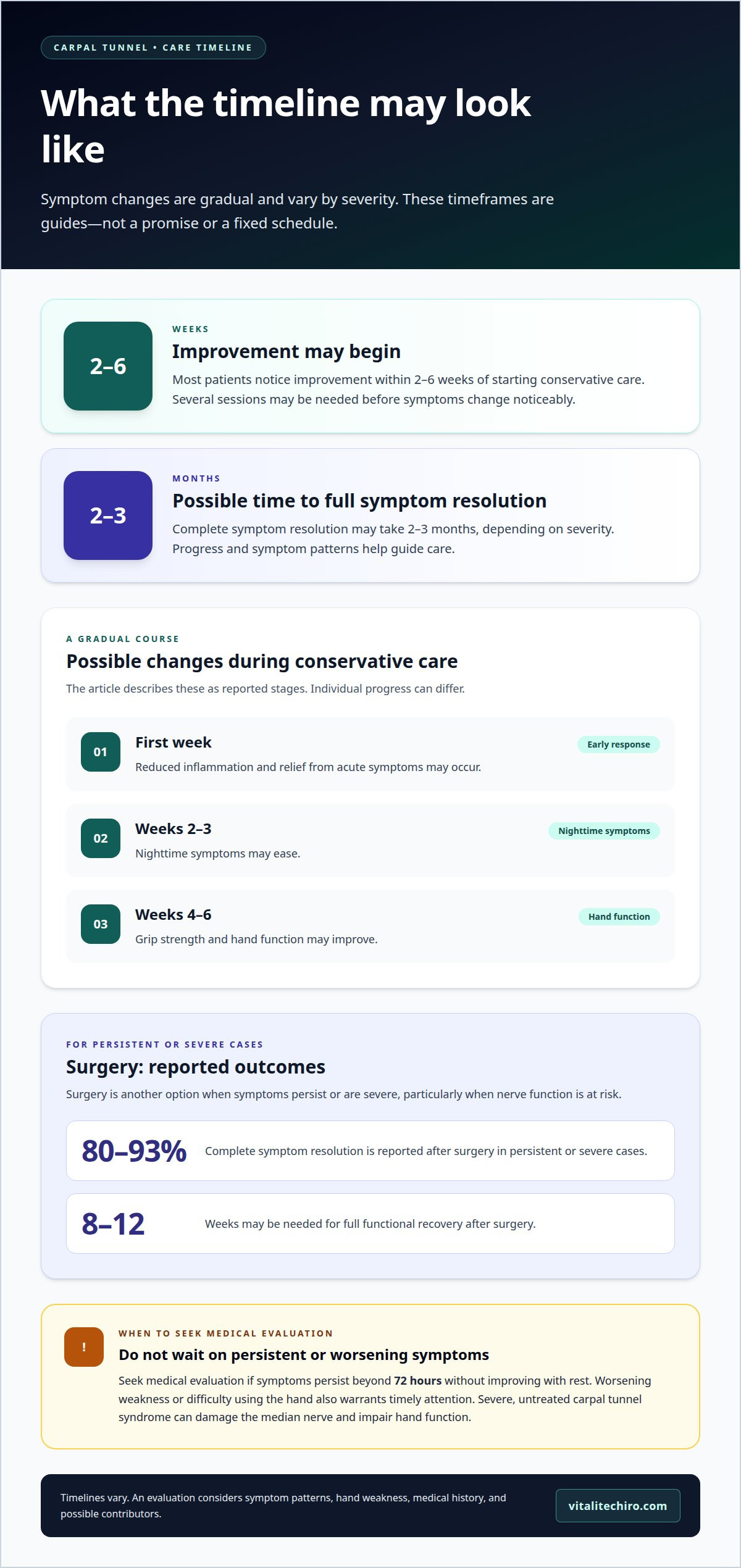
There’s no single timeline for every patient. Most notice improvement within 2-6 weeks of starting conservative care, while complete symptom resolution may take 2-3 months, depending on severity. Several sessions may be needed before symptoms change noticeably. A carpal tunnel relief chiropractor in Rosslyn can use progress and symptom patterns to guide care, rather than treating the calendar as a fixed schedule.
An initial appointment helps shape a treatment plan around the person. Evaluation considers symptom patterns, hand weakness, medical history, and possible contributors such as repetitive tasks, a wrist injury, or pregnancy. For example, symptoms associated with repeated keyboard use call for different considerations than symptoms following an injury. Someone seeking carpal tunnel relief from a Rosslyn-area chiropractor can discuss which daily activities have become difficult.
Seek medical evaluation when symptoms persist beyond 72 hours without improving with rest. Worsening weakness or difficulty using the hand also warrants timely attention. Severe, untreated carpal tunnel syndrome can damage the median nerve and impair hand function. Chiropractic care is a conservative option alongside medical guidance, not a replacement for necessary surgical evaluation.
Insurance coverage depends on your plan. Vitalité Chiropractic accepts most major insurance plans and offers flexible payment options. Benefits vary by plan.
Potential risks and side effects depend on the technique and a person’s health factors. An evaluation should take symptoms, injury history, and pregnancy into account before care is selected.
At Vitalité Chiropractic in Arlington, an evaluation and treatment discussion address symptoms, possible contributors, and an individualized plan. You can discuss how your symptoms affect daily activities and what next steps may be appropriate.
For an assessment focused on your symptoms and treatment options, consider an individualized chiropractic evaluation. Changes in comfort and everyday hand function can help guide ongoing care.
Carpal tunnel symptoms
Carpal tunnel symptoms often affect sensation in the thumb, index finger, and middle finger. People may notice numbness, tingling, burning, or pain, sometimes extending from the palm toward the elbow. The dominant hand is often affected first, though both hands can develop symptoms. Weakness may make gripping a cup or picking up a small button difficult. In severe cases, the muscle at the base of the thumb can waste away, signaling more advanced nerve involvement.
A clinical evaluation typically combines a physical examination, medical history, and a detailed account of symptoms. The clinician considers which fingers are affected, when sensations occur, and whether tasks such as typing worsen them. These details help distinguish a median nerve pattern from discomfort with another underlying cause. Persistent symptoms or increasing weakness deserve timely assessment, because untreated nerve compression can lead to lasting changes in hand movement and function.
With conservative care, symptom changes can follow a gradual course. The first week may bring reduced inflammation and relief from acute symptoms; nighttime symptoms may ease during weeks 2-3. Grip strength and hand function may improve during weeks 4-6. These are reported treatment stages, not a guarantee for an individual. Chiropractic adjustments may be considered as part of conservative care, guided by the examination and the symptoms being addressed.
Surgery is another option for persistent or severe cases, particularly when nerve function is at risk. Complete symptom resolution after surgery is reported in 80-93% of persistent or severe cases, while full functional recovery may take 8-12 weeks. Surgical costs vary with the procedure and individual circumstances, so one figure cannot represent every case. A clinician weighs symptom severity, examination findings, and response to conservative treatment when discussing next steps. Progressive weakness or loss of sensation should not be dismissed as ordinary hand fatigue.
Possible causes and contributing factors
Carpal tunnel syndrome can develop when pressure builds around the median nerve at the wrist. Repetitive hand and wrist movements, such as long periods of typing, sewing, or assembly work, may contribute. Long-term use of vibrating tools is another occupational factor. A wrist fracture or dislocation can also change the space around the nerve and contribute to wrist pain or tingling.
Health and life-stage factors matter, too. Pregnancy or menopause-related fluid retention may increase pressure in the carpal tunnel. Diabetes, thyroid disorders, rheumatoid arthritis, and other inflammatory conditions are also associated with greater risk. Thyroid or pituitary hormone imbalances may be relevant, so a medical consultation can consider health history alongside work and daily activities. Women experience carpal tunnel syndrome nearly three times as often as men, and incidence peaks between ages 45 and 60.
These factors don’t establish the cause for any one person. An evaluation considers symptom patterns, past wrist injuries, repetitive tasks, and relevant medical conditions. For instance, tingling that worsens during prolonged keyboard use involves different possible factors than symptoms following a fracture. Spinal and wrist assessments may help determine which areas relate to the symptoms, while medical guidance can address underlying health contributors. Surgery may be considered for persistent or severe cases, but the decision depends on clinical findings and response to conservative treatment.
Reducing strain can complement a care plan. Take frequent breaks during repetitive tasks, stretch the hands and wrists regularly, and use ergonomic tools or wrist supports where appropriate. These steps address workplace demands, but they don’t replace assessment when symptoms persist or hand function declines. If wrist pain or tingling is affecting your routine, discuss your symptoms and contributing factors as part of an individualized evaluation.
Vitalité Chiropractic
Vitalité Chiropractic offers chiropractic adjustments as a conservative option for people experiencing hand or wrist symptoms associated with carpal tunnel syndrome. An evaluation considers your symptoms, their effect on daily activities, and whether chiropractic care is appropriate. Care is tailored to your needs rather than assuming every case has the same cause or requires the same approach.
If repetitive activities, a wrist injury, or pregnancy may be contributing, share that context during your appointment. It can guide a thoughtful discussion of care options and next steps. For persistent or worsening symptoms, medical evaluation is important. Chiropractic care does not replace a necessary surgical assessment.
Contact Vitalité Chiropractic in Arlington to discuss your symptoms and arrange an evaluation.
Take the Next Step Toward Comfortable Hand Function
Progress begins with a clear understanding of what you want to do more comfortably, whether that means typing through a workday, holding a steering wheel, or returning to a favorite activity. Bring those goals into a conversation about care. They help shape a practical plan around the movements and tasks that matter in your daily life.
A carpal tunnel relief chiropractor serving Rosslyn can discuss whether conservative chiropractic care fits your needs and how progress can be assessed. At Vitalité Chiropractic, care options include Chiropractic Adjustments and Decompression Therapy. Sports Injury Care is also available when an injury affects your activity and recovery needs.
Persistent or worsening symptoms deserve thoughtful attention, especially when they interfere with routine tasks. Contact Vitalité Chiropractic to discuss your hand symptoms and the next step that feels right for you. A more comfortable, confident return to daily activities can start with a conversation.
Frequently Asked Questions
How many sessions will I need?
The number of sessions depends on symptom severity, how long symptoms have been present, and how your hand responds to care. Progress can be assessed through practical changes, such as whether gripping a mug or fastening buttons feels easier. At each follow-up, share what has changed and what remains difficult. That information helps guide whether the plan should continue or be adjusted.
What Happens if Carpal Tunnel Is Left Untreated?
Untreated carpal tunnel syndrome can cause ongoing median nerve damage and lasting loss of hand function. Everyday tasks that require precise finger control, such as fastening a small clasp, may become harder as symptoms progress. If numbness, weakness, or difficulty moving the hand worsens, seek prompt medical assessment. Early attention helps clarify the cause and appropriate next steps.
What are the Best Treatments Available?
The most suitable treatment depends on the cause and severity of symptoms. Conservative options can include chiropractic care, physiotherapy, or prescribed medicines; surgery may be considered for persistent or severe cases. A useful discussion weighs symptom progression, hand function, and response to conservative care. Chiropractic treatment can complement medical guidance, but it doesn’t replace a needed surgical evaluation.
What exercises can help alleviate carpal tunnel pain?
Gentle wrist stretches, nerve-gliding movements, and wrist and hand muscle strengthening are exercise categories used for carpal tunnel symptoms. Keep movements comfortable and controlled rather than forcing a stretch through pain. For example, a clinician can demonstrate a nerve glide and explain how to perform it correctly. Stop an exercise that noticeably worsens symptoms and discuss it during an evaluation.
Who Is Most at Risk?
Risk can increase with repetitive hand use, vibrating tools, wrist injuries, pregnancy-related fluid retention, diabetes, thyroid disorders, and inflammatory conditions such as rheumatoid arthritis. Women are more susceptible, and incidence peaks between ages 45 and 60. These factors don’t establish a diagnosis on their own. A medical assessment considers them alongside symptom history and hand function.
What carpal tunnel treatments do Rosslyn-area chiropractors offer?
In Arlington, Vitalité Chiropractic offers Chiropractic Adjustments and Decompression Therapy. Which approach is appropriate depends on the evaluation, symptoms, and relevant health history. Chiropractic care is a conservative option, not a substitute for medical assessment or surgical evaluation when needed. Discuss how symptoms affect work and daily activities so treatment planning can address your priorities.


