
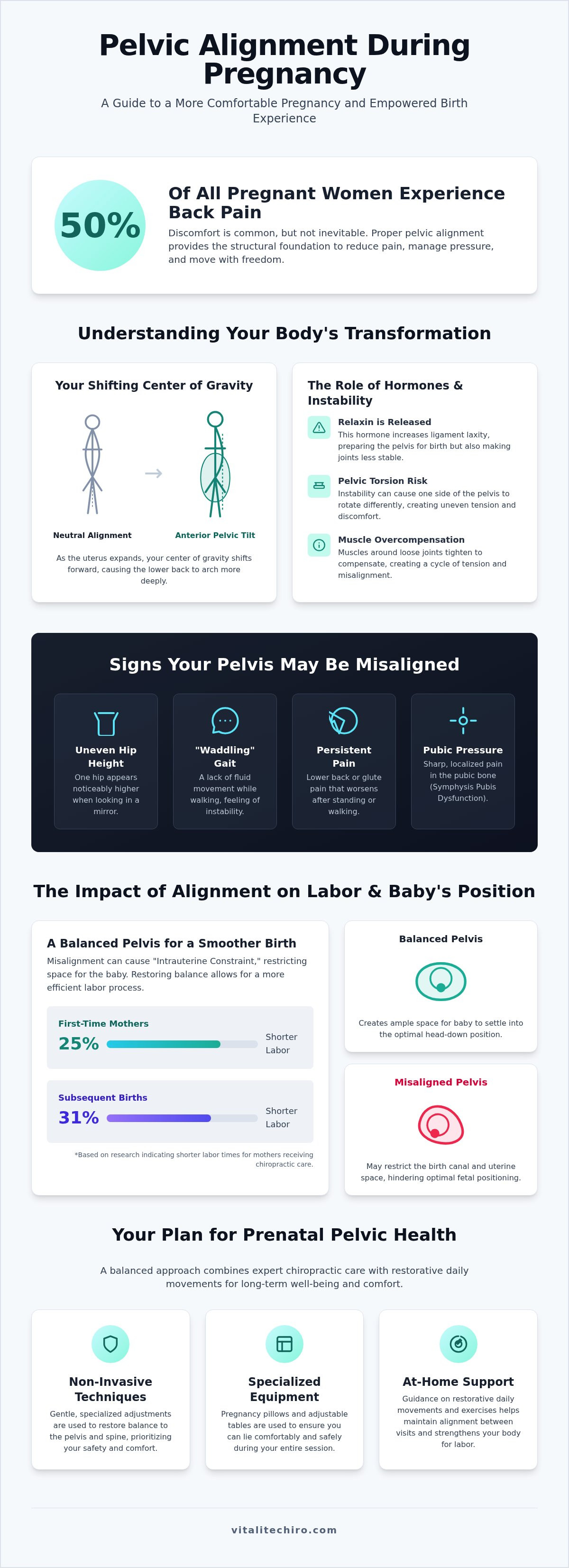
Did you know that approximately 50% of all pregnant women experience back pain during their journey? While discomfort is often treated as an inevitable milestone, prioritizing pelvic alignment during pregnancy provides the structural foundation necessary to move with freedom. It's exhausting to manage sharp shooting pains in your glutes or the heavy pressure of pubic symphysis dysfunction while you're trying to prepare for your baby's arrival. You might even feel a sense of anxiety about your baby's position, wondering if your body is truly ready for the physical demands of labor.
We understand that you want more than just temporary relief; you want to feel strong and capable. This guide will show you how restoring balance to your pelvis can significantly reduce daily discomfort and optimize your body for a smoother, more efficient delivery. We'll examine the role of specialized prenatal chiropractic techniques and provide a clear plan to help you feel confident in your body's innate ability to give birth. By focusing on your pelvic health today, you're building a path toward a more comfortable pregnancy and a more empowered birth experience.
Key Takeaways
- Understand how your body's shifting center of gravity impacts the orientation of your pelvis and spine as your pregnancy progresses.
- Learn how optimal pelvic alignment during pregnancy creates the necessary space for your baby to settle into the best position for a smoother birth.
- Differentiate between muscular strengthening and joint mobility to ensure your prenatal wellness routine supports rather than stresses your pelvic structure.
- Discover the non-invasive techniques and specialized equipment, such as pregnancy pillows and adjustable tables, that prioritize your comfort during professional adjustments.
- Gain a clear plan for your prenatal pelvic health that balances expert chiropractic care with restorative daily movements for long-term well-being.
Understanding Pelvic Alignment: Why Your Body Shifts During Pregnancy
Maintaining proper pelvic alignment during pregnancy is about more than just posture; it's the functional relationship between your pelvis, spine, and lower limbs. Your pelvis acts as the structural cradle for your growing baby. As your uterus expands, your center of gravity naturally shifts forward. This physical change triggers a series of Physiological changes in pregnancy that require your musculoskeletal system to adapt constantly. To prevent falling forward, your lower back arches more deeply, often leading to a condition known as Anterior Pelvic Tilt. You can recognize this by a noticeably increased curve in the small of your back and a feeling that your hip bones are tipping toward the floor.
Hormones play a vital role in this structural evolution. The hormone relaxin is released to increase ligamentous laxity, which prepares your birth canal for delivery. While this softening is necessary for birth, it also makes your pelvic joints less stable. This instability often results in the pelvis shifting out of its neutral position, leading to the discomfort many expectant parents feel. When your joints are loose, the muscles around them often overcompensate by tightening, creating a cycle of tension and misalignment.
The Biomechanics of the Pregnant Pelvis
During the second and third trimesters, the interaction between your sacrum and iliac bones becomes increasingly complex. The weight of your baby exerts downward pressure on the sacrum, while the iliac bones may flare outward to accommodate the growing uterus. Your sacroiliac (SI) joints are responsible for distributing this weight from your upper body to your legs. If these joints aren't moving correctly, you might experience pelvic torsion. Pelvic torsion occurs when one side of the pelvis rotates in a different direction than the other, often creating uneven tension in the pelvic floor muscles. This mechanical imbalance can lead to a cycle of muscle tightness and joint restriction that impacts your daily comfort.
Signs Your Pelvis May Be Out of Alignment
Identifying a misalignment early can prevent chronic pain from settling in. Look for these physical markers that suggest your body is struggling to balance its new weight distribution:
- Uneven hip height: One hip appears noticeably higher than the other when you look in the mirror.
- Waddling gait: A lack of fluid movement while walking, often accompanied by a feeling of instability.
- Persistent pain: Lower back or gluteal discomfort that intensifies after standing or walking for long periods.
- Pubic pressure: Sharp, localized pain in the pubic bone, often referred to as Symphysis Pubis Dysfunction.
If you notice these markers, your pelvic alignment during pregnancy may need professional attention to restore balance. Addressing these shifts isn't just about pain relief; it's about ensuring your body is functioning at its absolute best as you approach labor.
The Impact of Misalignment on Pregnancy Comfort and Labor
The structural integrity of your pelvis dictates the quality of the environment your baby grows in. When we discuss pelvic alignment during pregnancy, we are looking at the literal "room in the inn." If the pelvis is misaligned, it can create what practitioners call "Intrauterine Constraint." This occurs when the physical space within the uterus is restricted or distorted by the surrounding skeletal structure. A misaligned pelvis may lead to a narrower birth canal or uneven tension in the supporting ligaments, making it harder for your baby to find the path of least resistance during delivery.
Research suggests that a balanced pelvis is a primary factor in a more efficient labor process. According to a 2025 study by Global Clinic, first-time mothers receiving chiropractic care experienced up to 25% shorter labor times, while mothers who had previously given birth saw reductions of up to 31%. This efficiency stems from the body's ability to move through the stages of birth without fighting against its own structural roadblocks. A pelvis in harmony allows the pelvic floor muscles to relax and contract effectively when the moment arrives.
Optimal Fetal Positioning and Pelvic Balance
For a baby to settle into the ideal head-down (vertex) position, the pelvic bowl must be symmetrical. When the pelvis is twisted or tilted, the round ligaments, which anchor the uterus to the pelvis, can become tight and pull unevenly. This tension can act like a tightened drawstring on a bag, limiting the baby's ability to turn or drop into the pelvis. Professional Chiropractic Care During Pregnancy aims to achieve a "Webster-like" symmetry. By releasing these ligamentous tensions and adjusting the sacrum, we help create the optimal space for your baby to move freely.
Reducing Nerve Pressure and Pelvic Pain
Misalignment doesn't just affect the baby; it creates significant physical stress for you. As the pelvis shifts, it often places direct pressure on the sciatic nerve, resulting in that sharp, shooting sensation in the glutes common in the third trimester. This shift also forces the paraspinal muscles to work overtime to keep you upright, leading to chronic fatigue and soreness. The link between an increased pelvic tilt and rib cage discomfort is often overlooked, as the shifting lumbar curve forces the upper torso to compensate, compressing the diaphragm and lower ribs.
Restoring balance can offer profound relief from these daily burdens. If you're feeling the strain of these structural changes, consulting with a prenatal specialist can help you regain your physical freedom and peace of mind as you prepare for your birth journey.
Chiropractic Care vs. At-Home Exercises: Finding the Right Balance
Many expectant parents turn to prenatal yoga or home exercise routines to manage their growing discomfort. While movement is essential, it's vital to distinguish between muscular strengthening and joint mobility. Strengthening a muscle that's protecting a misaligned joint won't solve the underlying issue. In fact, attempting to stretch a joint that's "stuck" or subluxated can sometimes increase local inflammation and worsen your pain. This is why we advocate for a synergistic approach: restore the structure through a professional chiropractic adjustment first, then use targeted exercises to support that new, balanced state.
Clinical research on perinatal pelvic alignment underscores how the widening and tilting of the pelvis require precise management to avoid long-term dysfunction. Without structural integrity, your body's attempt to stabilize itself through muscle tension can lead to chronic fatigue and restricted movement. When the foundation is off, every step you take requires more energy than it should.
The Limitations of Pelvic Tilt Exercises
You might find that performing dozens of pelvic tilts at home doesn't provide the relief you expected. This often happens because the issue is structural rather than functional. If a pelvic bone is physically restricted or out of its neutral position, no amount of glute strengthening will move it back into place. When you force movement on a restricted joint, your body often overcompensates by using other muscle groups. This compensation pattern can lead to secondary pains in your hips, knees, or even your upper back as your body tries to find a new center of gravity.
How Manual Adjustments Restore Structural Integrity
Professional care offers a level of precision that home routines simply cannot replicate. Using the Diversified Technique, we provide gentle, targeted adjustments tailored specifically for the unique needs of an expectant body. This method focuses on restoring proper motion to the SI joints and the sacrum, which are the cornerstones of pelvic alignment during pregnancy. A 2024 study published in the Journal of Manipulative and Physiological Therapeutics found that 94% of pregnant women experienced reduced back pain after chiropractic treatment. By addressing joint restrictions first, you allow your muscles to function as they were intended, leading to a more comfortable and active pregnancy.
What to Expect During a Prenatal Chiropractic Session
Entering a chiropractic office during pregnancy shouldn't feel like a leap of faith. It should feel like a homecoming to a body that is supported, balanced, and understood. Prenatal chiropractic care is a non-invasive, gentle discipline that focuses on optimizing pelvic alignment during pregnancy. We recognize that your body is undergoing rapid transformations, and our goal is to ensure those changes happen with as little friction as possible. By prioritizing safety and clinical precision, we help you transition from a state of discomfort to one of physical readiness.
To ensure your absolute safety, we utilize specialized equipment designed specifically for the pregnant form. Our adjustable tables and supportive pregnancy pillows allow you to lie face-down comfortably, a position many expectant parents haven't enjoyed for months. This intentional setup removes pressure from your abdomen and allows your spine to settle into a neutral position, making the adjustment more effective. We then assess your structure for pelvic torsion and ligamentous tension, looking at how the sacrum and iliac bones are interacting. Our commitment to inclusive care ensures that every patient, including those in the LGBTQ+ community, receives personalized attention in a welcoming environment where their unique health journey is the priority.
Step-by-Step: Your First Prenatal Visit
Your initial visit is a methodical exploration of your health history and current physical state. We start with a detailed conversation about your pregnancy journey, including any past birth experiences and your specific goals for delivery. This is followed by a postural analysis to evaluate how your shifting center of gravity affects your gait and stance. Through gentle palpation of the spine and pelvic landmarks, we identify subtle misalignments that may be contributing to your discomfort. We then craft a personalized care plan that aligns with your due date, ensuring you receive the right support at the right time.
Safe Techniques for Every Trimester
Techniques must be as adaptable as the body they serve. In the early stages, we focus on maintaining spinal mobility and nervous system health. As you move into the third trimester, we modify our adjustments to be even more gentle, incorporating soft tissue release to address tension in the round ligaments and paraspinal muscles. This whole-person approach ensures that we aren't just adjusting a joint, but nurturing the entire physiological environment for both you and your baby. If you're looking for a partner in your prenatal health, book your initial consultation to see how specialized care can transform your pregnancy experience.
Personalized Pelvic Health at Vitalité Chiropractic in Arlington
Dr. W. Jean-Luc Sansfaute has been a cornerstone of the Arlington healthcare community since 2003. With over two decades of clinical experience, he understands that pelvic alignment during pregnancy is a deeply personal journey that requires both technical precision and genuine empathy. At Vitalité Chiropractic, we believe that every individual deserves to feel safe and respected. Our clinic is proud to be an LGBTQ+ friendly space where diverse families find the support they need during this transformative time. We also provide multilingual services, ensuring that language is never a barrier to receiving high-quality healthcare. Understanding the prenatal chiropractic care benefits available to you is the first step toward a more comfortable and empowered pregnancy experience.
A Compassionate Partner in Your Pregnancy Journey
Arlington families choose Vitalité because we treat birth preparation as a collaborative process rather than a series of clinical transactions. We know that acute pregnancy pain, like sudden sciatica or intense pubic symphysis pressure, doesn't follow a standard schedule. That's why we prioritize same-day appointments for patients experiencing urgent discomfort, providing immediate relief when you need it most. Our approach integrates pelvic health into a broader wellness strategy, helping you maintain mobility from your first trimester through your final weeks. We don't just address a specific symptom; we partner with you to enhance your body's natural resilience and long-term health.
Preparing for a Confident Birth Experience
Our specialized care often complements the work of local midwives and doulas in the Northern Virginia area. By focusing on pelvic symmetry and joint mobility, we help create the physical conditions that align with your birth plan's specific goals. We empower our patients with knowledge about their own biomechanics, explaining how their skeletal structure directly influences fetal positioning and the progression of labor. This education builds a sense of confidence that is vital for the delivery room. When you understand how your body works, you can trust its innate ability to give birth. Schedule your prenatal consultation at Vitalité Chiropractic today to begin your personalized path to a more comfortable birth.
Empowering Your Pregnancy with Structural Balance
Your journey toward a more comfortable pregnancy and a confident birth experience begins with a foundation of structural balance. We've explored how maintaining proper pelvic alignment during pregnancy reduces nerve pressure and creates the optimal environment for your baby to settle into the vertex position. While at-home exercises are helpful for maintenance, professional chiropractic care addresses the underlying joint restrictions that movement alone cannot resolve. By prioritizing your pelvic health now, you're investing in a smoother labor and a more restorative recovery.
Dr. W. Jean-Luc Sansfaute has been supporting Arlington families with expert care since 2003, offering a seasoned perspective on prenatal wellness. Our practice is a proudly LGBTQ+ friendly and inclusive space, ensuring every individual feels respected, heard, and safe. If you're struggling with acute discomfort, we offer convenient same-day appointments to provide the immediate relief you deserve. You don't have to navigate these physical changes alone; expert support is available to guide you through every trimester.
Book Your Prenatal Pelvic Alignment Session in Arlington and take the first step toward physical freedom today. Your body is capable of incredible things, and we're here to help you feel strong and supported every step of the way.
Frequently Asked Questions
Is it safe to have my pelvis adjusted during the third trimester?
Yes, chiropractic adjustments are safe throughout the third trimester when performed by a licensed practitioner trained in prenatal care. Dr. Sansfaute has been practicing since 2003 and uses modified techniques to ensure your safety. We use specialized tables and pillows to accommodate your growing belly, removing pressure from the abdomen. This ensures the adjustment is gentle and effective for both you and your baby during the final weeks of pregnancy.
Can pelvic alignment help my baby turn from a breech position?
Chiropractors do not physically turn babies; however, restoring pelvic balance can help the baby turn themselves. The Webster Technique, a specialized adjustment for expectant parents, has an 82% success rate in allowing breech babies to move into the vertex position. By reducing intrauterine constraint and relaxing the round ligaments, we create the necessary space for your baby to find the most comfortable, head-down position before labor begins.
How often should I see a prenatal chiropractor for pelvic issues?
Your visit frequency depends on your specific goals and level of discomfort. Many patients in Arlington find relief with weekly or bi-weekly sessions to maintain pelvic alignment during pregnancy. As you approach your due date, we may suggest more frequent visits to ensure your pelvis is balanced for delivery. Every care plan is individualized, taking into account your unique biomechanics and the physiological changes occurring in each trimester.
Will insurance cover chiropractic care for pregnancy-related back pain?
Many insurance providers cover chiropractic care for pregnancy-related issues, though the extent of coverage depends on your specific plan. It's common for policies to include benefits for spinal adjustments and manual therapy. At Vitalité Chiropractic, we recommend contacting your insurance carrier directly to confirm your benefits. Our team is also available to help you understand your options for accessing prenatal care in our Arlington office.
What is the difference between pelvic girdle pain and regular back pain?
Pelvic girdle pain (PGP) is typically felt deep in the pubic area, hips, or sacroiliac joints, often manifesting as a sharp or grinding sensation during movement. Regular back pain is usually localized to the lumbar muscles and may feel like a dull ache. While both are common, PGP specifically relates to the instability of the pelvic joints. Professional assessment helps determine if your discomfort is structural or muscular in nature.
Can poor pelvic alignment cause a longer labor?
Poor pelvic alignment can indeed lead to a longer and more difficult labor process. Research shows that first-time mothers who receive regular chiropractic care may experience up to 25% shorter labor times. When the pelvis is balanced, the baby can descend more easily through the birth canal. This structural harmony allows your body to work efficiently during contractions, reducing the physical hurdles that often lead to stalled labor.
Are there specific exercises I should avoid if my pelvis is misaligned?
If your pelvis is misaligned, you should avoid high-impact activities or deep, asymmetrical movements like wide lunges. These exercises can place excessive strain on the already loosened ligaments of the SI joints. It's best to prioritize gentle, symmetrical movements until you've had a professional assessment. Restoring pelvic alignment during pregnancy first ensures that your prenatal fitness routine supports your body's stability rather than increasing your risk of inflammation.
Do I need a referral from my OB/GYN to see a prenatal chiropractor?
You do not need a referral from your OB/GYN to see a prenatal chiropractor in Virginia. We operate as direct-access providers, allowing you to schedule your consultation whenever you feel the need for support. We highly value a collaborative approach to your health; therefore, we often communicate with your midwife or obstetrician. This ensures that your entire birth team is aligned and working toward the same goal of a safe, comfortable delivery.


