
Did you know that nearly 67% of women in their third trimester experience significant pelvic girdle pain? You've likely spent your recent nights tossing and turning, only to be met with a sharp, shooting sensation every time you try to adjust your position. It’s incredibly frustrating when healthcare providers dismiss these symptoms as a standard part of pregnancy, leaving you to worry if this physical strain will make your upcoming labor more difficult. You deserve more than just a suggestion to wait it out until your due date.
The good news is that discomfort doesn't have to be your baseline. Finding effective third trimester pelvic pain relief in Arlington is possible when you shift the focus from merely enduring the weight to actively balancing your pelvic biomechanics. This guide provides a roadmap to help you reclaim your mobility and sleep quality. We’ll explore professional manual techniques that address sacral instability and provide you with specific, at-home strategies to eliminate pressure. By the end of this article, you will understand how to stabilize your body for immediate relief and build the physical confidence necessary for a comfortable, empowered delivery.
Key Takeaways
- Learn how the hormone Relaxin impacts your pelvic joints and why this biological shift often leads to Pelvic Girdle Pain (PGP) or Symphysis Pubis Dysfunction (SPD).
- Discover how specialized manual adjustments provide third trimester pelvic pain relief Arlington residents can access to restore symmetry and prepare for a smoother delivery.
- Use simple diagnostic tools like the "Stair Test" to determine if your discomfort requires professional structural correction or basic at-home management.
- Master immediate lifestyle adjustments, such as the "knees together" rule for transitions, to minimize pelvic shearing and reduce sharp shooting pains during daily movements.
- Understand the importance of choosing a seasoned practitioner who offers same-day appointments for acute pain while prioritizing an inclusive, patient-centered approach.
Understanding Third Trimester Pelvic Pain: Why It Happens Now
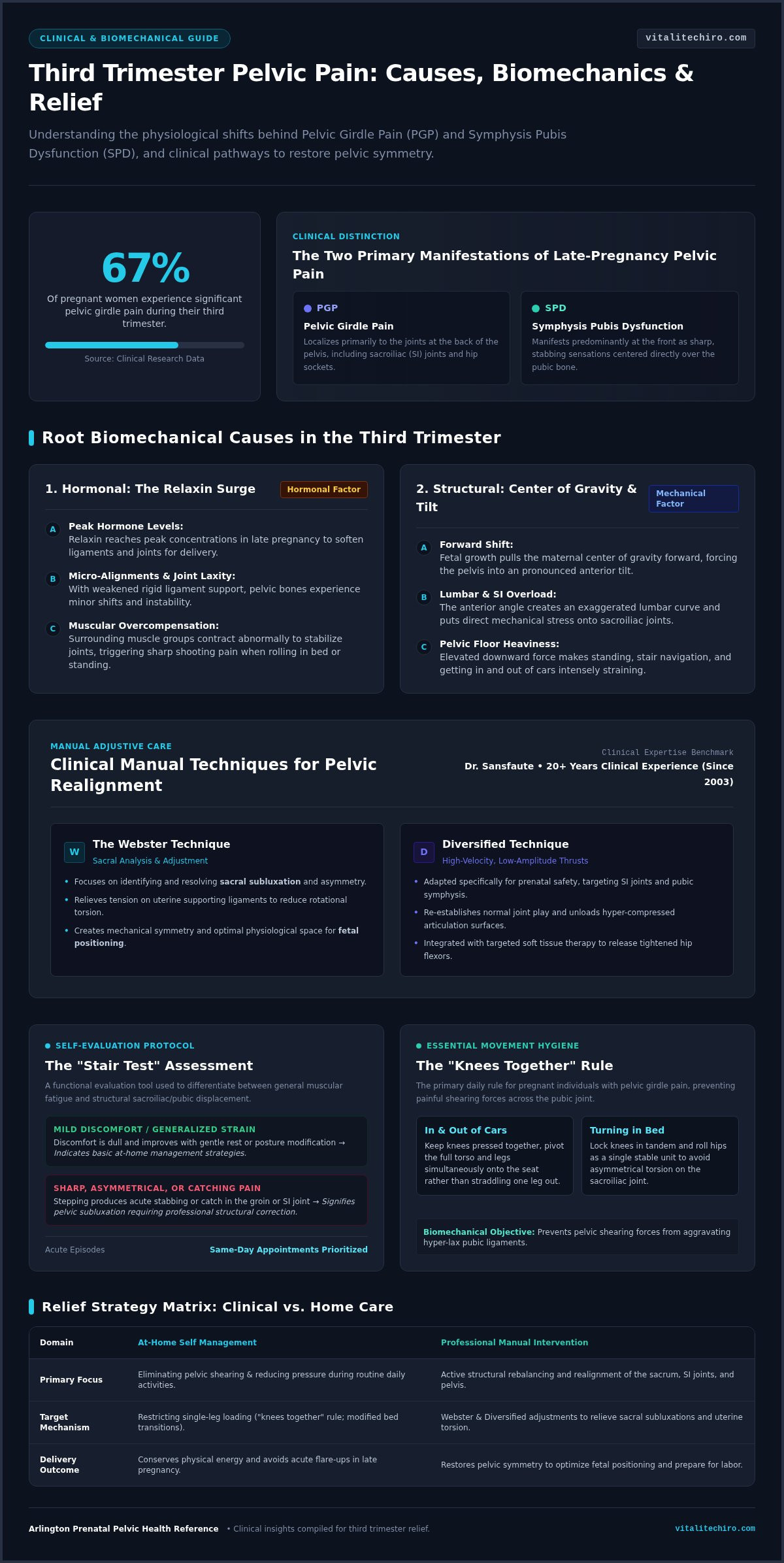
If you feel a sharp, stabbing sensation in your pubic bone or a deep ache in your hips, you aren't alone. Research indicates that pelvic girdle pain during pregnancy affects up to 67% of individuals in their third trimester. This discomfort often falls under two categories: Pelvic Girdle Pain (PGP), which involves the joints at the back of your pelvis, and Symphysis Pubis Dysfunction (SPD), which affects the front. While many well-meaning friends might tell you this is just a normal part of the journey, debilitating pain that stops you from walking through your Arlington neighborhood shouldn't be ignored. Identifying the biological "why" is the first step toward finding effective third trimester pelvic pain relief in Arlington.
The Role of Relaxin and Ligament Laxity
During these final weeks, your body produces a hormone called Relaxin at its highest levels. Its primary job is to soften the ligaments and joints of the pelvis to create a clear path for delivery. However, this necessary laxity can lead to "micro-alignments" where the bones of the pelvis shift slightly out of place. Because the ligaments are no longer providing their usual rigid support, the surrounding muscles often overcompensate. This leads to those familiar shooting pains when you turn in bed or stand up. Maintaining stability in this increasingly mobile environment is essential for your comfort.
Structural Shifts: Center of Gravity and Pelvic Tilt
As your baby grows, your center of gravity shifts significantly forward. This physical change pulls the pelvis into an anterior tilt, which creates a deep curve in your lower back and places immense pressure on your sacroiliac (SI) joints and hip sockets. In a city like Arlington, where you might be navigating stairs or frequently getting in and out of a car for errands, these structural shifts become painfully apparent. The anterior tilt forces your body to work harder just to stay upright, often resulting in a persistent heaviness in the pelvic floor. Understanding these mechanical changes helps us target the specific areas that need support, ensuring that your pursuit of third trimester pelvic pain relief in Arlington addresses the root cause rather than just the symptoms.
Professional Chiropractic Techniques for Pelvic Relief
Manual therapy offers a precise, non-invasive path to restore pelvic symmetry during the final stages of pregnancy. When the body's structural foundation is compromised by shifting weight and hormonal changes, professional intervention can provide the stability that stretching alone cannot. Dr. Sansfaute has been practicing since 2003, bringing over 20 years of clinical experience to every adjustment. This depth of expertise is essential for third trimester pelvic pain relief in Arlington, as it ensures that high-risk prenatal adjustments are performed with the highest degree of safety and precision. Chiropractic care during this period is remarkably safe for both mother and baby, focusing on gentle corrections that respect the body's unique state.
The Webster Technique: Balancing the Pelvis
The Webster Technique is a specialized sacral analysis and adjustment designed to improve pelvic neuro-biomechanics. By addressing sacral subluxation, this method reduces torsion to the uterus and relaxes the supporting ligaments. This is particularly beneficial when following NHS guidance on pregnancy pelvic pain, which emphasizes the importance of maintaining pelvic stability. Restoring balance within the pelvis does more than just alleviate sharp pains; it creates the necessary space for optimal fetal positioning. You can learn more about how these adjustments support your body's journey in our guide to prenatal chiropractic care benefits.
The Diversified Technique and Manual Therapy
The Diversified chiropractic technique is a hands-on approach that utilizes high-velocity, low-amplitude thrusts to correct specific joint dysfunctions. In the third trimester, this technique is adapted to target the sacroiliac (SI) joints and the pubic symphysis with extreme care. These adjustments are often paired with soft tissue work to release tight hip flexors and strained round ligaments that contribute to persistent discomfort. This multi-modal approach ensures that the structural correction is supported by relaxed musculature, allowing you to move with renewed energy. If you're experiencing acute discomfort, scheduling a same-day appointment can provide the immediate structural support your body requires for a more comfortable delivery.
Aligning the pelvis isn't just about comfort today; it's about preparing your body for the physical demands of labor. When the pelvic girdle is symmetrical, the birth canal can open more efficiently, often leading to a shorter and less complicated labor experience. We prioritize a patient-centered approach that treats every individual as a unique case, ensuring your care plan reflects your specific physical needs and birth goals.
Professional Care vs. Home Management: When to Seek Help
Determining when to transition from self-care to clinical support is a pivotal step in your pregnancy journey. While a heating pad or a warm bath might offer a fleeting sense of comfort, these methods only soothe the surface symptoms. They don't address the underlying mechanical imbalances that cause your distress. To help you decide if you need professional intervention, consider the "Bed Pivot" test. If turning over at night or stepping out of a car causes a sharp, localized pain that momentarily halts your movement, you're likely dealing with a structural issue rather than simple muscle fatigue. Seeking third trimester pelvic pain relief in Arlington early can prevent these dysfunctions from becoming a permanent fixture of your daily life.
When Home Remedies Are Enough
Not every ache requires a clinical visit. You can often manage mild symptoms at home if they meet the following criteria:
- Mild aching that occurs only after a long walk and resolves completely after thirty minutes of rest.
- Occasional pelvic tightness that responds well to gentle prenatal yoga or light stretching.
- Discomfort that is easily mitigated by using supportive pillows to maintain neutral hip alignment while sleeping.
If your pain remains at this manageable level, focus on maintaining symmetry in your daily movements and using ergonomic supports to protect your joints.
Clinical Indicators for Professional Intervention
In a walkable community like Arlington, mobility is essential. If your pelvic discomfort makes walking more than a single block difficult, it's time to seek a higher level of care. You should also watch for a "clicking" or "grinding" sensation in the pubic bone area, which is a hallmark of symphysis pubis dysfunction. This often manifests as pain that radiates into the groin or down the inner thighs, making simple tasks like climbing stairs feel nearly impossible. For a deeper look at the symptoms and conservative management of these conditions, you can refer to the Cleveland Clinic's guide to symphysis pubis dysfunction.
A holistic chiropractor Arlington VA families trust will look beyond the immediate pain to evaluate how your entire pelvic ring is functioning. This is vital because untreated mechanical imbalances don't always disappear after birth. Statistics show that roughly 25% to 28% of patients continue to suffer from pelvic girdle pain into the postpartum period if the joint dysfunction isn't corrected during pregnancy. By addressing these issues now, you aren't just seeking third trimester pelvic pain relief in Arlington; you're actively safeguarding your long-term pelvic floor health and ensuring a more resilient recovery after your baby arrives.
How to Relieve Pelvic Pain at Home: A Step-by-Step Guide
Clinical adjustments provide the necessary structural reset, but the way you move throughout the day dictates how long that comfort lasts. Integrating specific lifestyle hacks into your routine can significantly reduce the shearing forces that aggravate the pubic symphysis and SI joints. For those seeking third trimester pelvic pain relief in Arlington, these small, intentional adjustments often make the difference between a restful night and hours of persistent discomfort. Small changes in how you navigate your home or office can preserve the alignment achieved during your professional care sessions.
Daily Movement Modifications for PGP
The most critical rule for managing pelvic girdle pain is to keep your knees together during transitions. Whether you're turning in bed, getting out of a car, or standing up from a chair, moving your legs as a single unit prevents the pelvic bones from twisting against each other. When getting out of bed, use the log roll technique: roll onto your side with your knees bent and together, then use your arms to push your torso up while swinging your legs to the floor together. Additionally, always sit down to put on pants, socks, or shoes. Standing on one leg, even for a moment, creates an uneven load on the pelvis that can trigger sharp shooting pains. These habits protect the delicate ligaments that are currently softened by Relaxin.
Gentle Stretching and Strengthening Protocols
Incorporate the Tailor Sit into your day by sitting on the floor with the soles of your feet together and your back supported against a wall. This position gently opens the hips without straining the sacrum, offering a safer alternative to sitting cross-legged. You can also utilize the Cat-Cow stretch to maintain lumbar mobility; focus on small, controlled movements rather than deep arches to avoid overstretching the abdominal wall. Safe pelvic tilts are another essential tool, as they engage the deep core and help tuck the pelvis out of that painful anterior tilt. If you find that these movements aren't providing enough relief, scheduling a prenatal chiropractic consultation can help you develop a customized movement plan tailored to your specific biomechanics.
Evening Decompression Routine
A consistent evening routine helps decompress the spine and pelvis before sleep. Start by utilizing a trochanteric or SI belt worn low across the hips to provide external stabilization; these are readily available in Arlington pharmacies and medical supply stores. Follow this with a three-step decompression process: spend five minutes in a quadruped position to take the weight of the baby off your spine, perform ten slow pelvic tilts, and finally, use a full-body pregnancy pillow to keep your hips stacked and neutral throughout the night. This structured approach ensures that you aren't just managing pain, but actively preparing your body for a more restorative sleep and a successful delivery.
Choosing Your Prenatal Chiropractor in Arlington
Selecting a healthcare partner for your final weeks of pregnancy is a deeply personal decision. In a vibrant, diverse community like ours, you need a provider who understands the specific physical demands of the Arlington lifestyle. Whether you're walking the trails at Potomac Overlook or commuting via the Metro, your body requires a specialist who looks beyond the immediate ache. Seeking third trimester pelvic pain relief in Arlington means finding a practitioner who prioritizes your long-term wellness and respects your unique journey toward parenthood. You deserve a partner who treats your case with the individual attention it requires.
What to Look for in a Pregnancy-Focused Provider
Experience is the most critical factor when choosing a prenatal chiropractor. You should look for a practitioner who has spent decades refining their approach to the delicate biomechanics of the third trimester. Dr. Sansfaute has been serving patients since 2003, providing over 20 years of clinical expertise in manual therapy and the Diversified Technique. It's also essential to ensure the office environment feels like a supportive healing space rather than a high-volume clinical factory. Your provider should offer specialized prenatal adjustments that are gentle, precise, and tailored to your body's changing needs as you approach your due date.
The Vitalité Approach: Expert and Inclusive Care
Our practice is built on a foundation of clinical authority and person-centered empathy. We recognize that every individual deserves to feel heard and respected, which is why we prioritize an inclusive, LGBTQ+ friendly environment. Dr. Sansfaute’s commitment to the Arlington community since 2003 is reflected in our multilingual support, ensuring that language is never a barrier to high-quality care. We also understand that acute third-trimester pain doesn't follow a schedule. We offer same-day appointments to provide immediate structural support when you need it most, helping you find third trimester pelvic pain relief in Arlington without the wait.
We take a "Whole-Person" approach to your health. This means we don't just adjust your spine; we partner with you to address nutrition, ergonomics, and daily movement patterns. This comprehensive strategy ensures that the relief you find in our office carries over into your daily life, supporting your body through the physical demands of labor and recovery. You can take the first step toward a more comfortable pregnancy by scheduling a visit online or calling (703) 879-5144. Our goal is to help you navigate these final weeks with physical freedom and the confidence that your body is fully prepared for the birth of your child.
Preparing for Your Empowered Birth Journey
Navigating the final weeks of pregnancy requires a balance of rest and proactive structural care. By understanding the hormonal shifts and mechanical changes in your body, you can move from merely enduring discomfort to actively preparing for a smoother delivery. Simple habits like the "knees together" rule and utilizing proper ergonomic supports are essential tools in your daily wellness toolkit, ensuring your pelvis remains as stable as possible during transitions.
When home management isn't enough, professional intervention provides the stability your body requires. Achieving third trimester pelvic pain relief in Arlington is accessible through expert manual therapy that restores pelvic symmetry and eases ligament tension. Dr. Sansfaute brings over 20 years of clinical experience to our inclusive, multilingual office, ensuring every patient feels secure and understood. If you're experiencing acute discomfort, don't wait for your symptoms to resolve on their own. Schedule your same-day prenatal relief appointment at Vitalité Chiropractic to reclaim your physical freedom and sleep quality.
You're doing the remarkable work of bringing new life into the world. Let us support you in making these final weeks a time of comfort and confidence as you prepare for your baby's arrival.
Frequently Asked Questions
Is it safe to have a chiropractic adjustment in the third trimester?
Yes, chiropractic adjustments are exceptionally safe for both mother and baby throughout the third trimester. Dr. Sansfaute utilizes specialized manual techniques that accommodate your growing belly while avoiding any unnecessary pressure on the abdomen. These non-invasive methods focus on restoring pelvic symmetry without the use of surgery or medication. Our clinical approach prioritizes your comfort and safety, ensuring that every adjustment is gentle and tailored to your specific stage of pregnancy.
How often should I see a chiropractor for pelvic pain during pregnancy?
The frequency of your visits depends on the severity of your symptoms and your specific birth goals. Most patients seeking third trimester pelvic pain relief in Arlington benefit from one to two sessions per week during the initial phase of care. As your pelvic stability improves and your pain levels decrease, we often transition to a maintenance schedule. This steady, methodical approach ensures your body remains balanced and prepared for the physical demands of labor.
Can chiropractic care help if my baby is in a breech position?
Chiropractic care does not involve manually turning a baby. Instead, we focus on balancing the pelvis and relaxing the surrounding ligaments to create more room for the baby to move into an optimal position. By reducing uterine torsion and sacral subluxation, we address the mechanical barriers that might prevent a baby from turning naturally. This whole-person approach supports your body's innate ability to facilitate a healthy, comfortable delivery process.
Will insurance cover my prenatal chiropractic visits in Arlington?
Many health insurance plans in Virginia provide coverage for chiropractic services, though specific benefits vary by provider. We recommend contacting your insurance carrier to verify your out-of-network or in-network benefits for prenatal care. Additionally, chiropractic adjustments are classified by the IRS as qualified medical expenses. You can often use your Health Savings Account (HSA) or Flexible Spending Account (FSA) funds to cover your per-visit fees and therapeutic modalities without a separate referral.
What should I wear to my pregnancy chiropractic appointment?
We recommend wearing comfortable, loose-fitting clothing that allows for a full range of motion. Leggings, yoga pants, or flexible athletic wear are ideal choices for your session. These fabrics make it easier for Dr. Sansfaute to perform manual adjustments and soft tissue work while ensuring you feel secure and comfortable on the table. You won't need to change into a clinical gown, as our techniques are designed to be performed over standard clothing.
How soon after giving birth can I return for postpartum care?
You can typically return for postpartum chiropractic care as soon as you feel comfortable moving around, often within the first two to six weeks after delivery. The hormone Relaxin remains in your system for several months after birth, which makes this an ideal time to stabilize the pelvis and address any lingering structural shifts. Early postpartum care helps restore your spinal alignment and supports a more efficient recovery as you navigate the physical demands of early parenthood.
Do I need a referral from my OB/GYN to see Dr. Sansfaute?
No, you don't need a formal referral from your OB/GYN or midwife to schedule an appointment at Vitalité Chiropractic. Chiropractors are primary access providers, meaning you can book your visit directly with us. We often collaborate with local Arlington obstetricians and midwives to ensure your care plan is integrated and supportive of your overall birth strategy. This partnership ensures a comprehensive approach to your well-being during these final, critical weeks of pregnancy.
Can chiropractic adjustments help with sciatica as well as pelvic pain?
Yes, chiropractic adjustments are highly effective for managing sciatica along with third trimester pelvic pain relief in Arlington. Sciatic nerve pressure often results from the anterior pelvic tilt and the baby's position, leading to sharp pain that radiates down the leg. By correcting sacral misalignments and reducing muscle tension in the gluteal region, we can alleviate the pressure on the sciatic nerve. This restorative care helps you regain your mobility and improves your daily comfort level.


