
Lower back pain from sitting all day in Arlington, VA, can come from prolonged pressure or strain on muscles, ligaments, joints, or discs in the lower back. Sitting may aggravate an existing mechanical problem. Notice whether pain changes with sitting, standing, or bending: these patterns can offer clues, but the cause varies from person to person.
If your back aches after a day at a desk, sitting may be part of the problem, but it may not be the whole story. This guide explains how the lower back works, what can contribute to pain, and how appropriate activity and over-the-counter pain relievers may help. It also covers when persistent or worsening symptoms warrant medical attention, so you can choose a sensible next step.
Key Takeaways
- Notice whether your back pain stays in the lower back or changes with movement; these patterns can help distinguish possible causes.
- Learn how muscles, ligaments, joints, and discs support the lower back and how strain or changes in these structures can contribute to discomfort.
- Understand how adjusting activity and considering over-the-counter pain relievers may fit into initial self-care.
- Compare how sitting, standing, and bending affect your symptoms to identify which everyday positions may be aggravating them.
What causes lower back pain?
Axial back pain is localized to the lower back and may be acute or chronic. It can feel like a deep ache, hurt when pressure is applied, or flare with slight movement. About 97% of lower back pain cases are caused by a mechanical issue. Examples include a muscle or ligament strain after lifting, moving too quickly, or an accident.
Mechanical causes include disc degeneration or herniation, facet joint degeneration, sacroiliac joint dysfunction, spinal ligament problems, and weakened spinal muscles. Other possible causes include osteoporosis, arthritis, tense muscles or spasms, spinal stenosis, scoliosis, and cancer. A change in posture may show what aggravates pain, but it cannot identify the underlying condition on its own.
Pain on one side may arise from an irritated structure on that side, such as a muscle, joint, or disc. A herniated disc can also affect a nearby nerve, with discomfort extending into the hip or leg. Arthritis is another possibility, as inflammation around a joint may contribute to stiffness and pain. Pain location alone cannot establish whether the cause is mechanical or inflammatory.
When should lower back pain be evaluated by a doctor? Arrange a medical evaluation if pain lasts more than a few days, worsens, or remains severe during everyday movement despite self-care and medication. Pain that persists for weeks also deserves attention, particularly if it interferes with walking, sitting, or bending.
What are warning signs of serious lower back pain? New loss of bowel or bladder function, or pain accompanied by progressive nerve symptoms, needs urgent medical attention. Cleveland Clinic notes that a herniated disc can lead to cauda equina syndrome, a medical emergency. Rare sacral tumors may also cause pain while sitting, sciatica, urinary tract infections, or loss of bowel and bladder function.
Exercise changes and over-the-counter pain relievers
Initial care for lower back pain may include adjusting your fitness plan and using over-the-counter pain relievers. Choose an activity level that suits your symptoms and how movement affects them.
Exercise and Movement for Chronic Pain
Therapeutic exercise uses purposeful movement to support mobility and everyday function during chronic pain. Physical therapy may help restore mobility and ease lower back pain, while adjusting your fitness routine can keep activity manageable. If a workout worsens your symptoms, change or reduce the activity rather than forcing the same routine. Gentle, consistent movement may be more practical than prolonged inactivity.
Desk Relief and Sitting Breaks
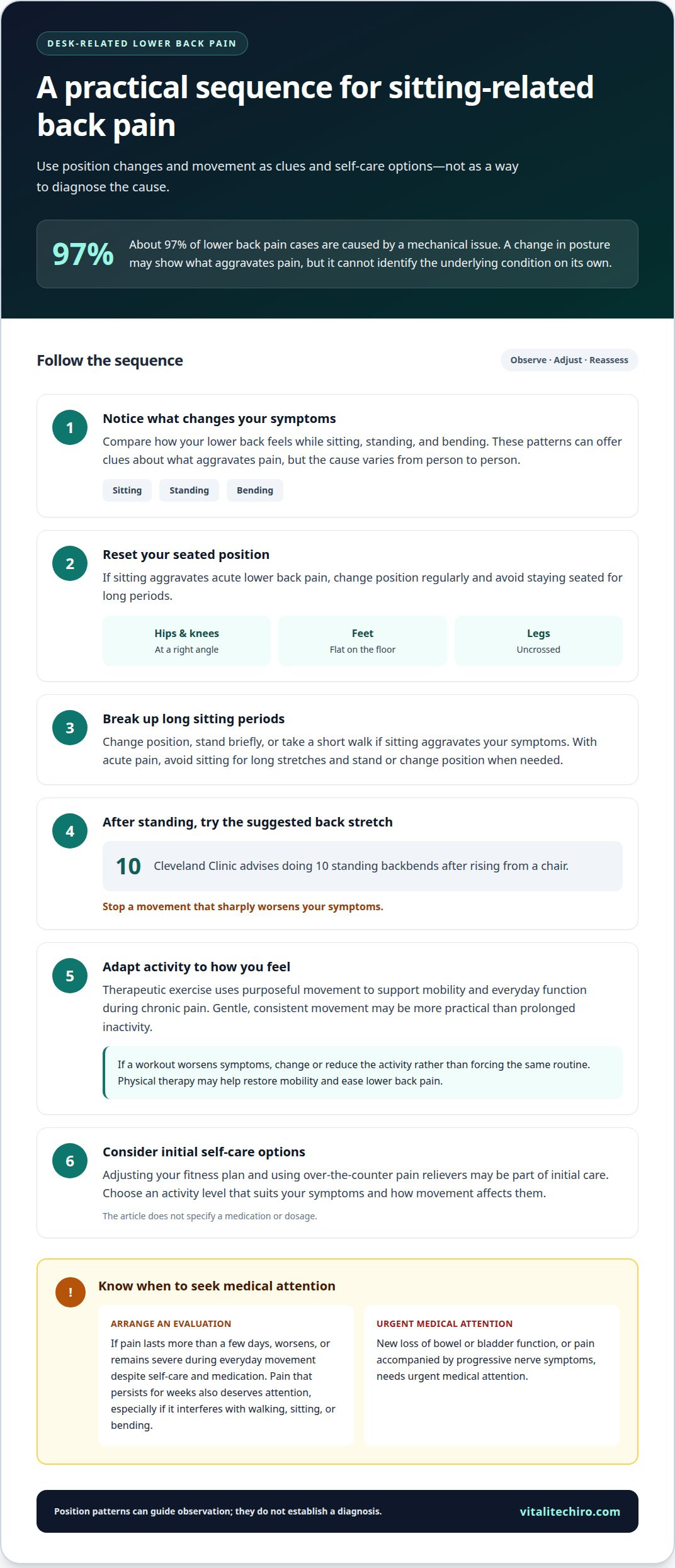
Desk relief means changing position and moving regularly instead of staying seated through long work periods. If sitting aggravates acute lower back pain, try changing position regularly and avoid staying seated for long periods. Keep hips and knees at a right angle, feet flat, and legs uncrossed. After standing, Cleveland Clinic advises doing 10 standing backbends to stretch the back. Stop a movement that sharply worsens symptoms.
How can I relieve lower back pain from sitting at a desk? Change position, stand briefly, and take a short walk if sitting aggravates your symptoms. Adjusting your fitness plan and considering an over-the-counter pain reliever may also be part of initial care.
How often should I take breaks and stretch when sitting all day? With acute pain, avoid sitting for long stretches and change position or stand when needed. Cleveland Clinic recommends 10 standing backbends after rising from a chair.
Does health insurance cover physical therapy for lower back pain in Virginia? Coverage depends on your plan’s terms and physical therapy benefits. Review your plan to understand whether visits are covered and what conditions apply.
If pain continues despite movement changes and self-care, a clinician can help assess next steps. Therapeutic modalities for back discomfort may be part of a broader approach to symptom management.
How lower-back muscles, ligaments, joints, and discs function
The lumbar spine has five vertebrae that support the torso and allow bending and turning. Discs between the vertebrae help distribute pressure as the spine moves. Facet joints guide movement between vertebrae, while sacroiliac joints connect the base of the spine to the pelvis. Each structure has a distinct role, and pain can arise when one or more are strained or irritated.
Muscles around the lumbar spine help control posture and movement, including reaching forward or rising from a chair. Spinal ligaments connect and support structures, helping limit excessive motion. Weak muscles or strained ligaments can increase the demand on other tissues during everyday tasks, such as lifting or holding one position. Facet joint degeneration and sacroiliac joint dysfunction can also cause mechanical pain.
A lumbar disc has a tough outer layer and a softer center. A bulge changes the disc’s outline; a herniation occurs when disc material pushes through a weakened area. Disc degeneration or herniation can contribute to mechanical back pain. The effect depends on which disc and nearby structures are involved, not simply on how a scan looks.
Pain that worsens while sitting and typically improves after standing may be associated with a lumbar herniated disc. A herniation can also irritate or compress a nearby nerve, affecting where symptoms are felt. If nerve involvement is suspected, a doctor considers the pain pattern alongside movement and function. A disc finding alone does not explain every symptom or determine treatment.
These structures work together, rather than in isolation. A disc problem, for example, can affect movement while nearby muscles tighten to guard the area. Therapy may focus on restoring comfortable movement and supporting function. Surgery may be an option if noninvasive pain management does not help, but the decision depends on the cause and its effects.
Low back pain while sitting, standing, or bending
Symptoms that change with position can help explain what aggravates your back. Sitting applies about 90% more pressure on the back than standing. That doesn’t identify a diagnosis, but it helps explain why a desk-bound day may feel different from walking or standing. Compressed spinal nerves can also cause low-grade pain after prolonged sitting or standing, so note which position brings symptoms on and what eases them.
For acute low back pain, try to avoid sitting for long stretches and change positions as needed. When seated, keep hips and knees at a right angle, feet flat, and legs uncrossed. Cleveland Clinic advises easing an exaggerated curve in your seated back by about 10 degrees. After standing from a chair, its advice is to do 10 standing backbends, stopping if movement sharply increases pain.
Standing all day can also strain the back if you stay in one posture. Avoid holding the same position for a long time; if using a stool or box, switch which foot rests on it after several minutes. While driving, keep your knees level with or higher than your hips. These small position changes can help you notice whether standing or sitting affects mobility.
Bending and lifting can provide another useful clue. To pick up an object below waist level, keep your back straight and bend at the knees and hips rather than leaning forward with straight knees. If pain began during sports, note how it changes with bending or standing and share that pattern during an assessment.
Pay attention to the pattern, not just the intensity: record which positions increase pain, whether it travels into a leg, and what movement changes it. If back pain followed an athletic injury or limits movement, explore sports injury care as a next step.
Vitalité Chiropractic: Chiropractic Adjustments
Vitalité Chiropractic provides Chiropractic Adjustments in Arlington, VA, for people whose lower back discomfort affects sitting, standing, or everyday movement. If changing position and staying active haven’t eased the problem, an assessment can help relate your symptoms to spinal movement and guide an appropriate approach to care.
Depending on your needs, care may also include Decompression Therapy or Sports Injury Care when back symptoms are related to an injury. The assessment considers your symptoms in context, including which movements aggravate them and how they affect daily function. Chiropractic care is not a substitute for urgent medical attention when serious warning signs arise.
Contact Vitalité Chiropractic to discuss your back discomfort and care options in Arlington.
Make your next step a clearer one
Use what you’ve noticed about your pain to make your next conversation more focused. Consider which daily tasks have become difficult, what activities you hope to return to, and what questions you want answered. For lower back pain from sitting all day in Arlington, VA, this context helps shape a discussion around your needs instead of relying on a one-size-fits-all approach.
Vitalité Chiropractic provides Chiropractic Adjustments, Decompression Therapy, and Sports Injury Care in Arlington. Discuss how your discomfort affects work, movement, or recovery from an injury, and whether these services suit your concerns and goals. An open conversation about your expectations can help you decide on a thoughtful next step.
Contact Vitalité Chiropractic to talk about your back pain and care options. A more informed next step can help you move forward with confidence.
Frequently Asked Questions
What Does It Mean When the Right or Left Side of Your Back Hurts?
One-sided back pain may come from a muscle, joint, disc, or nearby nerve on that side. Note whether it began after an injury, changes with bending, or travels into your hip or leg. These details help describe the pattern, but pain location alone cannot identify its cause. Seek urgent medical attention for new bowel or bladder problems.
What can I do if I have acute low back pain?
Modify activities that intensify your symptoms rather than pushing through a strenuous workout. Keep movement within a comfortable range, and consider an over-the-counter pain reliever according to its label. If everyday tasks such as walking or getting dressed remain difficult, or your pain worsens, arrange a medical evaluation. A clinician can assess possible causes and whether further investigation is needed.
What type of doctor should I see for back pain?
See a doctor who can assess your symptoms, movement, and medical history. Describe when the pain began, which positions affect it, and whether it spreads into a leg. Depending on the findings, evaluation may include an X-ray, CT scan, or MRI of the lower spine. New loss of bowel or bladder function requires urgent medical attention.
Why Does My Lower Back Hurt When I Sit?
Sitting can increase pressure on the back, and staying in one position may aggravate sensitive tissues or compressed nerves. If discomfort eases after standing but returns when you sit, track that pattern and note whether bending or walking changes it. Pain that travels into a hip or leg is also useful information to share during an evaluation.
What causes lower back pain from sitting all day?
Extended sitting can aggravate mechanical problems involving spinal muscles, ligaments, joints, or discs. A desk posture that keeps you still or puts your back in an uncomfortable position may add strain, and an earlier injury can also contribute. Lower back pain from sitting all day in Arlington, VA, does not point to one cause. Changes with standing, walking, and bending offer useful clues.
What desk posture and chair setup help prevent lower back pain?
Set your chair so your hips and knees form a right angle, with your feet flat and legs uncrossed. Cleveland Clinic advises keeping your knees level with or higher than your hips while driving, which can also inform desk setup. Avoid staying fixed in one posture. Alternate sitting and standing as your comfort allows, and notice which position eases strain.


