
If fear of a neck adjustment has you wondering what to expect, it may help to know that an adjustment uses controlled movement intended to support joint motion. You may feel pressure or a light movement, and you might hear a popping sound, but that sound isn’t necessary for an adjustment to be effective. Your comfort and consent matter throughout the visit.
It’s understandable to feel cautious about treatment involving your neck. You can ask what a proposed movement involves, share your concerns, and speak up if you want to pause. This article explains how an adjustment may feel, how changes in movement relate to possible relief from neck pain or stiffness, and how your preferences can shape the experience, so you can approach the decision with more clarity and control.
Key Takeaways
- An adjustment may involve controlled pressure or gentle joint movement; a popping sound isn’t required for treatment to support motion.
- Share your concerns and preferences before care begins, and speak up if you want the treatment paused or changed.
- Changes in neck motion and stiffness can help you understand how your body responds to care, though relief may vary.
- Learn which health factors can affect whether neck manipulation is appropriate and what uncommon complications are discussed.
What Does a Chiropractic Adjustment Feel Like?
A neck adjustment uses controlled movement to address a spinal joint. Understanding the steps and options can make the experience easier to navigate.
Fear and session expectations
People may fear a neck adjustment because they anticipate pain, a forceful movement, or a cracking sound they can’t control. At a first chiropractic visit, the practitioner discusses your symptoms, health history, injuries, daily activities, and goals before an examination. The exam may include posture and range-of-motion checks, with other tests considered when needed. No special preparation is needed, and you can share concerns before treatment begins.
Adjustment methods and common purposes
A chiropractic adjustment applies controlled force to a joint, using the hands or a small instrument to support spinal motion. You may feel pressure or light movement, and a joint may make a popping sound; the sound isn’t required for effective care. Neck pain and stiffness are common reasons people seek adjustments. The technique and force are tailored to factors such as your health history, age, and the issue being addressed.
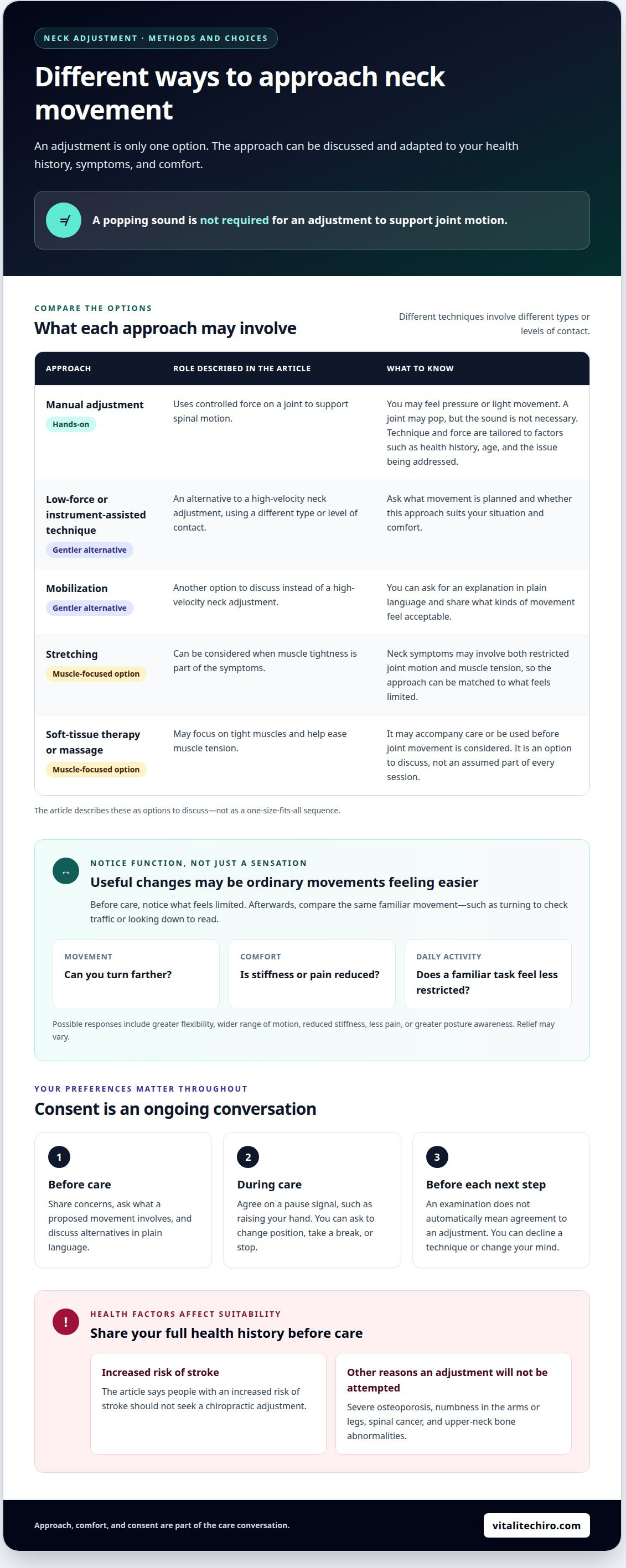
Gentler alternatives to a high-velocity neck adjustment include low-force or instrument-assisted techniques, mobilization, stretching, and soft-tissue therapy. These options involve different types or levels of contact, so you can discuss which approach feels acceptable before treatment. The practitioner can explain the planned movement and adapt the approach to your comfort.
People with an increased risk of stroke should not seek a chiropractic adjustment. Severe osteoporosis, numbness in the arms or legs, spinal cancer, and upper-neck bone abnormalities are also reasons a chiropractor will not attempt an adjustment. Share these conditions and your full health history before care, as they affect whether neck manipulation is appropriate.
Massage therapy may accompany chiropractic care to ease muscle tension and help prepare muscles for an adjustment. For example, soft-tissue work can focus on tight neck muscles before joint movement is considered. The choice depends on your symptoms and comfort, so discuss massage as an option rather than assuming it is part of every session.
Patient consent and control over treatment
You should not feel pressured into chiropractic treatment. If fear of a neck adjustment leaves you wondering what to expect, start by naming what worries you, such as a quick movement or unfamiliar positioning. Consent means you can understand the proposed care, decide whether to proceed, and communicate your preferences before treatment begins. Ask for an explanation in plain language.
You can make your preferences practical and specific. You might say, “I’m uncomfortable with a quick neck movement,” or “Please explain each step before you begin.” You can ask whether a gentler approach, such as mobilization or an instrument-assisted technique, suits your situation. These requests help the practitioner understand your boundaries and discuss options without assuming one method works for everyone.
During care, agree on a pause signal, such as raising your hand. If you feel tense or uncomfortable, use it; the practitioner can stop and talk through what happened. You can also ask to change position, take a break, or end the session. If you’re apprehensive and wondering what to expect from a neck adjustment, this gives you control and makes the visit a conversation, not a test of endurance.
Consent is an ongoing conversation, not a one-time yes. Agreeing to an examination doesn’t automatically mean agreeing to an adjustment. Ask which areas will be treated and what alternatives are available. If your symptoms or comfort level change, say so before the next step. Your preferences matter throughout the visit.
Before an appointment, note the movements or sensations that concern you and bring those questions with you. To explore how your preferences can shape a discussion about care, learn about chiropractic care. You can decline a technique or stop treatment.
Neck pain and stiffness relief
Neck relief is not simply about hearing a joint pop. A useful change may be easier movement during an ordinary task, such as turning to check traffic or looking down to read. Chiropractic treatment aims to improve joint motion, which may help reduce stiffness and discomfort. Notice what feels limited before care so you can compare the same movement afterward.
Neck pain can involve several factors, including restricted joint motion and muscle tension. An adjustment can address joint movement, while stretching or soft-tissue work can target tight muscles. For example, difficulty turning your head may relate to stiffness, while a tense upper shoulder can add discomfort. Matching the approach to your symptoms matters more than focusing on a single sound or sensation.
After treatment, possible responses include greater flexibility, a wider range of motion, reduced stiffness, and less pain. Some people also notice greater posture awareness or relaxation. Use practical measures: notice whether you can turn farther, hold a comfortable position longer, or complete a daily activity with less restriction. Comparing familiar movements can help you describe your response clearly.
Neck-related muscle tension can also contribute to headaches. Spinal manipulation has evidence for certain types of lower back pain, while some studies suggest it may help with headaches and other spine-related conditions, including neck pain. That does not mean every headache has a neck-related cause. Describe where discomfort occurs, which movements affect it, and whether symptoms extend beyond the neck. Those details help guide a relevant discussion about relief.
The key takeaway is to assess function as well as pain. If turning, reaching, or maintaining posture feels easier, that change matters even without a dramatic sensation during treatment. If discomfort or restricted motion remains, describe the specific activity that still feels difficult. A clear account of your movement and symptoms helps guide decisions about the next step in care.
What are the risks and rare serious complications of neck manipulation?
Serious complications linked to chiropractic adjustments are rare, but possible harms deserve a clear discussion. They can include a herniated disk or worsening of an existing herniated disk. A certain type of stroke may occur after neck manipulation. One estimate reports one stroke death per one million uses of spinal neck manipulation by a licensed chiropractor. Another study estimates the risk of a dangerous neck adjustment at one in five million adjustments. These figures represent different estimates, not a personal prediction.
Those numbers don’t remove the need to consider your health history. People with an increased risk of stroke should not seek a chiropractic adjustment. Conditions such as severe osteoporosis, spinal cancer, numbness in the arms or legs, or upper-neck bone abnormalities also affect whether an adjustment is appropriate. Sharing these details before treatment helps the practitioner assess risks in light of your circumstances.
Ask what technique is proposed and whether it involves neck manipulation. You can discuss gentler alternatives, including low-force methods or mobilization, rather than proceeding with a movement that concerns you. The practitioner should explain the purpose and potential risks in clear language. If you’re still uncertain after the explanation, pause the decision; you don’t need to accept treatment under pressure.
After an adjustment, some people experience temporary effects such as a headache, soreness in a treated area, or tiredness. Pay attention to how you feel and promptly describe any new or worsening symptoms. Severe or unusual symptoms after neck treatment warrant urgent medical attention. A concern about stroke risk, a significant health condition, or a new symptom should be discussed before another adjustment is considered.
If neck manipulation is being considered, discuss your health history, the specific technique, and alternatives before deciding. Discuss chiropractic adjustment concerns and the questions you want answered before care.
Vitalité Chiropractic: Chiropractic Adjustments
Vitalité Chiropractic offers chiropractic adjustments in Arlington, Virginia, for people exploring care for neck discomfort, stiffness, or restricted movement. If you’re considering an adjustment but feel uneasy about neck treatment, share your concerns and health history before care begins. You can discuss which movements feel comfortable and ask about options suited to your situation.
A helpful next step is to describe the specific activity affected, such as turning your head while driving or looking down at a screen. That context can support a focused discussion about whether chiropractic adjustments fit your needs. Vitalité Chiropractic also offers decompression therapy, sports injury care, and prenatal chiropractic care for other relevant concerns.
For a calm, informed conversation about your neck concerns and possible care, contact Vitalité Chiropractic or visit vitalitechiro.com.
Make Your Next Step Feel Clear
If fear of a neck adjustment makes you wonder what to expect, let that concern guide the conversation rather than silence it. Before deciding on care, consider what would help you feel informed: a clear explanation of the proposed approach, time to discuss your health history, or space to express a preference. Bring those questions to a conversation and make your decision at your own pace.
Neck discomfort can affect daily routines, from working at a screen to turning your head comfortably. A thoughtful next step starts with describing how it affects you and what you hope to change. That gives the discussion a practical focus centered on your needs and comfort.
For a conversation about your concerns and chiropractic care, contact Vitalité Chiropractic. Bring your questions, share what matters to you, and take the next step when you feel ready.
Frequently Asked Questions
What Happens After an Adjustment?
After an adjustment, notice how your neck responds during familiar activities, such as turning to speak with someone or checking a mirror while driving. Some people experience improved movement; others notice temporary soreness, a headache, or tiredness. These effects can last a few days. If you develop a new or worsening symptom, tell your practitioner so it can be considered before further care.
What happens during a chiropractic neck adjustment?
A neck adjustment involves controlled movement applied to a spinal joint by hand or with a small instrument. Depending on the technique, you may be positioned face down on a padded chiropractic table. The practitioner chooses the approach based on your examination and health history. A popping sound can occur, but the adjustment doesn’t depend on producing it.
Does a neck adjustment hurt, and what does it feel like?
A neck adjustment is often described as painless, though the sensation varies by person and technique. You may notice gentle pressure or light joint movement, and sometimes a brief popping sound. The sound alone doesn’t show whether the adjustment worked. Tell the practitioner if a movement feels uncomfortable; the technique can be adapted to your comfort and the condition being addressed.
How should I prepare for my first neck adjustment?
No special preparation is needed before an adjustment. To make a first visit more useful, be ready to describe when your neck symptoms began, which movements aggravate them, and how they affect daily activities. Share relevant medical history, injuries, and health concerns. You can also write down questions beforehand, such as what a proposed technique involves or which alternatives may suit you.
What should I expect after a neck adjustment, and how long do effects last?
Afterward, notice whether an everyday movement feels easier or remains restricted. Relief doesn’t follow one fixed timeline; it depends on the cause of your symptoms, your health, and how your body responds. Compare the same movement before and after care rather than judging only by whether you heard a pop. Describe any continuing discomfort or changes in your next discussion.
What are common side effects of a neck adjustment?
Common temporary effects can include a headache, soreness in a treated area, or tiredness. These effects may continue for a few days. Pay attention to how symptoms change after treatment, and share new or worsening concerns with your practitioner. A symptom that feels unusual or severe deserves prompt attention, especially if it differs from the discomfort that led you to seek care.


