
What if the reason your shoulder pain persists despite weeks of rest isn't because the joint hasn't healed, but because your body has lost its internal rhythm? It's incredibly frustrating to sit on the sidelines while a nagging ache during overhead movements keeps you from the sport you love. You've likely tried icing it and taking time off, yet the moment you reach for a serve or a pull-up bar, that sharp reminder returns. Utilizing chiropractic for shoulder injury allows us to look beyond the surface, investigating why rest alone hasn't restored your mobility.
You deserve more than just temporary relief; you need a strategy that restores your physical freedom and confidence. We'll explore how a whole-person chiropractic approach identifies the root cause of shoulder pain and provides a step-by-step path back to peak athletic performance. By identifying the specific mechanical breakdown in your kinetic chain rather than just masking symptoms, we can create a clear plan for recovery. This guide examines how aligning the spine and shoulder complex together ensures you achieve a full range of motion and a safe return to the game.
Key Takeaways
- Understand the vital connection between your cervical spine and shoulder mechanics to address the true source of referred pain and dysfunction.
- Discover how functional movement screenings identify specific mechanical breakdowns that standard exams might overlook during your recovery journey.
- Learn how a customized plan utilizing chiropractic for shoulder injury can incorporate decompression therapy to resolve persistent nerve issues safely.
- Follow a structured four-step framework that guides you through inflammation reduction and joint restoration for a confident return to sports.
- Connect with a compassionate, expert team in Arlington that prioritizes inclusive and personalized care for every individual athlete's unique needs.
What is the Connection Between Your Spine and Chiropractic for Shoulder Injury?
When you feel a sharp twinge in your shoulder during a tennis serve or a heavy lift, your instinct is to point directly to the joint. However, viewing the shoulder as an isolated ball and socket is a common misconception that often stalls recovery. In the context of Chiropractic care, we view the shoulder as a sophisticated system of muscles, nerves, and vertebrae working in unison. This holistic perspective is essential when utilizing chiropractic for shoulder injury because the root cause often resides far from where you feel the ache.
Your upper body functions through a kinetic chain. If your thoracic spine, or upper back, lacks mobility, your shoulder joint must overcompensate to achieve the same range of motion. This extra stress often results in subluxations, which are subtle misalignments, that trigger secondary conditions like impingement syndrome. A whole-person strategy involving chiropractic for shoulder injury ensures we don't just treat the symptom but the entire kinetic chain. By addressing these structural imbalances, we ensure the shoulder isn't working in a vacuum but is supported by a stable foundation.
The Cervical Spine: The Power Source for Your Arms
Think of your neck as the electrical panel for your upper extremities. The nerves exiting the C5, C6, and C7 vertebrae act as the power lines controlling your deltoids, biceps, and rotator cuff. When these pathways are compromised, you might notice a sudden drop in your swimming stroke power or a "dead arm" feeling during a baseball pitch. This phenomenon is known as referred pain. It's a deceptive sensation where the brain perceives an injury in the shoulder, but the actual irritation is a pinched nerve in the neck. Cervical radiculopathy is a frequent imposter of local shoulder injury that requires a spinal focus to resolve.
The Thoracic Spine and Scapular Stability
Your shoulder blade, or scapula, depends entirely on the thoracic spine for stability. If you spend hours in a slumped posture at a desk or tucked into a cycling position, your upper back rounds and your shoulders roll forward. This stiff foundation prevents the scapula from gliding correctly, forcing the rotator cuff to work twice as hard to maintain stability. A lack of thoracic mobility often leads to:
- Decreased overhead reach
- Increased tension in the neck muscles
- Poor leverage for athletic movements
Correcting these mechanical errors is a cornerstone of the science of how chiropractic adjustments work to restore physical balance. When your spine is aligned, your shoulders gain the freedom they need to perform at peak levels without the risk of repetitive strain.
Identifying the Root Cause: The Multimodal Diagnostic Approach
A standard diagnostic process often stops at the site of pain. In our practice, we believe that checking symptoms alone is insufficient for long-term recovery. Effective chiropractic for shoulder injury requires a comprehensive physical exam that scrutinizes how your body functions as a whole. We utilize functional movement screening to observe your arm's trajectory during specific athletic tasks, such as a golf swing or a swim stroke. This reveals compensations that a static exam might miss. By watching you move, we can pinpoint exactly where the mechanical breakdown occurs.
We also prioritize neurological testing to ensure the communication between your brain and muscle fibers remains uninterrupted. If the "signal" is weak, the muscle cannot protect the joint during high-impact activities. While manual testing provides deep insights, we utilize imaging like X-rays or referrals for MRIs when a precise anatomical view is necessary to rule out structural tears. According to the National Center for Complementary and Integrative Health, this evidence-based approach ensures patient safety and efficacy in care. It provides the clarity needed to build a restorative plan tailored to your specific anatomy.
Assessing Joint Mechanics vs. Nerve Function
Distinguishing between a mechanical blockage in the joint and a neurological impingement is vital. Dr. Sansfaute meticulously evaluates the glenohumeral joint's range of motion to see if the "ball" is seating correctly in the "socket." He often uses the diversified technique, a cornerstone of manual care, to both diagnose restricted segments and restore fluid motion. If you're experiencing persistent discomfort, scheduling a movement assessment is the first step toward clarity. We want to ensure that every adjustment serves a specific purpose in your recovery.
Evaluating Postural Imbalances in Athletes
Repetitive motions, such as thousands of tennis serves or repetitive pitching, naturally create muscular asymmetries. One side of the body becomes overdeveloped, pulling the shoulder out of its optimal alignment. We also look for daily habits like "text neck" or the "desk slump," which cause the shoulders to round and fatigue prematurely during sports. Integrating posture correction into your routine doesn't just fix how you look; it fundamentally changes how you move. This proactive adjustment helps prevent future injury cycles by ensuring your foundation is balanced and resilient.
Comparing Manual Adjustments and Specialized Therapies for Athletes
Many athletes assume a chiropractic visit is strictly limited to spinal "cracking," but modern sports-centered care is far more nuanced. When utilizing chiropractic for shoulder injury, we move beyond the stereotype to apply precise, gentle manual adjustments tailored to the unique mechanics of an overhead athlete. These interventions don't just address the spine; they target the intricate alignment of the shoulder blade and surrounding tissues. This clinical focus is supported by research into the chiropractic management of shoulder pain, which highlights the efficacy of conservative, hands-on protocols for restoring joint function without invasive measures.
In addition to manual work, we integrate soft tissue mobilization to address the "glue" that keeps athletes stuck. Repetitive strain often leads to scar tissue formation in the rotator cuff, which restricts fluid motion. By breaking up these adhesions, we allow the muscles to slide and contract efficiently. We also evaluate the body's foundation. Custom orthotics are frequently utilized to stabilize an athlete's posture from the ground up, ensuring that a collapsed arch in the foot doesn't lead to a compensatory tilt in the shoulder during high-performance movements.
Manual Adjustments for the Extremities
Chiropractors are trained to adjust far more than just the vertebrae. At Vitalité Chiropractic, we focus on the entire upper extremity, including the shoulder, elbow, and wrist. Realigning the clavicle (collarbone) and the humerus (upper arm bone) can provide an immediate improvement in range of motion for a pitcher or swimmer. We primarily use the Diversified Technique, a manual thrust method that allows for high-velocity, low-amplitude adjustments. This precision ensures that each joint segment is restored to its optimal position, reducing the mechanical friction that leads to chronic inflammation.
Decompression and Therapeutic Modalities
When shoulder pain is rooted in nerve compression, manual adjustments are paired with advanced technology. We often recommend spinal decompression therapy to alleviate pressure on the nerve roots in the neck that power the arm. This gentle traction creates a vacuum effect, allowing bulging discs to retract and nutrients to flow back into the injured area. It's a highly effective alternative for those looking to avoid the cycle of cortisone shots or the long recovery times associated with surgery. By combining this with other therapeutic modalities, we can rapidly reduce acute inflammation, helping you transition from the pain phase to the performance phase of your recovery.
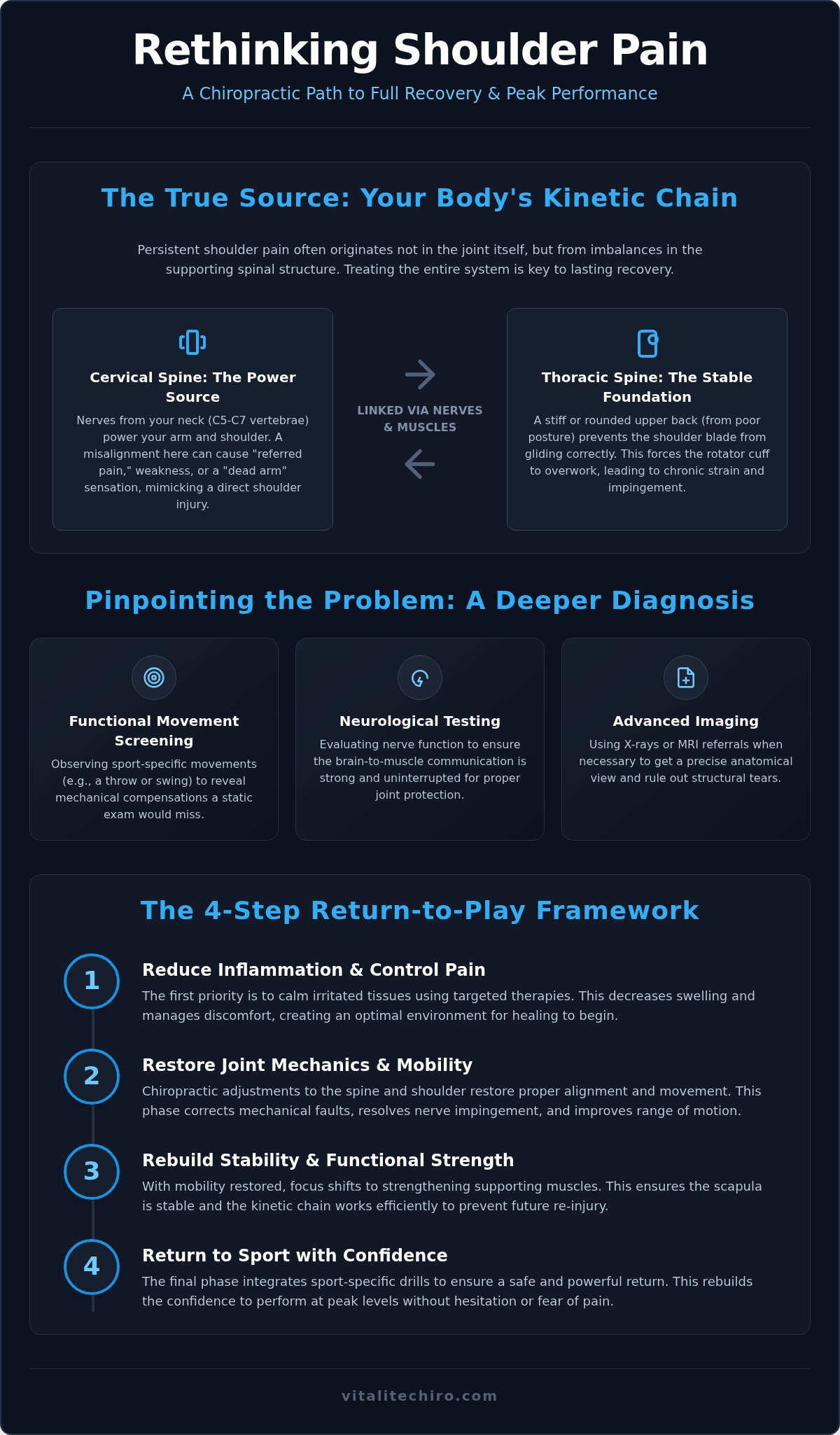
Navigating Recovery: A 4-Step Return-to-Play Framework
Recovery is rarely a straight line, but it should always follow a logical map. Many athletes feel lost after an injury, wondering if they'll ever regain their previous velocity or strength. Our framework for chiropractic for shoulder injury is designed to remove that uncertainty. We guide you through four distinct phases that transition your body from a state of protection to a state of performance. This methodical progression ensures that we don't just patch up the problem but build a more resilient version of your athletic self.
Phase 1 & 2: From Pain to Alignment
The first step is Acute Relief. During this time, our primary focus is calming the nervous system and reducing localized inflammation. Gritting your teeth and pushing through the pain during Phase 1 is a significant mistake; it often forces your body to adopt permanent compensatory patterns that lead to future breakdowns. Most athletes require a higher frequency of visits, typically two to three times per week, to achieve initial stabilization and break the pain cycle. Once the sharpest discomfort subsides, we move into the Restoration phase. The restoration phase serves as the bridge between immediate relief and long-term musculoskeletal health. Here, we focus on correcting spinal subluxations and restoring the precise joint mechanics of the shoulder complex that we identified during your movement screening.
Phase 3 & 4: Building a Resilient Athlete
Once your alignment is stable, we begin the Strengthening phase. Chiropractic adjustments clear the mechanical path, but specific exercise prescriptions are what hold those changes in place. We implement targeted protocols to stabilize the rotator cuff and the muscles surrounding the scapula. This ensures your shoulder can handle the high-velocity demands of your sport. The final stage is Performance, where we fine-tune your kinetic chain for sport-specific movements. Whether it's refining your throwing mechanics or your swimming pull-through, we ensure every link in the chain is firing correctly. Even after you return to the field, regular check-ups act as essential tune-ups for athlete injury recovery, catching minor imbalances before they become major setbacks.
If you are tired of the "wait and see" approach to your recovery, it is time to take a proactive step forward. You can schedule your initial assessment with our Arlington team to begin your personalized four-step journey back to the game you love.
Personalized Sports Injury Care at Vitalité Chiropractic in Arlington
Choosing a partner for your recovery is a significant decision that impacts your long-term athletic health. At Vitalité Chiropractic, we understand that you aren't just looking for a quick fix; you're looking for a practitioner who respects your unique goals and identity. Our clinical approach to chiropractic for shoulder injury is rooted in the belief that every patient deserves a dedicated advocate. We don't just see a shoulder joint; we see an individual whose quality of life depends on physical freedom. This whole-person philosophy ensures that your treatment plan is as diverse and dynamic as your lifestyle.
Expertise You Can Trust in Arlington
Dr. W. Jean-Luc Sansfaute has been a cornerstone of the Arlington healthcare community since 2003. With over two decades of experience, he has guided thousands of local athletes through the complexities of sports injury rehabilitation. Our clinic is designed for the modern, active individual. Whether you're a competitive athlete or a busy professional training for your first triathlon, our location offers ease of access to high-tier care. We take pride in being an inclusive, LGBTQ+ friendly practice that offers multilingual support, ensuring that every member of our community feels a sense of belonging and safety. Your recovery roadmap is created collaboratively, blending clinical expertise with your personal performance targets.
Taking the First Step Toward Recovery
It's time to stop simply "managing" your discomfort with temporary solutions. Persistent pain is a signal that your body's mechanics are out of sync, and waiting often leads to secondary issues in the neck or back. By choosing specialized chiropractic for shoulder injury, you're investing in a solution that addresses the root cause of your dysfunction. We've streamlined our process to be as efficient as possible for our patients. We offer same-day appointments for acute injuries, allowing you to get answers when you need them most. Our online scheduling system makes it easy to find a time that fits your schedule without the hassle of long wait times.
Ready to get back in the game? Schedule your sports injury consultation at Vitalité Chiropractic today and let’s start building your path back to peak performance.
Reclaiming Your Athletic Freedom
You don't have to accept persistent shoulder pain as a permanent part of your athletic life. By shifting the focus from masking symptoms to restoring the integrity of your kinetic chain, you can achieve a level of mobility and strength that rest alone cannot provide. Utilizing chiropractic for shoulder injury allows us to address the specific mechanical and neurological barriers holding you back. Whether it's through precise manual adjustments or advanced decompression therapy, the path to a pain-free season starts with a clear, expert assessment of your body's unique needs.
At Vitalité Chiropractic, we combine over 20 years of clinical experience with a deep commitment to an LGBTQ+ friendly and inclusive environment. We prioritize your comfort and urgent needs, which is why we offer same-day appointments for immediate pain relief. Don't let another game pass you by while you sit on the sidelines.
Book your same-day sports injury evaluation in Arlington today. Your peak performance is within reach; let's work together to build a foundation for long-term health and physical freedom.
Frequently Asked Questions
Can a chiropractor help with a rotator cuff tear?
Yes, chiropractic care is highly effective for managing partial rotator cuff tears and post-surgical rehabilitation. We focus on restoring proper joint mechanics and reducing inflammation to support the body's natural healing process. By ensuring the shoulder blade glides correctly, we take the mechanical pressure off the injured tendons. This whole-person approach helps you regain strength and mobility while preventing secondary issues in the neck or back.
How many sessions will I need for a shoulder injury?
Recovery timelines are unique to each individual, but most athletes require between 6 and 12 sessions to achieve stable results. Your initial visits focus on acute pain relief and reducing inflammation, while subsequent sessions transition into functional restoration and performance training. We provide a clear, step-by-step roadmap during your initial evaluation so you know exactly what to expect as you work toward returning to your sport safely.
Is it safe to get a chiropractic adjustment for a dislocated shoulder?
It is not safe to adjust a shoulder while it is actively dislocated; you must seek immediate emergency care to have the joint reduced. However, once the joint is stabilized, chiropractic care is vital for rehabilitating the surrounding tissues. We address the spinal misalignments and muscular imbalances that often occur during the injury. This helps restore confidence in the joint and reduces the risk of chronic instability or future dislocations.
Why does my shoulder hurt when the problem is in my neck?
This phenomenon is known as referred pain, where the brain misinterprets nerve signals originating from the neck as coming from the shoulder. The nerves exiting your C5 through C7 vertebrae are the power source for your arms. When these pathways are compressed or irritated, you feel the symptoms in your shoulder. Utilizing chiropractic for shoulder injury allows us to identify and correct these cervical issues, providing relief where other treatments might fail.
What is the difference between physical therapy and chiropractic for shoulder pain?
Chiropractic care focuses on the structural alignment of the joints and the health of the nervous system, whereas physical therapy often prioritizes muscle rehabilitation. Our clinic bridges this gap by combining precise manual adjustments with therapeutic modalities and exercise. We ensure the "foundation" of the joint is correctly aligned before building strength on top of it. This integrated approach provides a more comprehensive path to recovery for athletes who need both mobility and power.
Can poor posture at work cause athletic shoulder injuries?
Yes, daily habits like the "desk slump" create significant mechanical disadvantages that lead to athletic injuries. When you sit with rounded shoulders, it changes the way your scapula moves, leading to impingement when you transition to high-impact activities. We treat many Arlington professionals who find that their sports performance improves significantly once we address their workplace ergonomics. Correcting these postural imbalances is essential for long-term injury prevention and peak performance.
What should I wear to my first sports chiropractic appointment?
You should wear comfortable, flexible clothing that allows for a full range of motion, such as gym shorts and a tank top or loose t-shirt. This ensures we can perform functional movement screenings and physical exams without restriction. If you're coming directly from a professional setting, don't worry. We prioritize your comfort and can work around most attire, though having athletic gear available makes the diagnostic process much more thorough.
Does insurance typically cover chiropractic for shoulder injuries?
Most insurance providers cover chiropractic for shoulder injury, though the extent of coverage depends on your specific policy. Patients typically pay a copay between $10 and $75 per visit, and many plans include an annual limit of 12 to 30 visits. It's helpful to verify your benefits for "chiropractic manipulative treatment" before your first visit. Our team is happy to help you navigate these logistical questions so you can focus entirely on your recovery.


