
What if the first step for a suspected pinched nerve isn’t choosing a treatment, but finding out what may be causing your symptoms? Pain, tingling, or numbness that travels into an arm or leg can be unsettling. Chiropractic for pinched nerve symptoms should begin with an individualized assessment, not a one-size-fits-all adjustment.
“Pinched nerve” is a common way to describe pressure or irritation affecting a nerve, but similar symptoms can have different causes. An assessment helps determine whether chiropractic care is appropriate and guides decisions about adjustments, decompression therapy, rehabilitation, or another next step. Care should be measured and responsive to your symptoms and examination findings.
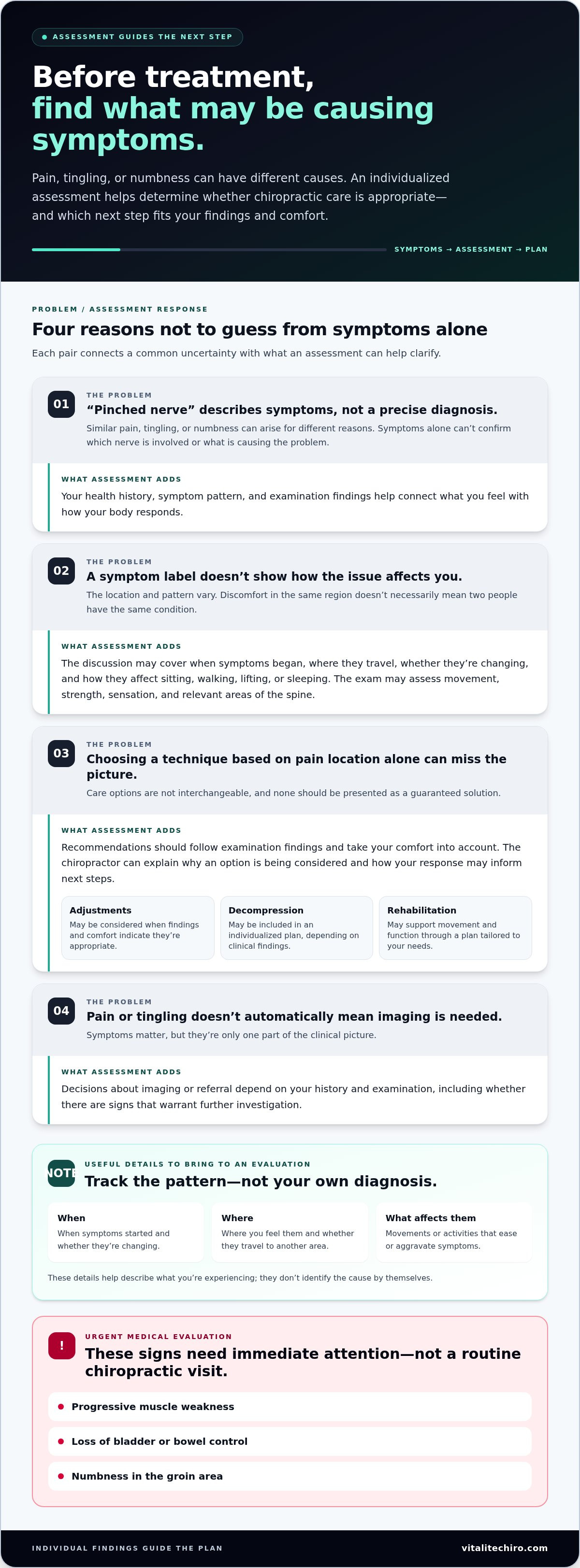
In this article, you’ll learn what people mean by a pinched nerve, which symptoms may occur, and how an assessment can shape a care plan. You’ll also learn when symptoms call for prompt medical attention. Seek urgent care for progressive muscle weakness, loss of bladder or bowel control, or numbness in the groin area. These signs need immediate medical evaluation, not a routine chiropractic visit.
Key Takeaways
- Radiating pain or tingling can have different causes. Note when symptoms began and which activities affect them.
- An individualized assessment helps guide whether imaging, referral, or a conservative care approach is appropriate.
- Chiropractic for pinched nerve symptoms may support comfort and function, but care depends on the cause and individual findings.
- Choose gentle, comfortable movement and avoid aggressive stretching or self-manipulation while arranging an appropriate evaluation.
- Vitalité Chiropractic in Arlington provides individualized chiropractic care with Dr. W. Jean-Luc Sansfaute, who has practiced since 2003.
What Does “Pinched Nerve” Mean, and What Symptoms Can It Cause?
Pain that travels from your neck into your arm, or from your lower back down a leg, can make sleep difficult and turn ordinary tasks into a challenge. Tingling or numbness may add to the worry, especially when you’re unsure where the sensation is coming from. These symptoms deserve attention, but they don’t point to one cause on their own.
“Pinched nerve” is a common, informal description of pressure or irritation affecting a nerve. The phrase can refer to different problems in different parts of the body, so it isn’t a precise diagnosis. Nerve-root irritation, often called radiculopathy, is one related condition. The overview of Radiculopathy (Pinched Nerve) describes how it can affect sensation or movement in areas served by a nerve.
Symptoms can suggest nerve irritation, but they can’t confirm which nerve is involved or what’s causing the problem. An assessment considers your health history and examination findings alongside your symptoms.
Which symptoms can accompany nerve irritation?
Symptoms vary. Some people notice sharp, aching, or burning pain that radiates along an arm or leg; others experience tingling, reduced sensation, or weakness. The location and pattern depend on the nerve involved and the underlying cause. Discomfort in the same region doesn’t necessarily mean two people have the same condition.
Before an evaluation, make a brief record of:
- When the symptoms started and whether they’re changing.
- Where you feel them, and whether they travel to another area.
- Which movements or activities ease or aggravate them.
This information helps you describe what you’re experiencing. Don’t assume that a particular activity or posture has identified the cause; it’s one useful detail among others.
What can cause a nerve to become compressed or irritated?
Possible contributors include changes to a spinal disc, pressure from nearby tissues, an injury, or repeated movements and positions that strain an area. More than one factor may be involved. The relevant structures depend on where symptoms occur and what an examination finds.
That’s why “pinched nerve” is best understood as a description, not a final explanation. Similar pain, tingling, or numbness can arise for different reasons, and symptoms alone can’t distinguish among them. If you’re considering chiropractic for pinched nerve symptoms, identifying the likely source is an important step before deciding whether care is appropriate and which approach to consider.
How Can Chiropractic Assessment Guide Pinched-Nerve Care?
An assessment connects your symptoms with your movement and helps determine whether chiropractic care is an appropriate next step. Rather than choosing a technique based on pain location alone, the chiropractor considers your health history, symptom pattern, examination findings, and any signs that may call for medical evaluation. This process helps identify an approach that fits your needs and flags when care should be reconsidered.
What happens during an initial assessment?
You’ll discuss when symptoms began, where you feel them, how intense they are, and whether they’ve changed. Your chiropractor may ask about your health history and how symptoms affect activities such as sitting, walking, lifting, or sleeping. The examination may assess movement, strength, sensation, and relevant areas of the spine to understand how your body responds.
Examination findings, not a symptom label alone, help shape a care plan around your needs, comfort, and functional goals. If findings indicate that another evaluation is needed, recommendations should reflect that.
Imaging isn’t automatically required just because pain or tingling is present. Decisions about imaging or referral depend on your history and examination, including whether there are signs that warrant further investigation. Symptoms matter, but they’re only one part of the clinical picture.
How might care options be selected?
Recommendations should follow the assessment findings and take your comfort into account. Options may include chiropractic adjustments, decompression therapy, or rehabilitation. These approaches aren’t interchangeable, and none should be presented as a guaranteed solution. Your chiropractor can explain why an option is being considered and how your response may inform next steps.
- Adjustments: May be considered when examination findings and your comfort indicate they’re appropriate.
- Decompression therapy: May be included in an individualized plan, depending on clinical findings.
- Rehabilitation: May support movement and function through a plan tailored to your needs.
The goal is to make a reasoned choice, not to apply every available treatment. For a balanced overview of conservative approaches, including physical therapy, see Harvard Health Publishing’s Treatments for a Pinched Nerve. If you’re exploring chiropractic for pinched nerve symptoms, an assessment can clarify which options may suit your situation. Learn more about chiropractic care at Vitalité.
Can Chiropractic Care Fix a Pinched Nerve? Setting Realistic Expectations
Chiropractic care may help some people manage symptoms related to nerve irritation, but it doesn’t address every cause of a pinched nerve. The right approach depends on what’s contributing to the symptoms, what an examination finds, and how the person responds to care. A disc problem, for example, may call for different considerations than irritation associated with surrounding tissues. That’s why a treatment plan should follow an assessment rather than a label or a promise.
It’s also helpful to distinguish symptom relief from correcting an underlying condition. Care may aim to improve comfort, movement, or daily activities, such as sitting through a meal or walking with less difficulty. Those are meaningful goals, but improvement in symptoms doesn’t necessarily mean the underlying cause has been eliminated. Expectations should be discussed in terms of individual findings and function, not a guaranteed result.
What can a person reasonably expect from care?
Plans and responses vary. Your chiropractor should explain the purpose of any recommended approach and adapt it to your examination findings and comfort. If an adjustment or another technique feels uncomfortable, say so. Share changes in pain, tingling, numbness, or strength promptly so the plan can be reconsidered. Open communication helps keep care responsive rather than relying on a fixed sequence of treatments.
With chiropractic for pinched nerve symptoms, the aim is not to force a nerve into place or promise a cure. Depending on the assessment, care may focus on supporting comfort and function while monitoring changes in symptoms. If an approach isn’t helping, or your condition changes, the next step may be to reassess rather than continue unchanged.
When might chiropractic care not be the first next step?
Some symptoms need prompt medical evaluation before routine chiropractic care is considered. Seek urgent care for progressive muscle weakness, loss of bladder or bowel control, or numbness in the groin area. These symptoms can signal a serious problem and shouldn’t be managed by waiting to see whether an adjustment helps.
Other concerning, rapidly worsening, or unexplained symptoms also deserve timely clinical attention. An assessment may indicate that another medical professional or further evaluation is appropriate, particularly when findings don’t fit a straightforward musculoskeletal concern. This doesn’t mean every radiating ache requires urgent care; it means the decision should reflect the full clinical picture, including symptom progression and examination findings.
Chiropractic care should never delay urgent or medically necessary evaluation. A careful practitioner considers whether proposed care fits your circumstances and directs attention to further evaluation when findings call for it. The safest expectation is an individualized process: discuss your goals, report changes, and make decisions based on how your symptoms and examination findings evolve.
What Should You Do When Pinched-Nerve Symptoms Begin?
New pain, tingling, numbness, or weakness can leave you unsure whether to rest, keep moving, or seek care. Start with measured steps: note what you’re experiencing, avoid movements that clearly aggravate it, and arrange an appropriate clinical assessment. You don’t need to identify the cause yourself. A clear record of how symptoms behave can help a chiropractor understand what has changed and what should happen next.
Keep movement gentle and comfortable if you’re able. Short walks or ordinary, easy movements may be more appropriate than forcing a stretch, pushing through sharp pain, or trying to manipulate your own neck or back. Stop an activity if it worsens symptoms. These steps aren’t a substitute for assessment, especially if symptoms are progressing.
What information should you track before an appointment?
Brief notes are enough. Record where symptoms occur, when they began, how intense they feel, what seems to trigger or ease them, and how they change over time. Include any recent injury, relevant medical history, and changes in strength or sensation. For example, note whether tingling stays in one area or travels, and whether a particular movement affects it. This snapshot can make the assessment more focused.
- Location and pattern: Where you feel symptoms and whether they spread.
- Timing and change: When they began and whether they’re improving, recurring, or worsening.
- Function: Any change in strength, sensation, sleep, or everyday activity.
- Context: Recent injury, health history, and activities that affect symptoms.
Share these details even if they seem minor. They can help distinguish a stable concern from a pattern that needs more prompt attention. If you’re considering chiropractic for pinched nerve symptoms, this information supports an individualized assessment rather than a decision based on discomfort alone.
Which warning signs need urgent medical attention?
Some symptoms should not wait for a routine appointment. New or progressive weakness, new loss of bowel or bladder control, or numbness in the saddle area are urgent warning signs that need immediate medical evaluation. The saddle area includes the inner thighs, buttocks, and region that would contact a saddle. Severe, sudden symptoms or rapidly worsening weakness also call for prompt medical assessment.
If these warning signs occur, seek emergency medical care rather than trying stretching, self-manipulation, or a chiropractic appointment first. Chiropractic care isn’t emergency treatment and shouldn’t delay urgent evaluation. For symptoms that aren’t urgent but persist, recur, or interfere with daily activities, arrange an appropriate assessment to discuss possible causes and next steps.
If you’re in Arlington and your symptoms don’t require urgent medical attention, schedule a chiropractic assessment with Vitalité to discuss your symptoms and whether care may be appropriate.
Pinched-Nerve Chiropractic Care in Arlington, VA: What to Expect at Vitalité
If you’re in Arlington and considering chiropractic for pinched nerve symptoms, Vitalité Chiropractic offers individualized care. Your visit begins with understanding your concerns, health goals, and how symptoms affect daily life. Dr. W. Jean-Luc Sansfaute has practiced since 2003 and considers each person’s needs rather than assuming one approach fits everyone.
How does Vitalité approach an individual care plan?
Your symptoms and goals guide the conversation, while assessment findings inform which options are appropriate. Depending on your needs, care may include chiropractic adjustments, decompression therapy, therapeutic modalities, or rehabilitation. These are options to consider, not a standard package or a promise of a particular result.
For example, someone hoping to return to comfortable daily movement may have different priorities from someone whose symptoms interfere with work or rest. The care approach should reflect those differences and how you respond over time. Share what feels manageable, what concerns you, and whether symptoms change during care. Your feedback helps keep decisions personal and responsive.
Pinched-nerve symptoms can have different causes, and people can respond differently to care. An individualized plan takes those differences into account rather than assuming the same treatment or timeline for everyone. If assessment findings indicate that chiropractic care isn’t the appropriate next step, decisions should account for any need for further medical evaluation. Chiropractic care does not replace urgent medical attention.
How can Arlington patients take the next step?
For a non-urgent concern, an appointment gives you an opportunity to discuss your symptoms, goals, and possible next steps with the Vitalité team. Same-day appointments are available. You can schedule online or call the Arlington office at (703) 879-5144.
If you’re experiencing urgent warning signs, such as new loss of bladder or bowel control, numbness in the saddle area, or rapidly worsening weakness, seek immediate medical evaluation instead of waiting for a chiropractic appointment. For other symptoms, an individualized visit can help clarify whether chiropractic care is suitable and which options may fit your circumstances.
To take the next step, schedule an appointment with Vitalité Chiropractic.
Take a Thoughtful Next Step Toward Better Movement
Persistent or radiating discomfort can make it tempting to search for a quick answer. A more useful next step is guidance grounded in your individual symptoms, priorities, and clinical findings. That gives you a chance to discuss what you hope to return to, ask questions about possible care, and make decisions without assuming one treatment suits everyone.
If you’re considering chiropractic for pinched nerve symptoms, bring your questions and any changes you’ve noticed to the conversation. A clear discussion can help you understand the options and decide what feels appropriate. If symptoms become urgent, seek immediate medical evaluation rather than waiting for a routine appointment.
When you’re ready to discuss a personalized next step, connect with Vitalité Chiropractic. Take it one informed decision at a time, with your comfort and well-being at the center.
Frequently Asked Questions
Can a pinched nerve go away on its own?
Yes, mild nerve irritation may improve if its trigger settles, but improvement doesn’t confirm what caused it. Keep a brief daily log and note whether routine tasks, such as driving or reaching, are becoming easier or harder. Arrange an assessment if symptoms persist, worsen, or limit everyday activities. New weakness, bladder or bowel changes, or numbness around the saddle area calls for urgent care rather than waiting.
How long does a pinched nerve take to heal?
There’s no single recovery timeline; it depends on the cause, symptom severity, and individual health factors. An assessment for chiropractic for pinched nerve symptoms can help clarify appropriate next steps, but it can’t guarantee a recovery date. Note changes in pain, sensation, and ability to do everyday tasks. If symptoms worsen, weakness develops, or daily activities remain disrupted, seek further clinical evaluation instead of relying on a fixed healing estimate.
Can an X-ray show a pinched nerve?
An X-ray can show bones and some structural features, but it doesn’t directly display nerves and may not reveal soft-tissue changes. That means an X-ray alone can’t confirm or rule out nerve compression. Whether imaging would be useful depends on your history and examination findings. If imaging is recommended, ask what question it is intended to answer and how the result could affect your next steps.
Is it better to rest or move with a pinched nerve?
It depends on your symptoms and how movement affects them. You might pause an activity that increases radiating discomfort while trying easy movement that stays comfortable, such as a short walk around your home. Prolonged bed rest isn’t the right choice for everyone. Stop if movement increases pain, numbness, or weakness, and arrange an assessment if symptoms are worsening or limiting your routine.
Can stretching make a pinched nerve worse?
Yes, a stretch can aggravate symptoms if it increases pain that travels, tingling, numbness, or weakness. Avoid forcing a position or trying to “stretch the nerve” when you don’t know what’s causing the symptoms. If gentle movement feels comfortable, stay within an easy range and stop if sensations intensify. An individualized assessment can help determine whether specific movements or exercises are suitable for you.
When should I seek emergency care for a pinched nerve?
Seek immediate medical attention for new loss of bladder or bowel control, numbness around the saddle area, or rapidly worsening weakness. Severe or sudden symptoms, especially after an injury, also need prompt medical evaluation. Don’t wait for a routine chiropractic appointment or try to manage these warning signs with stretching or self-manipulation. Emergency medical professionals can assess urgent symptoms and determine appropriate care.
Can a pinched nerve cause numbness without pain?
Yes, numbness or tingling may occur with little or no pain. The sensation can be subtle, such as a patch of reduced feeling in a hand or foot, but it doesn’t establish that a nerve is compressed. Note where the numbness occurs and whether it spreads or changes. Arrange a clinical assessment if it persists or spreads, or if you notice weakness alongside the altered sensation.


