
What if the tension you associate with stress is a physical concern worth evaluating on its own? Tight shoulders, a stiff neck, or back discomfort can make everyday activities harder, and it’s understandable to wonder whether stress relief chiropractic treatment Shirlington might be appropriate. Chiropractic care doesn’t treat stress or anxiety themselves, but an individualized assessment can help determine whether your muscle tension or movement discomfort may benefit from chiropractic care.
The right approach isn’t one-size-fits-all. This article explains the difference between emotional stress and physical tension that can accompany it, what a personalized chiropractic visit may involve, and what to discuss before care begins. At Vitalité Chiropractic in Arlington, a new-patient visit includes a conversation about your concerns and a comprehensive examination, which may include chiropractic and neurological tests. If appropriate, the doctor will review the findings and discuss a personalized treatment plan. For Shirlington-area readers, online scheduling or a call to the office is a straightforward way to explore this local next step.
Key Takeaways
- Stress can coincide with muscle tightness, but chiropractic care focuses on assessing and addressing musculoskeletal concerns, not treating stress itself.
- Symptoms, movement, health history, daily activities, and comfort preferences can help shape an individualized approach to stress relief chiropractic treatment Shirlington.
- Chiropractic care, acupuncture, and trigger point injections use different approaches and aren’t interchangeable.
- Prepare for a visit by noting your symptoms, what affects them, and your treatment preferences so you can have a clear conversation about care options.
- Vitalité Chiropractic provides personalized chiropractic care in Arlington, led by Dr. W. Jean-Luc Sansfaute, who has practiced since 2003.
Stress relief chiropractic treatment near Shirlington: what can it address?
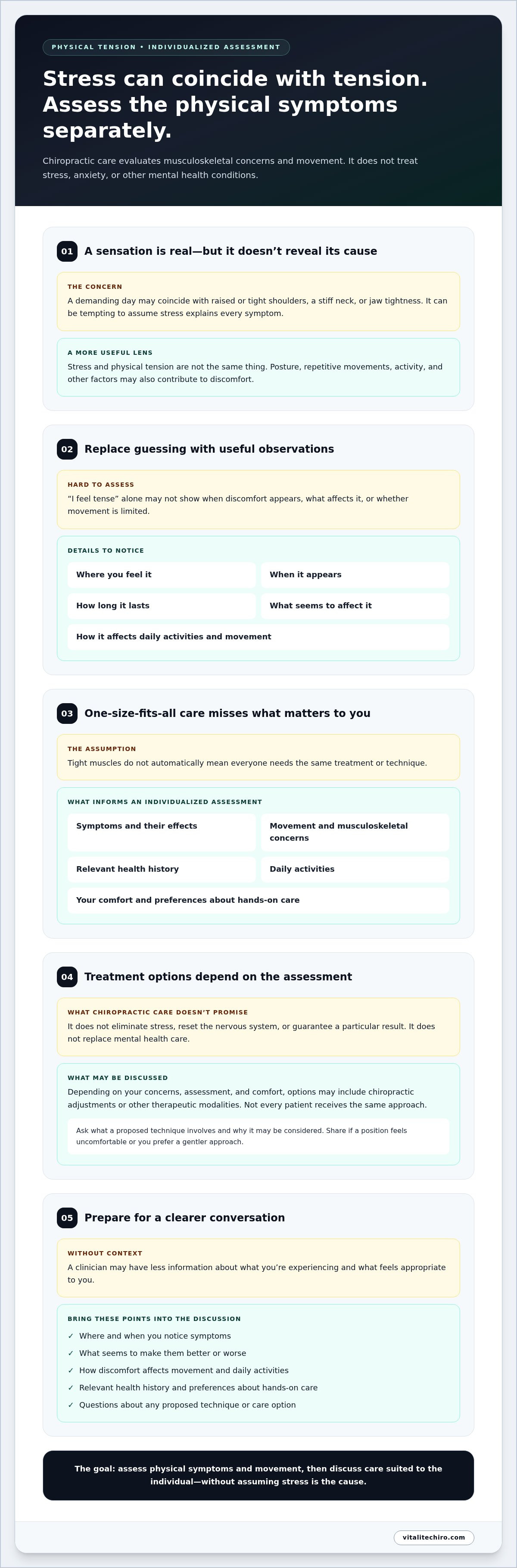
Stress and physical tension can occur together, but they aren’t the same thing. A demanding day may leave you noticing tight shoulders, a stiff neck, or a clenched jaw. Those sensations are real, yet stress isn’t the only possible explanation. Posture, repetitive movements, activity, and other factors may also contribute. Consider when the discomfort appears, what activities seem to affect it, and whether movement is limited. Those details can help a clinician assess the concern without assuming its cause.
For readers exploring stress relief chiropractic treatment Shirlington, the key distinction is that chiropractic care assesses and treats concerns involving the musculoskeletal system. It may be relevant to physical discomfort or restricted movement, but it isn’t a treatment for stress, anxiety, or other mental health conditions.
How can stress show up as physical tension?
You might notice that your shoulders feel raised or tense during a busy period, or that your neck feels stiff after long hours at a desk. Jaw tightness is another experience some people report. These observations help describe what you’re feeling, but they don’t identify a cause on their own. Note when symptoms occur, how long they last, and which daily activities are affected. A clinician considers those details alongside your movement and health history to understand what may be contributing and whether chiropractic care is appropriate.
What does chiropractic care mean in this context?
Chiropractic care involves evaluating musculoskeletal concerns and considering appropriate care options, which may include chiropractic adjustments or other therapeutic modalities. The approach should reflect your needs and comfort, rather than assume every person with tight muscles needs the same treatment. For a broader overview of the discipline, see Chiropractic.
An assessment can help distinguish physical symptoms that may be suitable for chiropractic care from concerns that call for a different kind of support. Chiropractic treatment doesn’t resolve the pressures of daily life or replace mental health care. It focuses on physical symptoms and movement. If you’d like to learn more about what an adjustment involves, read this complete guide to chiropractic adjustments.
Vitalité Chiropractic serves Arlington, including people seeking care from the Shirlington area. The person-centered approach starts by understanding where you feel discomfort, when it occurs, and how it affects your movement, rather than assuming stress explains every symptom. The goal is to assess physical concerns and discuss care suited to the individual, without promising a particular result or treating stress itself.
How chiropractic treatment may address stress-related muscle tension
When tightness or discomfort is part of your concern, care should start with your individual situation, not an assumption that stress has caused a particular problem. With stress relief chiropractic treatment Shirlington, an assessment helps the clinician understand what you’re experiencing, how it affects movement, and whether chiropractic care may be appropriate for the physical symptoms. Being specific about the location, timing, and effect of discomfort makes that conversation more useful.
What happens during an individualized assessment?
You’ll have an opportunity to describe where you feel tension, when it tends to appear, and what makes it better or worse. Relevant health history, daily activities, and preferences about hands-on care can also inform the conversation. The clinician may assess movement and musculoskeletal concerns to build a clearer picture of your needs.
This exchange is collaborative. Mentioning that a position feels uncomfortable or that you’d prefer a gentler approach gives the clinician useful information. You can also ask what a proposed technique involves and why it may be considered. Recommendations can evolve as your symptoms and comfort become clearer; an initial plan isn’t a universal protocol or a promise of a specific result.
Which treatment approaches may be considered?
Chiropractic adjustments are one option. The technique and whether an adjustment is suitable depend on the assessment, your concerns, and your comfort. Not every patient receives the same approach. The clinician may also consider therapeutic modalities as part of care when they fit the individual’s needs.
The purpose is to address relevant physical symptoms and support movement, not to claim that treatment eliminates stress or resets the nervous system. If you have questions about an option, raise them before care begins so the clinician can explain the approach and discuss your preferences.
For a wider perspective on how chiropractic care can fit into individualized wellness, explore this guide to a whole-body approach to chiropractic wellness. It offers additional context without suggesting that every person needs the same combination of care.
Vitalité Chiropractic provides personalized chiropractic care in Arlington for physical tension and discomfort. If you’re considering an assessment, you can learn about chiropractic care in Arlington and decide whether a conversation about your concerns feels like a helpful next step.
Chiropractic care, acupuncture, or injections: how do the options differ?
Physical tension can have different causes, and similar symptoms don’t automatically call for the same care. If you’re considering stress relief chiropractic treatment Shirlington, it helps to understand how chiropractic care differs from acupuncture and trigger point injections. These approaches aren’t interchangeable. A suitable option depends on your symptoms, health history, preferences, and clinical assessment.
| Approach | What it generally involves | Primary focus |
|---|---|---|
| Chiropractic care | An assessment of musculoskeletal concerns, followed by care that may include chiropractic adjustments or other appropriate modalities. | Physical discomfort and movement concerns involving the musculoskeletal system. |
| Acupuncture | Placement of fine needles at selected points on the body. | A distinct approach that may be considered for certain symptoms and individual goals. |
| Trigger point injections | An injection-based approach directed at an identified muscle trigger point. | Targeted muscle-related symptoms, based on clinical evaluation. |
Is chiropractic care a treatment for stress or anxiety?
No. Chiropractic care may be considered for some physical discomfort, but it doesn’t diagnose or cure anxiety, and an adjustment shouldn’t be represented as changing stress hormones or guaranteeing relaxation. Emotional distress deserves appropriate support in its own right. If stress or anxiety is affecting your well-being, consider discussing it with a qualified mental health professional or medical clinician.
How do hands-on options differ?
Chiropractic care centers on assessing musculoskeletal concerns and discussing options such as adjustments. Acupuncture uses needle placement, while trigger point injections are an injection-based intervention. Each has a different method and scope. The comparison isn’t a ranking: the most relevant option depends on which symptoms need attention, your preferences, and the findings of an appropriate clinical evaluation.
Be clear about your goals. Are you mainly concerned about restricted movement, localized muscle discomfort, or emotional distress? Sharing that distinction helps guide a conversation about what kind of assessment or support may fit. A clinician can also discuss comfort concerns and explain the proposed approach before proceeding.
Seek medical evaluation for symptoms that are severe, new, persistent, or otherwise concerning. Don’t assume physical tension is caused by stress or that one treatment approach is suitable for every symptom. A thoughtful assessment helps clarify the next step and keeps expectations grounded.
What should Shirlington-area patients expect when exploring care?
A first visit is a chance to explain what you’re experiencing and understand whether chiropractic care may be appropriate for your physical concerns. For people considering stress relief chiropractic treatment Shirlington, the process should be a conversation and an individualized assessment, not a preset treatment schedule. You can ask questions, describe what you hope to address, and discuss your comfort with different approaches.
How can you prepare for a first appointment?
A few notes can help you describe the issue clearly. Consider when symptoms began, how they have changed, what seems to affect them, and which daily activities have become uncomfortable or difficult. Bring up relevant health history and any questions you have about treatment. If you have preferences about hands-on care or feel uneasy about a particular approach, say so. Your comfort is useful information, not an inconvenience.
The visit typically begins with a discussion of your concerns and history, followed by an examination of relevant movement and musculoskeletal concerns. At Vitalité Chiropractic, a new-patient evaluation may include chiropractic and neurological tests; X-rays may be considered when appropriate. The doctor can then review the findings and discuss a personalized plan. Learn more about what to expect at a first chiropractic visit.
What happens after the assessment?
You can review options and ask questions before deciding how to proceed. Recommendations depend on the assessment, your symptoms, and your preferences. The plan may be adjusted as your needs become clearer. There’s no single session count or fixed timeline that applies to everyone, and progress can vary. A thoughtful conversation helps keep expectations realistic and gives you space to say what feels manageable.
When should symptoms receive medical attention?
Seek prompt medical assessment for symptoms that are severe, sudden, worsening, or concerning. Don’t use chiropractic care to diagnose a new problem or replace urgent medical evaluation. If you’re unsure whether a symptom needs prompt attention, prioritize contacting a medical professional.
Vitalité Chiropractic serves Arlington, including Shirlington-area patients. If you’re ready to discuss physical tension and learn whether an individualized chiropractic evaluation may fit your needs, schedule with Vitalité Chiropractic online or call the office.
Explore personalized chiropractic care with Vitalité in Arlington
For Shirlington-area readers seeking care for physical tension or discomfort, Vitalité Chiropractic offers an Arlington-based option centered on individual needs. Led by Dr. W. Jean-Luc Sansfaute, the practice draws on his experience, which dates back to 2003. Your symptoms, health history, movement, and preferences help shape the conversation about appropriate next steps.
Chiropractic adjustments and therapeutic modalities may be considered when they suit the person’s needs and assessment. The aim is to address relevant musculoskeletal concerns, not to promise a particular outcome or treat stress or anxiety themselves. To learn more about the practice’s approach, explore this guide to comprehensive chiropractic care.
What makes care at Vitalité person-centered?
A useful care conversation starts with listening. You can explain what’s bothering you, what activities are affected, and what you hope to understand or address. An individualized assessment helps the doctor discuss options in context instead of assuming one approach fits everyone. Your questions and comfort preferences are part of that process.
Feeling respected matters, too. Vitalité offers multilingual support and inclusive care for LGBTQ+ patients. These commitments help create a welcoming setting where people can share relevant concerns and participate in decisions about their care. The focus remains on clear communication and recommendations suited to the individual, without guarantees or one-size-fits-all promises.
How can you take the next step?
If you’re considering stress relief chiropractic treatment Shirlington, an appointment can be a practical opportunity to discuss physical symptoms and learn which options may be appropriate. You don’t need to arrive with a diagnosis. Sharing what you’ve noticed, which activities are affected, and what questions you have can make the conversation more useful.
Choose the next step that feels comfortable: schedule online with Vitalité Chiropractic or call (703) 879-5144. The purpose is to start a conversation about your concerns and possible care, without pressure to pursue a particular treatment.
Take a thoughtful next step toward physical comfort
Stress and muscle tension can occur together, but they’re not the same concern. Chiropractic care may be considered for physical discomfort after an individualized assessment; it isn’t a treatment for stress or anxiety. Chiropractic adjustments, acupuncture, and injections also work differently, so the relevant option depends on your symptoms, goals, and clinical picture.
If you’re considering stress relief chiropractic treatment Shirlington, Vitalité Chiropractic provides personalized care in Arlington with Dr. W. Jean-Luc Sansfaute, who has practiced since 2003. The practice also provides multilingual support and inclusive care for LGBTQ+ patients, with attention to each person’s concerns and preferences.
A conversation about your symptoms can help you understand whether chiropractic care may be appropriate and what options could fit your needs. Schedule a personalized chiropractic appointment with Vitalité online or call (703) 879-5144 to take that step at your own pace. A clear, individualized discussion is a constructive place to begin.
Frequently Asked Questions
Can chiropractic treatment help with stress-related muscle tension?
Chiropractic care may be appropriate for some physical discomfort or movement concerns that occur alongside stress, but the cause of tension can vary. A clinician considers your symptoms, health history, and movement before discussing care options. If you’re exploring stress relief chiropractic treatment Shirlington, think of it as an evaluation of musculoskeletal concerns, not a guaranteed way to relax or resolve stress.
What happens during a chiropractic appointment for muscle tension?
An appointment generally begins with a discussion of your concerns, relevant health history, daily activities, and treatment preferences. The clinician then assesses relevant movement and musculoskeletal concerns. At Vitalité Chiropractic in Arlington, a new-patient evaluation may include chiropractic and neurological tests, with X-rays considered when appropriate. The doctor reviews the findings with you and discusses a personalized plan, including suitable options and your questions.
Is chiropractic treatment safe for everyone?
No single treatment approach is appropriate for everyone. Your health history, symptoms, and comfort preferences help inform whether chiropractic care or a particular technique may be suitable. Share relevant health concerns and ask questions before care begins. Seek prompt medical assessment for severe, sudden, worsening, or concerning symptoms rather than relying on chiropractic care to diagnose them or replace urgent medical evaluation.
How do chiropractic care, acupuncture, and trigger point injections differ?
Chiropractic care assesses musculoskeletal concerns and may include adjustments or other appropriate modalities. Acupuncture involves placing fine needles at selected points, while trigger point injections are an injection-based approach directed at muscle trigger points. These options aren’t interchangeable, and none is universally best. Symptoms, patient preferences, and clinical assessment help shape which approach may be relevant to a person’s needs.
How can I schedule chiropractic care near Shirlington?
Shirlington-area patients can explore chiropractic care with Vitalité Chiropractic, an Arlington, Virginia, practice led by Dr. W. Jean-Luc Sansfaute, who has practiced since 2003. Schedule online through Vitalité’s website or call the office at (703) 879-5144. An appointment is an opportunity to discuss your physical concerns, receive an individualized assessment, and review appropriate care options without assuming a particular treatment is right for everyone.


