
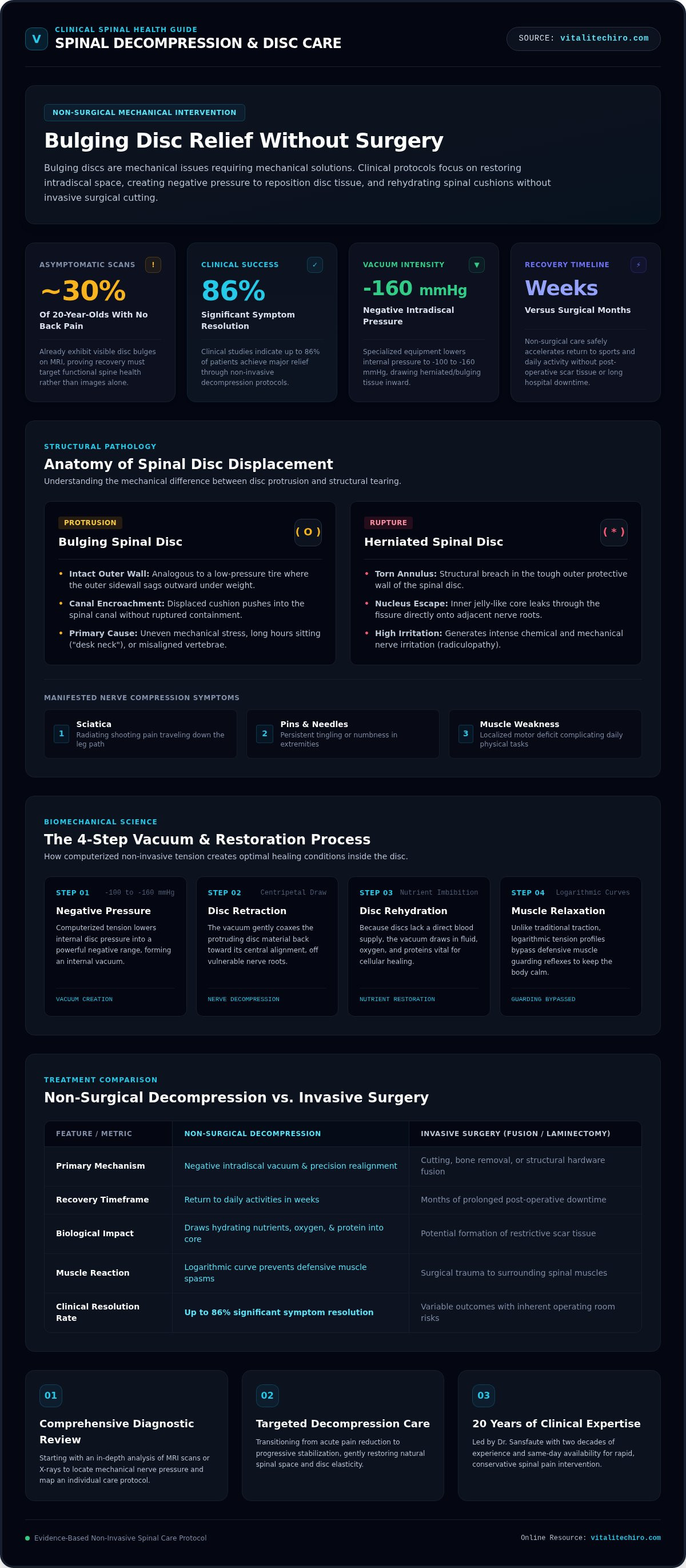
Research reveals that nearly 30% of healthy 20-year-olds with no back pain at all already have visible disc bulges on their MRI scans. This surprising statistic highlights why your recovery should focus on how your spine functions rather than just an image on a screen. If you've been searching for bulging disc relief without surgery Arlington specialists can provide, you likely feel caught between persistent radiating numbness and the daunting prospect of a long surgical recovery. It's exhausting to rely on temporary medications when you simply want to move freely again.
We understand the skepticism that comes with "quick fix" solutions, especially when every step feels like a reminder of your limitations. You deserve a path to wellness that respects your body's ability to heal through precise, mechanical intervention. This guide will demonstrate how non-invasive spinal decompression and expert chiropractic care offer a sophisticated alternative to the knife. Clinical studies indicate that up to 86% of patients achieve significant symptom resolution using these protocols, which focus on restoring the natural space within your spine.
You'll learn how specialized equipment creates negative intradiscal pressure as low as -160 mmHg to gently draw hydrating nutrients back into the disc. We'll outline a logical journey from acute pain reduction to long-term stabilization, ensuring you have a clear roadmap to return to your favorite sports and daily routines. By prioritizing a whole-person approach, we help you transition from managing a condition to enjoying a life of renewed physical freedom.
Key Takeaways
- Learn why bulging discs are mechanical issues that require mechanical solutions; it's more effective than simply masking symptoms with medication.
- Understand how decompression therapy creates a restorative vacuum effect to gently realign disc material and alleviate persistent nerve pressure.
- Discover how to achieve bulging disc relief without surgery Arlington residents can access to return to daily activities in weeks rather than the months often required for surgical recovery.
- Explore the personalized recovery roadmap, starting with a comprehensive diagnostic review of your MRI or X-rays to tailor your specific care protocol.
- Gain insight into how Dr. Sansfaute’s 20 years of clinical expertise and the availability of same-day appointments provide a secure path to long-term spinal wellness.
Understanding Bulging Discs and the Non-Surgical Path in Arlington
Think of your spinal discs as the high-performance shock absorbers of your body. A bulging disc occurs when the tough outer layer of these cushions is displaced, pushing outward into the spinal canal. For many Arlington professionals, this isn't just an abstract medical term; it's the result of "desk neck" from long hours at the Pentagon or tech hubs, or perhaps an injury sustained on the local trails. If you're seeking bulging disc relief without surgery Arlington offers specialized non-invasive paths that prioritize mechanical correction over invasive cutting.
To understand your options, you must distinguish between a spinal disc protrusion and herniation. A bulge is like a tire that's slightly low on air, causing the sidewall to sag outward while remaining intact. A herniation involves a tear in that outer wall, allowing the inner "jelly" to escape. Modern neurology recognizes that conservative care is the gold standard because the body often responds best to gentle, persistent structural support rather than aggressive intervention.
The Anatomy of Spinal Pressure
When your vertebrae lose their proper alignment, they exert uneven pressure on the discs between them. This compression forces the disc material toward sensitive nerves, which can lead to a cascade of discomfort. You might feel this as a dull ache in the lower back, or more alarming symptoms such as:
- Sciatica, which involves shooting pain down the leg.
- Persistent tingling or "pins and needles" in the extremities.
- Localized muscle weakness that makes daily tasks difficult.
Radiculopathy is the clinical term used to describe the pain, numbness, or weakness caused by the irritation of a nerve root as it exits the spinal column.
Why Surgery is Often Avoidable
Many patients fear that surgery is their only path to freedom, yet procedures like spinal fusion or laminectomy carry inherent risks, including the formation of restrictive scar tissue and months of recovery. Research consistently supports non-invasive protocols for long-term disc health, focusing on restoring the disc's natural environment. Integrating chiropractic care as a foundational step allows for precise adjustments that reduce mechanical stress. By choosing a conservative approach, you avoid the complications of the operating room while building a resilient, healthy spine for the years ahead. It's about finding a solution that works with your biology, not against it.
The Science of Spinal Decompression: Creating Space for Healing
Achieving bulging disc relief without surgery Arlington involves a sophisticated mechanical solution to a physical problem. Unlike general stretches, non-surgical spinal decompression uses computerized technology to create a state of negative intradiscal pressure. Research indicates that this process can lower internal disc pressure to levels as low as -100 to -160 mmHg. This creates a powerful vacuum effect that gently coaxes the protruding disc material back toward its central position, away from the sensitive nerve roots.
This vacuum doesn't just reposition the disc. It also facilitates the intake of nutrient-rich fluids, oxygen, and proteins back into the disc's core. Because spinal discs don't have a direct blood supply, they rely on this movement to stay hydrated and resilient. Clinical evidence for conservative disc recovery treatments suggests that restoring this fluid balance is essential for long-term structural integrity. While traditional traction tables often trigger proprioceptive muscle guarding, modern decompression bypasses this defensive reflex through logarithmic tension profiles that keep the body relaxed.
How Decompression Differs from Standard Adjustments
While we often utilize how chiropractic adjustments work to restore spinal alignment, decompression offers a different level of specificity. The equipment allows us to target specific segments, such as the L4-L5 or L5-S1 levels, with pinpoint accuracy. Computer-controlled cycles alternate between distraction and relaxation phases. This ensures the surrounding musculature remains calm while the target disc receives the maximum benefit of the negative pressure.
Decompression vs. Spinal Injections
Many patients consider epidural steroid injections as a primary option. However, these injections primarily serve to mask inflammation rather than addressing the physical displacement of the disc. Steroids don't fix the bulge; they simply quiet the alarm. In contrast, decompression therapy focuses on structural restoration with a significantly lower risk profile. By choosing a path that addresses the root cause, you're investing in a future of physical freedom rather than a temporary chemical reprieve. If you're ready to explore these non-invasive options, our team at Vitalité Chiropractic is here to guide your recovery.
Comparing Relief Options: Why Decompression Outperforms Invasive Procedures
Choosing a recovery path for a spinal injury is a significant decision that impacts your mobility for years to come. While surgical intervention was once the default for severe cases, modern nonsurgical spinal decompression therapy has shifted the paradigm. This "Success Framework" focuses on mechanical restoration rather than structural removal. For those seeking bulging disc relief without surgery Arlington offers a path where recovery is measured in weeks rather than the grueling months often required after a laminectomy or fusion. By avoiding the hospital, you also bypass the risks of anesthesia and the long-term limitations of scar tissue.
The risk of Failed Back Surgery Syndrome (FBSS) is a reality that many patients overlook. Medical literature suggests that between 10% and 40% of patients who undergo invasive spine surgery experience persistent or even worsening neuropathic pain afterward. By opting for non-invasive decompression, you eliminate these risks while preserving your natural anatomy. It's a methodical approach that effectively reduces nerve impingement without the irreversible removal of bone or disc tissue. This makes it a highly cost-effective and safer alternative for long-term wellness.
The Role of Complementary Therapies
Recovery isn't just about the time spent on a decompression table; it's about stabilizing the entire kinetic chain. We often integrate therapeutic modalities like electrical stimulation or ultrasound to manage acute inflammation and promote soft tissue healing. Additionally, supporting your spine starts at your feet. Utilizing custom orthotics helps correct postural imbalances that might be contributing to your disc stress. This holistic approach ensures that once the pressure is removed, your body has the foundation and strength to maintain that relief.
When to Seek Professional Consultation
Early intervention is vital to prevent a manageable bulge from progressing into a permanent rupture. You should seek a professional evaluation as soon as you notice persistent radiating pain or numbness. However, certain "red flag" symptoms require immediate medical attention. If you experience a sudden loss of bowel or bladder control, or significant leg weakness that makes walking impossible, these are signs of Cauda Equina Syndrome and need emergency care. For most other disc issues, getting a second opinion before committing to surgery provides peace of mind and often reveals a non-invasive path you hadn't considered.
Recovery Roadmap: What to Expect in Non-Surgical Care
Many patients arrive at our office feeling overwhelmed by the complexity of their diagnosis. Our goal is to simplify that journey. Finding bulging disc relief without surgery Arlington depends on a methodical, five-step recovery roadmap designed to restore function and confidence. We move beyond simply addressing the pain, focusing instead on the underlying mechanical cause of your discomfort.
- Step 1: Diagnostic Review. We begin with a comprehensive initial exam and a detailed review of your MRI or X-ray imaging. This allows us to visualize the exact location and severity of the disc protrusion.
- Step 2: Personalized Protocol. Every spine is unique. We design a decompression protocol based on your specific disc height and the degree of nerve involvement to ensure the most effective distraction forces.
- Step 3: The Treatment Session. You'll spend time on our specialized decompression equipment. The process is gentle, rhythmic, and focused on creating the vacuum effect necessary for healing.
- Step 4: Progress Monitoring. We regularly monitor your response to care. As your mobility improves and pain decreases, we adjust the frequency of your sessions to match your body's healing pace.
- Step 5: Maintenance and Optimization. Once the acute phase is over, we transition to performance optimization. This ensures your spine remains resilient against the stresses of daily life and sports.
The Initial Consultation at Vitalité
Dr. Sansfaute brings over 20 years of clinical expertise to every consultation, utilizing a whole-person diagnostic approach. We don't just look at the scan; we look at how you move, your medical history, and your specific lifestyle goals. This thoroughness helps us confirm your candidacy for decompression and set realistic expectations for your recovery. We prioritize a welcoming environment where you can discuss your concerns openly, ensuring you feel like a partner in your own healthcare journey.
The Treatment Experience
One of the most common questions we hear is what the actual session feels like. Most patients are surprised to find the experience deeply relaxing. The computerized cycles are so smooth that many individuals actually nap while the equipment does the work. Each session typically lasts between 20 and 30 minutes. While you may feel immediate pressure relief, a series of sessions is necessary to create lasting physiological change in the disc tissue. Consistency is the key to disc rehydration. By adhering to the prescribed schedule, you allow the disc to gradually pull in the fluids and nutrients it needs to heal. If you're ready to start your journey toward lasting wellness, schedule your initial diagnostic review today.
Why Arlington Residents Trust Vitalité Chiropractic for Disc Relief
Choosing a provider for bulging disc relief without surgery Arlington involves more than just finding a technical specialist. It’s about finding a partner who understands the local pace of life and the unique stresses of our community. Dr. W. Jean-Luc Sansfaute has been practicing since 2003, bringing over two decades of clinical expertise to every patient interaction. This experience allows for a level of diagnostic precision that reassures you of your safety and the efficacy of your care plan. We don't just treat symptoms; we treat the individual with a sophisticated blend of clinical authority and person-centered empathy.
Our clinic is designed to be a sanctuary for healing. We take pride in maintaining an inclusive, LGBTQ+ friendly environment where patient dignity is our highest priority. We recognize that the Arlington community is beautifully diverse, which is why we provide multilingual support to ensure that every person who walks through our doors feels heard and respected. For those in acute distress, we offer the advantage of same-day appointments, ensuring that you don't have to wait for the relief you need when a disc flare-up occurs.
A Whole-Person Approach to Wellness
We look beyond the specific disc lesion to assess your overall biomechanical health. This comprehensive view includes evaluating your posture, lifestyle habits, and nutritional foundation to support long-term tissue repair. For the many local athletes and active professionals in Northern Virginia, we provide specialized sports performance care to ensure your spine can handle the demands of your training and daily life. Our commitment is to provide high-end healthcare that remains modern, adaptable, and deeply rooted in proven methods.
Getting Started Today
Our office is conveniently located to serve the Arlington area, offering a steady and methodical path from discomfort to wellness. You can easily schedule your initial evaluation online or by phone to begin your personalized recovery journey. We guide you through every logistical and clinical step, ensuring the path to improvement is easy to follow. Don't let a bulging disc dictate your lifestyle any longer. Schedule your consultation for bulging disc relief today and take the first step toward lasting physical freedom.
Take Control of Your Spinal Health Today
Living with a bulging disc shouldn't mean living in fear of surgery or chronic pain. You've seen how non-surgical spinal decompression creates the necessary vacuum effect to restore disc height and alleviate nerve pressure. By choosing a mechanical solution over chemical masks or invasive cutting, you prioritize your body's natural resilience. Our specialized protocols focus on long-term structural health, helping you return to the activities you love without the risks and scar tissue associated with traditional surgical recovery.
Finding bulging disc relief without surgery Arlington residents can trust starts with an expert who respects your unique case. Dr. Sansfaute brings over 20 years of experience as a non-surgical spinal decompression specialist to every patient he serves. We understand that pain doesn't wait, which is why we offer same-day appointments to address acute discomfort immediately. Our inclusive, community-focused clinic is ready to partner with you on a steady, methodical journey toward wellness.
Book Your Non-Surgical Disc Consultation in Arlington to begin your personalized recovery roadmap. You don't have to navigate this path alone; we're here to provide the clinical expertise and compassionate support you deserve for a life of renewed physical freedom.
Frequently Asked Questions
Is spinal decompression therapy painful?
Most patients find the experience deeply relaxing rather than painful. During the session, you'll feel a gentle stretching sensation as the computerized equipment creates negative pressure within the disc. This process is designed to bypass the body's natural muscle guarding reflexes. Many individuals at our Arlington clinic actually nap during their 20 to 30 minute sessions. You might experience some mild muscle soreness afterward, similar to the feeling after a new workout.
How many sessions will I need to see results for a bulging disc?
The number of sessions depends on the severity of your disc displacement and your body's healing rate. While some patients report initial relief within the first few visits, a standard protocol typically involves 15 to 24 sessions over several weeks. This frequency is necessary to achieve lasting physiological changes and proper disc rehydration. Dr. Sansfaute monitors your progress throughout the roadmap to ensure the frequency matches your specific recovery goals.
Can I drive myself home after a decompression treatment?
Yes, you can safely drive yourself home or return to work immediately after your appointment. Unlike surgical procedures that require anesthesia or sedation, non-invasive decompression therapy doesn't impair your cognitive or motor functions. Most patients feel a sense of lightness or reduced pressure in their spine following a session. This makes it a convenient option for busy professionals in Arlington who need to maintain their daily schedules while recovering.
Does insurance cover non-surgical bulging disc relief in Arlington?
Coverage for bulging disc relief without surgery Arlington patients seek varies significantly by provider. Many commercial insurance plans and Medicare classify computerized decompression under code S9090, which is often considered investigational and not covered. However, your initial physician evaluation, diagnostic X-rays, and manual chiropractic adjustments frequently qualify for standard coverage. Our team can help you review your benefits and explain how Health Savings Accounts (HSA) can be used for your care.
What is the success rate for non-surgical disc decompression?
Clinical studies assessing non-surgical spinal decompression protocols report high levels of patient satisfaction and symptom resolution. Research published in journals like Anesthesia and Pain Medicine indicates that up to 86% of patients with disc bulges and herniations achieve significant pain reduction. These outcomes are often superior to traditional traction because the technology prevents muscle spasms. Success is most consistent when patients adhere to the full recommended series of treatments and stabilization exercises.
Can chiropractic care help if I've already had back surgery?
Chiropractic care and decompression can often help patients suffering from Failed Back Surgery Syndrome. However, we must carefully review your surgical history and imaging first. Decompression is generally contraindicated if you have surgical hardware, such as rods or screws, at the specific spinal segment being treated. If your surgery did not involve fusion or hardware, you may still be an excellent candidate for non-invasive protocols to manage recurring disc issues.
What happens if I don't treat my bulging disc?
Leaving a bulging disc untreated can lead to a worsening of symptoms and potential long-term complications. Over time, the outward pressure may cause the disc to rupture or herniate, which often results in more intense radicular pain. Chronic nerve compression can lead to permanent numbness, muscle wasting, or localized weakness. Early intervention is the most effective way to prevent these structural issues from becoming irreversible and requiring more invasive medical procedures.
How do I know if I am a candidate for decompression therapy?
Candidacy is determined through a comprehensive physical exam and a thorough review of your MRI or X-ray scans. Ideal candidates are those experiencing persistent back or neck pain, sciatica, or numbness caused by bulging or degenerated discs. Dr. Sansfaute uses his 20 years of experience to evaluate your spinal biomechanics and medical history. We ensure that you don't have contraindications like severe osteoporosis or spinal fractures before recommending this specialized care.


