
Resting completely isn’t always the best first step after whiplash. Gentle movement and a careful assessment can help guide recovery. A chiropractor near you for whiplash treatment can evaluate neck movement and tenderness and help determine whether chiropractic care is appropriate. Symptoms may take hours or days to appear, so feeling relatively well immediately after a collision doesn’t rule out an injury.
It’s understandable to feel uncertain about what to do when stiffness, headaches, or soreness develop after an accident or sports injury. This guide covers common whiplash symptoms, when further medical evaluation may be needed, and how chiropractic care may support recovery. It also explains how care can be adapted to your symptoms and comfort, and why severe pain, loss of consciousness, weakness, difficulty walking, or confusion calls for emergency care immediately.
Key Takeaways
- Recognize the range of symptoms that can follow a neck injury, including discomfort that may affect the shoulders, upper back, or arms.
- Learn what an evaluation can assess and when additional medical testing may help clarify an injury.
- Understand how chiropractic adjustments can be adapted to your condition and comfort level.
- See why early care may emphasize gentle movement and how treatment choices depend on your symptoms and function.
What are the Symptoms of Whiplash?
Whiplash can follow an auto accident or sports impact, and symptoms may emerge later. Notice changes in neck movement, pain, or sensation, and describe when they began during an evaluation.
Common Whiplash Symptoms
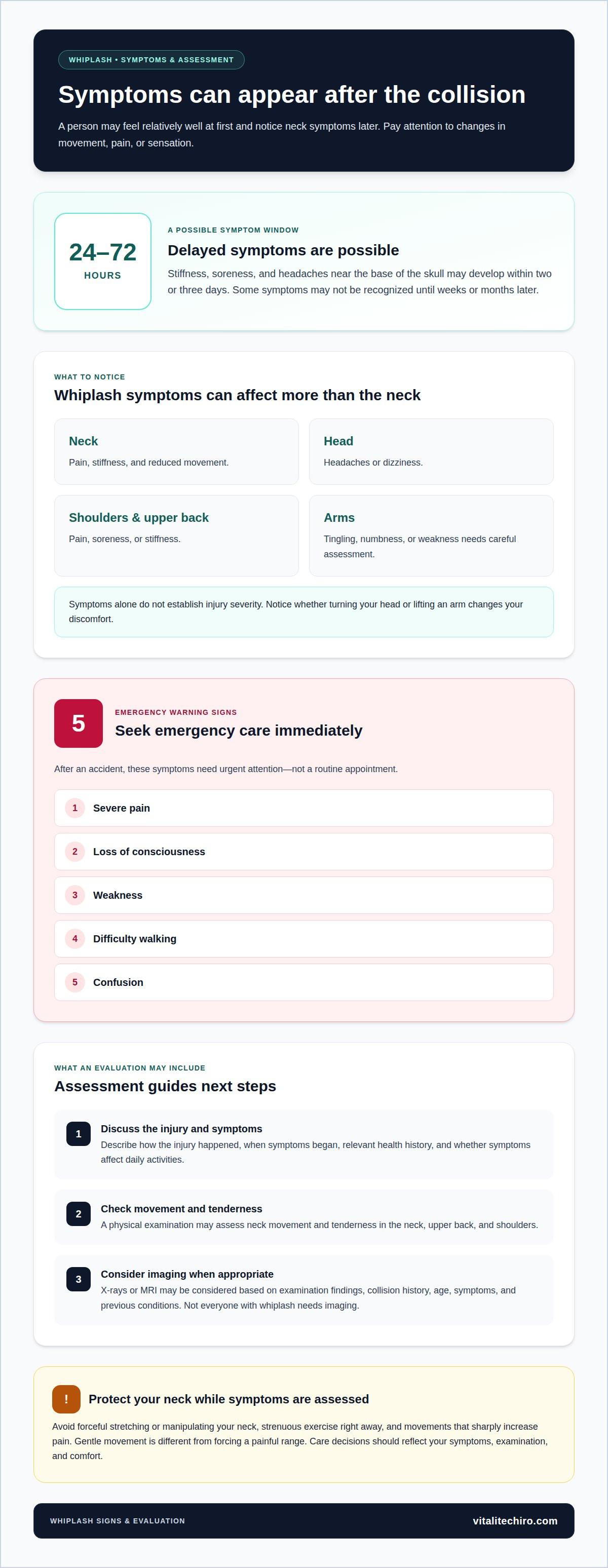
After a collision or contact-sport impact, whiplash may cause neck pain, stiffness, and reduced movement. Headaches, dizziness, shoulder or upper-back pain, and tingling in an arm can also occur. A whiplash treatment chiropractor near me can assess movement and tenderness, but symptoms alone don’t establish the severity of an injury. Note whether turning your head or lifting an arm changes your discomfort.
Delayed Symptoms After an Accident
Neck symptoms may become noticeable a day or two after a collision, and some appear 24 to 72 hours later. Stiffness, soreness, and headaches near the base of the skull may develop within two or three days. Feeling well immediately after a car accident doesn’t rule out injury. Some symptoms may not be recognized until weeks or months later. An appointment with a whiplash treatment chiropractor near me can help assess symptoms once they appear.
Soft-Tissue Injury Signs
A rapid back-and-forth movement can strain muscles and ligaments; whiplash can also affect spinal discs and other soft tissue. Signs include neck or upper-back soreness, shoulder discomfort, stiffness, and reduced movement. Tingling, numbness, or weakness in an arm also needs careful assessment. MDPI’s systematic review reported cervical arterial dissection in 57% of cases involving cervical spine manipulation or mobilization.
Emergency Symptoms and Referrals
Seek emergency care immediately after an accident if you have severe pain, loss of consciousness, weakness, difficulty walking, or confusion. These symptoms need urgent attention, not a routine appointment. An evaluation can help identify what may be injured and whether additional testing is appropriate. X-rays or MRI may be considered based on examination findings, collision history, age, symptoms, and previous conditions.
Health or auto insurance coverage for chiropractic care depends on your policy benefits and claim circumstances. Review your plan documents to understand coverage, authorization, and documentation requirements.
When further medical evaluation may be needed
Further evaluation can clarify what an accident may have caused and whether chiropractic care is appropriate. Severe or neurological symptoms call for urgent medical attention before routine treatment planning.
Signs Requiring Further Evaluation
Seek emergency care immediately for severe pain, loss of consciousness, weakness, difficulty walking, or confusion after a collision. These symptoms need prompt medical assessment rather than a routine appointment. For other concerns, an evaluation can help identify affected areas and whether additional testing is appropriate. Tell the clinician about persistent headaches, shoulder pain, tingling, or restricted neck movement, especially if these symptoms interfere with work, sleep, or daily activities.
Preparing for an Evaluation
An initial evaluation may cover how the injury happened, your symptoms, and relevant health history. A physical examination can assess neck movement and tenderness in the neck, upper back, and shoulders. X-rays or MRI may be considered when examination findings, collision history, age, symptoms, or previous conditions could affect diagnosis or treatment decisions. Not everyone with whiplash needs imaging.
Before an assessment, avoid forcefully stretching or manipulating your neck, returning immediately to strenuous exercise, or repeating movements that sharply increase pain. Gentle movement is different from forcing a painful range. Note when symptoms began, which movements aggravate them, and whether they affect your arm or walking. These details help the clinician evaluate your condition and consider a suitable treatment plan.
Ask the chiropractor what the examination found, whether further medical evaluation or imaging may be appropriate, and how care would be adapted to your symptoms and comfort. You can also ask which exercises or activities suit your current condition. These questions help you understand the proposed approach before deciding whether to proceed.
In Arlington, Virginia, the same priorities apply: urgent symptoms need emergency evaluation, while routine care decisions follow an assessment of your injury and symptoms.
Chiropractic adjustments
Chiropractic care may help with certain whiplash-related musculoskeletal symptoms, including neck stiffness, restricted joint movement, muscle tension, and accident-related neck pain. An examination helps identify affected areas and determine whether adjustments may suit your condition. Severe symptoms or unresolved concerns require medical evaluation before treatment decisions.
Neck manipulation carries potential risks, including cervical arterial dissection, as reported in a systematic review by MDPI. This makes careful assessment important, but it doesn’t mean every patient faces the same risk. After a collision, avoid forcefully manipulating your own neck. A clinician should consider your injury and comfort before deciding whether an adjustment is appropriate.
When appropriate, chiropractic adjustments may address restricted movement in the upper spine. The aim is to improve motion and reduce neck pain or stiffness, not to force a painful range. Timing matters: spinal manipulation may be considered after initial swelling and discomfort subside. If inflammation or tenderness remains prominent, the treatment approach should reflect those symptoms.
After an accident, care should be adapted to your condition and comfort. This includes considering how much movement feels tolerable and whether symptoms change during assessment. Tell the clinician which positions increase discomfort, whether pain travels beyond the neck, and whether a previous movement caused a marked response. These details help guide an individualized decision about neck care.
Before an adjustment, ask what the examination found, why manipulation is being considered, and what alternatives may suit your symptoms. Ask how the approach would change if neck pain increases or movement feels uncomfortable. A careful discussion clarifies the proposed goal and supports a treatment decision based on your findings, rather than applying the same technique to every patient.
Early chiropractic treatment
After a collision, early care can emphasize gentle movement rather than prolonged rest or a neck collar. During the acute phase, described as the first 1-2 weeks, an evaluation helps guide activity and determine whether chiropractic treatment is appropriate.
For acute whiplash, care may include mild stretching or ultrasound to help alleviate inflammation. The goal is comfortable movement without repeatedly pushing into sharp pain. As stiffness changes, a clinician can adapt the approach to your symptoms and tolerance. Avoid forceful self-manipulation while the injury is being assessed.
Early treatment timelines vary with diagnosis and symptom severity. One estimate for mild to moderate whiplash and back strain treated early is six to twelve weeks of care, with two to three visits per week during the first few weeks. This is not a universal schedule: health history, functional limits, goals, and response to care affect visit frequency.
Recovery also depends on the injury. Mild soft-tissue injuries typically improve in 2-6 weeks with consistent care, while whiplash recovery generally takes 6 weeks to several months. Disc herniation or nerve involvement can take several months to a year. These ranges describe recovery, not a guaranteed treatment duration.
To find a licensed chiropractor who treats whiplash, use your state licensing board’s directory to verify a current license. Look for an evaluation that considers your collision history, neck movement, symptoms, and comfort before recommending manipulation or exercises. Ask how the plan will be adjusted if pain or stiffness changes.
For whiplash recovery, the appropriate treatment duration depends on the diagnosis, symptom severity, functional limitations, and response to care. Early treatment may involve two to three weekly visits during the first few weeks, while overall recovery can take 6 weeks to several months.
Discuss early whiplash care as a next step when you’re ready to address neck stiffness and restore comfortable motion.
Vitalité Chiropractic
Vitalité Chiropractic in Arlington can help you consider next steps when neck pain or stiffness continues after an accident and emergency symptoms aren’t present. An assessment can help determine whether chiropractic adjustments fit your needs and how care should reflect your symptoms, movement, and comfort. Care may also include sports injury care after an athletic incident or prenatal chiropractic care during pregnancy. Decompression therapy may be part of care when appropriate to your condition. Treatment choices depend on the individual, not a one-size-fits-all schedule. To discuss your situation and possible care, contact Vitalité Chiropractic.
Take the Next Step Toward Comfortable Movement
Recovery is not a race. A thoughtful next step is to connect your symptoms with a clear, individualized care plan, rather than judging progress by one difficult day. A chiropractor near me for whiplash treatment can assess how your neck moves and discuss whether chiropractic care fits your situation. If symptoms are severe or include weakness, confusion, loss of consciousness, or difficulty walking, seek emergency care instead of waiting for a routine appointment.
For ongoing concerns after an accident, a conversation can help clarify your symptoms and what care may be appropriate. Vitalité Chiropractic in Arlington offers Chiropractic Adjustments, Decompression Therapy, and Sports Injury Care; the right approach depends on your needs and assessment. Contact the clinic to discuss a practical next step.
Contact Vitalité Chiropractic today to discuss your next step. Move forward with care that starts with listening.
Frequently Asked Questions
How does chiropractic care help whiplash?
Chiropractic care may address whiplash-related stiffness, muscle tension, restricted joint movement, and some neck pain. An assessment helps determine whether adjustments fit your symptoms and comfort. During your visit, describe which movements feel difficult, such as turning to check a blind spot. That practical example connects your daily limitations with an appropriate care approach.
When do I need treatment for whiplash?
Arrange an evaluation when symptoms appear after a collision, particularly if neck discomfort interferes with driving, sleep, or work. Don’t wait for a routine appointment if you have severe pain, weakness, confusion, loss of consciousness, or difficulty walking; seek emergency care immediately. For less severe symptoms, an assessment can help clarify what may be injured and guide care decisions.
Do I need imaging or a report first?
You don’t need to have imaging completed before an evaluation; imaging isn’t needed for everyone with whiplash. Examination findings, collision history, age, symptoms, and previous conditions can influence whether X-rays or an MRI would help guide decisions. If you already have a medical report or imaging results, sharing them can add context, but the evaluation also considers your current symptoms.
How is whiplash diagnosed?
Whiplash is assessed through your account of the incident, your symptoms, and a physical examination. The clinician may check neck movement and tenderness in the neck, upper back, and shoulders. For example, difficulty turning your head or tenderness in a specific area can inform the assessment. Imaging may be considered when examination findings or other factors could affect diagnosis or treatment decisions.
What are the signs of whiplash?
Signs can include neck pain or stiffness, headaches, shoulder or upper-back discomfort, dizziness, and tingling, numbness, or weakness in an arm. Symptoms may affect movement, making it uncomfortable to turn your head. Track where discomfort occurs and whether it changes during everyday activities. Severe pain, weakness, confusion, or difficulty walking calls for emergency attention.
How is whiplash diagnosed and treated?
Assessment starts with the accident history, reported symptoms, and an examination of neck movement and tenderness. If findings suggest further testing could affect care decisions, imaging may be considered. Treatment is guided by the injury and your comfort; chiropractic care may be appropriate for certain musculoskeletal symptoms. In Arlington, Virginia, Vitalité Chiropractic offers chiropractic adjustments tailored to individual findings.


