
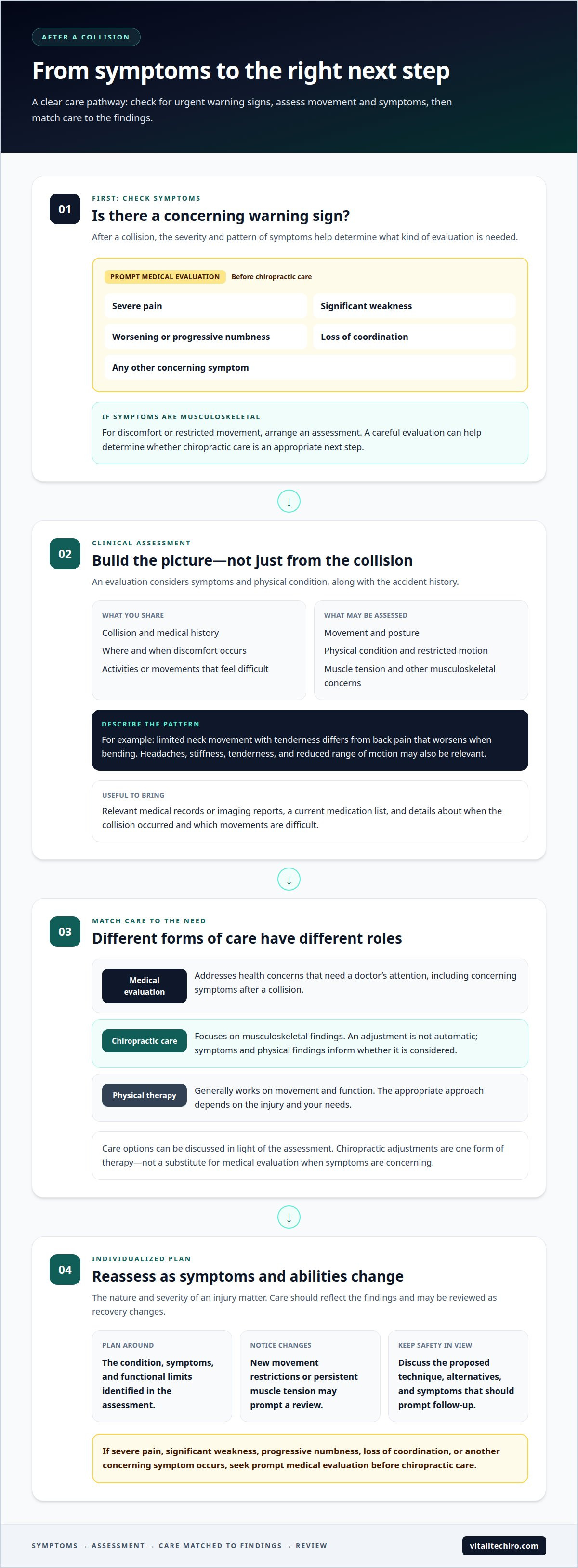
After a car accident, seek prompt medical evaluation for severe pain, significant weakness, worsening numbness, loss of coordination, or another concerning symptom. If you’re looking for an auto accident injury chiropractor in Arlington, arrange an assessment for musculoskeletal discomfort or restricted movement, while making medical care the priority for serious symptoms.
It’s understandable to wonder whether soreness or stiffness will pass, especially when the full impact of a collision isn’t immediately clear. A careful evaluation can identify movement restrictions, muscle tension, and other musculoskeletal concerns, and help determine whether chiropractic care is an appropriate next step.
This article explains which post-accident symptoms call for prompt medical attention, what an assessment may involve, and how care can respond to changes in your symptoms and abilities. You’ll also learn when chiropractic adjustments may fit into recovery and what to expect from an Arlington practice treating accident-related injuries.
Key Takeaways
- Learn how collision-related strains, joint irritation, and back pain may be assessed based on your symptoms and movement.
- Identify common whiplash signs, including neck stiffness, headaches, tenderness, and limited range of motion.
- See how chiropractic adjustments can be tailored as symptoms and functional abilities change.
- Understand which concerning symptoms call for prompt medical evaluation before chiropractic care is considered.
Types of accidents and injuries treated
Motor vehicle collisions can strain muscles, irritate joints, and affect the back or neck. Whiplash may occur when the head and neck move rapidly during impact. Symptoms can include headaches, tenderness, stiffness, or reduced motion. Back pain may develop when sudden force affects the spine and surrounding tissues. Because these conditions vary, an assessment considers your symptoms and physical condition, not just the collision itself.
An evaluation may start with your accident history, symptoms, and medical history. The clinician can assess movement, posture, and physical condition for restricted motion, muscle tension, or other musculoskeletal concerns. An auto accident injury chiropractor in Arlington can consider how the findings relate to everyday activities. Limited neck movement and tenderness, for example, differ from back pain that worsens with bending. Treatment should reflect the assessment.
Medical treatment, chiropractic care, and physical therapy have different roles. Medical evaluation addresses health concerns that need a doctor’s attention; chiropractic care focuses on musculoskeletal findings, while physical therapy generally works on movement and function. The appropriate approach depends on the injury and your needs.
You can seek clinical care without an attorney. Describe the collision, your symptoms, and activities that have become difficult, such as turning your head or sitting comfortably. Legal representation is separate from a clinician’s assessment of your health and movement concerns.
A customized treatment plan addresses the condition, symptoms, and functional limits identified during assessment. The nature and severity of an injury matter, and care may change as symptoms and abilities change. For example, new movement restrictions or persistent muscle tension may prompt a review. Inflammation can also be considered when assessing discomfort, alongside the broader presentation. An appointment with an auto accident injury chiropractor in Arlington can help assess musculoskeletal concerns and guide a discussion about an individualized plan.
Whiplash symptoms
Whiplash can occur when impact moves the head and neck rapidly, straining cervical muscles and supporting tissues. Symptoms may include neck pain, stiffness, headaches, tenderness, and reduced range of motion.
Symptoms After Rear-End Collisions
A rear-end collision can force the head and neck to move rapidly, potentially straining muscles and other supporting tissue. Note where discomfort occurs and how it affects movement, such as difficulty turning your head to check a blind spot. Describe headaches, tenderness, and neck stiffness during an evaluation, too. These details help clarify the areas affected and guide the clinical discussion.
Whiplash and Soft Tissue Damage
Whiplash may strain cervical muscles and supporting tissues during sudden head-and-neck movement. Discomfort can include tenderness or stiffness, while reduced motion may make everyday movements harder. An evaluation considers these symptoms alongside posture and movement, rather than relying on one sign alone. For example, tenderness with restricted neck motion presents differently from soreness without a movement limitation.
Neck and Back Pain
Neck pain is a common whiplash symptom, but collision-related discomfort can also affect the back. Sudden force may affect the spine and surrounding tissues, with pain changing how you bend, turn, or sit. Note which movements feel limited and whether headaches or tenderness accompany the pain. Describing this pattern during an assessment helps inform decisions about suitable care.
Symptoms for Medical Evaluation
Severe pain, significant weakness, progressive numbness, loss of coordination, or other concerning symptoms after a collision require prompt medical evaluation before chiropractic care. These signs need attention beyond a routine assessment of muscle tension or restricted motion. After urgent concerns have been medically evaluated, a clinician can consider musculoskeletal findings and whether movement-focused care, including appropriate exercises, suits your needs.
Chiropractic adjustments
After a car accident, chiropractic care should reflect the injury’s nature and severity. An appointment can assess your symptoms and movement before adjustments are considered.
Adjustments After a Car Accident
An adjustment isn’t automatic after a collision. The clinician considers the injury, symptoms, and physical findings, then shapes care around those factors. For example, neck pain and restricted movement call for attention to those specific concerns. The treatment plan may change as symptoms and abilities change, so progress is assessed over time rather than assumed from the initial visit.
What credentials and experience should an Arlington accident chiropractor have? Look for a licensed chiropractor experienced in evaluating collision-related injuries and explaining how findings inform care. You should be able to discuss your symptoms, treatment options, and questions clearly before deciding on adjustments.
What should you bring to your first appointment? Bring any relevant medical records or imaging reports you have, along with a current medication list. Be ready to describe when the collision occurred, where you feel pain, and which movements are difficult.
Treatment Risks and Side Effects
Risks depend on the injury and proposed technique, so discuss the plan before treatment begins. Ask what the adjustment involves, what alternatives may suit your condition, and what symptoms should prompt follow-up. Severe pain, significant weakness, progressive numbness, or loss of coordination calls for prompt medical evaluation before chiropractic care.
Chiropractic adjustments are one form of therapy, not a substitute for medical evaluation when symptoms are concerning. Discussing your accident history, neck pain, movement limits, and the proposed approach helps establish whether an adjustment fits the care plan. If symptoms or abilities change, the plan should be reviewed and modified accordingly.
What symptoms after a car accident should be evaluated by a doctor before chiropractic care?
Severe pain, significant weakness, progressive numbness, loss of coordination, or other concerning symptoms after a collision require prompt medical evaluation. Have these symptoms assessed before chiropractic care, rather than treating them as routine soreness. Medical evaluation can determine whether the immediate concern needs attention before musculoskeletal care is considered.
Pay attention to changes in strength, sensation, and coordination. For example, worsening numbness differs from stable tenderness around a sore area. Significant weakness or difficulty coordinating movement also deserves prompt evaluation. Describe when each symptom began and whether it is changing. Those details help a doctor understand what has changed since the collision.
- Severe pain: Report pain that feels intense or concerning after the impact.
- Significant weakness: Describe areas where strength has noticeably changed.
- Progressive numbness: Explain where numbness occurs and how it is progressing.
- Loss of coordination: Share which movements or tasks have become difficult.
For other symptoms, an evaluation can identify restricted movement, muscle tension, and musculoskeletal concerns. For instance, you can discuss limited neck movement or back tension as part of the assessment. The findings help distinguish movement-related concerns from symptoms that need prompt medical attention. They also give the clinician a clearer picture of the affected areas and how they respond to movement.
Be specific about the collision’s effects: name the painful area, the movement that feels restricted, and any change in sensation or strength. If symptoms worsen or coordination is affected, prioritize prompt medical evaluation before considering chiropractic care. After concerning symptoms have been evaluated, an assessment can help determine whether care for musculoskeletal concerns is appropriate. A clear account of changes since the collision makes the next discussion more focused.
For an individual discussion of post-accident symptoms, get in touch.
Vitalité Chiropractic: Sports Injury Care
Vitalité Chiropractic offers Sports Injury Care for people seeking support with injury-related concerns. After urgent symptoms have been medically evaluated, this can be a next step for discussing musculoskeletal discomfort and movement limits. Chiropractic Adjustments and Decompression Therapy are also available, with care guided by your condition and needs.
If you’re recovering from an accident, describe which areas feel affected and how your movement has changed. That context can guide a conversation about whether these services suit your concerns. Vitalité Chiropractic also offers Prenatal Chiropractic Care for pregnancy-related chiropractic needs.
Please contact Vitalité Chiropractic to discuss your care needs.
Choose a Clear Next Step for Recovery
After an accident, a useful next step is a focused conversation about which movements or daily activities remain difficult. Consider what you’d most like to regain, such as comfortable turning, reaching, or sitting. Sharing that priority can keep the discussion practical and centered on your needs, rather than on a one-size-fits-all expectation.
For people seeking an auto accident injury chiropractor in Arlington, Vitalité Chiropractic offers Chiropractic Adjustments, Decompression Therapy, and Sports Injury Care. These options can be discussed in relation to your symptoms and functional goals; an individual assessment guides decisions about appropriate care. Understanding the proposed approach can help you make an informed choice and take an active role in recovery.
Contact Vitalité Chiropractic today to discuss your concerns and care options. A thoughtful conversation can help you move forward with greater clarity and confidence.
Frequently Asked Questions
How soon after my accident should I be seen?
Arrange a clinical evaluation promptly after a collision if pain or restricted movement appears; don’t wait for symptoms to become severe before describing them. Severe pain, significant weakness, progressive numbness, loss of coordination, or another concerning symptom calls for prompt medical evaluation before chiropractic care. A clinician can assess what has changed and determine an appropriate next step based on your symptoms.
Do you accept Letters of Protection?
A Letter of Protection shouldn’t be assumed to work like insurance. Vitalité Chiropractic accepts most major insurance plans and offers flexible payment options, but that doesn’t establish whether an LOP applies to a particular visit. Before relying on that arrangement, understand who is responsible for charges and what payment method will be used. Keep financial and legal questions separate from clinical decisions about injury care.
Hurt in a Car Accident in Arlington?
If you’re hurt in a car accident in Arlington, note how the injury affects everyday activities, such as turning to drive or carrying a bag. Seek prompt medical evaluation for severe or concerning symptoms. For musculoskeletal discomfort, a clinical assessment can clarify movement concerns and whether chiropractic care may suit your needs after urgent issues have been addressed.
I don’t have an attorney yet. Can I still come in?
Yes. You can seek an evaluation for accident-related symptoms without first hiring an attorney. The clinical discussion focuses on your health concerns, relevant history, and physical function, not on whether you have legal representation. For example, describe which activities became harder after the collision and discuss care options. Decisions about legal representation are separate from decisions about clinical care.
What conditions can a personal injury chiropractor help with?
A chiropractic assessment may address musculoskeletal concerns following a collision, including muscle strains, joint irritation, and discomfort affecting the back or neck. The key question is how symptoms affect movement and function. For instance, difficulty turning or bending gives the clinician specific information to assess. A personalized plan should reflect those findings and the injury’s nature and severity.
How can a chiropractor help after an auto accident injury?
A chiropractor can assess symptoms, medical history, posture, and movement to identify musculoskeletal concerns after an accident. The findings help guide whether Chiropractic Adjustments or another appropriate approach belongs in a treatment plan. Care should reflect the injury’s nature and severity, and the plan can change as symptoms and abilities change. This provides a structured way to discuss progress and next steps.


