
Between 50% and 80% of expectant parents experience significant spinal discomfort as they approach their due date. If you find yourself waking frequently from hip pressure or wincing at sharp sensations in your lower back, you're certainly not alone. It's natural to feel hesitant about standard pain management options, especially given the FDA warnings regarding NSAID use after the 20-week mark. You deserve third trimester back pain relief that honors your safety and the health of your baby without compromise.
We believe these final weeks should be a time of joyful anticipation, not physical endurance. This guide offers evidence-based strategies and professional insights to help you safely alleviate discomfort and reclaim your mobility. We'll examine how specialized prenatal chiropractic care, such as the Webster technique, can restore pelvic balance and reduce structural tension. You'll also discover ergonomic modifications and gentle movements designed to improve your sleep quality and daily comfort. By addressing the biomechanical shifts of your body, you can move toward a state of renewed energy, feeling physically prepared and empowered for labor and delivery.
Key Takeaways
- Gain a deeper understanding of how hormonal surges and your migrating center of gravity contribute to late-pregnancy spinal strain.
- Learn how restoring pelvic alignment can alleviate intrauterine constraint and physically prepare your body for the demands of labor.
- Identify the most effective strategies for third trimester back pain relief, comparing the benefits of mechanical supports like maternity belts with structural chiropractic adjustments.
- Implement practical ergonomic changes and gentle, safe stretches to maintain comfort during your daily routine, whether at a desk or at rest.
- Discover how specialized, inclusive prenatal care in Arlington provides a non-invasive path to improved sleep and reduced daily pain levels.
Understanding the Biomechanical Shift: Why Back Pain Peaks in the Third Trimester
The final stage of pregnancy is a marvel of biological engineering, yet it places extraordinary demands on your musculoskeletal system. As your body prepares for delivery, it undergoes a profound biomechanical shift that often makes seeking Back pain during pregnancy a primary concern for many. This discomfort isn't merely a byproduct of weight gain; it's the result of a complex interplay between hormonal surges and structural realignments that occur as you approach your due date.
The Impact of Hormonal Changes on Joint Stability
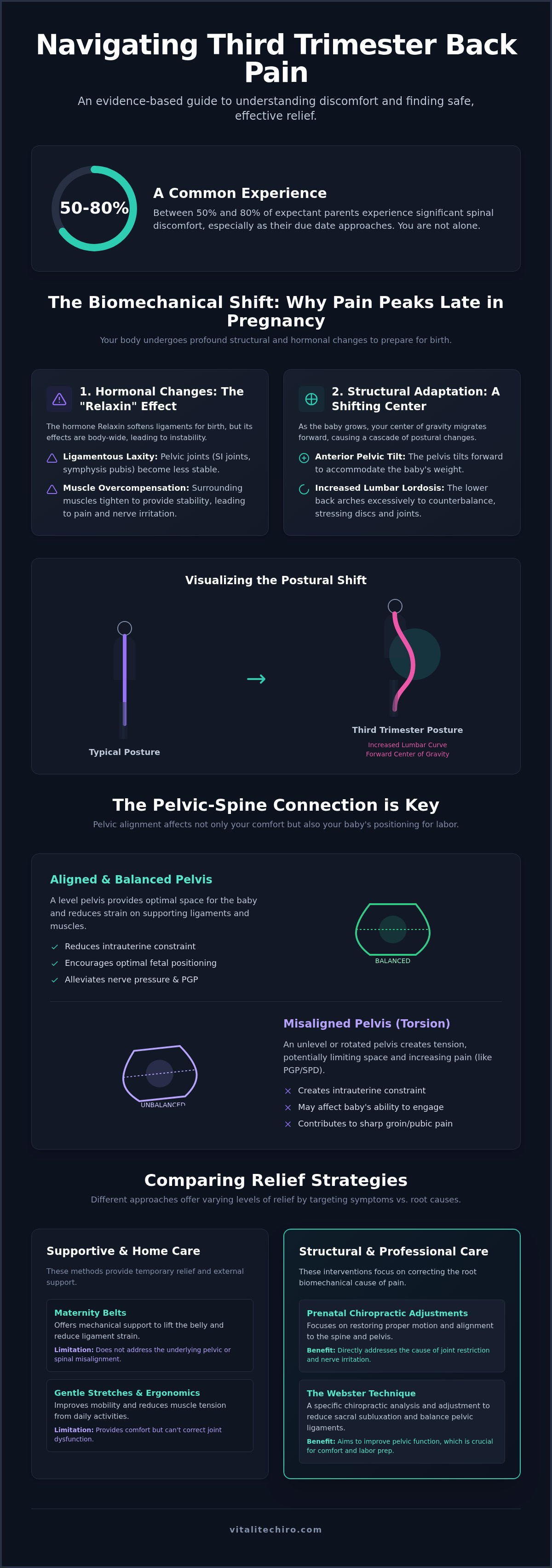
Relaxin is the primary driver of these changes. While this hormone is vital for softening the ligaments of the pelvis to allow for an easier birth, its effects aren't localized to just one area. It creates systemic ligamentous laxity, which means the sacroiliac (SI) joints and the symphysis pubis become less stable. When these joints "loosen," the surrounding muscles must overcompensate to maintain your upright posture. This often leads to nerve irritation and sharp, localized pain. What begins as a "normal" pregnancy ache can quickly transition into chronic dysfunction if these stability issues aren't addressed by a professional who understands pregnancy-related biomechanics.
Structural Adaptation and the Growing Bump
Your center of gravity migrates forward as the baby grows, pulling your pelvis into an anterior tilt. To keep from falling forward, your body naturally increases its lumbar lordosis. Lumbar lordosis refers to the exaggerated inward curvature of the lower spine that occurs to balance the weight of the growing uterus, significantly increasing pressure on the intervertebral discs and facet joints. This arching of the lower back doesn't happen in isolation. The thoracic spine, or mid-back, often rounds in response to balance the lumbar curve, which frequently leads to upper back tension and rib discomfort.
Maintaining pelvic balance is a physiological necessity for both your comfort and fetal positioning. When the pelvis is misaligned, it can create tension in the round ligaments, potentially limiting the space available for the baby to move into an optimal birth position. This structural strain is further exacerbated by diastasis recti, the separation of the abdominal muscles. When the "front wall" of your core loses its integrity, your spine loses its primary support system. Without this internal bracing, the lower back bears the brunt of every movement, making effective third trimester back pain relief essential for your daily wellness.
By understanding that your pain is a response to these significant physical shifts, you can begin to look at restorative solutions. Addressing these changes through gentle, non-invasive care helps restore the structural harmony your body needs during this transformative time.
The Pelvic-Spine Connection: How Alignment Affects Comfort and Labor Prep
The relationship between your pelvis and spine is the foundation of your physical comfort during the final weeks of pregnancy. While the lumbar curve changes described previously create pressure, the alignment of the pelvic bowl itself determines how that pressure is distributed. When the pelvis is unlevel or rotated, a condition known as pelvic torsion, it can lead to intrauterine constraint. This means the baby may have less room to move or settle into the optimal head-down position. Achieving Prenatal Chiropractic Care Benefits involves more than just soothing sore muscles; it's about ensuring the sacrum and round ligaments are balanced to support the expanding uterus.
Pelvic Girdle Pain (PGP) vs. Standard Back Pain
It's vital to distinguish between general lumbar strain and Pelvic Girdle Pain (PGP). While standard back pain usually centers on the spine, PGP often manifests as "symphysis pubis dysfunction" (SPD). This feels like a sharp, grinding sensation in the pubic bone or deep in the groin, often making walking or climbing stairs difficult. This specific discomfort requires a management strategy that goes beyond typical muscle care. While the Mayo Clinic offers 7 tips for back pain relief that help with daily management, chiropractic adjustments address the root cause of pelvic asymmetry. By gently realigning the sacroiliac joints, we reduce the uneven mechanical stress that triggers PGP, providing a more sustainable form of third trimester back pain relief.
Preparing the Birth Canal Through Spinal Neutrality
A balanced pelvis provides a distinct mechanical advantage during the delivery process. During labor, the sacrum must be able to move freely to allow the birth canal to open to its maximum capacity. If the sacrum is "stuck" or misaligned, it can create unnecessary resistance, potentially leading to a longer or more difficult labor process. Dr. Sansfaute uses specialized manual therapy and spinal decompression techniques to reduce tightness in the pelvic floor and ensure the sacrum remains mobile. This focus on spinal neutrality isn't just about comfort today; it's about preparing your body for an efficient and empowered birth experience. If you're feeling the strain of these structural shifts, scheduling a comprehensive prenatal assessment can help you find the balance your body needs.
Comparing Relief Strategies: Home Care vs. Professional Interventions
Achieving sustainable third trimester back pain relief requires a dual approach: managing daily symptoms at home and addressing structural issues with professional care. While many parents-to-be find temporary solace in maternity support belts, these tools provide mechanical stability rather than a permanent fix. They're helpful for long walks or periods of standing, but they don't address the underlying pelvic shifts. To find lasting comfort, it's essential to understand the difference between soothing the symptoms and correcting the cause.
Prenatal massage is a wonderful way to relax overtaxed muscles and reduce stress. However, while massage focuses on soft tissue, it often misses the deeper structural misalignments that trigger discomfort. This is where a Professional Chiropractic Adjustment becomes the missing piece of the puzzle. By restoring proper joint function and spinal alignment, chiropractic care provides a level of third trimester back pain relief that soft tissue work alone cannot achieve.
At-Home Support Tools and Their Efficacy
Birthing balls are excellent for "active sitting," as they encourage pelvic mobility and prevent the static posture that often leads to stiffness. When you use heat and cold therapy, we suggest 20-minute intervals: use heat to relax tight lumbar muscles and cold to soothe inflammation in the sacroiliac joints. For sleep, the side-lying position with supportive pillows between the knees and ankles is essential. This setup offloads the spine and maintains a neutral pelvic position throughout the night, helping you wake up feeling more restored.
Clinical Interventions: When to See a Specialist
It's vital to recognize when pain requires immediate clinical attention. Red flags include sudden numbness, tingling in the legs, or rhythmic back pain that could signal the onset of labor. In our Arlington practice, Dr. Sansfaute advocates for a multidisciplinary approach, often collaborating with OB-GYNs and physical therapists. Physical therapy is particularly effective for strengthening the "inner corset" of the core, which supports the spine as your center of gravity shifts. Our "whole-person" philosophy ensures that we don't just treat a symptom; we partner with you to achieve a state of physical freedom and readiness for your upcoming birth.
Daily Ergonomics and Gentle Movements for Late-Stage Pregnancy Relief
For the many professionals in Arlington navigating a busy workday while expectant, ergonomics aren't just about productivity. They're a vital component of third trimester back pain relief. If you're working from a desk, ensure your monitor is at eye level and your lower back is supported by a lumbar roll or a small pillow. Avoid the temptation to cross your legs while sitting. This common habit torques the pelvis and strains the sacroiliac (SI) joints, often leading to sharp, localized discomfort. Instead, use a small footstool to keep your knees slightly higher than your hips, which encourages a more neutral spinal position and reduces the load on your lower back.
Transitioning in and out of bed or lifting even small items requires new movement patterns to protect your physical integrity. To safeguard your lumbar discs, always squat using your legs rather than bending at the waist. Even picking up a laundry basket can cause strain if your spine isn't stabilized. When getting into bed, use the "log roll" technique: sit on the edge, lower your upper body sideways while keeping your knees together, and swing your legs up onto the mattress as one unit. This simple adjustment prevents the twisting motion that frequently "tweaks" the SI joints during the final weeks of pregnancy.
The 5-Step Daily Alignment Routine
- Step 1: Morning Pelvic Tilts. Perform gentle tilts while lying on your side or on all fours to "wake up" the lumbar spine and reduce overnight stiffness.
- Step 2: Birthing Ball Sitting. Swap your couch or office chair for a birthing ball for at least 30 minutes. This maintains pelvic neutrality and encourages active core engagement.
- Step 3: The Wall Squat. Use a flat wall for support as you perform shallow squats. This maintains lower body strength while keeping your spine long and decompressed.
- Step 4: Chest Openers. Stand in a doorway with your arms wide to counteract the "forward pull" of the baby bump, which often rounds the shoulders and strains the upper back.
- Step 5: Diaphragmatic Breathing. Focus on expanding your lower ribs with each breath. This reduces rib cage pressure and provides a gentle, internal massage for your spinal stabilizers.
Ergonomic Dos and Don’ts for the Final Weeks
- Don’t: Cross your legs. It creates pelvic asymmetry and can worsen pelvic girdle pain.
- Do: Use a birthing ball for active sitting. It allows for gentle hip circles that mobilize the pelvis without abdominal strain.
- Don’t: Sleep on your back. This can lead to vena cava compression and increased back strain; side-sleeping with pillows between the knees is the clinical standard.
Consistency is the key to managing these structural shifts effectively. Incorporating the "Cat-Cow" stretch into your evening routine is another excellent way to mobilize the spine. It allows you to move on all fours, taking the weight of the baby off your back while encouraging flexibility. If you're finding it difficult to maintain comfort despite these ergonomic changes, it's a sign that your body may need a professional touch. Our team is dedicated to helping you find prenatal wellness and structural alignment through every stage of your journey.
Specialized Prenatal Chiropractic Care in Arlington: A Path to Comfort
At Vitalité Chiropractic, we understand that the final weeks of pregnancy require a specialized level of clinical care that balances technical precision with person-centered empathy. Dr. Sansfaute has been practicing since 2003, bringing over two decades of experience to the management of pregnancy-related biomechanical shifts. This depth of expertise is vital when addressing the complex structural needs of the late third trimester. Our approach is inclusive and welcoming, ensuring that every individual who walks through our doors feels a profound sense of safety and belonging. For those seeking sustainable third trimester back pain relief, we provide a sophisticated environment where clinical authority meets a warm, supportive community spirit.
During a prenatal session in our Arlington office, your physical comfort is our primary focus. We utilize specialized chiropractic tables equipped with abdominal cutouts and adjustable drop-pieces. This allows you to lie face-down safely, a position many expectant parents haven't enjoyed in months. Our techniques are exceptionally gentle and diversified, focusing on restoring motion to the spine and pelvis without force. As your weight increases and your center of gravity shifts, your feet often bear a significant burden. To support your changing body, we may integrate Custom Orthotics into your care plan. By stabilizing your foundation, we help maintain the structural alignment achieved during your adjustments, reducing the strain on your lower back and hips.
Safety First: The Webster Technique and Beyond
A cornerstone of our prenatal care is the Webster Technique. This specific chiropractic analysis and adjustment focuses on reducing pelvic torsion and balancing the sacrum. It's a non-invasive, gentle method designed to improve the neuro-biomechanical function of the pelvis. We address any safety concerns with clinical confidence and transparency, explaining the "why" behind every movement. Our practice is dedicated to serving the diverse Arlington community with dignity, offering an LGBTQ+ friendly environment and multilingual support. We believe that everyone deserves access to high-quality, inclusive healthcare that respects their unique journey to parenthood.
Your First Visit at Vitalité Chiropractic
Your journey toward wellness begins with a comprehensive assessment. We don't just look at where it hurts; we examine your posture, gait, and spinal mechanics to find the structural root of your discomfort. This thorough evaluation allows us to create a personalized care plan that evolves alongside your pregnancy. As you approach your due date, our goals shift toward maintaining pelvic mobility and ensuring your body is physically prepared for the demands of labor. We invite you to take the first step toward a more comfortable, empowered pregnancy experience. You can schedule your prenatal consultation in Arlington today and discover how targeted, professional care can provide the third trimester back pain relief you've been searching for.
Reclaiming Your Comfort for the Final Stretch
The journey from identifying the source of your discomfort to implementing restorative strategies is a vital step toward a healthier birth experience. By addressing the hormonal shifts and structural realignments of late pregnancy, you can move beyond simple symptom management. Whether it's through refined ergonomics at your workstation or the targeted application of the Webster Technique, achieving third trimester back pain relief is entirely possible. Dr. W. Jean-Luc Sansfaute brings over 20 years of clinical expertise to our Arlington practice, ensuring that your care is as safe as it is effective.
Our specialized prenatal tables and pillows provide the physical support you need to relax fully during every session. We're proud to serve our diverse community with dignity and respect, offering same-day appointments to help you find comfort when you need it most. You don't have to spend these final weeks in a state of physical endurance. Experience a more comfortable third trimester; book your prenatal appointment at Vitalité Chiropractic today. We look forward to partnering with you as you prepare for the joyful arrival of your little one.
Frequently Asked Questions
Is it safe to get a chiropractic adjustment in the ninth month of pregnancy?
Yes, chiropractic care is safe and often highly beneficial even in your ninth month. Dr. Sansfaute utilizes specialized tables with abdominal cutouts and gentle, diversified techniques to ensure your comfort and safety. These adjustments are non-invasive and drug-free, making them an ideal cornerstone of your prenatal wellness plan. We focus on restoring structural harmony to help you navigate the final weeks with significantly less physical strain.
How can I tell if my back pain is labor starting or just pregnancy discomfort?
Distinguishing between labor and standard discomfort involves monitoring the rhythm and intensity of the sensations. Standard pregnancy pain is typically constant or triggered by specific movements; however, labor contractions usually arrive in rhythmic waves that increase in intensity. If you experience pain that radiates from your lower back to your front or is accompanied by other labor signs, you should contact your birth team immediately for a professional evaluation.
What is the Webster Technique and how does it help with back pain?
The Webster Technique is a specialized chiropractic analysis and adjustment designed specifically for pregnant patients. It focuses on reducing pelvic torsion and balancing the sacrum and round ligaments to optimize pelvic function. This gentle approach is a primary tool for achieving third trimester back pain relief because it addresses the structural root of your discomfort rather than just treating the surface-level symptoms that commonly arise as your due date approaches.
Can back pain in the third trimester affect the baby’s position?
Pelvic misalignment can indeed influence your baby's positioning by creating what we call intrauterine constraint. When your pelvis is unlevel or rotated, it can tighten the surrounding ligaments and limit the space available for your baby to move. Restoring pelvic balance through gentle adjustments ensures your body provides an optimal environment, encouraging the baby to settle into the ideal head-down position for a smoother and more efficient delivery process.
How often should I see a chiropractor during my third trimester?
The frequency of your visits depends on your unique structural needs and current pain levels. Many patients find that weekly appointments during the final month are highly effective for maintaining pelvic alignment and managing the rapid biomechanical shifts of late pregnancy. Dr. Sansfaute will develop a personalized care plan that evolves with you, ensuring your body remains supported and prepared as you approach your due date in our Arlington office.
Are there any stretches I should avoid in the final weeks of pregnancy?
You should generally avoid deep spinal twists or any movements that cause "coning" or doming of your abdominal muscles. Lying flat on your back is also discouraged after the second trimester to prevent pressure on the vena cava. Instead, focus on gentle, supportive movements like the Cat-Cow stretch or pelvic tilts, which mobilize the spine without placing undue stress on your core or the baby during these final, critical weeks.
Does insurance typically cover prenatal chiropractic care in Virginia?
Many private insurance plans in Virginia do provide coverage for chiropractic care, though the specific benefits for prenatal services can vary significantly. We recommend contacting your provider directly to confirm your out-of-pocket costs and visit limits. At Vitalité Chiropractic, we are happy to assist you by providing the necessary documentation to help you understand your benefits and make informed decisions about your prenatal wellness journey without unexpected financial surprises.
How quickly will I feel relief after an adjustment?
Many patients experience a sense of renewed energy and physical freedom immediately following their first adjustment. However, the timing of full relief often depends on how long the structural misalignment has been present. While some feel a significant reduction in sharp pain right away, others may require a few sessions to achieve lasting third trimester back pain relief as their muscles and ligaments adapt to a more balanced and neutral state.


