
What if the right sciatica treatment depends less on choosing a popular option and more on understanding what may be behind your symptoms? Pain that travels from your lower back into your leg, sometimes with tingling or numbness, can disrupt everyday routines. Similar symptoms can have different causes, so it’s understandable to feel unsure about which approach makes sense.
Sciatica describes a pattern of radiating pain, not a diagnosis you can confirm on your own. This guide explains common causes and warning signs, compares conservative care options, and outlines what to discuss during an individualized evaluation.
You’ll also learn how chiropractic adjustments and decompression therapy may be considered as part of a tailored plan, rather than as one-size-fits-all solutions. At Vitalité Chiropractic in Arlington, care starts with understanding your symptoms and goals. We’ll explain what an evaluation may involve and when symptoms call for urgent medical attention, so you can take an informed next step.
Key Takeaways
- Learn why sciatica symptoms alone can’t identify their cause, and which details may help clarify the picture.
- Compare sciatica treatment options by their purpose, suitability, and limitations rather than assuming one approach is best for everyone.
- Prepare for an evaluation by noting when symptoms began, what changes them, and how they affect daily activities.
- Recognize symptoms that may require urgent medical attention and shouldn’t wait for a routine evaluation.
- See how Vitalité Chiropractic’s individualized approach, led by Dr. W. Jean-Luc Sansfaute, draws on his practice experience since 2003.
What Is Sciatica? Understand the Symptoms Before Comparing Treatment
Sciatica describes symptoms associated with irritation or compression of the sciatic nerve or the nerve roots that contribute to it. It commonly involves pain traveling from the lower back or buttock into one leg, sometimes with tingling, numbness, or weakness. A herniated disc or spinal narrowing may contribute, but the symptom pattern alone can’t identify the cause. Sciatica is a description, not a complete diagnosis or proof of a specific disc problem. For a general overview of possible causes and evaluation, see What Is Sciatica?
What does sciatica pain feel like?
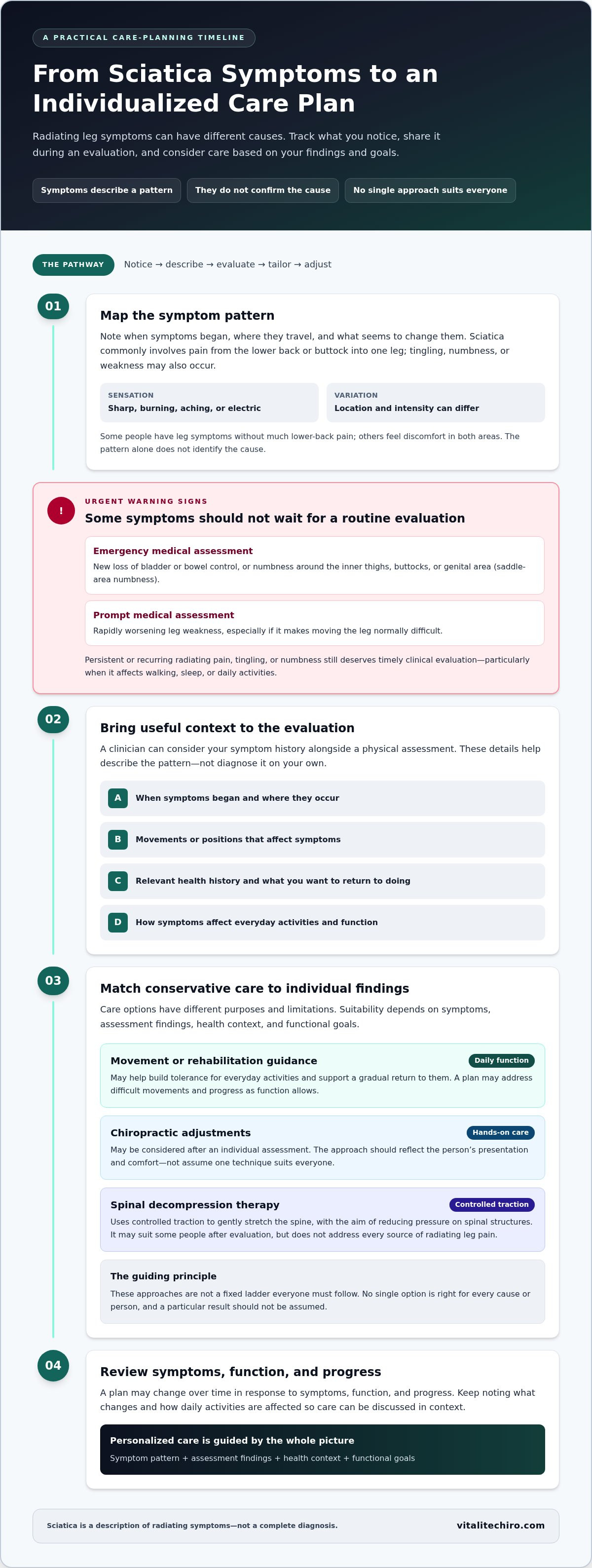
The sensation may be sharp, burning, aching, or electric, and can come with pins-and-needles or numbness. Symptoms may extend through the buttock and down part of a leg, but their location and intensity vary. Some people notice leg symptoms without much lower-back pain; others feel discomfort in both areas. When preparing for an evaluation, note where symptoms travel and what seems to change them. This information can help inform sciatica treatment planning.
Although sciatica often affects one leg, no single symptom pattern confirms its cause. Similar discomfort can have different explanations, so avoid diagnosing yourself based on a sensation, posture, or online checklist. A clinician can consider your symptom history alongside a physical assessment.
When should sciatica symptoms receive urgent attention?
Seek emergency medical assessment for new loss of bladder or bowel control, or numbness around the inner thighs, buttocks, or genital area, sometimes called saddle-area numbness. These can signal serious nerve compression and shouldn’t wait for a routine appointment.
Rapidly worsening leg weakness needs prompt medical assessment. Don’t delay if weakness is progressing or makes it difficult to move the leg normally. Persistent or recurring radiating pain, tingling, or numbness without these emergency signs still deserves timely clinical evaluation, especially if it affects walking, sleep, or daily activities.
Keep track of when symptoms began, where they occur, and whether they’re changing. These details help describe the symptom pattern and guide a discussion about appropriate next steps.
How Sciatica Treatment Options Address Different Causes and Symptoms
A useful care plan starts with the person, not a standard treatment sequence. An evaluation considers your symptom pattern, the movements or positions that affect it, relevant health history, and what you want to return to doing. These details help a clinician consider possible causes and which approaches may be suitable. The Mayo Clinic’s overview of sciatica symptoms and causes also explains why radiating leg symptoms can have different underlying explanations.
Conservative care may include movement guidance, hands-on approaches, or other therapies, selected according to individual findings. These options aren’t a fixed ladder everyone must follow, and no single approach is right for every cause or person. A plan may change over time in response to symptoms, function, and progress.
What role can spinal decompression therapy play?
Spinal decompression therapy uses controlled traction to gently stretch the spine, with the aim of reducing pressure on spinal structures. It may be considered for some people after an evaluation, but it doesn’t address every source of radiating leg pain. Whether it’s suitable depends on symptoms, assessment findings, and health context. Learn more in this guide to spinal decompression therapy.
How can adjustments and rehabilitation support a care plan?
Chiropractic adjustments are a hands-on option that may be considered based on an individual assessment. The approach should reflect the person’s presentation and comfort, rather than assume the same technique suits everyone. For more background on approaches and safety considerations, read the guide to professional chiropractic adjustments.
Movement or rehabilitation guidance can complement hands-on care by helping a person build tolerance for everyday activities and return to them gradually. For example, a plan might address movements that feel difficult, then progress as function allows. The aim is practical support, such as walking more comfortably or managing routine tasks, without promising a particular result.
At Vitalité Chiropractic in Arlington, decompression therapy and chiropractic adjustments are considered as part of an individual evaluation, alongside rehabilitation-oriented care. Explore individualized chiropractic care in Arlington to discuss how your symptoms and goals may shape a plan.
Sciatica Treatment Comparison: Decompression, Adjustments, and Other Care
The most appropriate sciatica treatment depends on the suspected cause, assessment findings, and how symptoms affect your life. No single option is best for everyone. This comparison outlines the general roles and limits of common conservative approaches. Suitability depends on health history, symptom behavior, examination findings, and functional goals.
| Approach | General purpose | Factors affecting suitability | Important limitations |
|---|---|---|---|
| Decompression therapy | Uses controlled traction intended to gently stretch the spine and reduce pressure on spinal structures. | Symptoms, evaluation findings, health context, and response to care. | Doesn’t address every cause of radiating pain or guarantee relief. |
| Chiropractic adjustments | A hands-on approach that may be used to address joint movement and function. | Assessment findings, comfort, health history, and individual goals. | Techniques aren’t interchangeable, and adjustments aren’t suitable for every presentation. |
| Movement-based rehabilitation | Builds movement tolerance and supports a gradual return to meaningful activities. | Current function, symptom response, and which activities are limited. | Progress may need to be adapted; it isn’t a guaranteed or instant solution. |
Is decompression better than traditional chiropractic care?
They’re different approaches, not interchangeable versions of the same treatment. Decompression uses controlled traction, while adjustments involve hands-on techniques. Assessment findings, symptom response, health history, and goals all matter when considering whether either approach fits. Neither is automatically superior or appropriate for every person. The NCBI overview of evidence-based treatment options for sciatica provides broader context on care approaches.
How do conservative options compare with medical evaluation?
Conservative care planning and diagnosis are related but distinct. A clinician may recommend further medical assessment if symptoms persist, are severe or changing, or examination findings raise concern. Imaging or specialist evaluation may be considered when indicated, but sciatica doesn’t automatically require imaging, medication, injections, or surgery. New emergency warning signs require urgent attention, as described earlier.
Use the comparison as a framework for a conversation, not a menu for self-diagnosis. At Vitalité Chiropractic, care planning considers each person’s presentation and goals. Explore individualized chiropractic care to discuss options that may fit your needs.
How to Prepare for a Sciatica Evaluation and Track Your Symptoms
A few clear notes can make it easier to explain what you’re experiencing and support a useful discussion about next steps. You don’t need to identify the cause yourself. Focus on what you’ve noticed and how it affects your day.
What information helps explain your sciatica symptoms?
Before your appointment, jot down the details you can recall. Use this checklist as a guide:
- When symptoms began: Note when you first noticed them and whether they started suddenly or developed over time.
- Where they travel: Describe the areas affected, such as the lower back, buttock, or leg, and whether the location has changed.
- What affects them: Record activities or positions that seem to ease or aggravate symptoms. These observations offer context, but they don’t establish a diagnosis.
- How symptoms have changed: Mention any new or increasing pain, weakness, tingling, or numbness. Share changes promptly, especially if weakness is progressing.
- Relevant health details: Bring a list of medications, prior diagnoses, and relevant health history.
- Impact on daily life: Note whether symptoms affect sleep, work, walking, exercise, or routine tasks. Specific examples help clarify your goals.
What can an individualized assessment help determine?
An evaluation may include a review of your health history and a physical assessment. Depending on your presentation, the clinician may consider movement, strength, sensation, and how symptoms respond to particular activities. Findings help guide appropriate next steps, but no single observation should be treated as a complete diagnosis on its own.
Additional medical evaluation may be considered when symptoms, health history, or examination findings warrant it. This doesn’t mean everyone needs imaging or the same referral. The aim is to make decisions that fit the individual rather than follow a preset path.
Use the visit to discuss what you hope to do more comfortably, which approaches may suit your situation, and any questions about comfort or potential risks. A thoughtful plan should respond to your needs and may be adjusted as your symptoms and function change. This discussion connects the evaluation to practical sciatica treatment choices without assuming a particular outcome.
Ready to talk through your symptoms and goals? Schedule an individualized chiropractic evaluation with Vitalité Chiropractic in Arlington.
Sciatica Treatment in Arlington, VA: Find a Personalized Next Step
Finding a path forward starts with three steps: describe your symptoms, recognize warning signs, and use an individualized evaluation to guide care. The goal isn’t to match yourself to a treatment based on one symptom. It’s to understand your situation and discuss options that fit your health history, comfort, and everyday priorities.
What does person-centered sciatica care look like?
At Vitalité Chiropractic in Arlington, Dr. W. Jean-Luc Sansfaute brings experience practicing since 2003 to a care process centered on each person’s needs. That means listening to your symptom history, the activities you want to return to, and your questions before discussing possible next steps.
Depending on an individual assessment, care may include chiropractic adjustments, decompression therapy, or rehabilitation-oriented support. These approaches aren’t universal remedies. Their suitability and progression depend on your presentation and response, with the plan shaped around your goals and comfort. Vitalité Chiropractic also offers multilingual support, helping patients communicate their concerns and preferences.
How can Arlington patients take the next step?
To prepare for a conversation, bring notes about when symptoms began, where they travel, what affects them, and how they influence daily life. Share relevant health history, medications, prior diagnoses, and any changes in strength or sensation. An evaluation can help inform appropriate care options, but it can’t promise a specific diagnosis or outcome in advance.
Online scheduling and same-day appointments are available at Vitalité Chiropractic. You can also call the clinic at (703) 879-5144 to arrange an appointment. A visit is an opportunity to review your symptoms and goals and consider whether chiropractic adjustments, decompression therapy, or rehabilitation-oriented care may suit your needs.
New loss of bladder or bowel control, numbness in the saddle area, or rapidly worsening leg weakness calls for emergency assessment, not a routine appointment. For other symptoms, a personalized discussion can help you make a more informed decision about sciatica treatment.
Schedule an appointment with Vitalité Chiropractic to discuss your symptoms and possible next steps.
Take the Next Step Toward a Personalized Care Plan
Choosing a path forward starts with understanding your symptoms, recognizing when they need urgent attention, and discussing options in light of an individualized evaluation. Decompression therapy, chiropractic adjustments, and rehabilitation may each have a role, but no single approach is right for everyone. A thoughtful sciatica treatment plan considers your health history, symptom response, and the activities you want to return to.
At Vitalité Chiropractic in Arlington, Dr. W. Jean-Luc Sansfaute brings experience practicing since 2003. Care may include adjustments, decompression therapy, and rehabilitation-oriented support, tailored to individual assessment and goals. Online scheduling and same-day appointments are available.
If radiating pain, tingling, or numbness is affecting your daily life, a conversation about your symptoms and priorities can help clarify a practical next step. Schedule an appointment with Vitalité Chiropractic to discuss your options with a team focused on your individual needs.
Frequently Asked Questions
What is the most effective treatment for sciatica?
The most appropriate treatment depends on what’s causing the symptoms, your assessment findings, health history, and daily goals. There isn’t one option that works best for everyone. A care plan may consider conservative approaches such as guided movement, chiropractic adjustments, or decompression therapy when appropriate. An individualized evaluation helps determine which options fit your situation and whether additional medical assessment should be considered.
Can a chiropractor help with sciatica?
A chiropractor may consider hands-on care, including adjustments, as one part of an individualized plan for sciatica symptoms. Suitability depends on your symptoms, health history, and assessment findings, and care should be adapted to your response and comfort. Chiropractic care doesn’t establish the cause by itself or guarantee relief. Share changes in strength or sensation and discuss whether further medical assessment is appropriate.
Is spinal decompression therapy effective for sciatica?
Spinal decompression therapy may be considered for some people, but it isn’t appropriate for every cause or presentation of sciatica, and results aren’t guaranteed. It uses controlled traction intended to gently stretch the spine. Whether it belongs in a care plan depends on an individual evaluation, symptoms, health context, and goals. Discuss its potential role and limitations with a clinician before deciding if it suits your needs.
How long does sciatica take to improve with treatment?
Improvement varies with the cause, symptom severity, health factors, and care plan. Some acute episodes improve over several weeks, while symptoms can persist longer for others. There’s no reliable timeline that applies to everyone. Track changes in pain, sensation, strength, and daily function, and discuss symptoms that worsen or aren’t improving as expected during follow-up. Seek urgent assessment for emergency warning signs.
Can sciatica go away without treatment?
Some episodes of sciatica improve over time without a specific intervention, but the course varies, and symptoms may persist or return. Pay attention to changes in strength, sensation, and everyday function. You can seek an evaluation to discuss your symptoms and appropriate next steps, especially if pain limits your routine or is getting worse. Don’t wait if urgent warning signs appear.
When should I seek urgent care for sciatica?
Seek emergency assessment for new loss of bladder or bowel control or numbness around the saddle area, including the inner thighs or genital region. These symptoms can indicate serious nerve involvement. Rapidly worsening leg weakness also needs prompt medical assessment. Don’t wait for a routine appointment if these warning signs occur. Persistent or changing symptoms without emergency signs still merit timely clinical evaluation, particularly when daily activities are affected.
Where can I get sciatica treatment in Arlington, Virginia?
Vitalité Chiropractic in Arlington offers chiropractic adjustments, decompression therapy, and rehabilitation-oriented care based on individual assessment. The practice is led by Dr. W. Jean-Luc Sansfaute, who has practiced since 2003. Patients can schedule online or call (703) 879-5144. Same-day appointments are available. An appointment is an opportunity to discuss your symptoms and goals, not a promise of a particular diagnosis or outcome.


