
Does a 40-visit chiropractic plan fit your needs, or would another clinician’s review help you understand the recommendation? Seeking a second opinion for chiropractic plan Arlington patients can use to clarify their options isn’t a sign of distrust. It’s a practical way to get answers, especially if progress has stalled, appointments feel rushed, or you’re unsure what diagnosis your care is addressing.
Your treatment should make sense to you. You deserve an explanation of the assessment, the purpose of each recommended service, and how your progress will be evaluated. You should be able to get those answers before deciding whether to commit to a lengthy course of care.
This guide covers when to seek another clinical perspective, which records and questions can make a review more useful, and how to assess whether a proposed plan is clear and individualized. At Vitalité Chiropractic in Arlington, Dr. W. Jean-Luc Sansfaute brings more than 20 years of experience to complex cases, with expertise in chiropractic adjustments, sports injury care, and decompression therapy. A careful review can help you understand your choices and make a more informed decision about your next step.
Key Takeaways
- A plateau after 6–10 sessions can be a reasonable point to review your plan and consider another clinical perspective.
- Look for a treatment strategy with clear goals, a way to track your response, and consideration of more than short-term symptom relief.
- Chiropractic techniques and therapeutic modalities serve different purposes. The right approach depends on an individualized assessment.
- A second opinion for chiropractic plan Arlington patients seek is more useful when they bring relevant records, imaging, and questions about diagnosis and progress.
- Learn what to expect from a clinical review at Vitalité Chiropractic, including how experience and inclusive care can inform a fresh perspective.
When Should You Seek a Second Opinion for Your Chiropractic Plan?
A second opinion is a review of your diagnosis and proposed treatment strategy by a chiropractor who wasn’t responsible for your original assessment. It differs from a follow-up appointment with the same clinician, which may simply revisit your findings or progress. If you searched for a second opinion for chiropractic plan Arlington, you may want an independent perspective on whether the diagnosis and recommendations fit your symptoms, history, and goals.
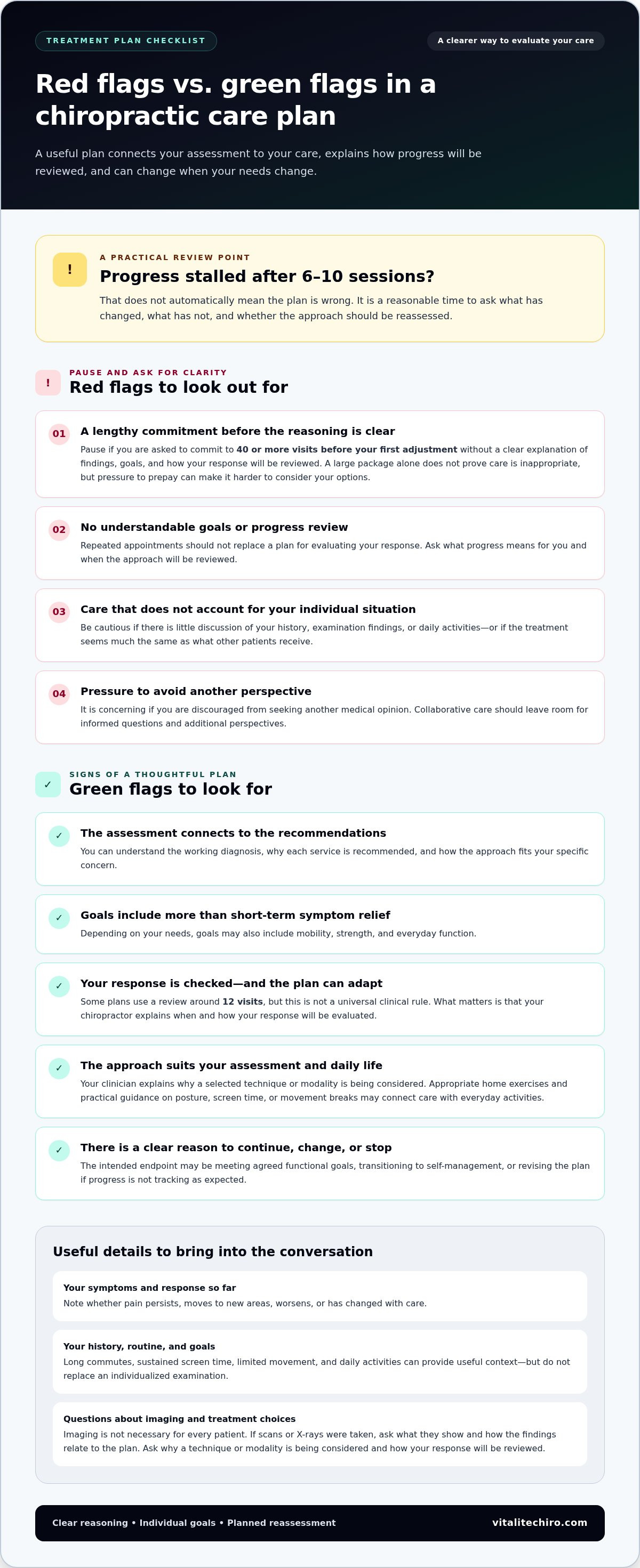
Consider a review if progress has stalled. If your symptoms haven’t improved after 6–10 sessions, that doesn’t automatically mean the plan is wrong. It is a reasonable point to ask what has changed, what hasn’t, and whether the approach should be reassessed. A plan should include understandable goals and a way to evaluate your response, not just a recurring appointment schedule.
Common Triggers for a Treatment Review
You should be able to explain what the assessment found and why each part of your care was recommended. Imaging isn’t necessary for every patient. If scans or X-rays were taken, ask for a clear explanation of what they show and how the findings relate to the plan.
Other reasons to pause and seek another perspective include:
- Your pain persists, moves to new areas, or worsens despite regular adjustments.
- The treatment seems the same as what other patients receive, with little discussion of your history, exam findings, or daily activities.
- You feel pressured to prepay for a lengthy course of care before the diagnosis, goals, and reassessment process are clear.
Daily routines in Arlington can place real demands on the body. Long Northern Virginia commutes may involve hours of sitting, while demanding government or technology work can mean sustained screen time and limited movement. Share these details with your clinician as useful context, while keeping in mind that they don’t replace an individualized examination.
The Clinical Value of a Fresh Perspective
A different chiropractor can review your history, movement, and previous findings to consider whether factors such as mobility, posture, or movement patterns may be contributing to your symptoms. A new assessment can also help clarify whether the treatment approach fits your specific concern. Manual techniques such as Diversified and instrument-assisted approaches such as Activator aren’t interchangeable. The choice should reflect the clinician’s assessment and your needs. For general background on the profession and its techniques, see this overview of Chiropractic.
Clear reasoning matters. You should understand the working diagnosis, the purpose of recommended treatment, and how progress will be reviewed. At Vitalité Chiropractic in Arlington, a fresh perspective can include consideration of chiropractic adjustments and, when appropriate, specialized options such as decompression therapy. A second opinion is a practical way to review your options, not a rejection of the care you’ve already received.
Red Flags vs. Green Flags: Evaluating Your Current Treatment Strategy
A useful treatment plan should do more than schedule repeated adjustments. It should connect the assessment to your care, explain how progress will be evaluated, and allow for changes if your needs shift. Symptom relief may be one goal, while mobility, strength, and everyday function may also matter. The key is whether the reasoning is clear and specific to you.
Therapeutic modalities may be used alongside chiropractic adjustments. For example, a clinician may consider spinal decompression therapy for certain disc-related concerns, based on an individual assessment. Rehabilitation exercises and practical guidance can also connect in-office care with the movements and activities that matter in daily life. No single modality suits everyone, so ask why it’s being considered and how your response will be reviewed.
Red Flags in a Chiropractic Care Plan
Pause if you’re asked to commit to 40 or more visits before your first adjustment without a clear explanation of the findings, goals, and review process. A large visit package doesn’t by itself show that care is inappropriate, but pressure to prepay can make it harder to consider whether the plan fits your circumstances.
Look for planned reassessment points. Some plans use a review around 12 visits, but that isn’t a universal clinical rule. What matters is that your chiropractor explains when and how your response will be evaluated. It’s also concerning if you’re discouraged from seeking another medical opinion. Collaborative care should leave room for informed questions and additional perspectives.
Ask what the intended endpoint is. It might involve meeting agreed functional goals, transitioning to self-management, or revising the plan if progress isn’t tracking as expected. Care should have a clear reason to continue, change, or end.
Green Flags of an Expert Plan
Look for recommendations that extend beyond passive treatment. For Arlington’s desk-heavy workforce, that may include appropriate home exercises and ergonomic suggestions about screen time, posture, or movement breaks. The plan should also explain the selected technique. If Diversified manual adjustments are recommended, you should understand why they fit your assessment and how your response will be monitored.
A person-centered practice gives you time to discuss your goals rather than moving you through a one-size-fits-all sequence. A high-volume setting isn’t automatically poor care, but attentive communication, meaningful reassessment, and individualized recommendations are valuable signs. The American Chiropractic Association’s Choosing a Doctor of Chiropractic resource offers additional guidance on evaluating a chiropractor and preparing questions.
If you’re weighing a plan or want a fresh clinical perspective, explore second-opinion care at Vitalité Chiropractic in Arlington, where recommendations can be considered alongside your goals and needs.
Comparing Specialized Chiropractic Techniques: Beyond the Standard Adjustment
The audible “crack” during an adjustment doesn’t tell you which technique was used or whether it fits your needs. Chiropractors use different approaches based on the examination, symptoms, and treatment goals. A manual adjustment, an instrument-assisted technique, decompression therapy, and orthotics serve different purposes. A second opinion for chiropractic plan Arlington patients seek can clarify why a particular method is recommended and how the clinician will assess progress.
Diversified is a well-established manual technique, but no single method is the gold standard for every person or condition. A clinician should explain the reasoning behind the approach and discuss alternatives when appropriate. For a balanced overview of chiropractic care, see Harvard Medical School on chiropractic care.
The Diversified Technique: Clinical Precision
Diversified adjustments use a controlled, hands-on thrust directed at a specific spinal joint. The quick movement may produce joint cavitation, sometimes heard as a popping sound. That sound doesn’t measure treatment success. The clinical purpose is to address restricted joint motion when appropriate to the patient’s findings. Applying the technique calls for sound assessment and practiced control. Dr. W. Jean-Luc Sansfaute has practiced since 2003 and brings more than 20 years of experience to individualized chiropractic care at Vitalité Chiropractic in Arlington.
When Adjustments Aren’t Enough: Decompression and Orthotics
If standard adjustments alone aren’t meeting a patient’s needs, a chiropractor may consider other options. Non-surgical spinal decompression uses a specialized form of traction intended to reduce pressure on spinal structures. Following a clinical evaluation, it may be considered for some disc-related concerns, including herniated or bulging discs. Learn more about spinal decompression therapy and how it may fit into a broader care plan.
Sports injury care differs from general wellness-focused care because it takes account of the injury, the movements an athlete needs to perform, and the demands of returning to activity. A sports performance chiropractic care plan may combine adjustments with other therapeutic approaches tailored to function.
Foot mechanics can influence how forces travel through the legs and into the lower back. When an assessment indicates a need, custom orthotics may support foot alignment as part of a broader plan. Vitalité Chiropractic’s custom orthotics guide explains this foundation-focused approach.
These methods can complement one another, but they aren’t automatic add-ons. At Vitalité Chiropractic, recommendations should connect to your individual assessment and goals. Explore care at Vitalité Chiropractic in Arlington for a fresh perspective on how different techniques may fit your needs.
The Step-by-Step Process for a Clinical Second Opinion in Arlington
A useful second-opinion consultation is a focused review by a different chiropractor, not simply a follow-up visit with your current provider. The appointment should leave time to discuss your history, review relevant records, and explain what the findings mean. You shouldn’t feel rushed into a new treatment plan or pressured to begin care before your questions are answered.
Preparing for Your Consultation
Start by requesting copies of your records and any imaging from your current provider. Ask how to receive the documents and whether imaging can be shared in its original format for review. Bring the information you have, even if some records are still on the way.
- Previous imaging and reports, along with your current treatment schedule.
- A list of medications and supplements, including how often you take them.
- A brief timeline of your pain: when it began, what changes it, where symptoms travel, and how they’ve responded to treatment.
Describe the plan neutrally. Explain what was recommended and what you’ve experienced without feeling that you must defend or criticize the original provider. Questions such as “Why might my progress have stalled?” and “Are there less frequent options that could fit my goals?” can lead to a practical discussion.
The Evaluation and Re-Diagnosis
A second clinician may review your records, ask about your symptoms and daily activities, and perform a physical examination based on your presentation. This may include orthopedic or neurological tests to assess movement, strength, sensation, or reflexes. The evaluation should be guided by your history and findings, rather than a fixed checklist.
A whole-person assessment considers more than the location of pain. Sleep, work demands, activity, and other relevant health factors can provide useful context. Learn more about a holistic chiropractor in Arlington, VA and how a broader perspective can inform care.
After the evaluation, the chiropractor should explain their findings and how they compare with the original diagnosis. This discussion, sometimes called a report of findings, should clarify areas of agreement, any differences, and the reasoning behind recommended next steps. Take time to consider the information. A professional second look supports informed choice, not an obligation to switch providers or start another plan.
For a thoughtful review of your diagnosis and treatment recommendations, schedule a second-opinion consultation with Vitalité Chiropractic in Arlington.
Vitalité Chiropractic: A Fresh Perspective on Your Spinal Health Goals
A second opinion should offer more than another treatment recommendation. It should help you understand how your diagnosis, daily demands, and personal goals fit together. At Vitalité Chiropractic in Arlington, Dr. W. Jean-Luc Sansfaute brings more than 20 years of chiropractic experience, practicing since 2003, to complex cases and individualized care planning.
If you’re considering a second opinion for chiropractic plan Arlington care, you deserve a setting where your concerns are heard and recommendations are explained without pressure. Vitalité Chiropractic emphasizes respectful communication, individualized assessment, and care choices based on your needs rather than a one-size-fits-all schedule.
Expertise You Can Trust
Dr. Sansfaute’s experience informs his work with a range of concerns, including sports-related injuries and prenatal chiropractic care. A second opinion can be useful when symptoms persist or a standard adjustment plan hasn’t addressed your concerns. The assessment may consider whether chiropractic adjustments, decompression therapy, or other appropriate therapeutic modalities fit the findings. No technique or timeline can guarantee a particular result, so recommendations should explain their purpose and how your response will be reviewed.
Care can address immediate priorities as well as longer-term function. Discuss what you hope to do more comfortably, what the current evaluation suggests, and how a plan may change as your needs evolve. Read more about Vitalité Chiropractic’s approach to individualized chiropractic care.
A Supportive and Inclusive Environment
Feeling respected and at ease can make it easier to share details that matter, from how symptoms affect work and activity to what concerns you about a proposed plan. Vitalité Chiropractic welcomes LGBTQ+ patients and offers multilingual support for Arlington’s diverse community. Person-centered care also means making space for your questions and explaining recommendations clearly, so you can make informed decisions at a comfortable pace.
A second opinion isn’t a commitment to change providers or begin a new course of treatment. It’s an opportunity to hear a careful clinical perspective and understand your options. Bring your records, describe what you want to improve, and discuss openly what the findings do and don’t support. Vitalité Chiropractic can help you consider the next step with experience, clear communication, and respect for your individual goals.
Move Forward With Clarity and Confidence
A second opinion can help you understand whether your diagnosis, treatment approach, and progress measures fit your individual needs. If you’re considering a second opinion for chiropractic plan Arlington care, bring your records, note how your symptoms have changed, and ask how the proposed plan will be reviewed over time. Clear explanations and room for questions can help you make a more informed decision.
W. Jean-Luc Sansfaute brings experience practicing since 2003 to the evaluation of complex cases and personal care planning. The clinic offers inclusive, LGBTQ+ friendly and multilingual care in Arlington, Virginia. Your next step can begin with a conversation about your concerns, goals, and options, without assuming one approach suits everyone.
Schedule a second-opinion consultation at Vitalité Chiropractic today. A fresh perspective can help you understand your options and decide how to move forward.
Frequently Asked Questions
Is it rude to get a second opinion from another chiropractor?
No. Seeking an independent clinical perspective is a reasonable way to better understand your diagnosis and options, not a personal slight against your current chiropractor. You’re entitled to feel informed about your care. A second opinion for chiropractic plan Arlington patients seek can help clarify whether the assessment and recommendations align with their symptoms and goals. Share your records and ask specific questions about your treatment to make the review more useful.
Will my insurance cover a second opinion for chiropractic care?
Coverage depends on your specific insurance plan and how the consultation is billed. Before scheduling, review your benefits or contact your insurer to ask about chiropractic evaluations, referral requirements, copayments, and deductibles. A second-opinion visit may be processed differently from a routine adjustment, so don’t assume it’s covered just because your plan includes chiropractic care. Keep notes about what your insurer tells you, including any relevant billing details.
Do I have to tell my current chiropractor that I am seeking another opinion?
You generally don’t need to notify your current chiropractor before arranging an independent opinion. You can decide whether to share the results afterward, especially if you want your providers to coordinate care. For the most useful review, be open with the second chiropractor about your current diagnosis, treatment schedule, and response so far. A professional consultation should welcome your questions without requiring you to criticize or defend another provider.
How do I get my X-rays from my current chiropractic office?
Contact the office that holds the images and ask for copies of the X-rays and any written interpretation. Ask what authorization or release form is required, how images can be transferred in a format suitable for review, and whether there are administrative steps. You may also request other relevant records, such as examination findings and treatment notes. Original image files can be more useful than phone photos or printouts.
What if the second chiropractor suggests a completely different plan?
A different recommendation doesn’t automatically mean either chiropractor is wrong. Ask the second chiropractor to explain how their examination and reasoning led to a different diagnosis or approach, and which findings support the recommendation. Compare the goals, proposed techniques, reassessment points, and expected role of your participation. If you’re unsure, take time to review the explanations and records before deciding. You don’t have to agree to a new plan during the consultation.
How much does a second opinion consultation typically cost in Arlington?
There isn’t one reliable price that applies to every Arlington second-opinion visit. The amount can vary with the provider, the scope of the evaluation, imaging review, and your insurance benefits. Ask your insurer how the visit may be covered and review the expected charges before committing to care. Consider the consultation separately from any proposed treatment plan so you understand what the evaluation involves and can make a decision without pressure.
Can I switch my care to the second chiropractor immediately?
You can choose to continue care with a different chiropractor, but first make sure you understand the new assessment and proposed plan. Share relevant records and tell both providers about treatments you’re receiving so care can be coordinated and unnecessary overlap avoided. You can also take time to consider your options rather than beginning treatment immediately. A second opinion provides information to support your decision, not an obligation to switch.
What should I do if my current plan involves a non-refundable contract?
Read the agreement carefully before making changes. Look for cancellation terms, payment obligations, and any language about unused visits or refunds, and keep copies of your contract and related communications. Don’t assume that a verbal explanation changes the written terms. If you dispute a charge or aren’t sure what the agreement requires, consider getting advice from an appropriate consumer or legal resource. You can seek a clinical second opinion separately from resolving the contract.


