
What if a clinic’s inclusive label isn’t enough to tell you whether care will feel safe? For trans patients, respect shows in the details: using your name and pronouns, explaining why information is requested, and asking before touch or changes in clothing or position. If you’re searching for a “safe space chiropractor for trans patients Arlington,” it’s reasonable to want clear answers before you book.
You deserve to feel heard, not treated as a curiosity. This guide offers practical questions to help you assess communication, consent, and comfort when choosing a chiropractor in Arlington. You don’t need to share more personal information than feels relevant to discussing your care.
Vitalité Chiropractic is one local option to evaluate. The practice describes its services as inclusive of the LGBTQ+ community, but that alone can’t guarantee it’s the right fit for you. Use the questions ahead to learn how a provider approaches your concerns and whether the proposed care feels compatible with your boundaries.
Key Takeaways
- Look beyond an inclusive label: notice how a clinic communicates about your identity, privacy, and choices.
- Ask how the chiropractor explains hands-on care and responds if you want to pause, decline, or ask questions.
- Compare providers using direct answers, and distinguish confirmed information from assumptions.
- Before booking a safe space chiropractor for trans patients Arlington, identify your priorities and ask how the clinic can address them.
- Vitalité Chiropractic serves Arlington and describes its services as inclusive of the LGBTQ+ community. Ask questions to assess whether its approach feels right for you.
What Can a Safe-Space Chiropractor in Arlington Mean for Trans Patients?
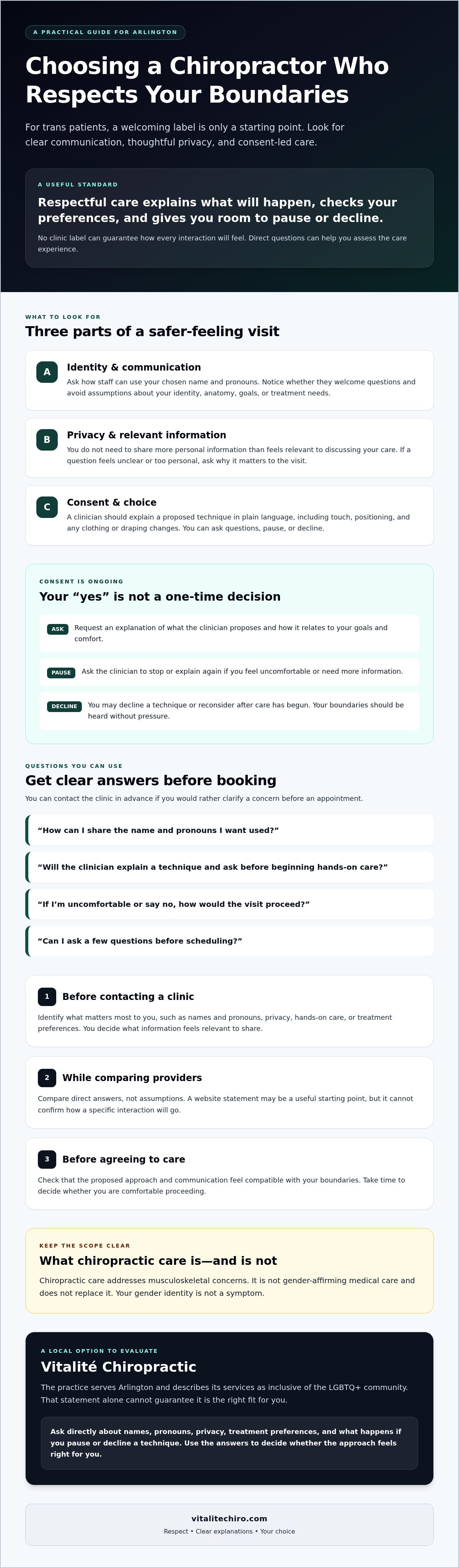
A safe-feeling chiropractic visit isn’t defined by a label or a promise. It’s an experience where you’re addressed respectfully, receive clear explanations, have your privacy treated thoughtfully, and can make informed choices about care. A useful standard is respectful, consent-led care that explains what will happen, checks your preferences, and gives you room to pause or decline. No clinic label can guarantee how every interaction will feel.
An inclusive statement on a clinic’s website can be a useful starting point. Direct conversations can tell you more. Do staff ask how you’d like to be addressed? Can they explain what information they need and why? Are they willing to discuss your boundaries before treatment? These questions help you assess the actual care experience rather than rely on assumptions.
Chiropractic care addresses musculoskeletal concerns; it isn’t gender-affirming medical care and doesn’t replace it. For a broader overview of care needs and terminology, see Transgender health care. Your gender identity isn’t a symptom, and it shouldn’t lead a provider to assume your anatomy, goals, or treatment needs.
What respectful communication can look like
Respect can begin with asking for and using your name and pronouns. If a form or conversation includes a personal question, you can ask why it’s relevant to your visit. Share information you consider pertinent to your health concerns and the care being discussed. If a question feels unclear or too personal, ask how it relates to the appointment before answering. You deserve an explanation, not pressure to educate a provider about your identity.
Why local fit matters when choosing Arlington care
A nearby clinic may be practical, but location alone doesn’t establish inclusive practices. Consider whether getting to the office and arranging appointments works for you, whether you want to communicate in a particular language, and how comfortable you feel contacting the clinic with questions. Ask directly about names, pronouns, privacy, and treatment preferences. Confirm details rather than inferring them from a website.
If you’re evaluating a safe space chiropractor for trans patients Arlington, look for a provider who welcomes questions and discusses your preferences without making assumptions. The right fit is personal. Take time to decide whether the communication and proposed approach feel comfortable before agreeing to care.
Will a Chiropractor Respect Your Identity and Consent During Care?
You can ask questions and discuss boundaries before agreeing to chiropractic care. A provider should be able to explain a proposed technique in plain language, including where they would place their hands, what position you may need to take, and whether clothing or draping needs to change. The discussion should connect the option to your goals and comfort, not rely on assumptions about your body or identity.
Ask for an explanation of any procedure before deciding whether to consent. Consent is an ongoing conversation, not a one-time yes at the start of an appointment. You can ask the clinician to pause, request another explanation, decline a technique, or reconsider after care has begun. A provider may discuss other options, but your questions and boundaries should be heard without pressure.
UCSF’s guidance on creating a safe and welcoming clinic environment offers useful context for considering how communication and the setting can affect a patient’s experience. Still, a written policy or inclusive phrase can’t tell you exactly how an individual interaction will go. Ask the clinic directly and use its response to decide what feels right for you.
Questions to ask before scheduling
Contact the clinic before booking if you want to clarify how staff handle chosen names and pronouns or how the chiropractor explains hands-on care. Ask what happens if you decline a proposed technique or need the clinician to stop. If you’d prefer not to discuss sensitive concerns during the appointment, ask whether a brief call or message can help clarify them in advance. Verify the answers with the clinic rather than assuming a website statement covers your specific question.
- “How can I share the name and pronouns I want used?”
- “Will the clinician explain a technique and ask before beginning hands-on care?”
- “If I’m uncomfortable or say no, how would the visit proceed?”
- “Can I ask a few questions before scheduling?”
Signs that a conversation feels patient-centered
Notice whether the person listens, answers without judgment, and leaves room for follow-up questions. Plain-language explanations help you understand what’s being proposed and make a choice without feeling rushed. Pay attention to how the clinic responds when you state a boundary.
Dismissive replies, pressure to proceed, or reluctance to explain a technique are worth considering before you book or continue. A website phrase or policy you haven’t discussed can’t establish whether a clinic will feel right for you. If you’re considering a local option, you can contact Vitalité Chiropractic to ask how it approaches communication and consent, then decide whether its answers meet your needs.
How Can You Compare Chiropractors for Trans-Inclusive Care in Arlington?
Comparing clinics is easier when you separate what’s confirmed from what you still need to ask. A website may describe a practice as LGBTQ+ inclusive, but that phrase alone doesn’t tell you how staff handle names and pronouns, explain treatment, or respond to a request to pause. When looking for a safe space chiropractor for trans patients Arlington, weigh direct answers and your own comfort rather than relying on a label or a universal score.
A practical checklist for evaluating a local provider
Use the table to keep details clear. Note what the clinic states publicly, what you confirm directly, and how important each point is to you. Practical fit matters too: check the location, how to arrange an appointment, and whether language options meet your needs. Confirm details such as accessibility or other accommodations directly instead of inferring them from an online description.
| What to compare | What to verify | Your priority |
|---|---|---|
| Communication | How the clinic handles names, pronouns, and questions about requested information | What helps you feel acknowledged? |
| Consent | How the clinician explains hands-on care and responds if you ask to pause or decline | What boundaries do you want respected? |
| Practical access | Appointment details, location, language options, and any accommodations you need | What makes attending workable? |
| First-visit expectations | What the appointment generally involves and how treatment options are discussed | What would help you feel prepared? |
Mark each item as “confirmed,” “needs follow-up,” or “not a fit.” A public statement tells you what a clinic says about itself; it doesn’t confirm a specific intake option, privacy procedure, or consent process. If you’re exploring how a broader chiropractic philosophy may relate to your priorities, read about a whole-body approach to chiropractic care in Arlington.
Questions that can clarify whether the fit feels right
Ask, “What does a first appointment generally involve?” and “How are treatment options explained before hands-on care?” You can also ask, “How can I signal discomfort or request a pause?” Notice whether the answers are direct, understandable, and responsive to your question. If you need a particular language or accommodation, ask whether it’s available rather than assuming.
Your priorities may differ from another patient’s. You may place the greatest weight on communication before booking, or focus on how the clinician explains touch and positioning. Compare each clinic against your own boundaries and practical needs. The goal isn’t to award a perfect score, but to choose an option whose answers give you enough clarity to decide your next step.
How Can You Prepare for a First Chiropractic Visit on Your Terms?
A little preparation can help keep the focus on your health goals and the communication that helps you feel comfortable. You don’t need to plan every detail. Start with what you want the clinician to understand, then take the visit one step at a time: identify your priorities, ask questions, discuss comfort, and decide whether to proceed.
Before the appointment: share only what is relevant to your care
Consider writing down your symptoms, what you hope to address, and any communication preferences you want to share. You might note the name and pronouns you’d like used, or concerns about touch, clothing, or changing position. These are prompts for discussion, not details you’re required to disclose in advance. Intake forms can vary, so contact the clinic if you have questions about what it requests or how information is used.
If a health question feels unclear, ask, “How is this information relevant to the care we’re discussing?” That can help you understand what the clinician needs to know without feeling pressured to share details that don’t seem connected to your visit.
During the visit: keep choices and communication clear
Before an assessment or treatment step, ask what it involves, what part of your body it relates to, and what position or clothing changes may be requested. You can ask for an explanation before deciding. A clinician can discuss possible options in light of your concerns and preferences, but the proposed approach should follow an individualized conversation rather than assumptions.
You can tell the clinician how you’ll signal discomfort, such as saying “pause” or raising a hand. If a step doesn’t feel right, ask to stop, request more information, or decline it. You don’t have to agree to every proposed part of a visit in order to ask questions or consider your options.
For broader background on adjustment techniques and safety considerations, explore this complete guide to chiropractic adjustments. It can help you identify topics to discuss, though your clinician is best placed to explain whether a particular approach may be appropriate for your circumstances.
Preparing this way can make it easier to assess whether a safe space chiropractor for trans patients Arlington understands your priorities and communicates in a way that works for you. If you’re considering Vitalité Chiropractic, contact the clinic with questions before booking so you can discuss communication and treatment preferences directly.
Considering Vitalité Chiropractic for Trans-Inclusive Care in Arlington?
Vitalité Chiropractic serves Arlington, Virginia, and describes its services as inclusive of the LGBTQ+ community. The practice is owned and operated by Dr. W. Jean-Luc Sansfaute, who has practiced since 2003. These details may help you decide whether to learn more, but they don’t establish transgender-specific credentials or guarantee that every patient will feel comfortable. Your questions and the clinic’s direct answers can help you assess the fit.
What to confirm with the clinic before booking
Contact the office to ask about the details that matter to you. For example, ask how staff handle names and pronouns, what privacy practices apply to your information, and how you can share communication preferences. If language support affects your comfort, confirm which options are currently available. You can also ask about appointment logistics and any accommodation you may need. Don’t assume a process or feature is in place unless the clinic confirms it.
Keep your questions specific and focused on your needs:
- “How can I let the clinic know the name and pronouns I use?”
- “Who can I speak with about privacy or communication preferences?”
- “What should I expect when discussing treatment options and consent?”
- “Can you confirm the appointment details and language options available?”
Vitalité offers chiropractic adjustments, decompression therapy, sports injury care, prenatal chiropractic care, orthotics, and therapeutic modalities. Which, if any, may be relevant depends on your concerns and a discussion with the clinician. For additional background on chiropractic services, see this chiropractic care and treatment guide.
Choose a next step that feels comfortable
You don’t have to decide before you have the information you need. Vitalité lists online scheduling and calling the office as ways to connect. Use either route to raise questions about communication, consent, and your concerns, then consider whether the answers feel clear and respectful before scheduling. If they don’t address what matters to you, it’s reasonable to seek clarification or consider another provider.
If you’re looking for a safe space chiropractor for trans patients Arlington, treat Vitalité as one local option to evaluate, not an automatic fit. Contact Vitalité Chiropractic with your questions and decide whether its approach aligns with your preferences.
Choose Care That Respects Your Boundaries
A clinic’s inclusive language can be a helpful starting point, but your questions and conversations offer a clearer sense of fit. Before agreeing to care, ask how the clinician explains proposed techniques, respects your communication preferences, and responds if you want to pause or decline. Your comfort and consent matter throughout the visit.
If you’re considering a safe space chiropractor for trans patients Arlington, Vitalité Chiropractic is one local option to evaluate. The practice serves Arlington, Virginia, and describes its services as inclusive of the LGBTQ+ community. Dr. W. Jean-Luc Sansfaute has practiced since 2003. Vitalité also offers multilingual support, so confirm current language availability directly if that would help you communicate comfortably.
You can take the next step at your own pace. Contact Vitalité Chiropractic to discuss your questions and appointment options, including communication, consent, and your individual concerns. You deserve the time and information to choose care that feels right for you.
Frequently Asked Questions
Can I ask a chiropractor to use my chosen name and pronouns?
Yes, you can tell the clinic and chiropractor which name and pronouns you’d like them to use. You might share this when contacting the office or at the start of your visit. Ask how the clinic can note your preferences, since intake forms and procedures differ. If someone uses the wrong name or pronouns, you can correct them and explain what you prefer for the rest of your care.
What should I ask an Arlington chiropractor before booking as a trans patient?
Ask how the clinic handles names, pronouns, and communication preferences, and what a first appointment generally involves. You can also ask how the chiropractor explains hands-on techniques, checks comfort, and responds if you decline or request a pause. If language options, appointment logistics, or an accommodation matter to you, confirm those details directly. Clear, relevant answers can help you decide whether to schedule.
Can I decline or pause a chiropractic adjustment during an appointment?
Yes. You can ask the chiropractor to pause, explain a step again, or stop a proposed adjustment. Before hands-on care, ask what the technique involves and how it relates to your concerns. If you feel uncomfortable at any point, say so. You can decline a proposed technique and discuss whether another option is appropriate. Treatment choices should follow an individualized conversation, not pressure to proceed.
How can I tell whether a chiropractor is LGBTQ+ inclusive?
Start by reviewing the clinic’s public statements, but treat inclusive language as a starting point rather than proof of how every interaction will go. Ask directly how staff approach names and pronouns, privacy questions, and consent during hands-on care. Notice whether answers are respectful, specific, and open to follow-up. As you look for a safe space chiropractor for trans patients Arlington, weigh confirmed information against your comfort and priorities.
Is chiropractic care gender-affirming medical care?
No. Chiropractic care and gender-affirming medical care are distinct. Chiropractic services may address musculoskeletal concerns, while gender-affirming care refers to care related to a person’s gender identity and needs. A chiropractor should not present chiropractic treatment as a substitute for gender-affirming medical care. If you’re unsure whether a proposed chiropractic service fits your health concerns, ask the provider to explain its purpose and discuss appropriate next steps.
What information do I need to share on a chiropractic intake form?
Answer questions that are relevant to discussing your health concerns and potential chiropractic care. Forms can vary, so if a question feels unclear or personal, ask the clinic why the information is requested and how it relates to your visit. Don’t assume a form includes fields for chosen names or pronouns, or offers particular privacy options. Contact the office before completing it if you want to ask what to expect.
Can I contact Vitalité Chiropractic before scheduling to discuss my concerns?
Yes. Vitalité Chiropractic serves Arlington, Virginia, and patients can contact the practice by phone or use online scheduling. You can ask about communication preferences, consent, appointment details, or current language support before deciding whether to book. Vitalité describes its services as inclusive of the LGBTQ+ community, but direct answers can help you assess your fit. Confirm details that are important to your comfort with the clinic.


