
Back pain care may combine conservative treatment, medication, therapeutic approaches, and, for some persistent problems, injections. A Rosslyn VA back pain specialist can assess what may be contributing to your symptoms and help identify an approach suited to your needs. The right path depends on the cause of the pain and how it affects your daily function.
It’s understandable to want relief while staying focused on the activities and routines you hope to return to. This article explains common care options and what a professional evaluation may involve, including considerations for herniated discs and sciatica.
You’ll also learn how back pain care can support movement and function, and when symptoms that persist despite home care may call for professional attention. The aim is to clarify your options and how care may be tailored to your situation.
Key Takeaways
- Explore how non-medication approaches and daily habit changes may fit into a back pain care plan.
- Learn why symptoms linked to a herniated disc or sciatica call for an assessment tailored to their cause and effects.
- See how treatment can focus on both pain relief and restoring movement and everyday function.
- Find the Arlington office’s address, phone number, and weekday hours to plan your next step.
What are my treatment options for back pain?
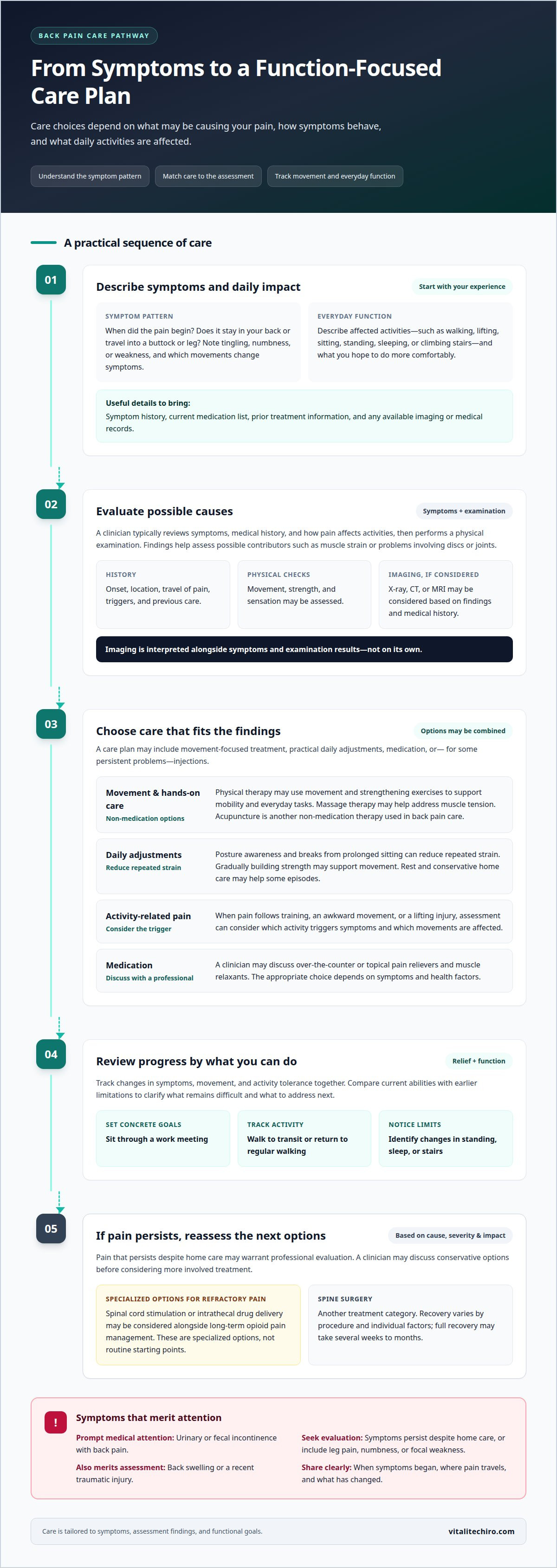
Back pain management may involve movement-focused care, lifestyle adjustments, medication, or procedures. Evaluation typically begins with your symptoms, medical history, and how pain affects activities such as walking, lifting, or sitting. A clinician may perform a physical examination and consider imaging, such as an X-ray or MRI, depending on the situation. These findings help assess possible causes, including muscle strain and problems involving discs or joints.
Non-medication options focus on easing discomfort while supporting mobility. A care plan may include physical therapy, massage therapy, or acupuncture, alongside practical changes. For example, posture awareness and breaks from prolonged sitting may reduce repeated strain during a workday. Gradually building strength can also support movement. Rest and conservative home care may help some episodes, while pain that persists despite those measures may warrant professional evaluation.
- Physical therapy: Movement and strengthening exercises can address mobility and support everyday tasks.
- Massage therapy: Hands-on treatment may help address muscle tension.
- Acupuncture: This is another non-medication therapy used in back pain care.
- Daily adjustments: Posture changes and sitting breaks can reduce prolonged static positioning.
Sports medicine may be relevant when pain follows training, an awkward movement, or a lifting injury. Assessment can consider which activity triggers symptoms and which movements are affected. In Arlington, Vitalité Chiropractic offers Sports Injury Care for activity-related pain. Medication is another option that a clinician may discuss, including over-the-counter or topical pain relievers and muscle relaxants. The appropriate choice depends on symptoms and health factors, so discuss medication with a qualified professional.
In Virginia, referral requirements depend on your insurance plan and the type of specialist. Bring your insurance card, medication list, symptom history, and any available imaging or records of prior treatment.
Which Rosslyn specialists accept your insurance and new patients depends on each practice’s network and current patient capacity. Check the plan’s provider directory and contact the practice about scheduling.
Patient ratings vary by specialist and review platform, so there is no single rating for Rosslyn. Look for recurring comments about communication, explanations, and follow-up rather than relying on one review.
Herniated discs and sciatica
A herniated disc can contribute to back pain when disc tissue affects nearby structures. Sciatica describes pain that travels from the lower back into the buttock or leg. These terms alone do not explain every symptom. Leg pain, tingling, or numbness may occur alongside back discomfort, while someone else may mainly notice pain when bending or sitting. A clinical assessment helps relate symptoms to their likely cause.
Evaluation generally starts with a history of your symptoms and a physical examination. A specialist may ask when the pain began, where it travels, and which movements change it. The assessment may include checks of strength, sensation, and movement. X-rays, CT scans, or MRI may also be considered based on the findings and medical history. Imaging is interpreted alongside symptoms and examination results. A Rosslyn VA back pain specialist can assess how symptoms affect daily activities.
- Describe the pattern: Note whether pain stays in the back or travels down a leg.
- Identify changes: Report numbness, tingling, or weakness and when each began.
- Bring relevant records: Share prior imaging, treatment history, and a current medication list.
Care depends on the assessment, symptom pattern, and impact on daily activities. A clinician may discuss conservative options before considering more involved treatment. For example, a plan may aim to ease symptoms while preserving comfortable movement. When you meet with a Rosslyn VA back pain specialist, discuss your work demands, walking tolerance, and activities that worsen leg symptoms. These details help shape care around practical goals, rather than relying on imaging alone.
Seek professional evaluation if symptoms persist despite home care or include leg pain, numbness, or focal weakness. Back swelling or a recent traumatic injury also merits assessment. Urinary or fecal incontinence with back pain needs prompt medical attention. Clearly describing these changes helps a clinician understand the situation and determine appropriate next steps.
Pain relief and functional outcomes
Relief matters, as does what you can comfortably do afterward. Describe concrete goals, such as sitting through a work meeting, walking to transit, or lifting groceries. These examples help frame progress around daily function, not pain intensity alone. A care team can review changes in symptoms, movement, and activity tolerance together. Tracking these areas also helps clarify what remains difficult and what to address next.
For persistent back pain, treatment depends on its cause, severity, and effect on activity. For refractory pain, spinal cord stimulation or intrathecal drug delivery may be considered alongside long-term opioid pain management. These are specialized options, not routine starting points. A discussion can weigh symptom history, previous care, and functional limits before considering them. Clear goals, such as returning to regular walking, can keep that conversation focused.
- Describe function: Identify activities affected, such as standing, sleeping, or climbing stairs.
- Note symptom changes: Explain whether pain stays in the back or travels into a leg.
- Review progress: Compare current movement and daily activity with earlier limitations.
Spine surgery is another treatment category, but recovery varies by procedure and individual factors. Full recovery may take several weeks to months. Physical therapy and rehabilitation are often recommended afterward to help regain strength and mobility. For example, a rehabilitation plan may address walking tolerance and controlled movement as recovery progresses. The procedure, a person’s health, and their starting level of function all shape recovery.
Success rates for spine surgery vary with the condition and procedure, so a single overall figure is not useful for setting expectations. A meaningful discussion considers the diagnosis, intended benefit, recovery demands, and alternatives. Ask how a proposed treatment relates to your main functional goal, such as returning to work or resuming your usual routine. This keeps decisions grounded in both pain relief and practical outcomes.
What are the addresses, phone numbers, and office hours of Rosslyn back pain specialists?
The listed North Arlington clinic is at 1635 North George Mason Drive, Suite 180, Arlington, VA 22205. Its phone number is (703) 738-4380. Listed weekday office hours are 8:00 AM to 4:00 PM, Monday through Friday. These details identify an Arlington location, not an office address in Rosslyn itself, so distinguish the two when planning an appointment.
When planning your visit, keep the suite number with the street address so you can identify the correct office in the building. Save the phone number alongside the clinic name and address for easy reference when arranging your appointment. If you’re comparing locations, write down each address separately to avoid mixing up Rosslyn and North Arlington.
- Address: 1635 North George Mason Drive, Suite 180, Arlington, VA 22205.
- Phone: (703) 738-4380.
- Hours: 8:00 AM to 4:00 PM, Monday through Friday.
The listed hours provide a straightforward scheduling window for weekdays. For example, someone planning around a workday can use the phone number during the stated hours to discuss appointment arrangements. Keep the location and hours together in your calendar entry, rather than saving only “back appointment.” That makes it easier to distinguish this Arlington visit from other medical appointments.
Before traveling, review the appointment details you received and match them to the Arlington address above. Bring relevant records, such as prior imaging or a medication list, so the clinician can understand your history. If your appointment information gives a different location, use the address in those details. Office locations and schedules matter because arriving at the wrong address or outside listed hours can disrupt your visit. Keeping the phone number available also gives you a direct way to address scheduling questions during the stated weekday hours.
Vitalité Chiropractic
Vitalité Chiropractic provides chiropractic care in Arlington for people seeking a non-surgical approach to back pain and improved movement. Care options include Chiropractic Adjustments and Decompression Therapy, as well as Sports Injury Care for pain related to physical activity. Prenatal Chiropractic Care is also available.
Consider an appointment when back discomfort affects daily activities or when you want to discuss conservative care options. Share where symptoms occur, which movements aggravate them, and how pain affects your routine. This context can guide a discussion about an approach that may suit your needs. If symptoms followed a sports injury, describe the activity and any changes in movement you’ve noticed.
To discuss back pain care and possible next steps, contact Vitalité Chiropractic.
Take the Next Step Toward Easier Movement
A Rosslyn VA back pain specialist can help connect your symptoms with a practical care plan. As you consider what comes next, focus on the activities you want to resume and the ways pain affects your routine. Those priorities give the care discussion direction. The most suitable approach depends on your symptoms, health history, and functional goals, so share what you’ve noticed and what you hope to change.
Your concerns deserve careful attention and a practical discussion of possible next steps. A conversation can help you understand whether chiropractic care fits your needs. You don’t need to have every answer before reaching out. Start with the questions that matter most to you.
Contact Vitalité Chiropractic to discuss your back pain care. Your next step can begin with a thoughtful conversation.
Frequently Asked Questions
What causes back pain?
Back pain can stem from muscle strain, a herniated disc, vertebral fracture, osteoarthritis, osteoporosis, or degenerative disc disease. Scoliosis and other structural changes can also contribute, and cancer is another possible cause. Everyday factors matter too: poor posture, awkward movements, improper lifting, or staying in one position for a long time may trigger discomfort. An evaluation helps assess the possible causes.
When should I book an appointment for back pain?
Arrange a professional assessment if back pain continues despite home care or interferes with walking, sleeping, or working. Leg pain or numbness, focal weakness, swelling, or pain after a recent injury also warrants attention. If symptoms begin affecting your ability to move normally, describe that change when arranging an appointment.
Which back pain specialists practice in Rosslyn, VA?
Vitalité Chiropractic provides chiropractic care in Arlington, Virginia, rather than at a Rosslyn address. Its office is at 1530 Wilson Blvd, #1040, Arlington, VA 22209. People comparing care near Rosslyn can consider this Arlington practice for chiropractic treatment. Its care includes Chiropractic Adjustments and Decompression Therapy, with the approach guided by the person’s symptoms and treatment needs.
What conditions and treatments do Rosslyn back pain specialists offer?
Available services vary by practice. Vitalité Chiropractic offers care that includes Chiropractic Adjustments, Decompression Therapy, and Sports Injury Care. These options may be relevant to someone seeking chiropractic support for back discomfort or pain associated with physical activity. Prenatal Chiropractic Care is also available. A treatment discussion should account for your health history, symptoms, and the movements or routines you want to manage.
How soon can I get an appointment with a back pain specialist near Rosslyn?
Vitalité Chiropractic offers same-day appointments in Arlington. To arrange a visit, call (703) 879-5144 or schedule online through the practice’s booking option. When requesting an appointment, describe what prompted you to seek care, such as pain after activity or difficulty with a usual task. This gives the practice useful context for your visit.
When should back pain require urgent or emergency care instead of a specialist appointment?
Seek urgent medical assessment for back pain with new leg weakness, loss of bladder or bowel control, swelling, or a recent traumatic injury. These symptoms need prompt attention rather than waiting for a routine chiropractic appointment. If symptoms are sudden or severe, use emergency medical services. A chiropractic appointment is not a substitute for emergency assessment of urgent symptoms.


