
What if the ultimate goal of your chiropractic care wasn't just to keep you coming back, but to empower you to eventually need us less? When you're in pain, the most pressing question is often how many chiropractic sessions do I need to finally feel like yourself again. It's completely natural to feel a bit of hesitation about the time commitment or worry that a treatment plan might be more about a provider's schedule than your actual recovery. You deserve a clear, evidence-based roadmap that respects both your time and your health goals.
In this guide, we'll pull back the curtain on the clinical framework used to determine your personalized recovery journey. We'll explore why your body's unique history and current lifestyle dictate the pace of healing. You'll learn the vital distinction between immediate symptom relief and the long-term structural stability that prevents future injury. By understanding these factors, you can move from a place of uncertainty to one of active, informed participation in your own wellness journey. This is about more than just adjustments; it's about restoring your physical freedom with a plan that makes sense for your life.
Key Takeaways
- Understand why the answer to "how many chiropractic sessions do I need" depends on the clinical distinction between immediate pain relief and long-term corrective stability.
- Learn about the three clinical phases of care, focusing on how your treatment evolves from inflammation control to strengthening joint mechanics.
- Discover how specialized recovery timelines for prenatal care and sports injuries are adapted to meet the shifting physical demands of your body.
- Identify the "green flags" of a healthy neurological response and the importance of the four-week clinical re-evaluation to track your progress.
- Explore how an evidence-based, whole-person approach replaces generic treatment plans with a recovery roadmap tailored to your unique lifestyle and health goals.
Factors That Determine Your Chiropractic Treatment Frequency
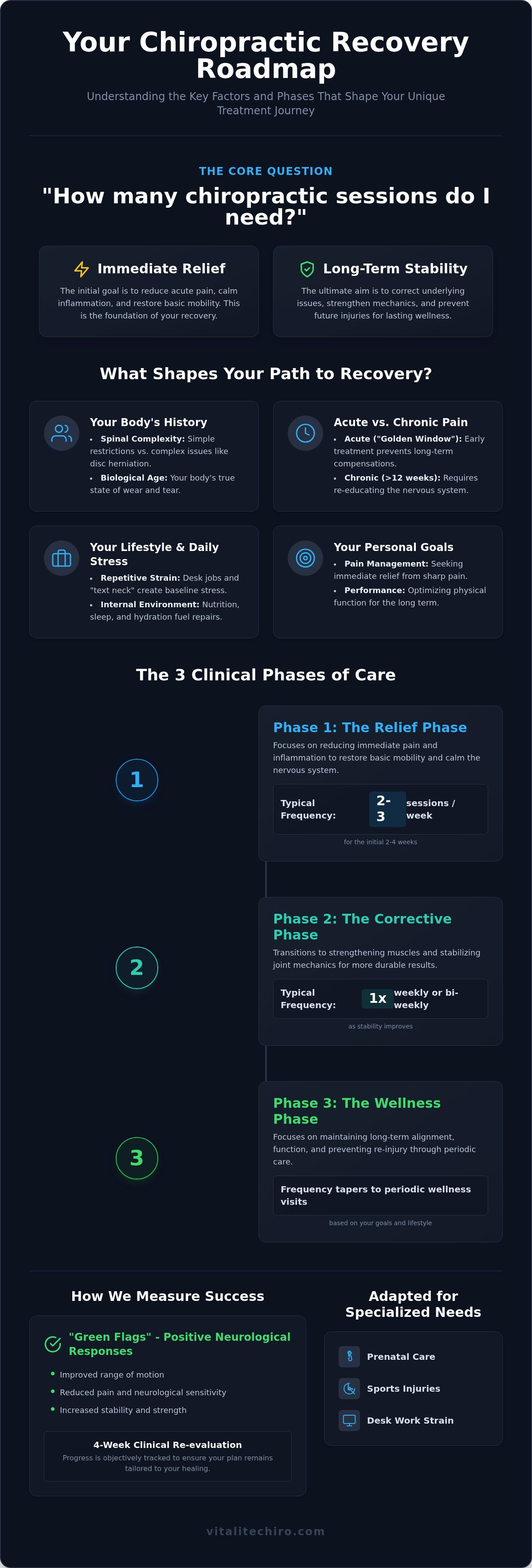
Every person walks into the clinic with a unique physiological history. When you ask, "how many chiropractic sessions do I need," the answer begins with an assessment of your spinal complexity. A simple joint restriction often resolves much faster than a case involving disc herniation or nerve impingement. Your biological age, which reflects your body's actual state of wear and tear rather than just the years on your birth certificate, also dictates how quickly your tissues can bounce back. Complex disc issues might require specialized tools like decompression therapy to create the space necessary for healing, which naturally shifts the timeline compared to a standard adjustment. Your personal goals also play a massive role. Some patients seek only immediate relief from a sharp pain, while others want to optimize their physical performance for the long term.
Acute vs. Chronic: Why Timing Matters
Timing is everything in the healing process. We often refer to the "Golden Window," which is the period immediately following an injury when the body is most receptive to corrective intervention. Treating a new strain early prevents the development of chronic compensations that can plague you for years. On the other hand, chronic pain is defined as dysfunction that has persisted for longer than 12 weeks. These long-standing issues typically require more frequent initial sessions because the nervous system has "learned" to operate in a state of imbalance. We aren't just moving bones; we're re-educating your nerves and muscles to hold a healthier pattern, a process that takes consistency and patience.
The Impact of Lifestyle and Daily Stress
Your life outside the clinic walls significantly influences how many chiropractic sessions do I need to reach your goals. In a high-energy environment like Arlington, many of our patients spend hours at desk jobs, leading to the repetitive strain known as "text neck." This constant forward-leaning posture creates a baseline of stress that your body must overcome. Your internal environment is just as vital. Proper nutrition, restorative sleep, and consistent hydration provide the raw materials your cells need to repair damaged tissues. If you are diligent with prescribed home exercises, you often find that you require fewer office visits over time. Your body is a dynamic system, and your daily habits are the fuel that powers your recovery.
The Three Clinical Phases of Chiropractic Care
Recovery is rarely a straight line. Instead, it follows a structured clinical path designed to transition you from acute discomfort to lasting resilience. When determining how many chiropractic sessions do I need, we look at where you sit within three distinct phases of care. This framework ensures we aren't just chasing symptoms but are actually addressing the underlying mechanical issues. We move you between these phases based on objective clinical markers, such as improved range of motion and reduced neurological sensitivity, rather than a predetermined calendar date.
Phase 1: The Relief Phase
The first priority of any treatment plan is to reduce the immediate burden of pain and inflammation on your body. For most individuals, this requires a frequency of 2 to 3 sessions per week for the initial 2 to 4 weeks. During this time, we use precise chiropractic adjustments to restore basic mobility and calm the nervous system. Your journey starts with a thorough assessment during your first chiropractic visit, where we establish the baseline for your recovery. We don't want to rush this phase; it's the foundation upon which all future progress is built. Frequent visits early on help maintain the corrective momentum needed to break the cycle of acute discomfort.
Phases 2 & 3: Correction and Wellness
Once your pain has subsided and inflammation is under control, we transition into corrective care. This is where the real work of strengthening muscles and stabilizing joint mechanics happens. Frequency typically tapers to once a week or bi-weekly as your stability improves. We often utilize the diversified chiropractic technique to ensure long-term alignment and functional integrity. The transition between these phases is never arbitrary. We look for specific indicators, such as increased muscle endurance and the absence of radiating symptoms during testing.
Finally, we reach the wellness or maintenance phase. This is an optional but highly beneficial stage where monthly check-ins help sustain your spinal health and prevent old patterns from returning. It’s about staying ahead of the curve so you can keep living your active life without interruption. This long-term approach shifts the focus from fixing a problem to preserving your physical freedom. If you're ready to see which phase of care best fits your current needs, explore our personalized treatment options today.
Recovery Timelines for Specialized Care (Prenatal, Sports, and Desk Work)
Your daily activities and physiological state are the primary architects of your recovery timeline. A high-performing athlete, a person navigating the physical shifts of pregnancy, and a professional managing the strain of an Arlington desk job all require different frequencies of care. When considering how many chiropractic sessions do I need, it's essential to look at these specialized contexts. For instance, complex disc issues often benefit from decompression therapy. This specialized tool typically requires a more intensive series of approximately 20 sessions to achieve lasting results, which differs from the more flexible timeline of standard manual adjustments.
Prenatal Care: Supporting a Changing Body
Prenatal care requires a dynamic schedule that mirrors the rapid changes of your body. In the early stages of pregnancy, monthly visits are often sufficient to maintain pelvic balance and support overall wellness. As you enter the third trimester, the frequency typically increases to bi-weekly or even weekly sessions. This shift addresses the increased mechanical stress on the lower back and pelvis as your due date nears. Our protocols focus on gentle, inclusive care that prioritizes both your comfort and the baby's positioning, ensuring a supportive environment for your changing needs throughout every trimester.
Sports Injury and Performance Optimization
Athletes often require a more aggressive initial approach to speed up the return-to-play process. For an acute sports injury, we might recommend sessions three times per week to manage inflammation and restore joint function quickly. Once the acute phase passes, we transition to performance optimization. These "tune-ups" help prevent common issues in the hips, knees, and shoulders by maintaining proper biomechanics. We often integrate custom orthotics and therapeutic modalities to reinforce the work done during adjustments, providing a comprehensive foundation for athletic excellence and long-term injury prevention.
For the many professionals in Arlington dealing with chronic "desk-worker" syndrome, the timeline is often about reversing years of postural habit. This repetitive strain requires a steady, methodical approach to break the cycle of neck and shoulder tension. By combining regular adjustments with ergonomic advice and home exercises, we can often move from a frequent relief schedule to a less intensive maintenance plan. This ensures you can stay productive and pain-free without feeling like your treatment is a second full-time job. Each plan is a clinical dialogue, shifting as your body demonstrates its capacity for change.
How to Evaluate Your Progress: Red Flags and Green Flags
A professional clinical journey should never feel like a series of endless, aimless appointments. One of the most common concerns patients have when asking, "how many chiropractic sessions do I need," is the fear of being over-treated without seeing tangible results. To prevent this, we utilize a rigorous four-week re-evaluation process. This is a dedicated checkpoint where we step back from the treatment itself to objectively measure your progress against your initial baseline. By using data-driven markers rather than just subjective feelings, we ensure that your care remains both safe and effective.
Success in chiropractic care is measured by more than just the absence of pain. While relief is the first goal, we also look for signs that your nervous system is integrating the adjustments and moving toward long-term stability. We categorize these indicators as "Green Flags." These positive signals tell us your body is responding well to the current frequency and technique. Conversely, "Red Flags" are indicators that the current plan needs adjustment or that your condition may require a different type of intervention altogether.
Signs Your Treatment Plan Is Working
Early indicators of success often appear in your daily life before the pain completely vanishes. You might notice an increased range of motion when turning your head to check traffic or a significant improvement in your sleep quality because you aren't waking up to find a comfortable position. Another major green flag is a reduced reliance on over-the-counter pain medications as your body begins to manage inflammation more naturally. It’s vital to understand that improved function often precedes total pain relief. When your joints move better and your muscles stabilize, the pain eventually follows suit as the underlying mechanical stress is removed.
When to Re-evaluate Your Care
Transparency is a cornerstone of the Vitalité Method. If your symptoms remain largely unchanged after 6 to 8 sessions, it is time for a serious clinical pivot. Dr. Sansfaute uses these re-evaluations to ensure every patient is on the most efficient path to wellness. If progress stalls, we may recommend diagnostic imaging or provide a referral to another specialist to rule out underlying issues that manual therapy alone cannot address. With over 20 years of clinical experience, Dr. Sansfaute prioritizes your safety and recovery above all else. We are committed to being your partner in health, which means knowing when to stay the course and when to adapt your plan for better results. If you feel your current progress has plateaued, schedule a comprehensive re-evaluation to get your recovery back on track.
Personalized Chiropractic Care in Arlington, VA: The Vitalité Method
At Vitalité Chiropractic, we understand that the question "how many chiropractic sessions do I need" doesn't have a single, universal answer. Our approach is rooted in the belief that your care should be as unique as your DNA. We reject the cookie-cutter models often found in high-volume clinics, opting instead for a person-centered methodology that respects your specific health history and lifestyle. Our practice is a reflection of the diverse Arlington community we serve. We provide a multilingual and inclusive environment where every individual feels a genuine sense of belonging and clinical safety. This commitment to dignity and respect is the foundation of every treatment plan we create.
For those currently in the grip of acute pain, we offer the benefit of same-day appointments to jumpstart the relief phase. We know that waiting days for an appointment isn't an option when you're unable to work or care for your family. By integrating advanced modalities like decompression therapy alongside manual adjustments, we can often accelerate the recovery process for complex cases that might otherwise stall under traditional methods. This combination of seasoned expertise and modern technology ensures that your path to wellness is both efficient and thorough.
Our Evidence-Based Approach to Frequency
Dr. Sansfaute brings over 20 years of clinical expertise to every case, blending seasoned wisdom with modern evidence-based guidelines. A core component of our care is the diversified chiropractic technique in Arlington, VA, which allows for highly specific and tailored adjustments. Our ultimate goal isn't to keep you on a table indefinitely. We focus heavily on patient education, providing you with the tools and home exercises needed to maintain your own spinal health. By empowering you to understand your body's mechanics, we naturally reduce your long-term dependency on frequent office visits. It's a partnership designed to foster independence and lasting physical freedom.
Booking Your Assessment at Vitalité
Your journey begins with a comprehensive initial consultation and physical exam. We don't rush this process; it's the foundation of your recovery. Following the exam, we present a detailed Report of Findings. This is where we sit down with you to explain exactly what's happening in your body and outline your personalized recovery timeline. You'll leave your first visit with a clear understanding of the steps ahead and the confidence that your plan is built on clinical logic. If you're a resident of Arlington or the surrounding areas and you're ready for a healthcare partner who prioritizes your long-term wellness, we invite you to take the first step. Your path to renewed energy starts with a single, focused assessment.
Your Path to Sustainable Wellness Starts Here
Finding the definitive answer to how many chiropractic sessions do I need requires shifting the focus from a generic number to a personalized clinical dialogue. By utilizing objective markers and a rigorous four-week re-evaluation process, we ensure your recovery journey remains efficient and transparent. Whether you are managing the physical demands of pregnancy, rehabilitating a sports injury, or correcting postural habits from years of desk work, your treatment frequency should always adapt to your body's unique rate of healing.
With over 20 years of clinical expertise in Arlington, our practice provides specialized prenatal and sports injury care within a welcoming, LGBTQ+ friendly environment. We believe that inclusive healthcare is essential for true well-being. It is time to transition from temporary relief to a state of long-term physical freedom and stability. Schedule your personalized assessment at Vitalité Chiropractic today to begin your evidence-based path to health. You don't have to navigate your recovery alone; we are here to support your journey every step of the way.
Frequently Asked Questions
Is it normal to feel sore after the first few chiropractic sessions?
Yes, mild soreness is a common and normal response to your first few adjustments. This sensation is similar to the muscle soreness you feel after starting a new exercise routine as your body adapts to improved alignment. It typically resolves within 24 to 48 hours. Staying hydrated and moving gently can help manage this transition as your nervous system begins to process the restorative changes.
Can I stop going to the chiropractor as soon as the pain goes away?
You can stop care once the pain subsides, but doing so may leave you vulnerable to a relapse. Pain is often the last symptom to appear and the first to disappear, meaning the underlying structural instability might still be present. Completing the corrective phase of your plan ensures that your muscles and ligaments have enough time to strengthen and support your new alignment for the long term.
What happens if I miss a scheduled chiropractic appointment?
Missing an appointment interrupts the corrective momentum your body needs to hold a new spinal pattern. Consistency is vital because we are essentially re-training your nervous system to maintain a healthier posture. If you must miss a visit, try to reschedule within 24 to 48 hours to keep your recovery on track. This helps prevent your spine from slipping back into old, painful habits.
Does insurance typically cover a specific number of chiropractic sessions?
Most insurance plans do cover a specific number of sessions per calendar year, though the exact amount varies by provider. It is common for plans to have a set cap or require a clinical review after a certain number of visits. We recommend checking your specific summary of benefits to understand your coverage limits. When asking how many chiropractic sessions do I need, your insurance coverage is a logistical factor we consider alongside your clinical needs.
How many sessions are usually needed for a herniated disc?
A herniated disc typically requires a more intensive schedule than a simple joint restriction, often ranging from 12 to 20 sessions. Because disc issues involve nerve compression, we often utilize specialized decompression therapy to create the space needed for the disc to heal. The exact timeline depends on the severity of the herniation and how quickly your body responds to these targeted, non-invasive techniques.
Can I combine chiropractic care with physical therapy or massage?
Yes, combining chiropractic care with other therapeutic modalities like massage or physical therapy is often highly beneficial. While an adjustment focuses on spinal alignment and nervous system function, massage addresses soft tissue tension and physical therapy builds necessary muscular strength. These therapies work together to create a more stable and resilient body, often leading to faster and more sustainable results.
How do I know if I'm being over-treated by a chiropractor?
You can tell if you're being over-treated if your provider fails to perform regular re-evaluations or cannot provide objective data on your progress. A professional clinical plan should have clear goals and a defined timeline for reassessment, usually every four weeks. If you feel you are just being adjusted without a broader strategy or discussion about your recovery milestones, it's a sign to seek a more evidence-based second opinion.
Do children need as many sessions as adults for similar issues?
Children generally require significantly fewer sessions than adults to resolve similar issues. Their bodies are more adaptable and haven't yet developed the decades of chronic compensation and structural wear that adults often face. When parents ask how many chiropractic sessions do I need for my child, the answer is usually a very short, focused plan aimed at supporting their natural growth and development.


