
Chiropractic for vertigo and dizziness may help when neck pain, stiffness, or movement-related issues contribute to symptoms, but dizziness can also have inner-ear or neurological causes. The right first step is an assessment that considers what you’re feeling and whether chiropractic care is appropriate.
Dizziness accompanied by headaches, nausea, unsteadiness, or a spinning sensation can be unsettling and difficult to explain. It’s understandable to seek relief while making sure care addresses the likely cause, not just the symptom.
This article covers common causes of dizziness, how a chiropractor may assess neck movement, balance, posture, and eye movements, and what chiropractic care can and can’t address. It also explains why experience with vertigo assessment matters and when medical evaluation should come first.
Key Takeaways
- Dizziness can arise from inner-ear, neurological, or neck-related causes, so identifying the likely source matters before choosing care.
- A thorough assessment may consider symptom patterns alongside neck movement, balance, posture, and eye movements.
- Chiropractic care may complement medical treatment when musculoskeletal factors contribute, but it shouldn’t replace evaluation of unexplained or worsening symptoms.
- Look for a chiropractor experienced in vertigo management who tailors care to assessment findings and recognizes when medical evaluation is needed.
What causes dizziness and how does a chiropractor treat it?
Dizziness has several possible causes, so the right approach depends on the symptom pattern and suspected source. An assessment can help distinguish inner-ear, neurological, and neck-related concerns before care is chosen.
Common Causes of Vertigo and Dizziness
Dizziness can mean lightheadedness, faintness, or unsteadiness. Vertigo specifically describes a spinning sensation in you or your surroundings. The distinction matters because these symptoms can have different causes and call for different care.
Benign paroxysmal positional vertigo (BPPV) occurs when tiny calcium particles become dislodged and enter the inner-ear canals. Rolling over in bed or looking upward may trigger symptoms. Other possible causes include Meniere’s disease, vestibular neuritis, migraines, certain medications, and head or neck injuries. Noting when symptoms occur can help guide the next assessment step.
Peripheral and Central Vertigo
Peripheral vertigo arises from problems within the inner ear, while central vertigo involves the brain or central nervous system. This distinction matters because the underlying cause determines whether inner-ear or neurological assessment is needed.
BPPV, Meniere’s disease, and vestibular neuritis are examples of inner-ear disorders that can disrupt balance. Central causes may include migraines, multiple sclerosis, or brain injuries. Symptoms can last from brief episodes to periods of hours or days. A clinician may ask what the sensation feels like and how long each episode lasts to understand the pattern.
Cervical Dizziness and Neck Manipulation
Cervicogenic dizziness refers to dizziness associated with neck problems, often alongside neck pain or stiffness. That distinction matters because neck-focused care may be relevant only when assessment supports a cervical contribution.
Can cervical spine manipulation treat cervicogenic dizziness? Manual therapy may reduce dizziness and neck symptoms for people diagnosed with cervicogenic dizziness. A 2022 systematic review found moderate-quality evidence for these improvements, but manipulation isn’t a universal treatment for dizziness. The clinician should consider the neck alongside other possible causes and select care based on the findings.
Dizziness After Adjustments and Vascular Risks
Dizziness after an adjustment is a symptom that follows treatment, but timing alone doesn’t identify its cause. An underlying inner-ear problem, such as BPPV, may still trigger vertigo with head movement.
Can chiropractic neck adjustments cause stroke or arterial dissection? Dizziness after an adjustment alone cannot establish that either condition occurred or was caused by treatment. New speech difficulty or facial weakness are warning signs: avoid further neck adjustment and seek urgent medical assessment. If vertigo worsens or continues after treatment, medical evaluation can assess causes beyond the neck.
Assessment of movement, balance, posture, eyes, ears, and neck
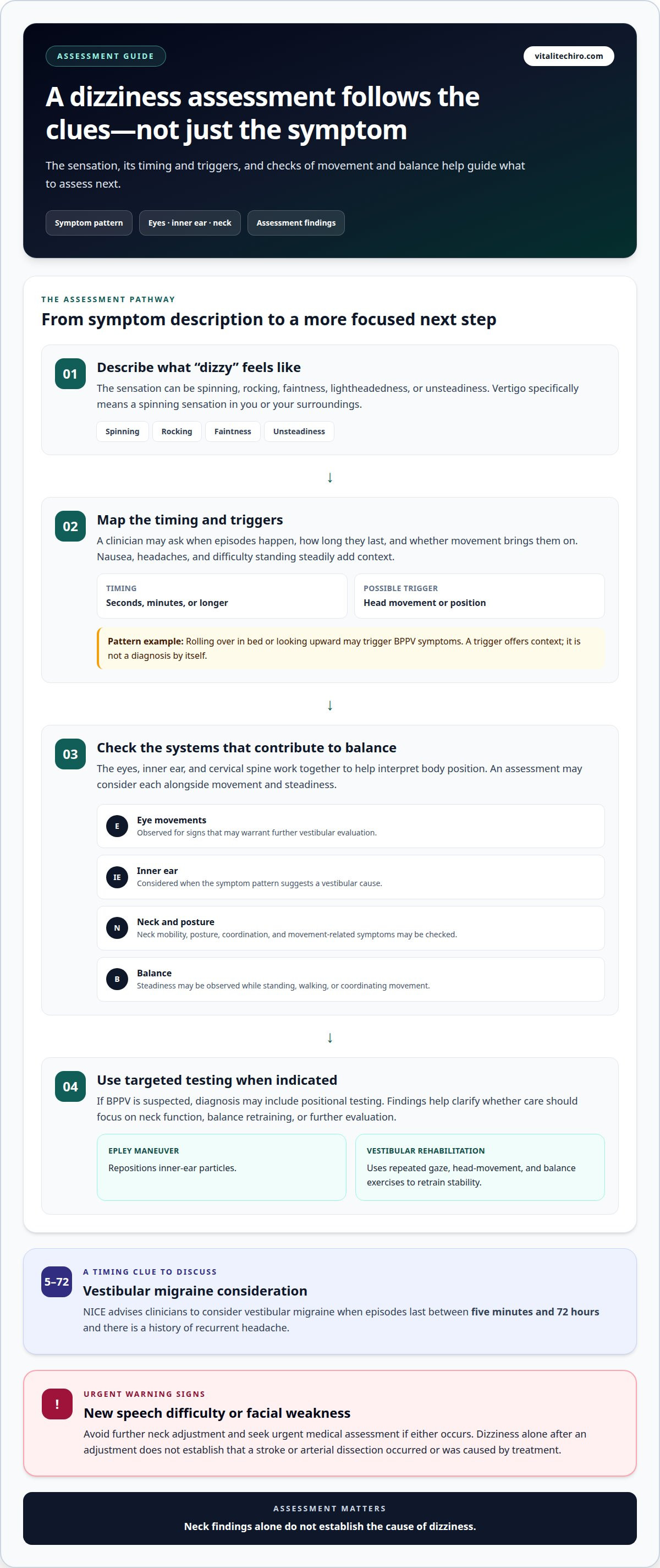
A focused assessment combines your symptom history with checks of eye movements, posture, neck function, and balance. When BPPV is suspected, diagnosis may include positional testing. The Epley maneuver repositions inner-ear particles, while vestibular rehabilitation uses repeated gaze, head, and balance exercises to retrain stability.
Balance-Contributing Systems
Balance depends on the eyes, inner ear, and cervical spine working together to interpret body position. Examining these systems matters because mismatched signals can affect steadiness and movement.
A chiropractor may observe posture, neck movement, coordination, and balance while you stand or walk. An eye-movement assessment can reveal signs that warrant further vestibular evaluation. If turning your head changes symptoms, that pattern offers useful context but isn’t a diagnosis by itself. The findings help distinguish movement limitations from balance problems and guide whether further assessment is appropriate.
Symptoms and Diagnostic Assessment
An assessment considers the type, timing, and triggers of symptoms, including nausea, headaches, lightheadedness, or difficulty standing steadily. These details matter because “dizziness” can describe several different sensations.
A clinician may ask whether symptoms feel like spinning, rocking, or faintness, and whether episodes last seconds, minutes, or longer. They may assess neck mobility, neurological signs, coordination, and balance, then use positional testing if BPPV is suspected. NICE advises clinicians to consider vestibular migraine when episodes last between five minutes and 72 hours and there’s a history of recurrent headache. A doctor may assess other causes when findings suggest them.
Neck Proprioception and Balance
Neck proprioception is the body’s sense of head and neck position. Along with input from the eyes and inner ear, it contributes to balance. Neck pain or restricted movement can affect how comfortably someone turns or holds their head.
An assessment may compare neck movement with your symptoms and observe coordination while you stand or walk. A mismatch among position signals may contribute to cervicogenic dizziness, but neck findings alone don’t establish the cause. Vestibular rehabilitation may include gaze-stabilization, head-movement, and balance exercises selected according to the assessment. These findings help clarify whether care should focus on neck function, balance retraining, or further evaluation.
How does going to a chiropractor help with vertigo?
Chiropractic care may complement medical treatment when an assessment identifies a musculoskeletal contribution to dizziness. Chiropractic for vertigo and dizziness does not replace evaluation of unexplained symptoms or conditions requiring medical care.
Chiropractic Care Alongside Medical Treatment
As a complement to medical care, chiropractic addresses relevant neck or movement-related findings while medical clinicians assess other possible causes. This distinction matters because spinning sensations, headaches, or unsteadiness can stem from conditions that adjustments don’t address.
A coordinated plan starts with an assessment and a clear understanding of your symptoms. The chiropractor uses the findings to decide whether neck-focused care is appropriate and adapt treatment. A primary care doctor can evaluate persistent or unexplained vertigo; chiropractic care doesn’t replace that assessment. If symptoms worsen during care, seek medical evaluation.
Care for Different Forms of Vertigo
Different types of vertigo call for different approaches because they arise from different underlying problems. Matching care to the suspected cause helps avoid treating every dizzy feeling as a neck issue.
For BPPV, the Epley maneuver uses guided head and body positions to move inner-ear particles. Vestibular rehabilitation uses exercises such as gaze stabilization and balance training. Chiropractic for vertigo and dizziness may be relevant when an assessment identifies neck pain or movement limitations associated with symptoms. Clinical findings help determine which approach fits and whether medical assessment should come first.
Evidence for Chiropractic Care
Evidence supports manual therapy for some people diagnosed with cervicogenic dizziness, not vertigo from every cause. This distinction matters when considering potential benefits and the limits of current findings.
A 2022 systematic review found moderate-quality evidence that manual therapy reduced dizziness, neck, and balance symptoms in people with cervicogenic dizziness. Research on upper-cervical manual therapy also found improvements, but certainty was low to very low for several outcomes. These findings don’t establish that adjustments treat inner-ear or neurological causes.
New speech difficulty or facial weakness, sudden hearing loss, or significant recent head or neck trauma calls for medical assessment before neck treatment. If dizziness or vertigo starts after an adjustment and intensifies or persists, contact the treating chiropractor and seek medical evaluation for worsening symptoms.
Selecting a chiropractor experienced in vertigo management
Vertigo care involves more than checking spinal alignment or treating neck stiffness. A careful approach distinguishes a spinning sensation from lightheadedness, then considers the symptom pattern alongside examination findings. This matters because BPPV, neck-related dizziness, and neurological causes call for different responses.
A careful assessment considers when symptoms began, how long episodes last, and whether head movement triggers them. For example, dizziness when rolling over in bed may prompt positional testing for BPPV. Neck pain or restricted movement may lead to a cervical examination, while balance, coordination, and eye movements provide further context. No single finding should substitute for a complete assessment.
Look for care that explains how examination findings shape the plan. The Epley maneuver uses guided positions for BPPV; spinal adjustments are a different intervention and don’t replace that maneuver. Vestibular rehabilitation may use gaze-stabilization, head-movement, or balance exercises. A practitioner should distinguish these approaches and explain which findings support the proposed care.
Safety awareness is essential. New speech difficulty or facial weakness, sudden hearing loss, or significant recent head or neck trauma calls for medical evaluation rather than routine neck treatment. Persistent or worsening dizziness also warrants medical attention. A responsible approach recognizes when symptoms fall outside chiropractic care and supports appropriate evaluation.
For a useful first visit, bring a clear account of your symptoms, including triggers, episode duration, headaches, neck pain, and any recent injury. These details help the clinician interpret the examination and discuss whether chiropractic adjustments fit your situation. The goal is a plan based on your symptoms and findings, not a promise of relief or a one-size-fits-all routine.
Discuss chiropractic care and your symptoms as a next step toward understanding which options may fit.
Vitalité Chiropractic
Vitalité Chiropractic in Arlington, Virginia, offers chiropractic care for people exploring whether neck or movement-related factors contribute to discomfort alongside dizziness. Chiropractic adjustments may be relevant when an assessment identifies a musculoskeletal concern. Unexplained, severe, or worsening vertigo calls for medical evaluation.
Sharing when symptoms occur, which movements affect them, and whether you have neck pain can help guide a discussion about appropriate care. The focus is understanding your concerns and considering whether chiropractic care fits your situation, not assuming every cause of dizziness responds to adjustments.
If you’d like to discuss your concerns and possible next steps, contact Vitalité Chiropractic.
Take the next step toward care that fits
Choosing chiropractic for vertigo and dizziness begins with a thoughtful conversation about your symptoms and what you hope to address. The next step is understanding whether chiropractic care belongs in your broader plan, not committing to a particular technique. If symptoms are unexplained, worsening, or accompanied by concerning changes, prioritize medical evaluation.
Vitalité Chiropractic offers Chiropractic Adjustments, Decompression Therapy, and Sports Injury Care in Arlington, Virginia. These services address different needs, so your concerns and assessment findings should guide which options are relevant. A clear discussion can help you understand how care may fit alongside other treatment and what questions to raise about your symptoms.
When you’re ready to explore your options, contact Vitalité Chiropractic to discuss your care. Taking that first step can help you move forward with greater clarity and confidence.
Frequently Asked Questions
How can a chiropractor help with headaches and dizziness?
A chiropractor can assess whether neck pain, restricted movement, or muscle tension accompanies headaches and dizziness. For example, a clinician may consider whether symptoms change with neck movement and whether examination findings support a musculoskeletal contribution. Headaches and dizziness can have other causes, so chiropractic care shouldn’t replace medical evaluation when symptoms are new, persistent, or worsening.
What Is Vertigo?
Vertigo is the sensation that you or your surroundings are moving or spinning when they aren’t. For example, someone might describe the room seeming to rotate after turning their head, rather than feeling faint or generally unsteady. That distinction helps a clinician understand the symptom, but the sensation alone doesn’t identify its cause. Describe clearly what you feel and when it happens during an assessment.
How Long Does It Take to Feel Better?
Improvement timelines vary with the cause, severity, and duration of symptoms. Some patients notice improvement after 2-4 chiropractic visits, while complete resolution can take 4-12 weeks, depending on chronicity and severity. These timeframes aren’t a personal forecast. If symptoms persist, intensify, or change during care, the treatment plan and need for medical evaluation should be reconsidered.
Can Dizziness Come From the Neck?
Yes, neck-related problems can contribute to dizziness in some cases. The neck supplies position information that helps the body coordinate movement; pain or stiffness may accompany a mismatch in those signals. For instance, someone might notice dizziness alongside limited neck rotation. This pattern needs assessment, since neck symptoms can occur alongside other causes and don’t prove the neck is responsible.
Can chiropractic adjustments stop dizziness naturally?
Chiropractic adjustments can’t be relied on to stop dizziness from every cause. Their relevance depends on whether an assessment identifies a musculoskeletal factor that chiropractic care can address. For example, BPPV involves inner-ear particles and is treated with repositioning maneuvers, not by assuming spinal adjustments will resolve it. A clinician should explain the intended role of any proposed care.
Can neck problems cause vertigo?
Neck problems can be associated with cervicogenic dizziness, which may feel like unsteadiness or disorientation rather than classic spinning vertigo. Neck pain or stiffness can provide useful context, especially when symptoms relate to neck movement. However, these clues don’t establish a diagnosis. A careful evaluation considers other possible causes before linking vertigo to the cervical spine.


