
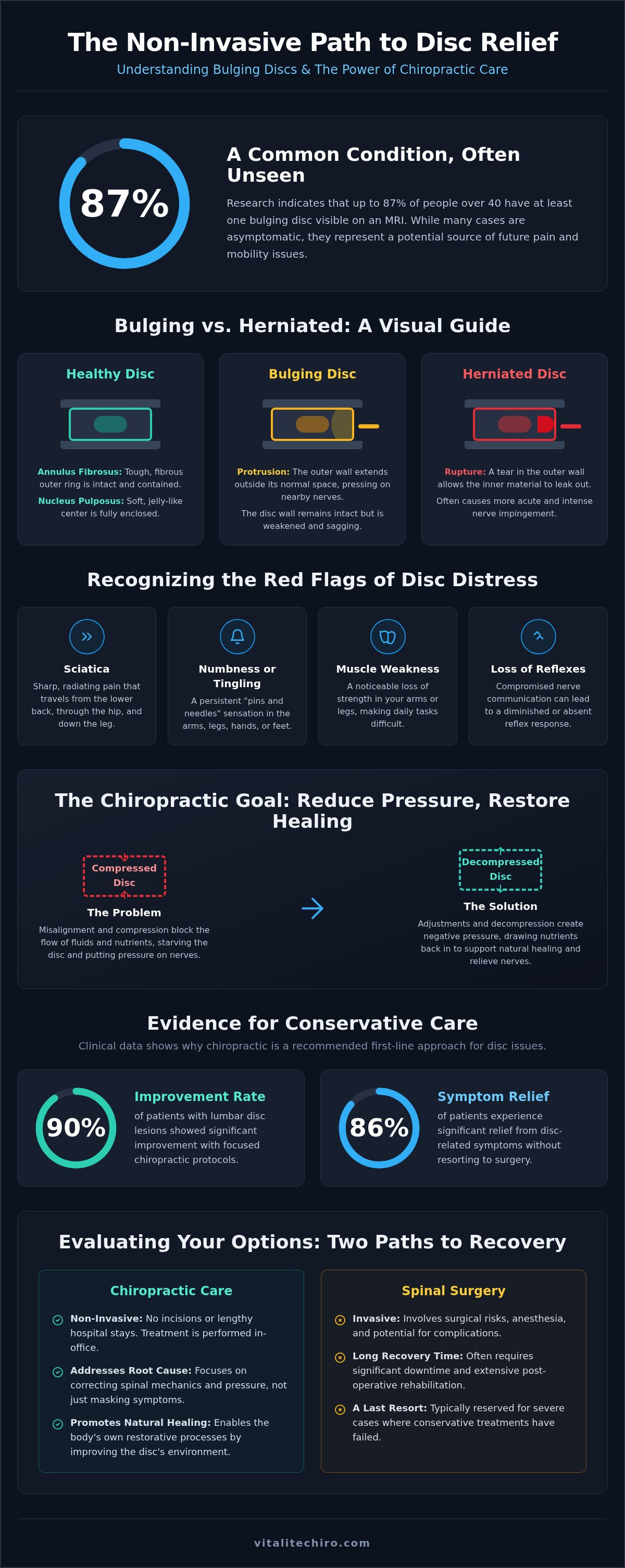
Did you know that research published in the European Spine Journal in 2025 indicated that up to 87% of people over 40 have at least one bulging disc visible on an MRI? While many of these cases are asymptomatic, for those who experience radiating nerve pain or debilitating sciatica, the prospect of invasive spinal surgery can feel like a frightening and inevitable conclusion. If you've been relying on pain medications just to get through your daily routine, it's natural to feel like you're losing your physical freedom. However, chiropractic care for bulging disc issues offers a sophisticated, non-invasive alternative that focuses on restoring the body's natural function.
We understand the weight of these concerns and the desire for a solution that doesn't involve the operating room. This article explores how specialized chiropractic techniques and spinal decompression therapy provide a safe, evidence-based path to relief. You'll discover how these clinical methods reduce nerve pressure and promote long-term spinal stability. By understanding the "why" behind your treatment, you can regain your mobility and move forward with professional confidence and clarity.
Key Takeaways
- Learn why major medical guidelines recommend a conservative approach as the first line of defense to avoid the risks and long recovery times associated with spinal surgery.
- Understand the mechanical role of the intervertebral disc and how reducing intradiscal pressure allows vital nutrients to flow back into the injured area for natural healing.
- Discover how chiropractic care for bulging disc symptoms utilizes specialized adjustments and decompression therapy to restore proper joint mechanics and reduce inflammation.
- Explore the diagnostic journey, including what to expect during your initial consultation and how a customized recovery plan is tailored to your specific physical needs.
- Gain insight into how decades of clinical expertise and a whole-person approach can help you regain your physical freedom and long-term spinal stability.
Understanding the Bulging Disc: Why it Causes Pain
Think of your spine as a sophisticated architectural feat. At the heart of this structure are the intervertebral discs, acting as your body's essential shock absorbers. These discs are composed of a tough, fibrous outer ring called the annulus fibrosus and a soft, jelly-like center. When your spine functions correctly, these discs distribute weight and absorb impact during every movement you make. However, when the outer wall weakens, the inner material can push outward, creating a bulge. This protrusion often puts pressure on nearby spinal nerves, leading to the discomfort that brings many people to seek chiropractic care for bulging disc symptoms.
The causes of these structural shifts vary widely. For some, it's the result of gradual, age-related wear where the discs naturally lose hydration and elasticity. For others, an acute sports injury or a sudden lifting mishap triggers the change. Regardless of the origin, the result is often nerve impingement. This manifests as radiating pain, numbness, or a persistent tingling sensation in your limbs. It's a signal from your body that the delicate balance of your spinal mechanics has been disrupted.
Bulging vs. Herniated Discs: What is the Difference?
It's common to hear these terms used interchangeably, but they describe distinct clinical states. A bulging disc occurs when the outer wall remains intact but extends outside its normal space, much like a tire that is slightly deflated and sagging. In contrast, Spinal disc herniation involves a tear in the annulus fibrosus, allowing the inner nucleus pulposus to escape. While a herniation is often considered more acute, both conditions represent a significant biomechanical disruption. Fortunately, both respond well to conservative chiropractic care for bulging disc issues, focusing on restoring alignment and relieving pressure without the need for invasive procedures.
Identifying the Red Flags: When to Seek Professional Care
Recognizing the signs of disc distress is the first step toward recovery. You might notice sciatica, which is a sharp pain that travels from the lower back through the hip and down the leg. Other red flags include muscle weakness or a noticeable loss of reflex integrity in your arms or legs. These symptoms suggest that nerve communication is being compromised by the disc's position. A bulging disc becomes a clinical priority the moment it begins to interfere with your neurological function or limits your ability to perform daily activities with ease.
The Science of Chiropractic Care for Bulging Discs
The primary objective of chiropractic care for bulging disc management is to fundamentally alter the internal environment of the spine. While traditional medicine often targets symptoms with medication, chiropractic intervention addresses the mechanical cause by reducing intradiscal pressure. When a disc is compressed, it loses the ability to pull in the fluids and nutrients necessary for repair. By restoring proper alignment, we facilitate the flow of these essential elements back into the disc, supporting its natural healing capacity. This restorative process is vital for maintaining the integrity of the annulus fibrosus and preventing further structural decline.
This approach is grounded in clinical evidence that supports conservative care as a primary solution. Research as of 2026 indicates that 86% of patients experience significant symptom relief from disc issues without the need for surgery. Another study found that 90% of patients with lumbar disc lesions improved through focused chiropractic protocols. These statistics underscore why many leading healthcare institutions now advocate for nonsurgical treatments for a herniated disc or bulge before considering more invasive options. It's a method that respects the body's biology while providing technical precision.
Manual Adjustments and Spinal Alignment
We often utilize the Diversified Technique, a precise method involving high-velocity, low-amplitude thrusts. This technique is designed to correct subluxations, which are minor misalignments that create uneven mechanical stress on your discs. When one segment of the spine is restricted, the discs above and below must overcompensate, leading to premature wear and bulging. By addressing the whole spine rather than just the symptomatic area, we ensure long-term stability. If you're experiencing acute discomfort, we offer same-day appointments to begin your path toward relief and functional recovery.
Spinal Decompression: The Game-Changer for Disc Health
While manual adjustments are foundational, spinal decompression therapy provides a specialized mechanical advantage for disc recovery. This process involves a computer-controlled table that gently stretches the spine, creating a state of negative pressure within the disc space. This "vacuum effect" encourages the bulging material to retract toward the center of the disc, which immediately reduces nerve impingement. This process not only relieves pain but also draws in oxygen and healing growth factors. For those curious about the financial aspect of this advanced technology, you can explore our spinal decompression therapy cost guide to see how this investment compares to the long-term expenses of surgical recovery.
Chiropractic vs. Surgery: Evaluating Your Options
Deciding between conservative management and a surgical procedure is a significant crossroads for anyone suffering from spinal distress. It's a choice that involves weighing immediate relief against long-term structural integrity. For most patients, the clinical gold standard is now a "conservative first" approach. In 2025, the American College of Physicians updated their guidelines to recommend at least six to eight weeks of non-invasive care before surgical intervention is even considered. This shift reflects a growing medical consensus that chiropractic care for bulging disc symptoms often resolves the underlying mechanical issues without the permanence of a scalpel.
While surgery is sometimes necessary for rare, acute cases involving progressive neurological deficits or loss of bowel and bladder control, these represent a small fraction of disc patients. For the vast majority, the goal is to avoid the operating room entirely. Beyond the physical toll, the cost-effectiveness of chiropractic is a major factor. When you consider the expenses of hospital stays, anesthesia, and months of post-operative physical therapy, a structured chiropractic plan offers a much more sustainable path to wellness. It allows you to invest in your health through restorative sessions rather than high-risk interventions.
The Risks of Invasive Procedures
Surgery is not a guaranteed fix; it's a permanent alteration of your anatomy. One of the most significant concerns is Failed Back Surgery Syndrome (FBSS), a condition where pain persists or even intensifies after a procedure. This often happens because surgery addresses the "bulge" but not the underlying biomechanical dysfunction that caused it. Additionally, invasive procedures carry risks of scar tissue formation, which can further impinge on nerves. For our community in Arlington, starting with non-invasive methods eliminates the dangers of anesthesia and the potential for hospital-acquired infections, providing a safer environment for recovery.
Long-Term Outcomes and Lifestyle Integration
We view health as a continuous journey rather than a one-time event. Choosing manual therapy empowers you to take an active role in your recovery. Instead of being a passive recipient of a surgical procedure, you learn how to support your spine through movement and proper ergonomics. Regular chiropractic adjustments serve as a vital maintenance tool, ensuring that small misalignments don't escalate into future disc lesions. This proactive mindset transforms your relationship with your body, moving you from a state of fear and restriction to one of physical freedom and lasting stability.
What to Expect: Your Journey to Disc Recovery
Embarking on a recovery path requires a clear roadmap. We don't believe in guesswork when it comes to your spinal health. Instead, we follow a methodical progression designed to move you from acute pain to long-term vitality. This structured approach ensures that every adjustment and decompression session serves a specific purpose in your healing process. By understanding each step, you can approach your care with the confidence that you're on a proven, evidence-based trajectory toward wellness.
Step 1: The Comprehensive Evaluation
Your first visit is dedicated to a deep clinical investigation. Dr. Sansfaute, who has been practicing since 2003, conducts a thorough physical examination that includes neurological testing and range of motion assessments. We carefully review any existing MRIs or X-rays to pinpoint the exact level of the disc bulge and understand the degree of nerve impingement. This technical precision is what allows us to provide high-level chiropractic care for bulging disc cases with such high success rates. We treat you as a unique individual, ensuring our diagnostic findings translate into a plan that respects your specific physical history.
Step 2: The Active Treatment Phase
Once we have a clear diagnosis, we enter the active phase of recovery. This stage typically involves more frequent visits during the first few weeks to aggressively manage inflammation and reduce mechanical pressure on the affected nerves. We often combine Diversified adjustments with advanced spinal decompression and therapeutic modalities like heat or electrical stimulation to accelerate tissue repair. You'll likely feel a gentle, rhythmic stretching sensation during decompression sessions, which many of our patients find deeply relaxing. We constantly monitor your progress, fine-tuning the treatment intensity based on your feedback and physical improvements.
Step 3: Stabilization and Prevention
The final stage of your journey focuses on making your results permanent. For the many desk-bound professionals in the Arlington area, this includes specific ergonomic advice to minimize postural stress during the workday. We prescribe targeted core strengthening and rehabilitation exercises designed to stabilize the spine and protect your discs from future injury. We believe that your active participation in these home care recommendations is the most critical factor in ensuring your recovery remains stable and long-lasting. If you're ready to begin this structured path to relief, schedule your comprehensive evaluation with our Arlington team today.
Choosing Vitalité Chiropractic for Disc Relief in Arlington
Selecting the right provider for chiropractic care for bulging disc recovery is a decision that deeply impacts your long-term mobility and quality of life. In the heart of Arlington, Vitalité Chiropractic stands as a beacon of non-surgical hope for those struggling with spinal conditions. We've spent over two decades refining our approach, combining clinical rigor with a genuine warmth that makes every patient feel heard and valued. It's not just about the technical application of force; it's about understanding the person behind the symptoms and providing a safe, inclusive environment for our diverse community.
Our clinic utilizes advanced technology, specifically on-site spinal decompression therapy, which we consider the gold standard for disc-related issues. This technical edge, paired with our commitment to being an LGBTQ+ friendly and multilingual practice, ensures that high-end healthcare is accessible to everyone. We prioritize your comfort from the moment you walk through our doors, bridging the gap between sophisticated medical science and a supportive, community-oriented lifestyle.
Expertise You Can Trust in Northern Virginia
Dr. Jean-Luc Sansfaute has been dedicated to the field of chiropractic care since 2003. His clinical journey is rooted in the belief that every individual requires a unique, whole-person strategy for recovery. This seasoned expertise has earned the practice a 4.7-star rating with over 83 five-star reviews, with many local patients specifically highlighting their success in avoiding surgery for ruptured or bulging discs. We know that disc pain doesn't wait for a convenient time, which is why we offer same-day appointments for those seeking acute relief. You don't have to manage this journey alone; you have a technical specialist and a holistic partner right here in Arlington.
Schedule Your Consultation Today
Taking the first step toward a pain-free life is simple. You can book your appointment online or speak with our attentive team directly by calling (703) 879-5144. To make your initial visit as efficient as possible, please bring any recent diagnostic imaging, such as MRIs or X-rays, along with a detailed health history. This allows Dr. Sansfaute to conduct a more thorough evaluation from the start. We're ready to help you move from a state of restriction to a life of renewed energy and physical freedom. Schedule your disc evaluation at Vitalité Chiropractic and discover the non-surgical path to lasting relief.
Step Into a Future of Spinal Freedom
The journey from debilitating disc pain to physical freedom doesn't have to lead to an operating room. By prioritizing conservative, evidence-based methods, you address the mechanical cause of your discomfort rather than just masking the symptoms with medication. Specialized chiropractic care for bulging disc recovery, specifically through advanced spinal decompression, offers a technical advantage that encourages your body's natural healing processes. This approach not only provides immediate relief but also builds the long-term stability needed to prevent future structural decline.
At Vitalité Chiropractic, we combine over 20 years of clinical experience with specialized spinal decompression technology to guide you toward wellness. Our practice is rooted in providing a safe, LGBTQ+ friendly, and inclusive environment where every individual is treated with dignity and technical precision. You deserve a healthcare partner who sees you as a whole person and respects your unique path to health. It's time to reclaim your daily function and leave the fear of invasive surgery behind.
Are you ready to restore your mobility and move with confidence again? Book Your Non-Surgical Disc Consultation in Arlington and take the first step toward lasting relief today. We look forward to supporting your restorative journey and helping you achieve your long-term health goals.
Common Questions About Disc Recovery
Is it safe to have a chiropractic adjustment with a bulging disc?
Yes, chiropractic adjustments are exceptionally safe when performed by a licensed professional using diagnostic imaging to guide the process. Serious adverse events are extremely rare; research estimates a rate of only 1 in 2 million manipulations. We use precise, gentle techniques that avoid putting direct stress on the damaged area, focusing instead on restoring proper mechanics to the surrounding joints.
How many chiropractic sessions will I need for a bulging disc?
Most patients require an initial intensive phase of 2 to 3 visits per week for the first month. When seeking chiropractic care for bulging disc relief, the American College of Physicians recommends a conservative care window of 6 to 8 weeks before evaluating other options. Your specific timeline depends on the severity of the bulge and how quickly your body responds to decompression therapy.
Can a chiropractor 'pop' a disc back into place?
No, a chiropractor doesn't physically push or "pop" a disc back into its original position. Instead, we use spinal decompression to create a vacuum effect within the disc space. This negative pressure encourages the bulging material to retract naturally. Adjustments also help by aligning the vertebrae, which reduces the uneven mechanical stress that caused the bulge to form in the first place.
What happens if I leave a bulging disc untreated?
Leaving a symptomatic disc untreated can lead to progressive nerve damage, chronic pain, and permanent muscle weakness. While the European Spine Journal noted in 2025 that many bulges are asymptomatic, those causing pain require intervention. Over time, persistent nerve impingement can cause the protective sheath around the nerve to degrade, making recovery much more difficult and potentially leading to a loss of reflex integrity.
Will insurance cover chiropractic care for disc issues?
Most major insurance plans cover chiropractic services, though your specific out of pocket costs will vary. In 2026, many patients pay a copay or coinsurance ranging from $10 to $75 per visit. Medicare Part B covers manual manipulation of the spine to correct a subluxation. It's always best to check your annual visit caps, which often fall between 12 and 30 sessions per year.
How soon will I feel relief from disc pain after a session?
Many patients report a noticeable reduction in sharp, radiating pain within their first 1 to 4 sessions. While immediate relief is common after decompression therapy, lasting recovery takes longer as the tissues need time to stabilize. You'll likely notice that your "good days" begin to outnumber your "bad days" as the inflammation subsides and the nerve pressure is consistently relieved.
Can chiropractic care help with disc-related numbness in my legs?
Yes, targeted chiropractic care for bulging disc issues is highly effective at resolving numbness and tingling in the lower extremities. These sensations are usually caused by the disc material pressing against the sciatic nerve or other spinal nerve roots. By utilizing decompression to move the disc material away from the nerve, we can restore normal neurological signaling and eliminate the "pins and needles" feeling.
What is the success rate of spinal decompression for bulging discs?
Clinical research shows that non-surgical disc recovery has a high success rate; 86% to 90% of patients experience significant symptom relief. These studies confirm that most individuals can avoid the operating room by following a structured conservative care plan. Our goal is to move you into that majority by utilizing evidence-based protocols that have been proven effective for over two decades.


