
Neck pain care involves more than easing discomfort in the moment. A Shirlington chiropractor for neck pain can assess how your neck and surrounding musculoskeletal system are functioning, then discuss whether chiropractic adjustments and rehabilitation may suit your needs. The right approach depends on what is contributing to your symptoms.
It’s understandable to want relief and a clear picture of what treatment involves. Neck pain can be associated with muscle strain, whiplash, arthritis, stress-related tension, or long periods looking down at a screen. An individualized evaluation helps identify options that may fit your situation, without assuming every case needs the same care.
This article explains how chiropractic care may help, what hands-on treatment and therapeutic exercises can involve, and when neck symptoms warrant attention. You’ll also find practical directions for reaching the clinic from Shirlington, so you can understand the care pathway and location before arranging a visit.
Key Takeaways
- Neck pain can have different causes, so an assessment of your symptoms and musculoskeletal system helps guide an individualized care plan.
- Learn which symptoms, including pain after an injury or tingling in the arm or fingers, are reasons to seek professional attention.
- Understand how hands-on care and rehabilitation may combine chiropractic adjustments with active exercises tailored to your needs.
- Plan your trip from Shirlington, including where to access the clinic’s parking and which office hours to keep in mind.
How Can A Chiropractor Help with Neck Pain?
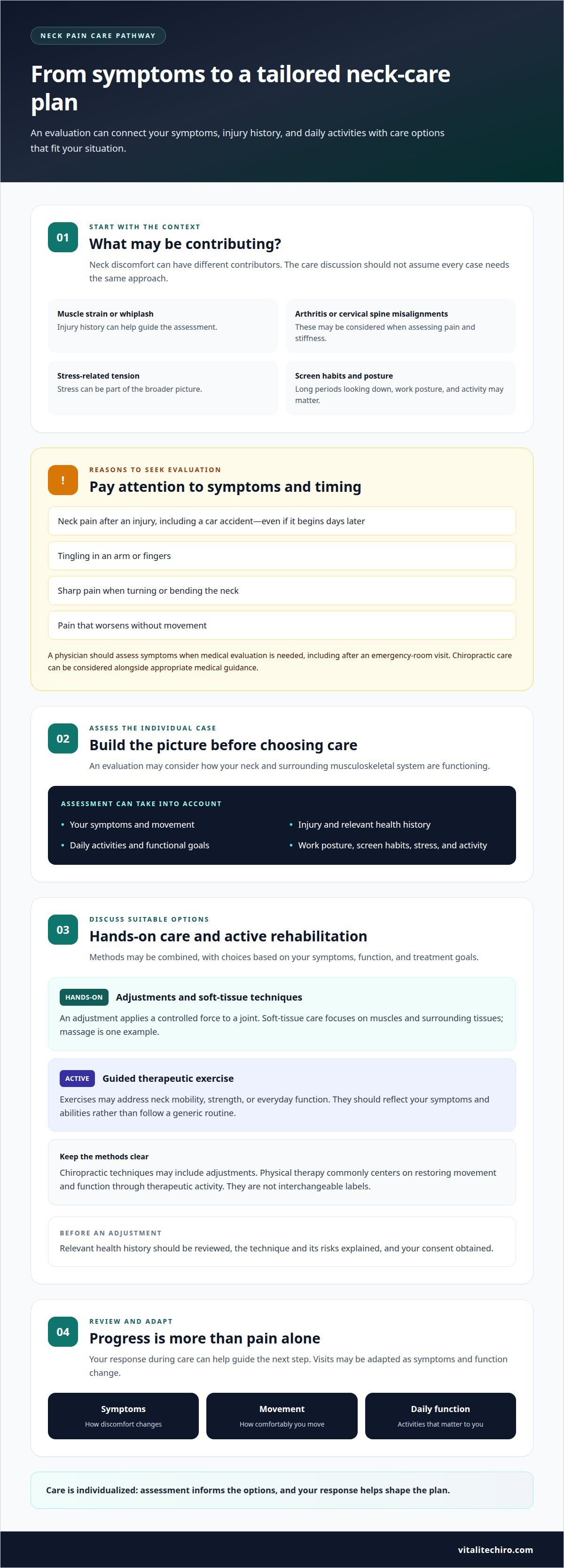
Someone seeking a Shirlington chiropractor for neck pain may need more than an adjustment. Neck pain can follow muscle strain, whiplash, arthritis, stress-related tension, or long periods looking down at a screen. In Arlington, Virginia, an evaluation of the musculoskeletal system can help identify possible contributors and shape care around your symptoms, injury history, and daily activities. Cervical spine misalignments can also contribute to pain and stiffness.
Neck pain after an injury, including a car accident, deserves attention even if it starts days later. Tingling in an arm or fingers, sharp pain when turning or bending your neck, or pain that worsens without movement are also reasons to seek evaluation. A physician should assess symptoms when medical evaluation is needed, including after an emergency-room visit. Chiropractic care can be considered alongside appropriate medical guidance.
Chiropractic care is a non-surgical treatment option. Whether it is appropriate before surgery depends on the cause of pain and the findings from an individual assessment. Treatment may combine hands-on care with therapeutic exercise, with visits adapted as symptoms and function change. Progress is not measured by pain alone: movement and daily activities matter, too.
An integrative approach considers more than the neck itself. Work posture, screen habits, stress, and activity can help explain recurring discomfort. A care discussion may also consider whether options such as acupuncture are relevant, without assuming they suit every person.
Which chiropractors in Shirlington, Arlington, VA, treat neck pain? Look for a local chiropractor who assesses your symptoms and injury history before selecting care. Ratings vary by practice, and written reviews describe individual experiences rather than guaranteed results. Insurance coverage depends on your specific policy. In Virginia, optional MedPay coverage can help with early visits after a crash. Before a neck adjustment, the chiropractor should review your relevant health history, explain the technique and its risks, and obtain your consent.
Clinic location and directions from Shirlington
From Shirlington, plan your route to the Arlington, Virginia clinic with parking access in mind. The Shirlington surface parking lot and bottom-floor garage are accessible only from South Arlington Mill Drive. Use that road to reach either parking option; approaching from another direction may not lead directly to the lot or garage. The available directions identify this access point, rather than a street address or turn-by-turn route.
Parking and arrival can be part of appointment planning, especially when neck symptoms make driving or turning uncomfortable. Allow time to enter from South Arlington Mill Drive, park, and reach the clinic. Use the clinic’s listed hours to choose a suitable appointment time. Don’t assume walk-ins are available; plan ahead and schedule a visit.
Listed hours are Monday, 7:00-5:00; Tuesday, 10:00-7:00; Wednesday, 7:00-5:00; Thursday, 2:00-7:00; Friday, 7:00-5:00; and Saturday, 8:00-1:00. These are the clinic’s stated times. The schedule gives options across weekdays and Saturday, while the different opening times make it useful to plan the visit around the day.
At your appointment, the chiropractor can assess your neck symptoms and musculoskeletal system, then consider factors that may contribute to your discomfort. A root-cause-focused approach connects the evaluation with your reported symptoms and care needs. Chiropractic assessment and treatment planning are tailored to the individual case. For prenatal care, pregnancy is also relevant to the discussion and treatment plan.
Shirlington is the location reference here; nearby communities beyond Arlington aren’t specified. To review clinic details before setting out, see clinic location and appointment information. Planning around the South Arlington Mill Drive entrance and listed hours can make the trip clearer.
Hands-on manual therapy and active rehabilitation
Hands-on care and active rehabilitation address different parts of neck-pain treatment. The clinician selects techniques and exercises according to your symptoms, function, and treatment goals.
Adjustments and Soft-Tissue Therapy
A chiropractic adjustment applies a controlled force to a joint, while soft-tissue techniques focus on muscles and surrounding tissues. Massage is one example of hands-on soft-tissue therapy. The doctor considers your symptoms, movement, and relevant health history when deciding whether either approach fits. You should understand each technique’s purpose and how it relates to your functional goals.
Manual Therapy Approaches
Manual therapy refers to hands-on techniques used during care, rather than one specific procedure. For neck discomfort, a clinician may assess how movement feels before choosing an approach. Your response during treatment helps guide the next step. Ask which area a technique targets and how progress will be assessed across visits, especially if symptoms or tolerance change.
Active rehabilitation adds guided movement to hands-on care. A clinician may recommend therapeutic exercises that address neck mobility, strength, or everyday function. For example, treatment goals might include turning your head more comfortably while working or checking traffic. Exercise selection should reflect your symptoms and abilities, not follow a generic routine.
Chiropractic care and physical therapy can both involve movement-based rehabilitation, but they are not interchangeable labels. Chiropractic techniques may include adjustments, while physical therapy commonly centers on restoring movement and function through therapeutic activity. Your treatment plan should clarify which methods are used, what they are intended to address, and how your response will shape care.
Neck pain can have several causes, so care may combine approaches. A clinician can explain whether hands-on treatment, exercises, or both are intended to support your goals. Rather than promising a particular result, a sound plan tracks practical changes, such as comfort when moving your head or tolerance for work tasks, and adjusts treatment as needed.
Chiropractic adjustments and rehabilitation
Chiropractic adjustments and rehabilitation work best as parts of a personalized plan, not as interchangeable procedures. The key question is how each step relates to your neck pain, movement, and everyday function.
An adjustment uses a controlled force on a joint. An adjustment is one hands-on approach that may be considered as part of care. Before treatment, the practitioner considers your symptoms, health history, and movement. A useful discussion explains the adjustment’s purpose, the area being treated, and how your response will guide care. That context matters, particularly after an injury or when symptoms have changed.
Rehabilitation adds active movement to hands-on care. For example, a plan may include therapeutic exercises intended to support neck movement or tasks such as turning your head while driving. The practitioner can assess your function over time and adapt the plan to your response. This gives each visit a practical focus beyond receiving an adjustment.
A comprehensive approach also considers how neck symptoms connect with work, recreation, and daily routines. A desk worker and someone recovering from a sports injury may have different goals and activity demands. Personalized care connects those details with treatment choices instead of applying the same routine to every patient. If other healthcare professionals are involved, communication across your care network can help keep treatment goals clear.
For an effective treatment plan, look for clear explanations of the proposed techniques, their purpose, and how progress will be assessed. Ask how rehabilitation fits alongside adjustments and what changes would prompt a review. This keeps the focus on informed decisions and measurable activities, such as turning your head comfortably or returning to a valued task.
For individualized chiropractic adjustments and rehabilitation, schedule a neck pain appointment.
Vitalité Chiropractic
Vitalité Chiropractic can help people with neck pain understand care options and consider an approach suited to their needs. An evaluation can connect symptoms, movement, and relevant history with a plan for care, rather than assuming one technique fits everyone. Chiropractic adjustments may be considered as part of that plan, alongside other appropriate options.
Turn to the clinic when neck discomfort affects daily activities, follows an injury, or needs professional assessment. If you are seeking care related to a sports injury or pregnancy, discuss those circumstances as part of treatment planning. The aim is a clear, individualized conversation about next steps and the care that fits your situation.
Contact Vitalité Chiropractic to discuss your neck pain and care options.
Take the Next Step Toward Comfortable Movement
When considering a Shirlington chiropractor for neck pain, focus on the activities you want to make more comfortable. Perhaps turning your head, concentrating at work, or returning to a sport is your priority. Sharing that goal can make the conversation about care more specific and relevant to your daily life.
Vitalité Chiropractic offers Chiropractic Adjustments, Decompression Therapy, and Sports Injury Care. These services can provide a starting point for discussing how your symptoms affect movement and which approach may fit your needs. Share what you’ve already tried and any changes you’ve noticed, giving the practitioner useful context for your care discussion.
You don’t need to have every answer before taking that step. A conversation can help you clarify what you’re experiencing and decide how to proceed. Arrange a conversation with Vitalité Chiropractic about your neck pain and care options.
Frequently Asked Questions
What neck pain treatments do chiropractors in Shirlington offer?
Neck-pain care in Arlington may include chiropractic adjustments, decompression therapy, and therapeutic modalities. Vitalité Chiropractic also provides sports injury care, which may be relevant when symptoms follow an athletic injury. The clinician considers your symptoms and movement when discussing options, rather than assuming every treatment suits every person. Ask how a proposed approach relates to your symptoms and daily activities.
What are the office hours, locations, and parking options for chiropractors in Shirlington?
Vitalité Chiropractic is located at 1530 Wilson Blvd, #1040, Arlington, VA 22209. Listed office hours are Monday, Wednesday, and Friday, 7:00-5:00; Tuesday, 10:00-7:00; Thursday, 2:00-7:00; and Saturday, 8:00-1:00. The Shirlington surface lot and bottom-floor garage are accessed from South Arlington Mill Drive. Plan your route with the clinic address and parking entrance in mind.
What should I expect at a first chiropractic appointment for neck pain?
Your first visit begins with patient forms and a consultation about your health concerns. The chiropractor then performs an examination, which may include chiropractic and neurological testing. X-ray studies are used when necessary. Next, the chiropractor explains the findings and treatment plan, and care can begin. Sharing when your neck pain started, any injury history, and which activities are affected helps make the discussion specific to you.
Do Shirlington chiropractors accept insurance for neck pain treatment?
Insurance coverage depends on your specific policy. In Virginia, optional MedPay coverage can help with early visits after a crash.
What are the risks and side effects of chiropractic neck adjustments?
Before an adjustment, the chiropractor should review your relevant health history, explain the technique and its risks, and obtain your consent.


